
Review · MADRID
10-Day Andalusia and Morocco from Madrid
The most unusual feature here is the sharp change of scene midway through the trip. You begin among Spain’s Roman and Moorish cities, cross the Strait of Gibraltar by fast ferry, then spend several days moving through Morocco from Tangier to Rabat, Fez, and blue-painted Chefchaouen. One booking covers two countries and nine hotel nights.
I like the strong sightseeing lineup, especially the Mosque-Cathedral in Cordoba, the Alhambra in Granada, and the Fez medina. I also like the practical package: breakfasts, most dinners, guided city tours, coach transport, ferry tickets, and insurance are included. The tradeoff is a brisk pace, with long road days and little free time in several places.
In This Review
- Key points at a glance
- A two-country route with a fast change of pace
- Day 1: Caceres before Seville
- Day 2: Seville’s grand squares and optional evening culture
- Day 3: Cordoba and the Mosque-Cathedral
- Day 4: White Villages, Ronda, and the Costa del Sol
- Day 5: From the Costa del Sol across the Strait
- Day 6: Rabat’s monuments and Fez’s old city
- Day 7: Blue streets in Chefchaouen, then Tangier
- Day 8: Back to Spain and the Costa del Sol
- Day 9: Granada and the Alhambra
- Day 10: Toledo, then Madrid
- What the $1,797.71 price really covers
- Pace, group size, and the practical side
- Who should choose this tour?
- Should you book the Andalusia and Morocco route?
- FAQ
- Where does the tour start?
- Where does the tour end?
- How long is the experience?
- Is transportation included?
- Which cities include guided sightseeing?
- Are meals included?
- Do I need a passport?
- How much luggage can I bring?
Key points at a glance
- Two countries in 10 days: Combine Andalusia with northern Morocco without arranging the ferry, hotels, and intercity transport yourself.
- Major Moorish landmarks: Visit the Mosque-Cathedral in Cordoba, the Alhambra and Generalife in Granada, and Fez’s old medina.
- A useful meal plan: Nine breakfasts, eight dinners, and two lunches are included, but lunches on other days are your responsibility.
- Coach-based travel: An air-conditioned bus with onboard Wi-Fi links the route, with a maximum group size of 50.
- Morocco requires flexibility: The Moroccan portion may change without a major reduction in services.
- Best for active sightseers: Expect early starts, walking tours, border formalities, and several long transfers.
A two-country route with a fast change of pace
This is a sightseeing tour first, not a slow holiday. In ten days, you cover a large stretch of southern Spain and northern Morocco, with guided visits in Seville, Cordoba, Fez, Rabat, Granada, and Toledo.
That reach is the main value. Planning this route independently would mean coordinating hotels, a cross-border ferry, luggage, buses, local guides, and meals. Here, the basic framework is handled for you. You still need to manage your own free time, lunches on several days, and personal spending, but the complicated links are already in place.
The group can reach up to 50 people. That keeps the price reasonable, though it can also make boarding the bus, gathering after free time, and following a guide through narrow old-city streets less nimble.
A multilingual tour escort accompanies the group, and local guides take over in the main cities. One named guide and driver associated with the trip is Mohamed Arhoun, who was praised for being professional, helpful, and attentive to the group. Guide quality can shape a fast tour like this, so that is a meaningful strength.
Other Madrid days people book alongside this one:
- Madrid: Tour Bernabéu Entry Ticket
★ 4.5 · 21,573 reviews - Madrid: Prado Museum Entry Ticket
★ 4.6 · 17,509 reviews - Madrid: Royal Palace Fast-Access Admission Ticket
★ 4.6 · 13,856 reviews
Day 1: Caceres before Seville
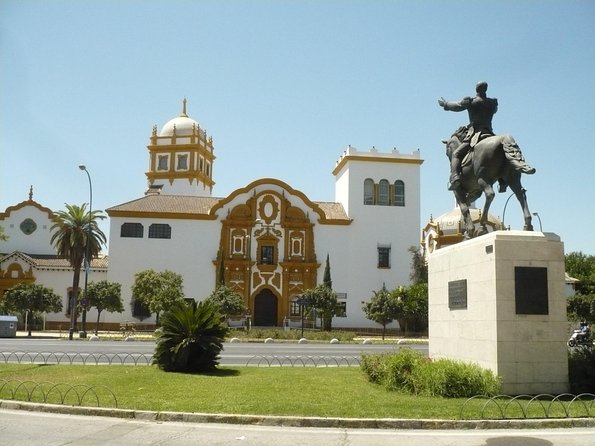
The coach leaves Madrid at 8:00 a.m. from C. de Ferraz, 3, near Moncloa. Your first stop is Caceres in Extremadura, where you have free time for Plaza Mayor and the remarkably preserved medieval quarter.
Caceres works well as an opening stop because it gives you a taste of Spain’s stone-built old towns before the trip turns south. You can explore at your own pace, but lunch is not included that day. Bring some euros and do not expect a lengthy visit, since the route continues to Seville afterward.
Arrival in Seville brings dinner and your first hotel night. The early departure and the continued transfer make this a full travel day, not a gentle introduction.
Day 2: Seville’s grand squares and optional evening culture
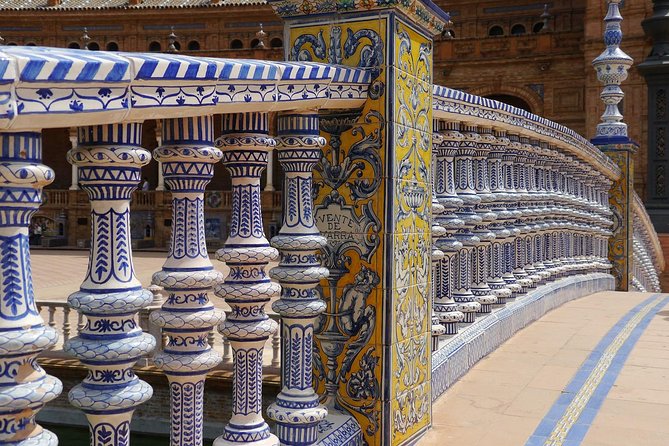
The guided Seville tour covers María Luisa Park, Plaza de España, the exterior of the Cathedral and Giralda, and the Santa Cruz district. This is a good selection for a first visit. Plaza de España gives you broad views and grand architecture, while Santa Cruz shifts to lanes, small squares, and shaded corners.
The cathedral visit is described as exterior sightseeing, so you should not assume that interior admission is part of the included tour. The same applies to the optional activities. You may choose a Guadalquivir river cruise for views of the Gold Tower and the Expo 92 area, or visit the Maestranza bullring. A flamenco show is also offered in the evening.
These extras can make Seville more memorable, but they cost more and add to an already busy day. If you want time for a quiet meal or independent wandering, skip at least one option. Seville rewards a little breathing room, and the included schedule gives you only a limited amount.
Day 3: Cordoba and the Mosque-Cathedral
The Cordoba walking tour begins at Almodovar Gate and continues through the Jewish Quarter to the Mosque-Cathedral. This is one of the strongest days on the route.
The Mosque-Cathedral is important not only for its scale, but for the way different periods of worship and architecture occupy the same building. The famous forest of arches is the visual centerpiece, while the surrounding old quarter makes the visit feel connected to the city rather than isolated inside a coach stop.
You have the afternoon free, then dinner and accommodation. That free time matters. Cordoba is one of the few places where you can slow down, return to a favorite street, or find a meal beyond the group arrangements. Lunch is not listed as included, so plan for it separately.
A different sort of afternoon around Madrid:
- Madrid: “Emociones” Live Flamenco Performance
★ 4.8 · 12,866 reviews - Madrid: Panoramic Route City Tour
★ 4.1 · 12,259 reviews - Madrid: Live Flamenco Show with Food and Drinks Options
★ 4.5 · 9,901 reviews - Avila & Segovia Tour with Tickets to Monuments from Madrid
★ 5.0 · 9,762 reviews
Day 4: White Villages, Ronda, and the Costa del Sol
The route then turns toward the White Villages and Ronda. The villages are known for whitewashed buildings and hill-country views, while Ronda is associated with dramatic setting and its old-town character. You receive free time here, though the schedule does not specify how long.
Ronda is a particularly useful stop for people who want more than major city centers. It gives the trip a rural and small-town change of rhythm before the Costa del Sol. Still, this is another day when the clock matters. You may have enough time for a walk and a meal, but not the relaxed pace of an overnight stay.
Dinner and accommodation are on the Costa del Sol. The coast is primarily a base for the crossing to Morocco rather than a full beach holiday. Pack what you need for the next day so the morning ferry transfer is less stressful.
Day 5: From the Costa del Sol across the Strait
This is the trip’s big transition. You leave the Costa del Sol, take the fast ferry across the Strait of Gibraltar, and arrive in Morocco. The international crossing is included, but you must clear customs with your own luggage.
That rule matters. Keep your passport and essential items where you can reach them, and follow the one-piece-of-luggage limit. Passport details are required at booking, so this is not a trip for last-minute paperwork.
The first Moroccan stop is Assilah, where you have free time for lunch. It is a welcome pause before continuing to Rabat. Lunch here is at your own expense, so keep local currency or another accepted payment method available.
Rabat brings dinner and the night’s accommodation. One practical caution is worth noting: the hotel used in Rabat may be in a less appealing area. A report about a dark setting and a poor dinner at that hotel suggests you should judge this night as a functional stop, not the highlight of the trip.
Day 6: Rabat’s monuments and Fez’s old city
Rabat sightseeing includes Tour Hassan and the Mausoleum of Mohamed V. Tour Hassan is an unfinished mosque with a forest of columns, while the mausoleum is known for its decorated royal guard and its connection to Morocco’s independence.
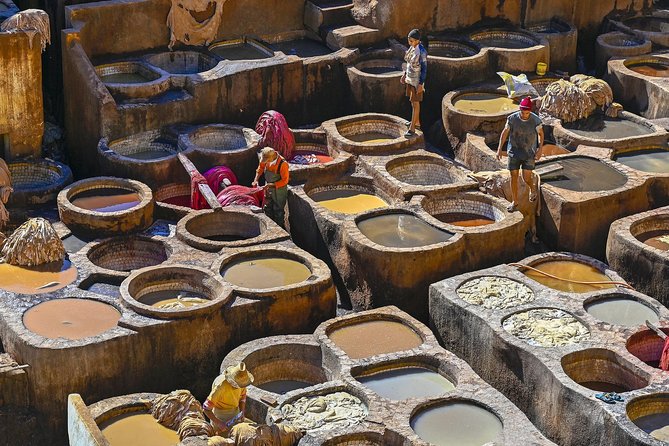
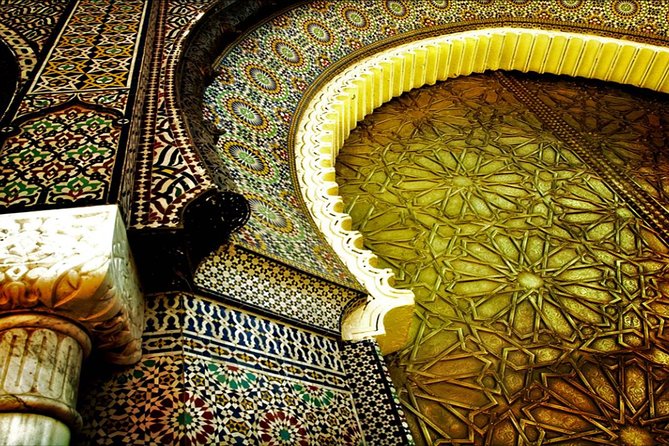
The tour then continues to Fez, described as Morocco’s intellectual and religious capital. A panoramic section passes the royal palace and its seven gates before the group enters Fez el Bali, the old medina.
This is one of the most demanding walking days. Fez’s old quarter is a maze of streets, alleys, squares, and mosques. The guided visit helps you make sense of it, but you should wear shoes suited to uneven walking and stay close to the group. A place this intricate is not easy to navigate alone during a short visit.
Lunch at a typical restaurant is included on this day. Dinner is not specifically listed in the daily description, although the package includes eight dinners across the trip. Check the final meal schedule with the tour escort rather than assuming every overnight includes a group dinner.
Day 7: Blue streets in Chefchaouen, then Tangier
The coach heads to Chefchaouen, also called Chaouen. The town’s narrow streets are painted blue, and the walking route leads to Outta El Hamman Square. You have free time before continuing to Tangier.
Chefchaouen is one of the route’s most photogenic stops, but it is still a short visit within a long journey. The blue streets make for attractive photographs, while the free time lets you browse and walk without a formal city lecture. You should keep track of the meeting time. A delayed return could affect the evening transfer.
Tangier provides the final Moroccan overnight. The next morning is set aside as free time until the ferry departure, giving you a small window to see more of the city or simply prepare for the return crossing.
Day 8: Back to Spain and the Costa del Sol
After a free morning in Tangier, you board the ferry back to Spain and transfer to the Costa del Sol. As on the outbound crossing, customs and luggage handling are part of your responsibility.
This day has less scheduled sightseeing than the others. That is useful after several long drives, but it also means the Costa del Sol is mainly a stopover. Dinner and accommodation are included, making the evening straightforward after the crossing.
The route’s repeated hotel changes are efficient but can be tiring. Keep daily necessities in a smaller day bag rather than opening your main suitcase every night.
Day 9: Granada and the Alhambra
Granada is the Spanish highlight for many people. The tour includes the Alhambra and Generalife, the former residence and gardens of the Moorish kings. Fountains, gardens, courtyards, and carved arches provide a welcome contrast to the long coach rides.
Because Alhambra entry is time-sensitive, follow the guide’s instructions closely and do not wander off without knowing where and when to regroup. The itinerary does not specify every part of the complex included, so the exact route may depend on ticketing and local operations.
Dinner and accommodation follow the visit. You may also choose an optional Sacromonte outing with cave visits and a traditional flamenco performance. It is a fitting Granada add-on, but again, it comes after a full sightseeing day. Choose it for the culture, not because you expect a restful evening.
Day 10: Toledo, then Madrid
The final day heads north to Toledo, the Imperial City known for its monuments and long religious and political past. The route includes lunch, a panoramic view from Mirador del Valle, and a walk through the old town before continuing to Madrid.
The Mirador del Valle is a smart inclusion because it gives you a clear view of Toledo before you enter its compact streets. The old town walk then brings you close to the city’s layered architecture.
The coach returns to the original Madrid meeting point, where the tour ends. There is no hotel night in Madrid included, so arrange your next accommodation or onward connection with the final arrival time in mind. The schedule gives an arrival day, not a guaranteed precise hour.
What the $1,797.71 price really covers
At $1,797.71 per person, the price makes the most sense if you want a guided route with few transport decisions. Nine nights of accommodation, nine breakfasts, eight dinners, two lunches, coach transport, local guides, the ferry, a multilingual escort, Wi-Fi on the bus, and travel insurance are included.
The dinner plan is especially useful in Morocco and on transfer nights, when finding a meal after arrival may be inconvenient. It does limit spontaneity, though. You should not expect to choose every evening’s restaurant or always eat at the most local place.
You still pay for unspecified services, optional activities, several lunches, drinks, and personal purchases. Pickup and drop-off service is not included, so you must reach the Madrid departure point yourself. The meeting point is near public transportation, which helps, but you should allow extra time for an 8:00 a.m. departure.
The bus has onboard Wi-Fi, a practical benefit during long transfers, but connection quality can vary. Treat it as useful extra service, not a guarantee that you can work online all day.
Pace, group size, and the practical side
The itinerary is packed. You change regions often, cross an international border twice, and combine guided walks with long coach journeys. I would choose this trip for coverage, not for long mornings in one city.
Most people can participate, but you need to be comfortable walking in old quarters and handling your own luggage at customs. One piece of luggage per person is allowed, which is sensible for a route with frequent hotel changes.
A group of up to 50 can feel large in Fez, Cordoba, or Toledo. The local guides and tour escort are important here. Mohamed Arhoun was specifically praised for professional driving, useful explanations, and looking after the group, qualities that matter when the schedule leaves little room for confusion.
The Moroccan segment may be altered without a substantial change to the services. That gives the operator some flexibility, but you should avoid booking tight independent plans around the exact order of Moroccan stops.
Who should choose this tour?
You should consider it if you want to see major Andalusian sights and northern Morocco in one trip, prefer organized transport, and value included dinners and hotels. It suits first-time visitors who want an efficient introduction rather than a deep stay in each city.
It is less suitable if you want slow mornings, independent restaurant choices, or several nights in each destination. A couple seeking a relaxed anniversary trip may find the constant movement tiring, while an active sightseer will likely appreciate the range.
The tour is also a good fit if arranging the Strait of Gibraltar crossing feels like a nuisance. The ferry tickets and coach connections are handled, while you focus on passports, luggage, and keeping to the schedule.
Should you book the Andalusia and Morocco route?
Book this tour if your priority is seeing a lot with one organized purchase. The combination of Seville, Cordoba, Ronda, Granada, Toledo, Rabat, Fez, Chefchaouen, and Tangier is impressive for ten days, and the included meals and transport give the price real practical value.
Think twice if you need flexibility or quiet. The long drives, large possible group, fixed meal arrangements, and modest free time are genuine compromises. Pack light, keep your documents accessible, budget for lunches and optional shows, and expect the Rabat hotel to be more functional than atmospheric.
For the right person, this is a useful first look at two connected cultures, with enough landmark visits to justify the busy schedule.
FAQ
Where does the tour start?
The tour starts at C. de Ferraz, 3, in the Moncloa-Aravaca area of Madrid. Departure is at 8:00 a.m.
Where does the tour end?
The tour returns to the original Madrid meeting point and ends there on Day 10.
How long is the experience?
The tour lasts approximately 10 days and includes nine nights of accommodation.
Is transportation included?
Yes. Transportation is provided by air-conditioned coach with free onboard Wi-Fi. Fast-ferry tickets for the crossings between Spain and Morocco are also included.
Which cities include guided sightseeing?
Local guided sightseeing is included in Seville, Cordoba, Fez, Rabat, Granada, and Toledo.
Are meals included?
The package includes nine breakfasts, eight dinners, and two lunches. Other meals are not specified as included.
Do I need a passport?
Yes. Passport details are mandatory to complete the booking, and you must clear customs with your own luggage during the ferry crossings.
How much luggage can I bring?
Only one piece of luggage is allowed per person.
Just added around Madrid
- Private Vacation Photography Session with Photographer in Madrid★ 5.0 · 3 reviews
- Arrival Private Transfer from MAD Airport to Madrid in a Minibus★ 5.0 · 3 reviews
- Segovia: 3-Hour Private Walking Tour★ 5.0 · 3 reviews
- Tour Segovia and La Granja de San Ildefonso from Madrid★ 5.0 · 3 reviews
- Madrid: Prado & Reina Sofia Museum Skip-the-Line Guided Tour★ 5.0 · 3 reviews
- Salamanca: Private Guided Customizable Walking Tour★ 5.0 · 3 reviews
- Total Reboot and Renew with top wellnes 3 hours couple experience★ 5.0 · 3 reviews
- Madrid: Prado Museum Private Tour★ 5.0 · 3 reviews