
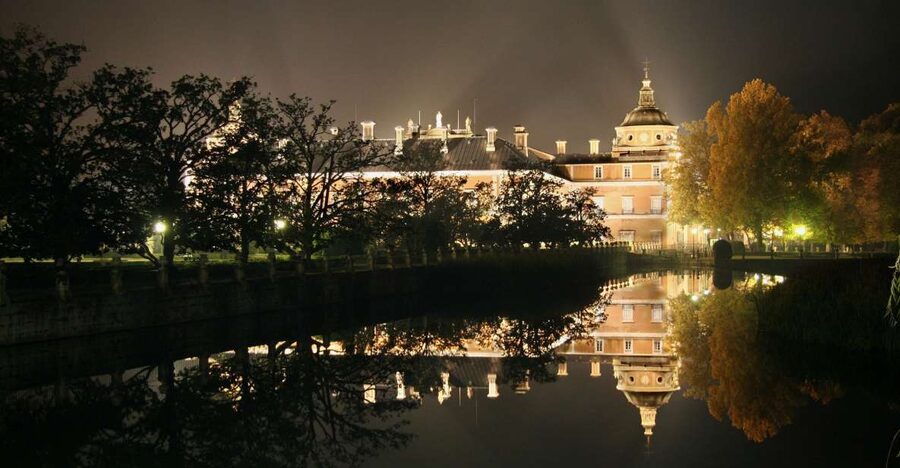
Review · ARANJUEZ TOURS
Aranjuez: Mystery and Legends Guided Nighttime Walking Tour
Aranjuez takes on a very different character after sunset. This royal town was planned with straight avenues, geometric gardens, mythological fountains, and buildings tied to centuries of court intrigue. On this $14 nighttime walk, the guide connects that grand design with occult ideas, secret architecture, freemasonry, royal deaths, conspiracies, and ghost stories.
I like the route for two clear reasons: it gives you a fresh look at the UNESCO cultural landscape, and it links famous sights to stories you would not get from a daytime photo stop. The guide also uses images and videos to make the tales easier to follow. The main thing to consider is that the tour is Spanish only, and the rain-or-shine format calls for sensible clothing.
In This Review
- Key points
- Why Aranjuez Gets Stranger After Sunset
- Starting at Avenida de Palacio
- The Palace Side at Plaza de Parejas
- Plazas, Markets, and the Everyday Town
- Gardens Designed as Symbols
- Fountains of Apollo, Hercules, and the Ancient Gods
- San Antonio and the Architecture of Belief
- Royal Deaths, Alchemy, and Secret Tunnels
- What the Guide Adds to the Walk
- Is $14 Good Value for 90 Minutes?
- Who Should Book This Aranjuez Night Walk?
- My Verdict on the Mystery and Legends Tour
- FAQ
- How long does the Aranjuez nighttime tour last?
- How much does the tour cost?
- Where do I meet the guide?
- What language is the tour in?
- Is transportation included?
- What sights are included on the route?
- Does the tour run in bad weather?
- Is the tour wheelchair accessible?
Key points
- Royal gardens after dark: Walk through the Garden of the King and Queen, the Parterre Garden, the Island Garden, and the Florist’s Garden in a quieter nighttime setting.
- Mythological fountains: See fountains dedicated to Apollo, Diana, Venus, Hercules, Ceres, the Nereids, and other figures from ancient mythology.
- Dark royal stories: Hear about palace conspiracies, deaths of queens, maddened kings, alchemy, impalement, secret tunnels, and apparitions.
- Geometry from above: Learn why Aranjuez’s avenues and planted areas were arranged in shapes meant to be understood from the sky.
- Historic town center: Pass the Church of San Antonio, House of Trades and Knights, House of Infantes, market, Town Hall, and several important plazas.
- Practical format: The walk lasts 1.5 hours, costs $14 per person, and includes a Spanish-speaking guide but no transport.
Why Aranjuez Gets Stranger After Sunset
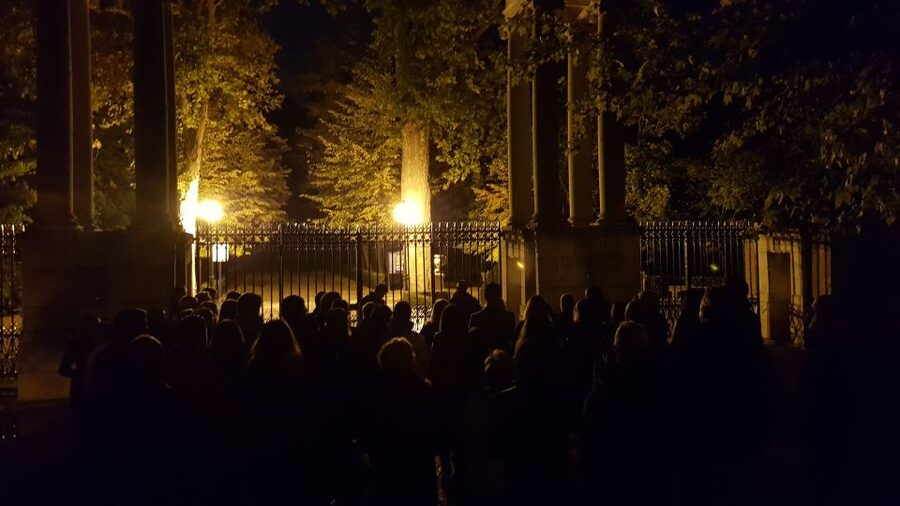
Aranjuez is known for its royal palace, gardens, fountains, and orderly avenues. At night, those same features become the setting for a different story. The tour asks you to look past the polished royal image and consider the beliefs, fears, symbols, and power struggles that shaped the town.
I like this approach because the mysteries are tied to real places. You are not simply hearing a string of unrelated ghost stories. The guide explains how the palace grounds, plazas, churches, fountains, and streets fit into a wider plan connected with sacred architecture, ancient Egypt, mathematics, and ideas about a supreme power.
Some parts are historical, some are legendary, and some belong to the realm of occult interpretation. You should enjoy the atmosphere without treating every tale as established fact. That mix is part of the fun, but it also means the experience suits curious listeners more than visitors seeking a strictly academic history lecture.
The tour is led in Spanish. If you follow spoken Spanish comfortably, the storytelling format should make the walk memorable. If you do not, this is not the right choice unless you have a strong reason to join and can arrange your own translation help.
More legends and after-dark walks in Madrid:
- Madrid: Spanish Inquisition and Legends Evening Walking Tour
★ 4.7 · 1,396 reviews - Madrid Oscuro: Torture, Ghosts, Crimes and Legends
★ 5.0 · 1,363 reviews - Madrid: Entry Ticket to Legends The Home of Football Museum
★ 4.7 · 563 reviews
Starting at Avenida de Palacio
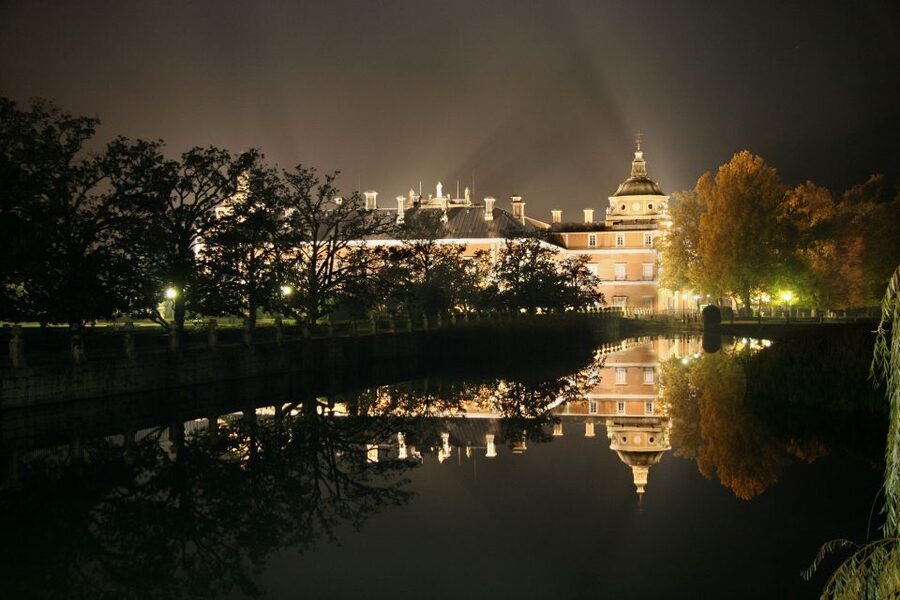
You meet outside Café de Damas, at the corner of the square where Avenida de Palacio begins. This is a useful starting point because the avenue leads you straight into Aranjuez’s royal setting, and the guide can begin with the town’s design rather than treating each sight as an isolated stop.
The opening explanation focuses on why the ground around the palace was changed before the royal complex was finished. Tree-lined avenues were laid out in geometric forms, with patterns that could be understood most clearly from above. That detail gives you a practical way to read Aranjuez: look for lines, angles, symmetry, and long views instead of seeing the gardens as decoration alone.
The idea of a design made for viewing from the sky adds an unusual layer to the visit. You will not simply hear that the gardens are attractive. You will learn to see them as part of a planned system with mathematical and symbolic meaning.
Bring comfortable shoes and water. The route lasts 90 minutes, and even a short city walk can feel longer if you are standing still while listening. A camera is also useful, though the low light may limit what you can capture.
The Palace Side at Plaza de Parejas
The route takes you to Plaza de Parejas, where you see another side of the Royal Palace. The square gives the guide room to explain royal ceremonies, court life, and the power behind the town’s grand public spaces.
This is also where the tour’s darker mood begins to gather force. The stories connect the palace and its surroundings with royal deaths, political plots, troubled rulers, and the mutiny of Aranjuez. That mutiny is one of the town’s key historical episodes, and it helps show that Aranjuez was not merely a pleasant retreat for the Spanish court.
The guide also discusses the legends attached to the palace area, including secret passages and apparitions. You should expect a dramatic delivery rather than a quiet architectural talk. The strongest part of this format is hearing how a building can carry several meanings at once: royal residence, political stage, sacred symbol, and setting for unsettling tales.
Plazas, Markets, and the Everyday Town
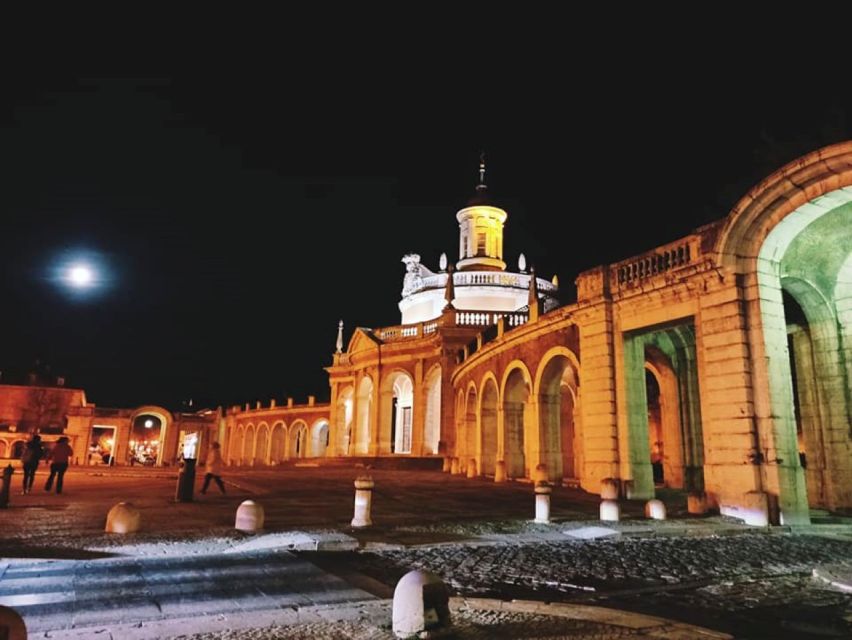
The walk continues through Plaza de la Parada and Plaza de Abastos. These places help balance the royal gardens with the town where ordinary life took place.
The market and Town Hall bring you back to Aranjuez as a living community. The route also passes historic buildings such as the House of Trades and Knights, an 18th-century structure linked to the royal setting, and the House of Infantes, associated with Carlos III.
I appreciate this part of the route because it prevents the tour from becoming palace-only sightseeing. You get a sense of how the royal project shaped the wider town. The contrast between official buildings, market space, and palace grounds gives the legends a firmer setting.
The stories may also make you look twice at familiar civic buildings. A market or town square can seem ordinary in daylight. At night, with a guide explaining its connections to old power struggles and local memory, it becomes part of a larger story.
More Aranjuez trips:
- Day Tour to Chinchón, Aranjuez and Toledo from Madrid
★ 4.5 · 142 reviews - From Madrid: Guided Day Trip to Chinchon, Aranjuez & Toledo
★ 4.3 · 132 reviews - Aranjuez: Royal Palace Guided Tour
★ 4.5 · 93 reviews - Aranjuez: City and Gardens Guided Walking Tour
★ 4.6 · 38 reviews
Gardens Designed as Symbols
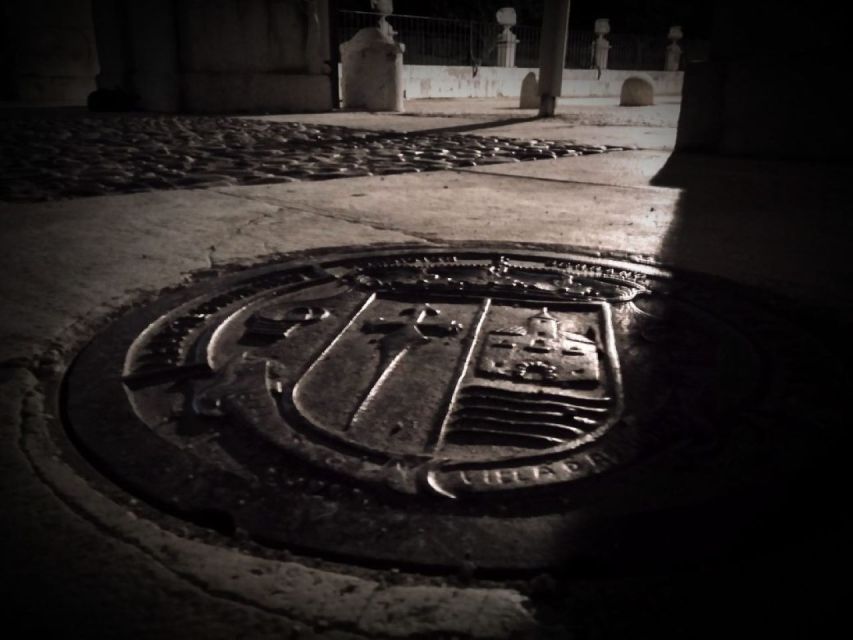
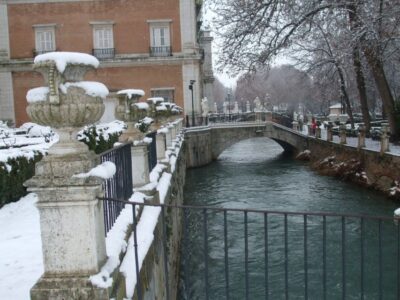
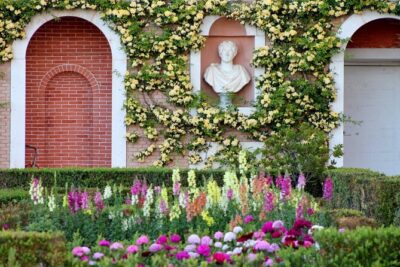
The gardens are the heart of the walk. You pass through the Garden of the King and Queen, the Garden of the Parterre, the Garden of the Island, and the Garden of the Florist.
The Parterre is the French-style garden, with a more formal arrangement. The Island Garden offers a different mood, shaped by water and greenery. The Garden of the King and Queen adds another royal layer, while the Florist’s Garden brings a smaller and more intimate scale to the route.
At night, you will not see these spaces in the same way you would during a bright daytime visit. Details may disappear, and some areas may feel quieter or more mysterious. That is a benefit if you want atmosphere, but a drawback if your main goal is to study planting patterns, sculpture, or architectural detail.
The guide’s central argument is that the gardens were planned as more than pleasant royal grounds. Their paths, axes, trees, water features, and sculptures can be read through religious and occult ideas. The tour traces links to sacred architecture, freemasonry, alchemy, and symbolic mathematics.
You do not need prior knowledge of these subjects. The storytelling is built around images, videos, and carefully arranged tales, so the guide can point out connections as you walk. This visual support is especially useful when the subject becomes abstract.
Fountains of Apollo, Hercules, and the Ancient Gods
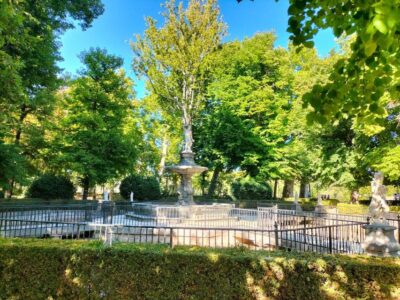
Aranjuez’s fountains give the tour some of its clearest symbols. You see works connected with myths and gods, including the Fountain of Hercules and the Hydra, the Apollo Fountain, the Clock Fountain, the Diana Fountain, and the Venus Fountain.
The route also includes the Boticaria Fountain, the Fountain of the Nereids, the Ceres Fountain, the Hercules and Antaeus Fountain, and the Thorn Child Fountain. Each name gives the guide a new opening into ancient mythology, royal taste, and the symbolic use of sculpture.
The Apollo Fountain is tied to one of the most familiar figures in classical mythology, while Hercules and the Hydra bring in themes of struggle and triumph. Diana and Venus offer different ideas about the natural world, beauty, desire, and power. Ceres connects with agriculture and fertility, and the Nereids bring water and sea mythology into the gardens.
I like this section because you can enjoy the fountains at two levels. You can simply admire the sculpture and names, or you can listen for the symbolic links the guide draws between the figures, the gardens, and the rulers who commissioned them.
The Clock Fountain and the Thorn Child add a more unusual tone. Their names alone create questions, and the guide uses them to widen the tour beyond the most famous classical gods. Keep your expectations realistic: nighttime conditions may make fine sculpture details harder to see, but the darkness helps the stories feel more theatrical.
San Antonio and the Architecture of Belief
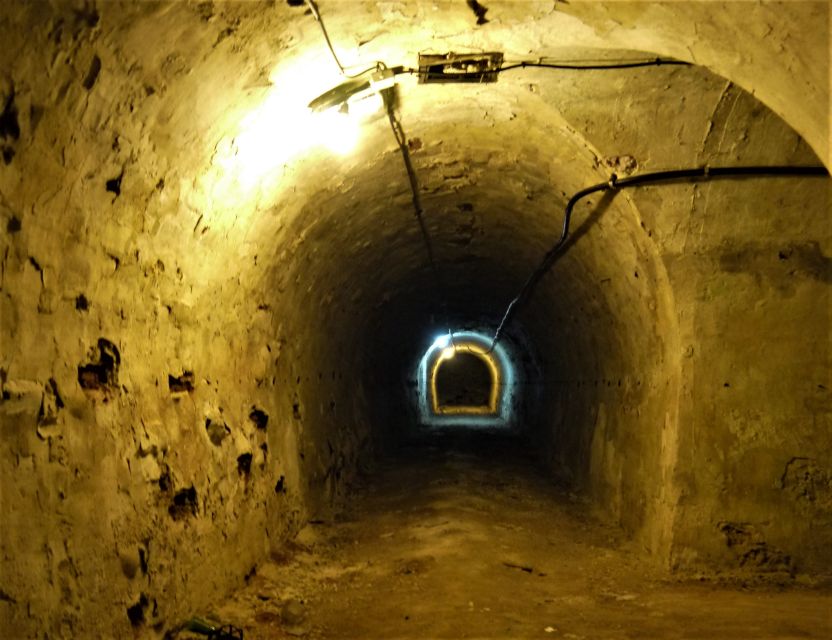
The Baroque Church of San Antonio is another important stop. Its style fits the grand royal setting, but the tour treats it as part of a wider discussion about sacred architecture and hidden meaning.
The guide explains how Aranjuez was conceived as a kind of temple of nature, built according to mathematical principles. The tour connects this idea with older Egyptian concepts and with the belief that geometry could express a higher order.
This does not mean every line or fountain should be accepted as proof of an occult plan. It is better to treat the interpretation as a way of asking questions. Why are the paths arranged this way? Why were certain mythological figures chosen? How did royal power use religious and classical symbols to shape the setting?
That questioning makes the church and gardens more interesting. You are encouraged to observe relationships between structures, avenues, water, sculpture, and open space. The experience becomes less about checking off landmarks and more about reading the town’s design.
Royal Deaths, Alchemy, and Secret Tunnels
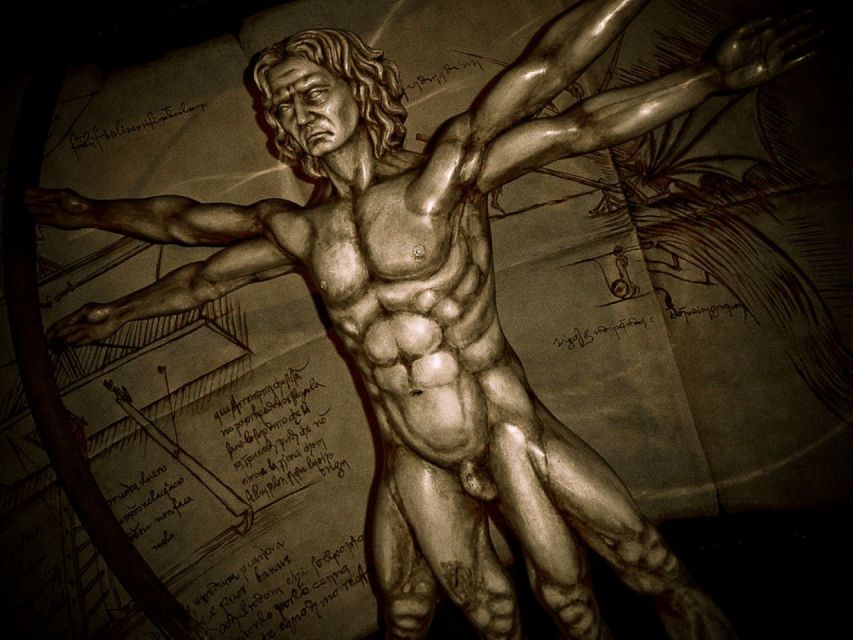
The darker tales include deaths of queens, conspiracies, alchemy, impalement, maddened kings, secret tunnels, haunted houses, and apparitions. These are the stories most likely to give the walk its promised goosebumps.
The value here depends heavily on delivery. The information provided about the tour points to a guide who explains clearly, tells stories with energy, and supports the narration with illustrations and videos. That matters because a long list of grisly events can blur together. A strong storyteller gives each place its own setting and meaning.
You should also know that this is not a horror attraction with actors or staged effects. The atmosphere comes from the real streets, gardens, fountains, and buildings, along with the guide’s account of what may have happened there.
Some subjects are grim. Stories of royal deaths, violence, madness, and impalement may not suit young children or anyone looking for a gentle evening stroll. For adults who enjoy legends and old mysteries, those details are likely to be the main reason to book.
The reference to wise initiates preserving secrets since the reign of Philip II adds another layer. It places Aranjuez within a long royal timeline and gives the guide a chance to connect the town’s design with older beliefs about hidden knowledge.
What the Guide Adds to the Walk
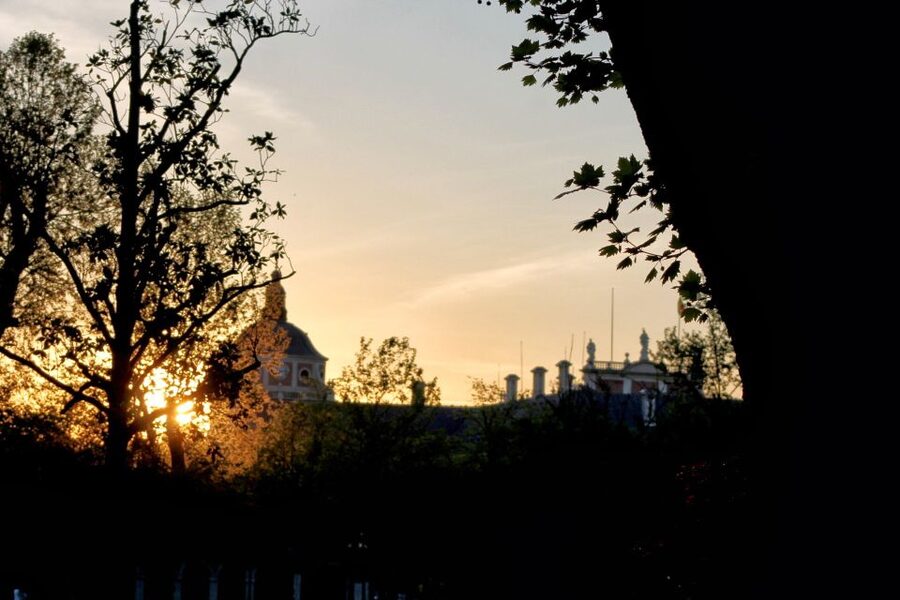
This experience rises or falls on the guide. The most praised features are the clear explanations, strong storytelling, historical detail, unusual anecdotes, and use of visual material.
You can expect the guide to explain rather than merely point. That is important in Aranjuez, where many of the most interesting details are not obvious from the pavement. The guide helps you understand why the avenues were planted in geometric patterns, how the royal setting shaped the town, and where the legends fit into the physical route.
The use of images and videos is a real advantage. Nighttime walks can make it difficult to see details, and visual material lets the guide show what cannot be fully appreciated in the dark. It also helps with complex subjects such as occult symbolism, sacred geometry, and the history of the palace grounds.
The guide speaks Spanish, and that should influence your decision more than the low price. The tour’s storytelling depends on nuance, timing, and word choice. If you understand Spanish well, you can get much more from it than from a walk translated only in your head.
Is $14 Good Value for 90 Minutes?
At $14 per person, this is an inexpensive way to add a focused evening activity in Aranjuez. The price includes the guide and walking tour, but not transport, so you need to arrange your own way to the meeting point and back.
I see the value in the combination of place and subject. You are not paying only for a stroll through attractive gardens. You are getting a guided interpretation of the town’s royal planning, fountains, architecture, legends, and local history.
The price is especially fair if you already plan to visit Aranjuez and want something different after the palace and gardens. It is less useful if you dislike supernatural stories, symbolic theories, or dramatic retellings. In that case, a standard daytime visit focused on art and architecture may suit you better.
The 1.5-hour duration is long enough to cover many major sights without taking up your entire evening. It is also short enough to combine with other plans. You should still allow extra time for finding the meeting point and getting home, since transport is not included.
Free cancellation up to 24 hours before the start gives you some flexibility, and you can reserve now and pay later. Those terms are helpful if your Madrid plans may change.
Who Should Book This Aranjuez Night Walk?
I would recommend it to you if you enjoy local legends, royal intrigue, old buildings, symbolic art, and guides who tell a story rather than recite dates. It also suits repeat visitors who have already seen Aranjuez by day and want a new angle.
Spanish speakers will get the full effect. The tour is also a good fit for couples, friends, and curious adults looking for a low-cost evening activity with a slightly eerie mood.
Families should use their judgment. The route is not presented as a children’s attraction, and the subjects include death, violence, madness, and apparitions. Some children may enjoy the mystery, but the darker material may be too much for others.
You should bring comfortable clothing, water, and shoes suited to walking. Since the tour runs rain or shine, carry rain protection when the forecast looks uncertain. A camera is welcome, though do not expect ideal conditions for detailed nighttime photography.
There is conflicting accessibility information: the activity details say wheelchair accessible, while another note says it is not suitable for wheelchair users. If mobility access matters to you, confirm the current route and surface conditions before booking.
My Verdict on the Mystery and Legends Tour
Book this tour if you want Aranjuez to feel like more than a palace town. The route brings together royal politics, garden geometry, ancient myths, church architecture, and sinister local stories in a compact 90-minute walk.
The best reason to go is the guide’s storytelling. Clear explanations, visual aids, and unusual anecdotes help the fountains and formal avenues make sense. The main limits are the Spanish-only format, the rain-or-shine policy, and the fact that nighttime viewing is better for mood than for close study of art.
For $14, I think it is a strong add-on to an Aranjuez visit, especially if you like history with a touch of mystery. Go ready to listen, walk, and question the stories rather than accept every occult claim as fact. That is the most rewarding way to experience this unusual side of the town.
FAQ
How long does the Aranjuez nighttime tour last?
The walking tour lasts 1.5 hours.
How much does the tour cost?
The listed price is $14 per person.
Where do I meet the guide?
Meet outside Café de Damas, at the corner of the square where Avenida de Palacio begins.
What language is the tour in?
The live tour guide speaks Spanish.
Is transportation included?
No. The tour includes the guide and walking tour, but transportation is not included.
What sights are included on the route?
The route passes Plaza de Parejas, Plaza de la Parada, Plaza de Abastos, the Garden of the King and Queen, the Parterre Garden, the Island Garden, the Florist’s Garden, the Church of San Antonio, the House of Trades and Knights, the House of Infantes, the market, and the Town Hall.
Does the tour run in bad weather?
Yes. The tour takes place rain or shine, so bring suitable clothing and comfortable shoes.
Is the tour wheelchair accessible?
The activity information gives conflicting details. One section says it is wheelchair accessible, while another says it is not suitable for wheelchair users. Contact the provider to confirm the current route before booking.
More Walking Tours in Madrid
- Toledo Tour & Vineyard Walk with Wine Tasting from Madrid
★ 5.0 · 2,546 reviews - Madrid Walking Tour from Puerta del Sol to Retiro Park
★ 5.0 · 2,285 reviews - Madrid Old Town & Royal Palace Walking Tour Skip the Line Ticket
★ 4.5 · 1,829 reviews - Guided Walking Tour of Immortal Toledo
★ 5.0 · 1,116 reviews
Just added around Madrid
- Arrival Private Transfer from MAD Airport to Madrid in a Minibus★ 5.0 · 3 reviews
- Private Vacation Photography Session with Photographer in Madrid★ 5.0 · 3 reviews
- Segovia: 3-Hour Private Walking Tour★ 5.0 · 3 reviews
- Tour Segovia and La Granja de San Ildefonso from Madrid★ 5.0 · 3 reviews
- Madrid: Prado & Reina Sofia Museum Skip-the-Line Guided Tour★ 5.0 · 3 reviews
- Salamanca: Private Guided Customizable Walking Tour★ 5.0 · 3 reviews
- Total Reboot and Renew with top wellnes 3 hours couple experience★ 5.0 · 3 reviews
- Madrid: Prado Museum Private Tour★ 5.0 · 3 reviews
Aranjuez Tours, compared.

Day Tour to Chinchón, Aranjuez and Toledo from Madrid
Read our review →



Hot-Air Balloon Ride over Aranjuez with Optional Transport from Madrid
Read our review →Browse the lists this tour appears in