
Review · MADRID
Architour through Lavapiés and Rastro with an architect
Madrid reveals its best stories at street level, and this walk gets you into the city’s most layered corners. With architect Emilio, you’ll move through Lavapiés and El Rastro, linking medieval lanes, Art Deco details, rationalist design, and modern urban culture in one compact route.
I especially like the access to places you could easily pass without noticing, including the former Inquisition jail beneath a corrala and the 1930 Municipal Printing Press. I also like the final stop at San Fernando Market, where you can eat, drink, and ask Emilio for practical Madrid tips. The main drawback is the price: $210.12 per person is a serious spend for roughly three hours, even with private guiding and building access included.
In This Review
- Key points at a glance
- Why an architect changes the Lavapiés walk
- Starting at Plaza de Tirso de Molina
- An Inquisition jail beneath a corrala
- El Rastro on Sunday, vintage shops on other days
- Teatro Pavón and the art-deco clock
- The Municipal Printing Press, a 1930 design surprise
- Plaza de Lavapiés and a neighborhood in transition
- Reina Sofía’s Jean Nouvel extension
- Tapas and local advice at Mercado San Fernando
- Tabacalera and Teatro Figaro
- What the $210.12 price includes
- Who should book this walk
- Should you book the Lavapiés Architour?
- FAQ
- Where does the Architour begin?
- Where does the tour end?
- How long does the tour last?
- Who leads the tour?
- Is the tour offered in English?
- Is this a private tour?
- Is admission to the buildings included?
- Are drinks and tapas included?
- Can I cancel for a full refund?
Key points at a glance
- An architect leads the walk: Emilio connects buildings, politics, urban planning, and neighborhood life rather than simply naming façades.
- Lavapiés beyond the postcard: The route shows old housing forms, immigrant communities, local neighbors, theaters, markets, and changing streets.
- El Rastro depends on the day: On Sunday, you visit the famous street market. On other days, the route turns to vintage furniture shops.
- Several interiors are included: Access to the buildings on the route is included, with stops such as the Municipal Printing Press and Reina Sofía extension.
- Food ends the tour: The walk finishes at Mercado de San Fernando with tapas and a drink, but you pay for refreshments separately.
- Wear proper walking shoes: The route is about three hours, and the streets and stops call for comfortable footwear.
Why an architect changes the Lavapiés walk
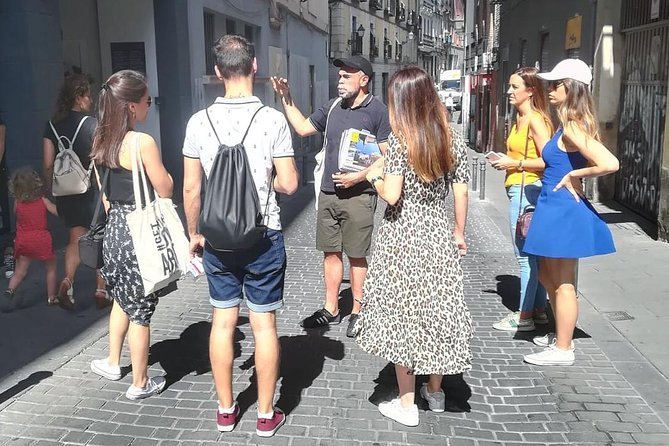
Lavapiés is easy to reduce to a few labels: old quarter, multicultural district, street-art area, or nightlife zone. This tour gives you a more useful way to read it. Emilio lives in the neighborhood, and his explanations join architecture to daily life, political change, and the ways Madrid has adapted old buildings for new uses.
That local connection matters. You are not only looking at a façade from the pavement. You are asking why a theater was built in a particular style, how an old housing structure worked, and what happens when a former industrial building becomes a community-run cultural space.
The route also has a pleasing range. One stop deals with the Spanish Inquisition, another with modern theater, another with a municipal building from 1930, and another with a major art museum designed by Jean Nouvel. You get a short course in Madrid’s built environment without spending the whole morning inside one museum.
The private format is another plus. Only your group takes part, so Emilio can adjust the pace and conversation. The published duration is about three hours, though one account describes a tour lasting three and a half hours. I would leave a little breathing room afterward rather than schedule a train, timed museum entry, or important lunch reservation immediately after the walk.
Other Madrid days people book alongside this one:
- Madrid: Tour Bernabéu Entry Ticket
★ 4.5 · 21,573 reviews - Madrid: Prado Museum Entry Ticket
★ 4.6 · 17,509 reviews - Madrid: Royal Palace Fast-Access Admission Ticket
★ 4.6 · 13,856 reviews
Starting at Plaza de Tirso de Molina
The tour begins at Plaza de Tirso de Molina, a useful place to understand the district before setting off. Emilio introduces the history of Lavapiés and Madrid here, giving the rest of the walk a frame.
The value of this opening is not visual drama alone. It helps you notice that Lavapiés is a meeting point between old central Madrid and a neighborhood still changing. You will spend time with the relationship between long-established residents and newer communities from different cultural backgrounds.
The stop lasts about 15 minutes. That is enough for orientation, but not enough for a full lecture on Madrid. If you prefer tours that get moving quickly, the timing should suit you. If you want extended photography or a long historical talk at each point, this route may feel brisk.
An Inquisition jail beneath a corrala
The short stop at the Carcel de la Inquisicion offers one of the route’s most unusual details. You see a former Inquisition prison located beneath a corrala, the traditional Madrid housing form built around a shared interior courtyard.
This pairing is what makes the stop memorable. A corrala can seem like a charming old residential structure, but the space beneath it also carries a darker past. Emilio’s architectural approach helps connect the building’s physical arrangement with the institutions and social conditions that shaped the neighborhood.
The visit is listed at about 10 minutes and admission is free. Do not expect a large museum or a long indoor exhibition. Think of it as a sharply chosen piece of evidence, a place that makes the surrounding streets feel less anonymous.
El Rastro on Sunday, vintage shops on other days
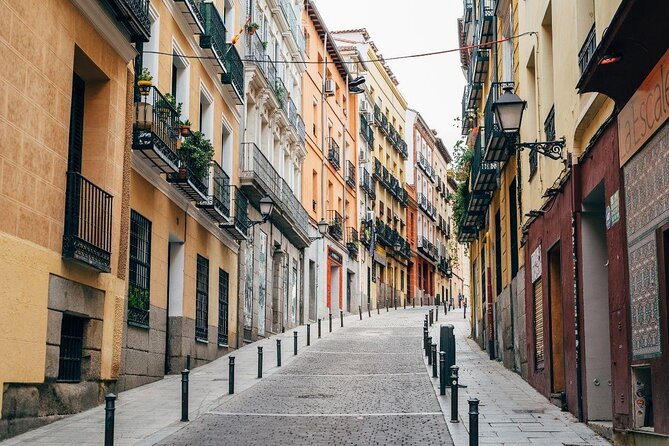
El Rastro is the route’s most obvious name, but the timing changes what you see. If you take the tour on Sunday, Emilio visits the street market. On other days, he takes you to vintage furniture shops instead.
That flexibility is practical. Sunday gives you the market atmosphere and the chance to see one of Madrid’s best-known shopping traditions. A weekday route may appeal more if you care about design, old furnishings, and the way shops occupy the district.
The listed stop takes about 15 minutes, so this is not a full shopping expedition. You will not have hours to inspect every stall or negotiate over furniture. Still, it gives you a local introduction and a chance to return later if something catches your eye.
Because El Rastro involves outdoor walking and a market setting, comfortable shoes matter here more than polished city footwear. The tour’s previous participants have been especially clear about that point, and I would take the advice seriously.
A different sort of afternoon around Madrid:
- Madrid: “Emociones” Live Flamenco Performance
★ 4.8 · 12,866 reviews - Madrid: Panoramic Route City Tour
★ 4.1 · 12,259 reviews - Madrid: Live Flamenco Show with Food and Drinks Options
★ 4.5 · 9,901 reviews - Avila & Segovia Tour with Tickets to Monuments from Madrid
★ 5.0 · 9,762 reviews
Teatro Pavón and the art-deco clock
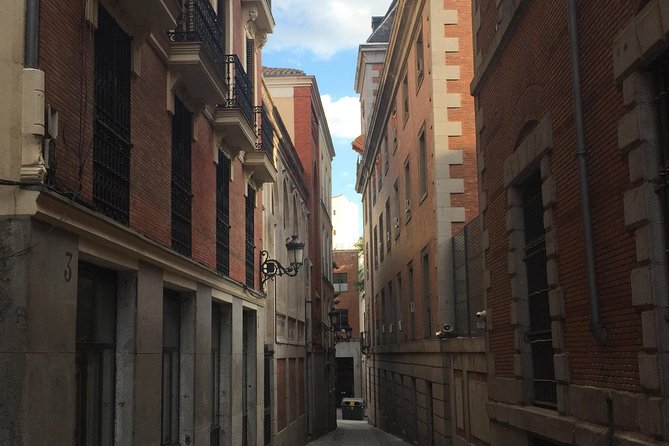
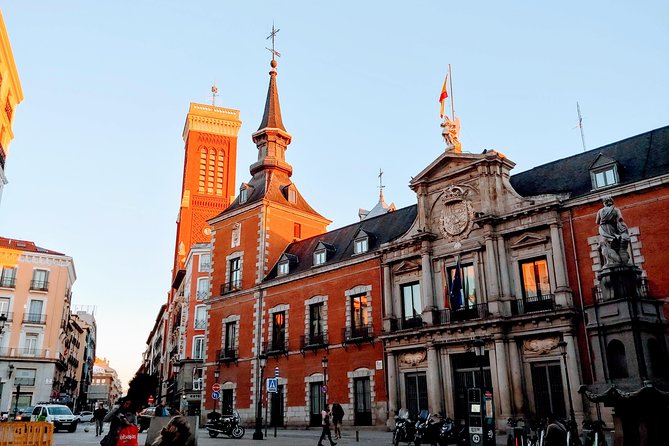
At El Pavón Teatro Kamikaze, the group pauses for about five minutes to study the façade and its Art Deco clock. You may also stop for coffee at the theater café during the walk, though that coffee is not included.
This is a small stop, but it shows how the tour works. Emilio does not need a full hour in every location to make a building useful. A clock, façade, theater history, and café can provide a quick lesson in how design shapes a public place.
The brief timing also keeps the route moving. If you enjoy architectural detail but dislike long indoor presentations, this rhythm should work well. If you want to enter and tour every theater, the stop will feel too short.
The Municipal Printing Press, a 1930 design surprise
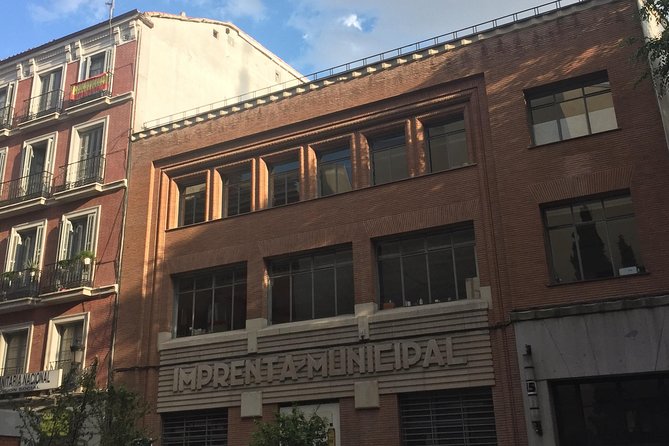
The Municipal Printing Press is one of the strongest stops for architecture fans. It is described as a little-seen example of Madrid’s rationalist architecture from 1930, and admission is included.
Rationalist buildings often reward close attention. Their appeal lies less in ornament and more in proportion, structure, function, and the logic of the design. With an architect leading, you can expect Emilio to explain what makes this building important rather than simply pointing out its age.
The inclusion of access makes the price easier to understand. Many walking tours stay outside, especially when discussing less famous buildings. Here, you have the chance to see the architecture at closer range, which gives the explanation more weight.
This is also the kind of place you might miss entirely on a standard Madrid route. It does not compete with the Royal Palace or Prado for instant name recognition, but it offers the pleasure of finding a piece of the city that rewards curiosity.
Plaza de Lavapiés and a neighborhood in transition
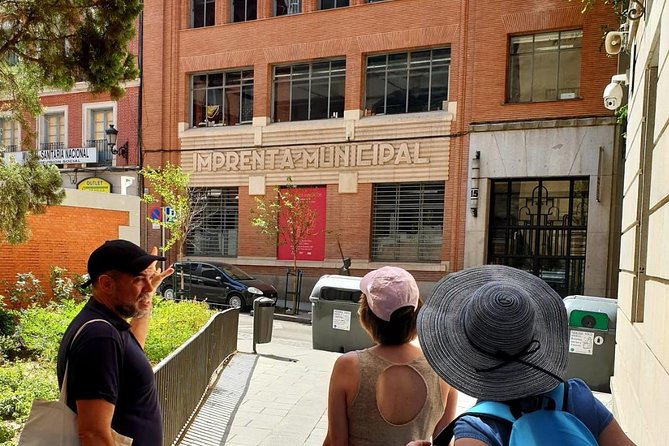
Plaza Lavapiés gives the district its name and functions as its social center. The stop is short, about five minutes, but the subject is large: people from different races and cultures living alongside long-established neighbors and newer residents.
Emilio’s own connection to Lavapiés adds useful perspective here. The district is not presented as a frozen historic zone. You get a look at a neighborhood where community life, immigration, property change, and tourism meet in a small central Madrid setting.
I would pay attention to the ordinary details at this stop: who uses the square, how the buildings meet the pavement, and how old and new businesses share the same streets. These observations help you understand why architecture is not only about famous architects. It is also about who can live, work, gather, and feel at home in a place.
Reina Sofía’s Jean Nouvel extension
The route then turns to the extension of Museo Nacional Centro de Arte Reina Sofia, designed by Jean Nouvel. The group visits the extension’s restaurant, library, and covered patio, and Emilio explains the proposals considered in the 1999 design competition.
This stop gives the tour a different scale. Earlier, you have been looking at neighborhood streets, older housing, and theater façades. At Reina Sofía, you consider a major museum project and the decisions behind a large contemporary addition.
The restaurant, library, and covered patio are useful choices because they let you experience the extension as a working public building rather than viewing it only from outside. The stop lasts about 10 minutes, so it is an introduction, not a full museum visit. If you want to see the art collections, plan a separate visit.
The competition background is particularly helpful. Contemporary buildings can seem detached from their surroundings when you first see them. Learning about the competing proposals gives you a way to think about why the final design looks and functions as it does.
Tapas and local advice at Mercado San Fernando
The official end point is Mercado de San Fernando on Calle de Embajadores. This is where the group pauses for tapas and something to drink while Emilio offers suggestions for the rest of your time in Madrid.
I like this ending because it turns the tour into a conversation. You can ask about restaurants, decorating shops, rooftop spots, or other neighborhoods, all subjects that Emilio has brought up during past walks. It is a useful moment to sort out what you have seen and decide what deserves a return visit.
Drinks are not included, and the same applies to food purchased during stops at markets, bars, or restaurants. That keeps the bill flexible, but remember to carry money for this part of the experience. You can choose what to order rather than paying for a fixed food package.
The stop is listed at about 15 minutes, though the social side may make you want to linger. The tour officially finishes here, so you can continue eating at the market or head elsewhere in Madrid after saying goodbye.
Tabacalera and Teatro Figaro
La Tabacalera de Lavapies adds another layer to the route. This abandoned industrial building now houses exhibitions and a neighbor-run area, with urban art on its walls. It is a strong example of how an old structure can gain a second life through community use.
There is an important date warning: Tabacalera is closed for works from July 25. Check the operating status when booking if this stop matters to you, because the experience of seeing the building may change.
The final listed stop is Teatro Figaro, built according to modern movement principles and described as the first theater in Spain built using those criteria. The visit is only about five minutes, so again, the point is focused interpretation rather than a full theater tour.
Together, these two stops make the route feel broader than a standard architecture walk. You see both formal design history and the less polished process of reuse, exhibitions, and neighborhood management.
What the $210.12 price includes
At $210.12 per person, this is not a budget walking tour. The cost makes the most sense for people who value a private guide, architectural interpretation, and access to buildings that are not central to the usual Madrid sightseeing circuit.
Access to all buildings on the route is included. That is a meaningful advantage, especially at the Municipal Printing Press and the Reina Sofía extension. The private format also means your group is not attached to a large crowd, and Emilio can respond to your interests.
Still, the price is high for about three hours, and drinks, tapas, coffee, and other refreshments are extra. Group discounts may improve the value if you are traveling with several people. For one or two people watching every euro, a regular public walking tour may be easier to justify.
I would book this for the quality of the explanation, not for the number of stops. Ten stops can sound packed, but many are brief. The payoff is the connection between them, with Emilio explaining why a jail, market, theater, museum extension, and industrial building belong in one story about Madrid.
Who should book this walk
This tour is a strong match for you if:
- You study or work in architecture, design, theater, urban planning, or art.
- You have already seen Madrid’s major monuments and want a more local route.
- You enjoy history tied to buildings and politics rather than a simple list of dates.
- You want a private English-language experience with room for questions.
- You like markets, cafés, neighborhood food, and practical local suggestions.
- You are comfortable walking for several hours and wearing sturdy shoes.
It may be less suitable if you want a slow food tour, a major museum visit, or a route focused only on famous sights. The tour is also weather dependent. If poor weather causes cancellation, you are offered another date or a full refund.
Confirmation arrives at booking unless you reserve within one day of the start, in which case it is sent as soon as possible and depends on availability. The experience is near public transportation, service animals are allowed, and most people can take part. Free cancellation is available up to 24 hours before the start time. A minimum number of participants is required, though the activity remains private to your group.
Should you book the Lavapiés Architour?
Book it if you want Madrid explained through its buildings and you are happy to pay for a private, specialist-led walk. Emilio’s strength is the link between architecture, politics, neighborhood life, and places you might otherwise walk past.
The best fit is a curious first-time visitor who has several days in Madrid, an architecture student, or someone returning to the city who wants a fresh angle. Bring good shoes, allow extra time around the final market stop, and check Tabacalera’s status if you travel from July 25 onward.
Skip it if $210.12 per person feels too steep for a short walk or if you mainly want grand monuments and museum collections. For the right reader, though, this is a thoughtful way to see Lavapiés as a living neighborhood rather than just another stop on a sightseeing map.
FAQ
Where does the Architour begin?
The tour begins at Plaza de Tirso de Molina in Madrid, at Pl. de Tirso de Molina, Centro, 28012 Madrid, Spain.
Where does the tour end?
It ends at Mercado de San Fernando, C. de Embajadores, 41, Centro, 28012 Madrid, Spain.
How long does the tour last?
The tour lasts approximately three hours. One available description of the experience gives a duration of three and a half hours, so it is sensible to keep some flexibility afterward.
Who leads the tour?
The tour is led by Emilio, an architect who lives in Lavapiés and guides the group through the neighborhood’s architecture, history, politics, and urban development.
Is the tour offered in English?
Yes. The experience is offered in English.
Is this a private tour?
Yes. Only your group participates in the activity.
Is admission to the buildings included?
Yes. Access to all buildings included in the route is included in the price.
Are drinks and tapas included?
No. Drinks at markets, bars, and restaurants are not included. The tour finishes at Mercado de San Fernando, where you can have tapas and something to drink at your own expense.
Can I cancel for a full refund?
Yes. You can cancel at least 24 hours before the experience start time for a full refund. Cancellations or changes made less than 24 hours in advance are not accepted for a refund.
Just added around Madrid
- Private Vacation Photography Session with Photographer in Madrid★ 5.0 · 3 reviews
- Arrival Private Transfer from MAD Airport to Madrid in a Minibus★ 5.0 · 3 reviews
- Segovia: 3-Hour Private Walking Tour★ 5.0 · 3 reviews
- Tour Segovia and La Granja de San Ildefonso from Madrid★ 5.0 · 3 reviews
- Madrid: Prado & Reina Sofia Museum Skip-the-Line Guided Tour★ 5.0 · 3 reviews
- Salamanca: Private Guided Customizable Walking Tour★ 5.0 · 3 reviews
- Total Reboot and Renew with top wellnes 3 hours couple experience★ 5.0 · 3 reviews
- Madrid: Prado Museum Private Tour★ 5.0 · 3 reviews