
Review · 4-DAY EXPERIENCES
From Madrid: Andalusia in 4 Days and 3 Nights with Tickets
Andalusia packs a lot into four days here: Seville’s Alcázar and Cathedral, a flamenco evening, white villages, Ronda, Carmona, and Córdoba’s remarkable Mosque-Cathedral. You travel between Madrid and Andalusia by high-speed train, while local excursions handle the longer road journeys.
I like the smart mix of guided sightseeing and free time. I also like the olive oil mill visit, which gives the trip a taste of daily Andalusian food culture rather than only grand monuments. The main drawback is the pace: long walking days, early starts, and several organized transfers leave little room for slow wandering.
In This Review
- Key points at a glance
- Why this four-day route works
- Day one: the train to Seville and flamenco after dark
- Day two: Seville’s Alcázar, Cathedral, and Giralda
- Day three: olive oil, Zahara de la Sierra, and Ronda
- Day four: Carmona before Córdoba
- The walking and pace you should expect
- Hotel, train, and group coordination
- What the $812 price really covers
- Who should book this Andalusia tour?
- FAQ
- Where does the tour begin?
- How do I receive the train tickets?
- Is transportation from my hotel to the train station included?
- Where do I stay in Seville?
- Can I upgrade the hotel?
- What monument tickets are included?
- Is the flamenco show included?
- Which languages are available for the guided tours?
- Is the tour suitable for wheelchair users?
- Should you book it?
Key points at a glance
- Madrid to Seville by high-speed train: Your four-day trip begins at Madrid Atocha Station and ends with a fast return from Córdoba.
- Three major Seville monuments included: The Royal Alcázar, Cathedral, and Giralda are visited with a guide and skip-the-line entry.
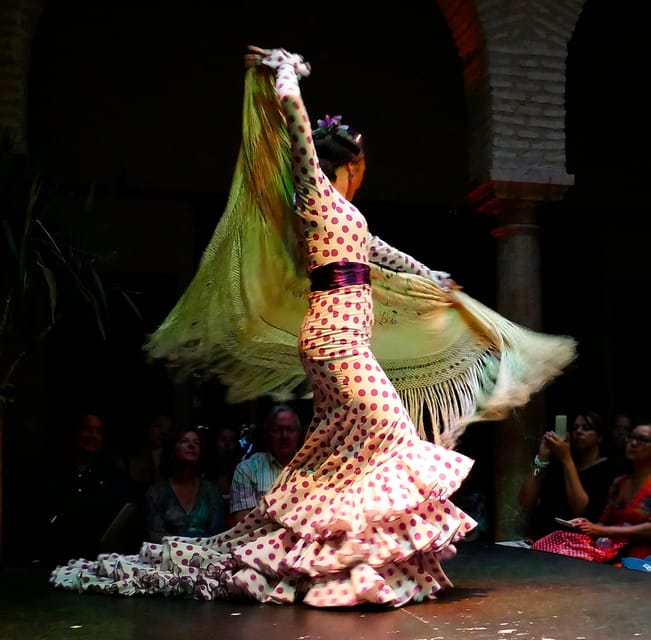
- A real flamenco evening: Your first night includes tickets for a flamenco performance in Seville.
- Ronda and Zahara de la Sierra: The third day pairs dramatic mountain views with a traditional white village and an olive oil tasting.
- Carmona and Córdoba in one day: Roman, Arab, Jewish, and Christian landmarks fill the final sightseeing day.
- Walking matters: Comfortable shoes and sunscreen are essential, and the tour is not suitable for wheelchair users.
Why this four-day route works
Andalusia is not a single-city destination. Seville, Córdoba, Ronda, and the hill towns each show a different side of the region, but they are spread across southern Spain. This tour solves the transport problem by putting you on the high-speed train from Madrid and using organized excursions for the outlying places.
At $812 per person, the cost is not low, but it covers three nights of bed-and-breakfast accommodation in a centrally located three-star hotel in Seville, return high-speed rail, the flamenco show, major monument tickets, and two full excursions. If you were arranging each part separately, you would also need to manage the rail tickets, hotel, local guides, and connections between Seville, Ronda, Carmona, and Córdoba.
The value depends on your travel style. I would consider it good value if you want a planned introduction to Andalusia and do not want to rent a car. It is less appealing if you prefer to linger in one city, choose your own restaurants, or spend hours inside each monument.
You need to arrive at Madrid Atocha Station by 7:30 in the morning. The train tickets are sent the day before, so check them carefully and allow time to find your platform. Transfers to and from the train stations are not included, and the listed supplement is €50, so budget for that extra cost.
A few more Madrid days to weigh up
- Cities of Andalusia 4-Day Tour from Madrid
★ 4.2 · 73 reviews - 4-Day Portugal Tour from Madrid: Lisbon and Fatima
★ 4.0 · 38 reviews - 4-Day Guided Tour Cordoba, Seville, Granada and Toledo from Madrid
★ 3.5 · 19 reviews
Day one: the train to Seville and flamenco after dark
The first day begins with the train from Madrid to Seville. That is a sensible start. You avoid a long road journey and arrive in one of Spain’s most rewarding cities with the afternoon free.
Your first period in Seville is independent. Use it to get your bearings, walk through the old center, or settle into the hotel before the evening show. The free time is important because the rest of the tour is guided and scheduled. You are not simply moved from one sight to the next all day.
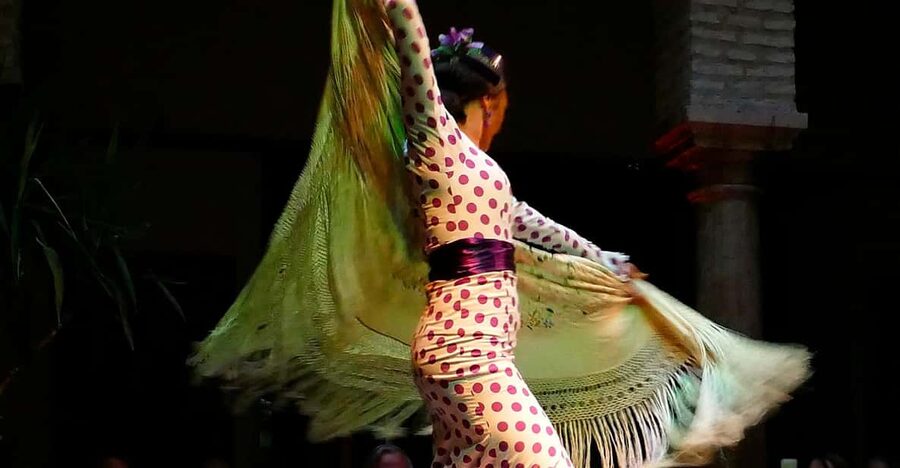
The flamenco performance gives the first night a strong local focus. Flamenco is not just a stage version of Spanish music. It combines singing, guitar, handclaps, and dance, with moods that can shift from restrained to fiercely emotional. The package includes the ticket, but food and drinks are not included, so plan dinner separately.
You will likely appreciate having the evening arranged after a travel morning, but the exact show schedule can affect your dinner plans. Ask for the start time when you receive the final details, then choose a meal around it rather than trying to fit in a major attraction.
Day two: Seville’s Alcázar, Cathedral, and Giralda
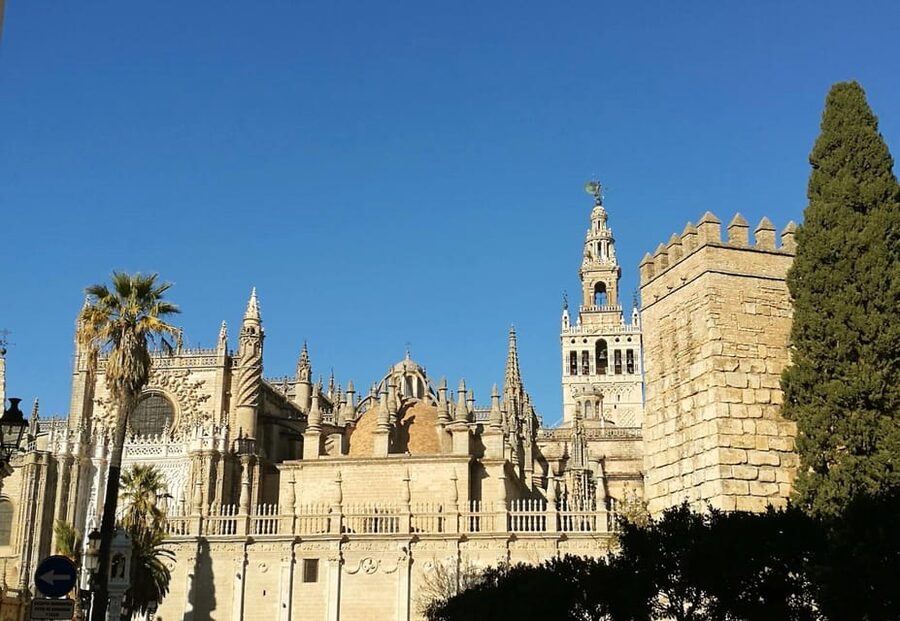
The second morning focuses on Seville’s three UNESCO World Heritage Sites: the Royal Alcázar, the Cathedral, and the Giralda. The guided visit lasts more than three hours, so expect a substantial walking tour rather than a quick photo stop.
The Royal Alcázar is the most visually varied of the three. Its palace rooms, tiled surfaces, courtyards, and gardens reflect the long meeting of Islamic and Christian traditions in Seville. A guide helps you connect the decorative details with the political changes that shaped the building.
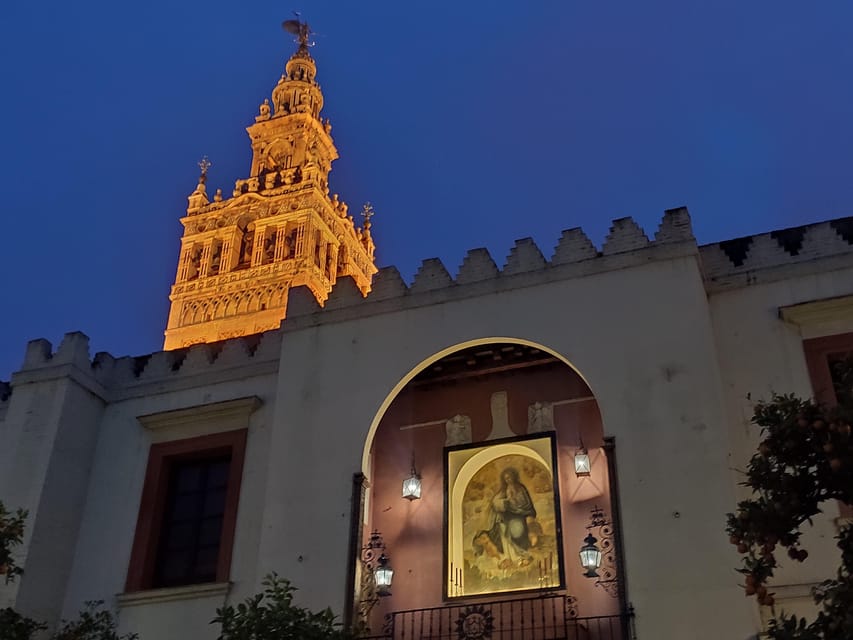
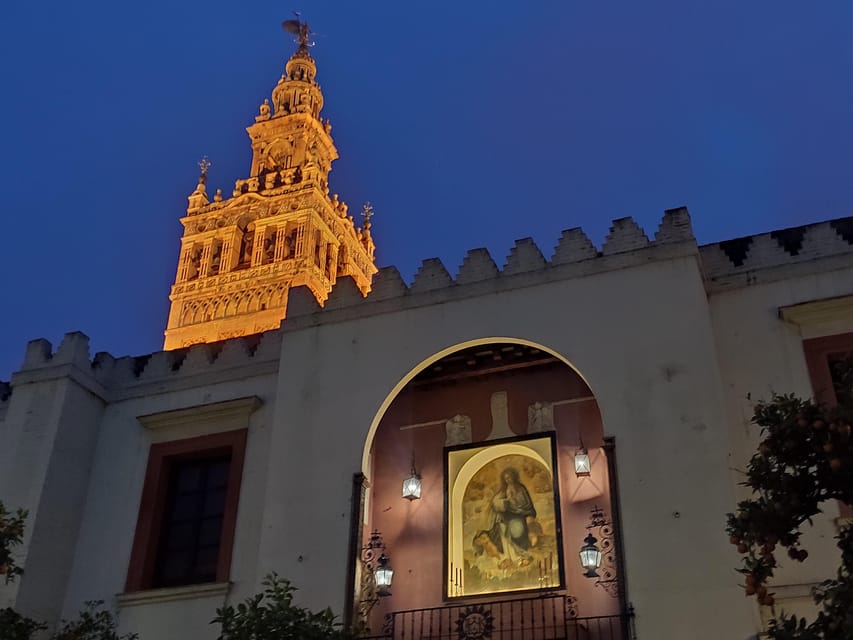
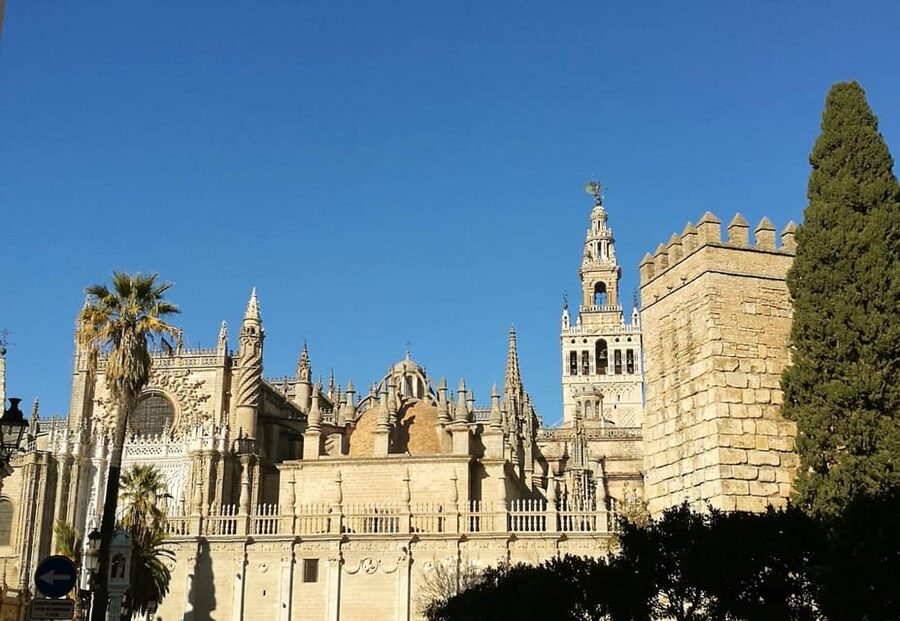
The Cathedral is a huge Gothic church built on the site of the city’s former mosque. The Giralda, once the mosque’s minaret, was adapted as a Christian bell tower. The pairing matters because you can see how Seville’s religious and civic identity changed over time instead of viewing each monument as an isolated building.
Tickets are included, with a separate entrance intended to avoid the main queues. That can save valuable time, especially in a city where the popular monuments draw steady crowds. Still, skip-the-line access does not mean you can rush through the visit. The tour lasts over three hours and involves plenty of standing and walking.
The afternoon is free, which is one of the strongest parts of the schedule. You might use it to revisit a favorite corner of the Alcázar area, walk through the Jewish quarter, sit in a plaza, or choose a longer lunch. You are also free to follow the guide’s suggestions for Seville. One useful detail from the trip experience is that the guides have offered practical city recommendations, so do not hesitate to ask for help choosing how to use your time.
Day three: olive oil, Zahara de la Sierra, and Ronda
The third day leaves Seville for the Cadiz white villages and Ronda. This is the most scenic part of the itinerary, but also one of the longest and most road-heavy days.
The first stop is an olive oil mill. You learn how olives are processed and how oil is made in the traditional way, followed by a tasting of extra virgin olive oil from the area. This stop adds context to a product that appears on nearly every Andalusian table. It also gives you a direct connection to local food production, not just a chance to look at old buildings.
Do not treat the tasting as a full meal. Food is not included in the tour, so carry water and plan for the day’s meals around the excursion schedule. Sunscreen is also a good idea, particularly when you are moving between open viewpoints and town streets.
Zahara de la Sierra is the white village stop. Its position in the mountains is the main attraction, and the setting gives you the classic Andalusian scene of whitewashed buildings against steep country. The information provided does not set out the exact amount of free time there, so expect the guide to manage the stop around the wider route.
The drive to Ronda passes through Alcornocales Natural Park, known here for its cork oak trees and the cork industry. That detail makes the journey more than a transfer. Your guide explains the trees and the work connected with cork before the views open toward the Ronda mountain range.
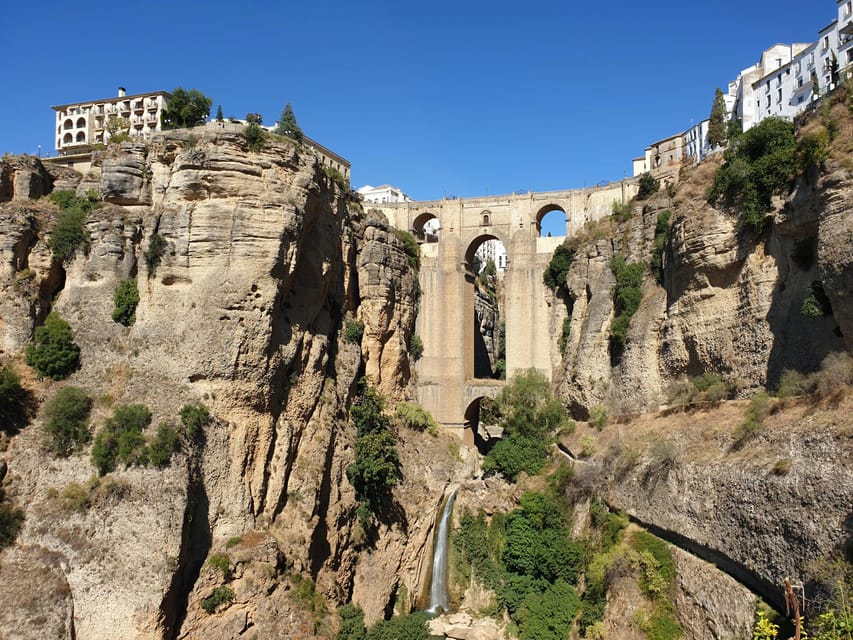
Ronda itself is the largest town on this part of the route. Before arrival, the guide introduces key sights including the Plaza de Toros, Alameda, Paseo de los Toreros, the Tajo gorge, and the Puente Nuevo. The Puente Nuevo is Ronda’s famous bridge, spanning the deep gorge and offering the view most associated with the town.
Once in Ronda, you explore independently with advice from the guide. I like this arrangement because Ronda rewards personal wandering. You can set your own pace rather than following a group through every street. The tradeoff is that you need to keep track of the meeting time and return point.
The day ends back in Seville with free time for dinner. After the olive oil mill, white village, natural park, and Ronda, you may be ready for a quiet meal rather than another planned activity.
A different sort of afternoon around Madrid:
- Madrid: Tour Bernabéu Entry Ticket
★ 4.5 · 21,573 reviews - Madrid: Prado Museum Entry Ticket
★ 4.6 · 17,509 reviews - Madrid: Royal Palace Fast-Access Admission Ticket
★ 4.6 · 13,856 reviews - Madrid: “Emociones” Live Flamenco Performance
★ 4.8 · 12,866 reviews
Day four: Carmona before Córdoba
You leave Seville with your luggage at about 9 a.m. for Carmona. This timing makes the final day efficient, though you should pack carefully because you will be sightseeing with your bags before reaching the return train.
Carmona sits on a hill and is described as one of Spain’s oldest towns. Roman, Arab, and Christian influences appear in its monuments, including the Alcázares. It is a useful counterpoint to Seville because it offers a smaller town setting and a layered past without requiring a separate overnight stay.
From Carmona, the group continues to Córdoba. The route begins at the Roman Bridge over the Guadalquivir. After crossing the river, you reach the Arc de Triomphe, the gateway into the medieval city.
The walking tour continues through Córdoba’s Jewish quarter, with its flower-filled courtyards and narrow streets. You also pass through the San Basilio district and by the Royal Stables before reaching one of the few surviving synagogues on the peninsula. These stops show Córdoba as a city shaped by several religious communities, though the day gives you only a short introduction to each area.
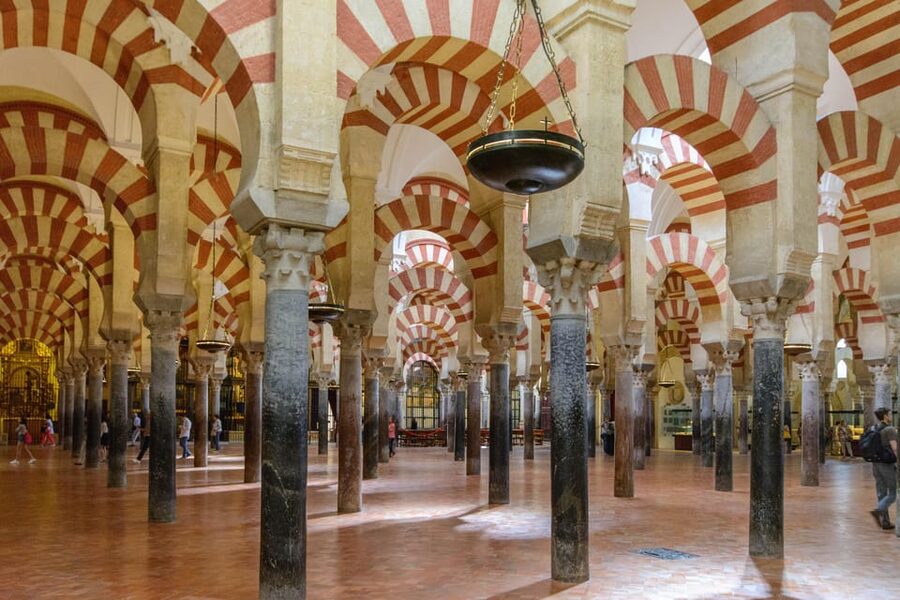
The Mosque-Cathedral is the centerpiece. Its interior is known for rows of arches and columns from the former mosque, combined with the Christian cathedral inserted into the building. The result is visually unusual and historically complicated, and a guided visit helps you understand why this monument is one of Andalusia’s defining sights.
After the guided visit, you have free time before going to the train station. The return train to Madrid takes less than two hours, with arrival planned for about 8 p.m. It is a full ending to the tour, not a leisurely final afternoon, so keep your expectations realistic.
The walking and pace you should expect
The itinerary covers several large monuments and historic centers, often with time on foot between stops. One day includes more than three hours of guided sightseeing in Seville, while the Ronda and Córdoba days add town walks, monument visits, and transport.
Bring comfortable shoes. This is not a tour for travelers who want minimal walking or long unplanned breaks. Sunscreen is specifically recommended, and water will be useful on the outdoor portions of the route.
The tour is not suitable for wheelchair users. The combination of historic streets, monument access, stairs, and organized transfers may create difficulties, and no adapted arrangements are described.
The guides speak Spanish and English. The people leading the visits have been described as helpful and well informed, especially when explaining the sights and giving suggestions for Seville. Coordination is the area that deserves the most attention. Before departure, confirm exactly where and when you meet the group each day.
Hotel, train, and group coordination
Your three nights are in a centrally located three-star hotel in Seville, with bed and breakfast in a double room. The central location should make free time easier, but the exact hotel is not named in the supplied details, so do not choose your plans around a specific property or neighborhood feature.
You can pay €100 extra for a four-star hotel. A single supplement is also €100. Children up to age 12 receive a €60 discount when using an extra bed.
The transport plan is straightforward on paper: Madrid to Seville at the start, road excursions from Seville, then Córdoba to Madrid at the end. The unusual detail is that the final Córdoba visit connects to the return train, so meeting instructions matter. One person who arrived separately from Madrid to Córdoba was initially left with a suitcase while the group tour had already begun. The guide eventually corrected the mix-up and arranged help with the luggage, but I would not rely on last-minute fixes.
Follow the main route as described and confirm your meeting point in writing if you plan to arrive independently at any stage. Keep your luggage clearly identifiable and easy to move.
What the $812 price really covers
The $812 price includes the costly framework of the trip: high-speed rail from Madrid and back, three hotel nights, monument admission, flamenco tickets, and the two organized day excursions. That makes the price easier to justify for a first Andalusia visit, particularly if you are traveling alone or do not want to handle several separate bookings.
You still pay for every meal and drink. You also need to account for the €50 train-station transfer supplement, plus possible hotel and single-room upgrades. The tour price is therefore not an all-in budget.
The strongest value comes from the included entries to the Royal Alcázar, Seville Cathedral, Giralda, and Mosque-Cathedral. These are the sites where queues and ticket planning can consume time. The weaker value is for independent travelers who are comfortable buying rail tickets, booking their own hotel, and arranging a rental car or regional excursions.
Free cancellation is available up to 24 hours before departure for a full refund, and you can reserve now and pay later. Check the starting time when selecting your date, since the activity lasts four days but the daily schedule varies.
Who should book this Andalusia tour?
I would recommend it to you if you have four days, want to see several major Andalusian sights, and prefer a guide to handle the regional transport. It is especially useful as a broad first look at Seville, Ronda, the white villages, Carmona, and Córdoba.
It also suits you if architectural history matters. The Alcázar, Cathedral, Giralda, synagogue, Roman Bridge, and Mosque-Cathedral create a strong sequence of sites from Roman, Islamic, Jewish, and Christian Spain.
I would hesitate if you dislike early starts, guided visits, or full days on your feet. You may also prefer a slower independent trip if you want several evenings in Seville, more time in Ronda, or the freedom to shop in Córdoba’s courtyards and small stores. The schedule can leave little time for browsing, so mention any shopping plans to your guide before the walking tour begins.
FAQ
Where does the tour begin?
You must be at Madrid Atocha train station at 7:30 in the morning to catch the train to Seville.
How do I receive the train tickets?
The tickets are sent to you the day before the tour.
Is transportation from my hotel to the train station included?
No. Transfers to and from the train station are not included. A €50 supplement is listed for this service.
Where do I stay in Seville?
You receive three nights of bed-and-breakfast accommodation in a centrally located three-star hotel, in a double room.
Can I upgrade the hotel?
Yes. A four-star hotel supplement of €100 is available.
What monument tickets are included?
The package includes tickets for the Royal Alcázar, Seville Cathedral, the Giralda, and Córdoba’s Mosque-Cathedral. The entries are listed as skip-the-line tickets through a separate entrance.
Is the flamenco show included?
Yes. A ticket for the flamenco show is included. Food and drinks are not included.
Which languages are available for the guided tours?
The live guides speak Spanish and English.
Is the tour suitable for wheelchair users?
No. The activity is listed as not suitable for wheelchair users.
Should you book it?
Book this tour if you want a tightly planned introduction to Andalusia with the major rail tickets, hotel, monument entries, and regional day trips arranged for you. The best parts are the three-monument Seville visit, the olive oil mill and white village route, and the chance to see Córdoba without arranging another overnight stay.
Skip it if you want an easy pace. Four days is enough to sample Andalusia, not enough to experience every city slowly. At $812, the package earns its price through convenience and coverage, but you should add meals, station transfers, and possible supplements before deciding. Confirm the meeting details, pack light, and bring good shoes.
Just added around Madrid
- Private Vacation Photography Session with Photographer in Madrid★ 5.0 · 3 reviews
- Arrival Private Transfer from MAD Airport to Madrid in a Minibus★ 5.0 · 3 reviews
- Segovia: 3-Hour Private Walking Tour★ 5.0 · 3 reviews
- Tour Segovia and La Granja de San Ildefonso from Madrid★ 5.0 · 3 reviews
- Madrid: Prado & Reina Sofia Museum Skip-the-Line Guided Tour★ 5.0 · 3 reviews
- Salamanca: Private Guided Customizable Walking Tour★ 5.0 · 3 reviews
- Total Reboot and Renew with top wellnes 3 hours couple experience★ 5.0 · 3 reviews
- Madrid: Prado Museum Private Tour★ 5.0 · 3 reviews
4-Day Experiences, compared.
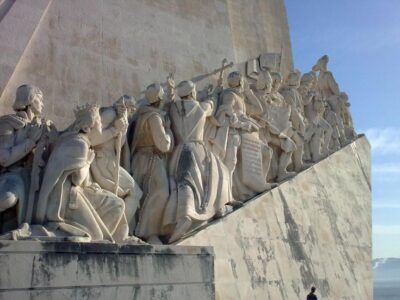
4-Day Portugal Tour from Madrid: Lisbon and Fatima
Read our review →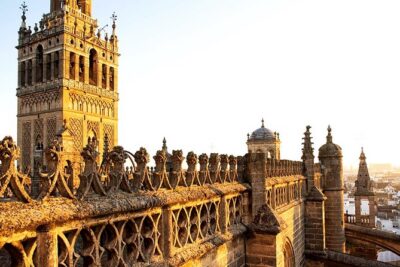
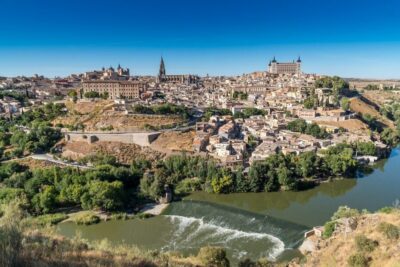
4-Day Guided Tour Cordoba, Seville, Granada and Toledo from Madrid
Read our review →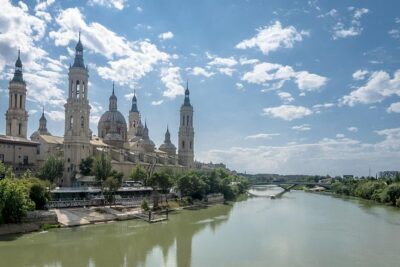
4 day Portugal & Fatima escorted tour from Madrid
Read our review →Browse the lists this tour appears in