
Review · CUENCA TOURS
Guided tour: Cuenca + Cathedral
Cuenca’s best feature is its dramatic setting, where medieval streets cling to a high rock between the Júcar and Huécar gorges. This three-hour walk connects the city’s fortress remains, old mansions, Hanging Houses, and Cathedral, so you get the main story of Cuenca without spending half your day working out the route.
I like the small price of $17.82 and the way the tour saves the Cathedral for the finish, when its stained glass and chapels make a strong final stop. I also like the range of places covered, from the Islamic fortress to the old skyscrapers and San Pablo bridge. The main consideration is that the route includes steep streets, viewpoints, and historic areas where footing may be uneven, while a group can include up to 51 people.
In This Review
- Key details of the Cuenca walk
- Why this three-hour route makes sense
- Starting at Plaza Mayor and the Cathedral
- Cuenca’s Islamic fortress and the Júcar gorge
- Calle del Carmen and Alfonso VIII’s stately homes
- The oldest skyscrapers and Hanging Houses
- The Spanish Abstract Art Museum
- Entering the Cathedral of Cuenca
- The cloister view toward the Huécar gorge
- Price, group size, and physical demands
- Who should book this Cuenca experience?
- Should you book the guided tour of Cuenca?
- FAQ
- How much does the Cuenca and Cathedral tour cost?
- How long does the guided tour last?
- Where does the tour start?
- Where does the tour finish?
- Is Cathedral admission included?
- Which places are included in the route?
- How large can the group be?
- Can I cancel for a full refund?
Key details of the Cuenca walk
- The route begins below the Cathedral, at Mirando pa Cuenca on Calle San Pedro, then climbs through the old city.
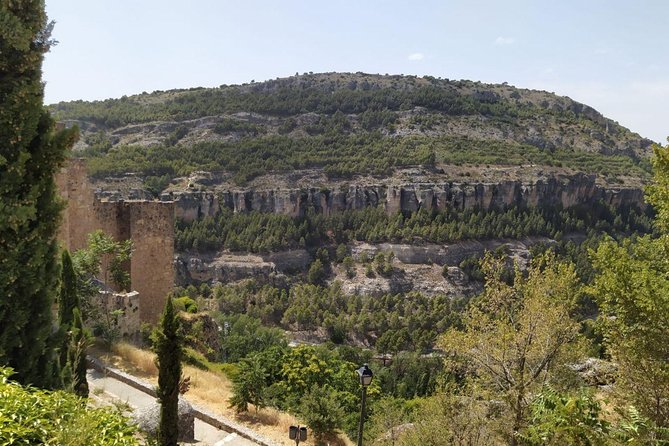
- The Islamic fortress area adds depth beyond the usual Hanging Houses photo stop, with remnants of the palace of the Marquises of Cañete, Torremangana, and a view toward the Júcar gorge.
- The old skyscrapers of Cuenca show how the city adapted its buildings to a narrow ridge between two gorges.
- The Spanish Abstract Art Museum is part of the route, with a permanent collection founded by Fernando Zóbel.
- The Cathedral visit lasts about one hour, including chapels, the main altar, stained glass, and cloister views toward the Huécar gorge.
- Free cancellation is available up to 24 hours before departure, but poor weather or too few bookings can lead to a change of date or a refund.
Why this three-hour route makes sense
Cuenca is easy to underestimate. On a map, the old town looks compact. On foot, it is a sequence of climbs, bends, balconies, walls, and sudden drops. A guide helps you connect these pieces rather than treating each sight as a separate photo opportunity.
The route also moves in a sensible order. You start near the Cathedral and Plaza Mayor, pass through the fortified upper town, follow the old streets and gorge viewpoints, and finish inside the Cathedral. That progression gives the walk a clear shape: defense first, daily life and architecture next, art and worship at the end.
The listed duration is approximately three hours. That is long enough for a useful introduction, but not so long that the tour takes over your day in Cuenca. You will still have time afterward to return to a favorite viewpoint, visit more of the museum, or explore independently.
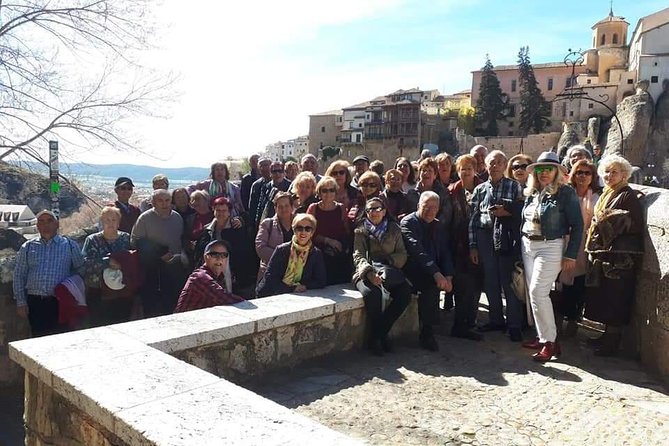
The tour uses a mobile ticket, which keeps the booking simple. Confirmation arrives at booking time. The maximum group size is 51, so you should not assume an intimate, private walk. A group of that size can make it harder to hear in narrow lanes or inside busy spaces, though the relatively low price reflects the shared format.
More Cuenca trips:
- Madrid: Cuenca Day Tour with or without Enchanted City
★ 4.8 · 398 reviews - Tour from Madrid to Cuenca and the Enchanted City
★ 4.5 · 191 reviews - Cuenca: Medieval Old Town
★ 4.7 · 152 reviews
Starting at Plaza Mayor and the Cathedral
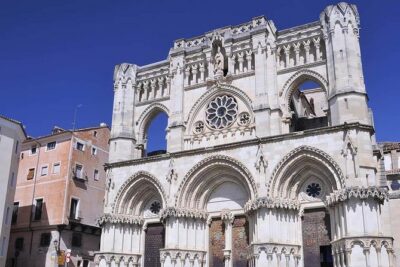
The walk begins at Mirando pa Cuenca, a gift shop at Calle San Pedro, 2. From there, you head toward the colorful Plaza Mayor at the foot of the Cathedral of Santa María and San Julián.
Plaza Mayor is a good place to begin because it quickly shows Cuenca’s unusual character. The square gives you a broad view of the Cathedral facade, nearby old buildings, and the tight urban fabric of the upper town. The planned stop here lasts about 15 minutes.
The Cathedral is not simply a building you pass on the way to something else. It sets up the story of Cuenca as a city shaped by faith, defense, and its difficult position on a rocky ridge. You will return inside later, when the guide can spend more time on the structure and decoration.
You may want to arrive a little early. The meeting point is on Calle San Pedro, and the tour ends elsewhere, so checking the start and finish points before setting out will help you avoid confusion.
Cuenca’s Islamic fortress and the Júcar gorge
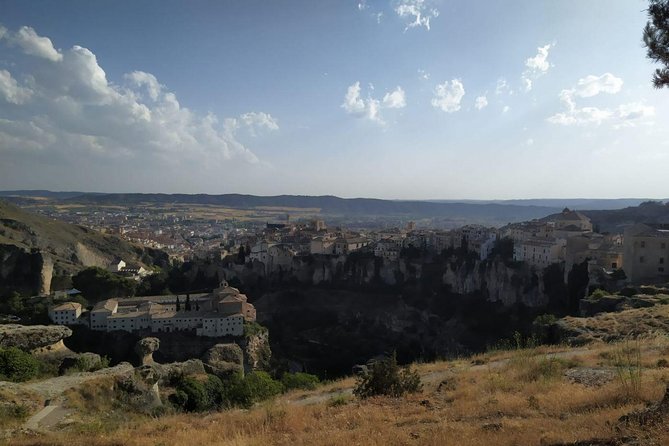
From the square, the route heads toward the remains of the Islamic fortress. This section gives Cuenca a useful layer of context. Before the later Christian buildings and noble homes, the town was a fortified settlement placed for protection and control.
The route includes the remains of the palace of the Marquises of Cañete and the Torremangana. You will also hear about the synagogue and reach a balcony facing the Júcar gorge. These details make the fortress area more than a quick stop at old stones. They show how military power, religion, and private status shared the same compact hilltop.
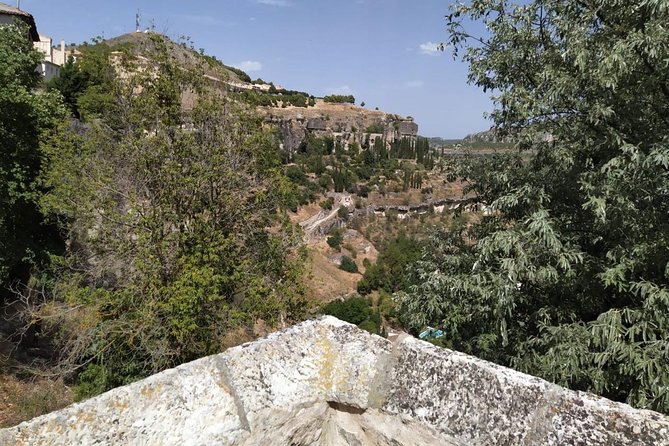
The view is one of the tour’s stronger moments. Cuenca’s gorges are not distant scenery. They press right up against the town, helping explain why the streets twist and why buildings seem to hang over empty space. The setting also explains the city’s defensive strength and its architectural oddities.
This is a place where comfortable shoes matter. The route uses historic streets rather than a flat promenade. If you prefer easy walking, ask yourself honestly how you feel about slopes and uneven surfaces before booking.
Calle del Carmen and Alfonso VIII’s stately homes
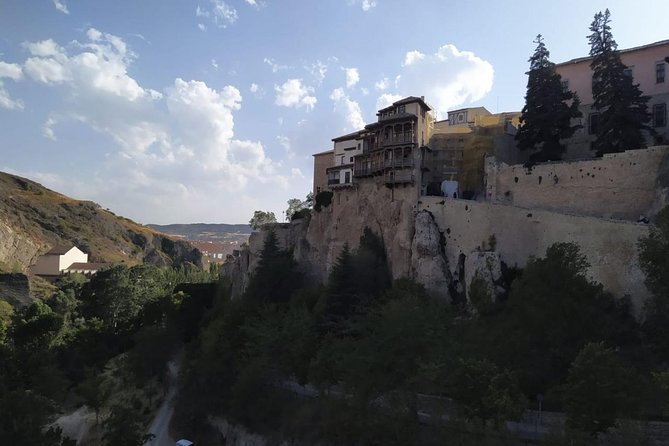
The walk then follows the medieval walls around Calle del Carmen and continues along Calle Alfonso VIII. This part changes the mood. The fortress gives way to grander homes and the details of a city shaped by wealthy families and civic officials.
The old town is not presented as a single frozen monument. You see how walls, residences, tunnels, and public buildings fit together. The tunnels of Alfonso VIII and the Casa del Corregidor add interest because they connect Cuenca’s street-level appearance with the spaces and authority behind it.
The tunnels are especially useful for understanding the old city as a working place, not just a pretty one. The tour gives you a guide’s explanation of what you are seeing, which is helpful in an area where a doorway or wall can look ordinary without context.
The narrow streets can also be the least comfortable part of a large group. Stay close enough to hear the guide, and expect pauses rather than a constant, fast march. The value here comes from the explanation, not from rushing through a checklist of buildings.
A few more Cuenca days to weigh up
- Guided Walking Tour of Cuenca
★ 4.5 · 52 reviews - Madrid: Royal Palace Expert Guided Tour with Skip-the-Line
★ 4.7 · 6,986 reviews - From Madrid: Guided Day Trip to Toledo by Bus
★ 4.1 · 5,280 reviews - Madrid: Toledo & Segovia Full Day Guided Tour with Alcázar
★ 4.6 · 4,394 reviews
The oldest skyscrapers and Hanging Houses
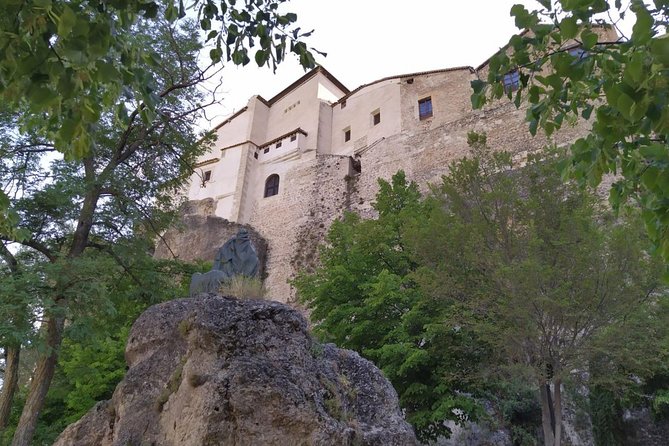
One of Cuenca’s most memorable architectural ideas comes next: buildings that adapt to the steep ridge above the Huécar gorge. From the rear, some structures appear modest. From the gorge side, they rise dramatically, creating the old skyscrapers for which Cuenca is known.
The phrase sounds modern, but the idea is simple. Builders used the rock and the slope, extending structures upward and outward where the terrain allowed. You get a direct look at how a medieval city made room for people when flat ground was scarce.
The Casas Colgadas, or Hanging Houses, are the city’s emblem. The tour allows about 20 minutes here, with free admission listed for the stop. Their wooden balconies project over the Huécar gorge and make the relationship between architecture and terrain hard to miss.
This is likely to be one of the most photographed parts of the walk. The guide adds value by explaining the popular architecture rather than leaving you with only the standard postcard view. Still, the stop is fairly short, so do not expect a long architectural lecture or a detailed visit to every interior.
The Spanish Abstract Art Museum
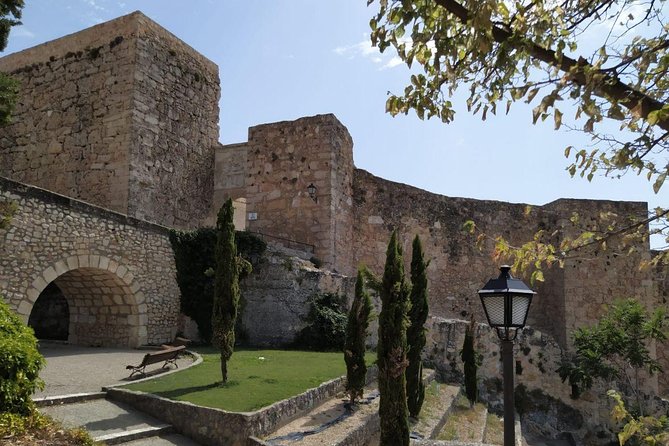
The route includes the Museo de Arte Abstracto Español, founded by the painter Fernando Zóbel. The permanent collection introduces the characteristics of Spanish abstract art and gives the walk a welcome change of pace after so many medieval buildings and gorge views.
Admission is listed as free, and the planned visit lasts about 25 minutes. That makes it a manageable introduction rather than an all-afternoon museum session. If modern art is not normally your first choice, the guide’s explanation can help you see why the collection belongs in Cuenca’s old houses and not in a separate modern district.
The museum also creates a useful contrast. Cuenca is often sold through stone walls, churches, and dramatic balconies, but its cultural identity includes modern Spanish art too. The collection founded by Zóbel helps connect the old city with a later generation of artists.
Because the museum stop is short, you will probably get an overview of the permanent collection rather than a slow look at every work. That is a fair trade on a three-hour city walk. If the art grabs you, you may want to return later with more time.
Entering the Cathedral of Cuenca
The Cathedral is the main included admission and the longest stop, at about one hour. It is described as a Gothic-style laboratory in Spain, a phrase that points to its changing forms and later additions rather than a perfectly uniform building.
Inside, the tour focuses on the main altar, chapels, and other rooms in the temple. This is where guide quality matters most. A church can become a blur of side chapels and religious objects unless someone helps you understand what deserves your attention.
The stained glass is a major reason to pay attention. The central nave includes windows decorated by contemporary painters such as Gustavo Torner and Gerardo Rueda. Their work gives the interior a distinctly modern note, so the Cathedral is not only about medieval stone and old devotional art.
Guide Pablo Huertas is specifically named in the available feedback, with praise for punctuality and an engaging explanation of the Cathedral’s chapels and stained glass. If he leads your departure, you can expect a guide who has made those details a clear focus. Guides can change, so treat his name as useful information, not a guarantee.
The Cathedral visit is also a practical reason to choose this tour over a simple walking route. You get admission included and a structured explanation of the interior. At $17.82 per person, that makes the price look strong, especially for anyone who would otherwise pay separately for a guided old-town walk and Cathedral entry.
The cloister view toward the Huécar gorge
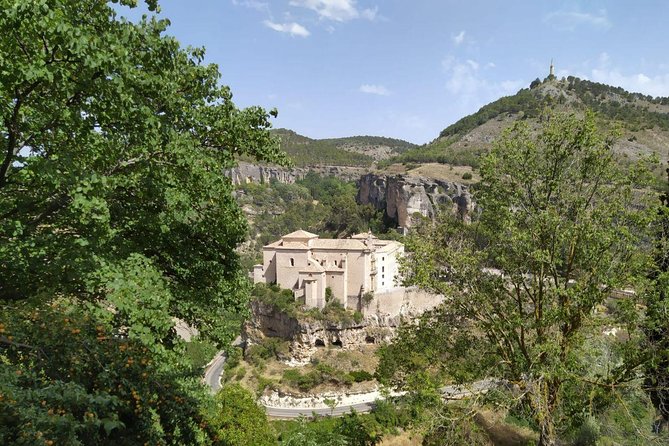
The tour finishes on a high note at the Cathedral’s cloister viewpoint. From here, the view toward the Huécar gorge puts much of the earlier walking into perspective.
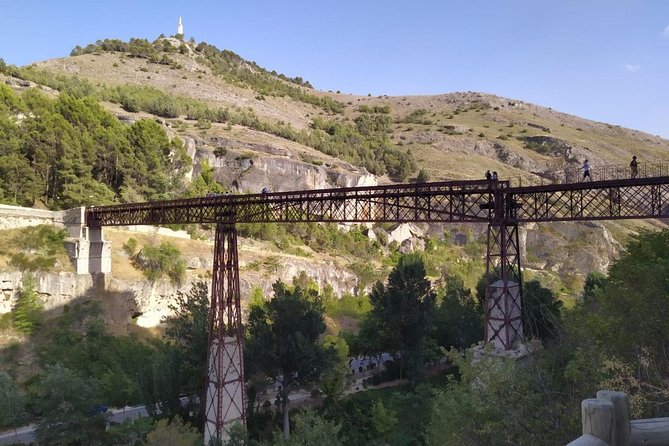
You have already seen the Hanging Houses and the steep rear faces of the old buildings. The cloister view helps you understand their relationship to the gorge, the ridge, and the bridge at San Pablo. It is a useful final image because it brings architecture and setting together in one place.
The San Pablo bridge area is another key viewpoint along the route. From the balconies near the bridge, you can feel how sharply the fortification and town walls drop toward the gorge. The route does not treat Cuenca as a collection of isolated monuments. It keeps returning to the way the city fits its difficult site.
The endpoint is on Calle Canónigos, near the Cathedral area. That is convenient if you want to continue exploring the old town after the tour, though it is not the same place where you started.
Price, group size, and physical demands
At $17.82 per person, this is priced as an accessible shared introduction rather than a specialized private tour. The Cathedral admission is included, and the route covers several major sights in roughly three hours. For a first look at Cuenca, I consider that good value.
The value is strongest if you want interpretation. If you only want photographs of the Hanging Houses, you can see those without paying for a tour. The fee earns its keep through the connections between the fortress, old homes, museum, Cathedral, and gorges.
The group limit of 51 is worth noting. A full group may feel less personal, and you may need to position yourself near the guide. In exchange, the price stays low. If you want long questions, a flexible pace, or a quiet museum visit, a smaller private option may suit you better, but that is not what this experience is offering.
Most people can participate, and service animals are allowed. The tour is near public transportation. The route’s real physical issue is the old town itself, with slopes, stairs or uneven sections, and viewpoints close to steep drops. The supplied information does not promise a step-free route, so ask the provider directly if you need specific mobility arrangements.
The activity requires good weather and a minimum number of bookings. If weather cancels the walk or the minimum is not met, you are offered another date or experience, or a full refund. You can cancel for a full refund up to 24 hours before the start time. Changes or cancellations inside that window are not accepted.
Who should book this Cuenca experience?
I would choose this tour for a first visit, especially if you have only one day in Cuenca and want the city’s main ideas explained in one sweep. It suits people who care about architecture, urban history, religious art, and views, not just one famous landmark.
It is also a good fit if you like a clear route and do not want to plan every turn through the old town. The guide leads you from the fortress to the gorge, through the old homes and museum, and into the Cathedral, with the finish near places you may want to explore afterward.
Families and mixed-interest groups may find the combination useful. The gorges and Hanging Houses provide visual drama, the museum adds modern art, and the Cathedral gives the tour a strong indoor stop. Most participants can join, but the walking conditions deserve attention.
I would hesitate only if you dislike group tours, need a slow pace, or want a long museum visit. The maximum group size is large, and three hours requires the guide to keep moving. You will see a lot, but you will not study every stop in great depth.
Should you book the guided tour of Cuenca?
Book it if you want an affordable, well-shaped introduction to Cuenca with Cathedral entry included. The combination of fortress remains, gorge balconies, Hanging Houses, modern art, and stained glass gives you far more than a basic old-town stroll.
The strongest part is the Cathedral, where the chapels and contemporary windows reward explanation. The most memorable outdoor moments come from the old skyscrapers, the Hanging Houses, and the views toward the Júcar and Huécar gorges.
At $17.82, the tour is easy to justify for a first visit. Just arrive ready for hills, keep near the guide in a potentially large group, and leave extra time afterward if one of the stops catches your interest.
FAQ
How much does the Cuenca and Cathedral tour cost?
The tour costs $17.82 per person.
How long does the guided tour last?
The experience lasts approximately three hours.
Where does the tour start?
It starts at Mirando pa Cuenca, Artículos de regalo, Calle San Pedro, 2, 16001 Cuenca, Spain.
Where does the tour finish?
The tour ends on Calle Canónigos, 16001 Cuenca, Spain.
Is Cathedral admission included?
Yes. Admission to the Cathedral of Cuenca is included.
Which places are included in the route?
The route includes the Casas Colgadas, Spanish Abstract Art Museum, Cathedral of Cuenca, Plaza Mayor, Islamic fortress area, and Cuenca’s oldest skyscrapers. It also includes views connected with the Júcar and Huécar gorges.
How large can the group be?
The activity has a maximum group size of 51 people.
Can I cancel for a full refund?
Yes. You can cancel at least 24 hours before the experience starts for a full refund. Poor weather or too few bookings can also lead to a different date or a full refund.
Just added around Cuenca
- From Madrid: Private Tour to Toledo and Cuenca★ 5.0 · 5 reviews
- Excursion to the Enchanted City from Cuenca★ 5.0 · 5 reviews
- Enchanted city express★ 5.0 · 5 reviews
- Cuenca: Private Walking Tour of Medieval Cuenca★ 3.9 · 8 reviews
- Day Trip to Cuenca from Madrid with Cathedral Visit★ 4.5 · 9 reviews
- Jumping in Zipline with Unique Views of Cuenca★ 5.0 · 9 reviews
- Cuenca: Historic Center and Cathedral of Cuenca Walking Tour★ 4.8 · 10 reviews
- Legends Tour in Cuenca★ 5.0 · 14 reviews
Cuenca Tours, compared.
Tour from Madrid to Cuenca and the Enchanted City
Read our review →
Cuenca and the Enchanted City Full Day Tour from Madrid
Read our review →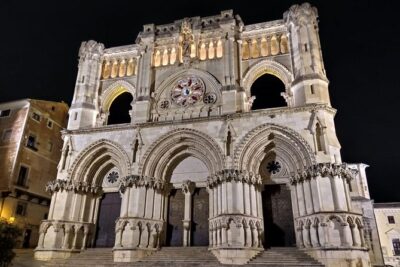
Browse the lists this tour appears in