Review · GUIDED
Guided tour of the Madrid of spies
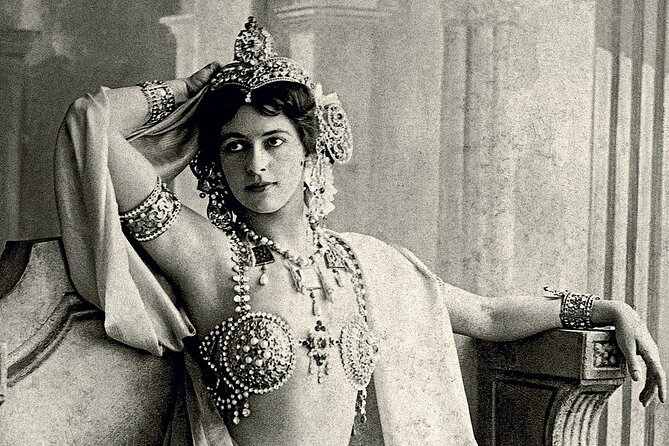
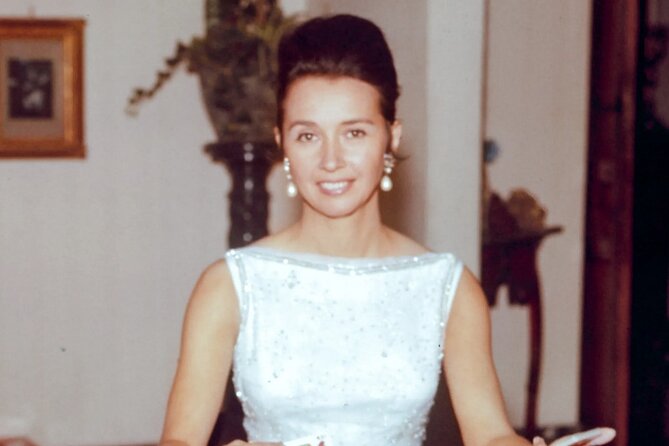
Madrid’s spy story begins not in a shadowy alley, but at the former British Embassy, where wartime intelligence work helped turn the city into a center of espionage. Over two hours, Carlos connects embassy buildings, cafés, churches, and grand hotels with Mata Hari, Garbo, the Countess of Romanones, and Philby.
I like the clear route from Chamberí to Neptune Fountain, which gives the walk a satisfying beginning and end. I also like that Carlos welcomes questions and adds film suggestions, so the subject can stay with you after the walk. The main consideration is physical: you will walk between six stops, and much of the experience takes place outdoors.
In This Review
- Key points to know before booking
- Why Madrid became a spy capital
- Starting at the former British Embassy
- The secret embassy at Robuchon Madrid
- The Peace Church and the former German Embassy
- Café Lion and the beginning of a spy career
- Horcher and the spy hunter
- The Ritz and secret negotiations
- From Chamberí to Neptune Fountain
- What Carlos adds to the experience
- Price, language, and timing
- Who should book this Madrid spy walk
- Should you book the Madrid of spies tour?
- FAQ
- How long is the guided tour of the Madrid of spies?
- Where does the tour begin?
- Where does the tour end?
- What languages are available?
- How many people can join the tour?
- What level of fitness is needed?
- Can I cancel for a full refund?
Key points to know before booking
- Six spy-related stops link Madrid’s former British and German diplomatic worlds with wartime agents and secret negotiations.
- Carlos leads the experience, answering questions in detail and adding film recommendations for further viewing.
- English tours run on Monday, Tuesday, and Saturday, while Spanish tours run Wednesday, Friday, and Sunday.
- The two-hour route begins in Chamberí at the former British Embassy and ends near Neptune Fountain.
- The group is limited to 20 people, a useful size for a walking tour built around storytelling.
- The price is unusually low at $3.44 per person, making this an easy add-on for visitors curious about espionage.
Why Madrid became a spy capital
Madrid’s position during the two world wars made it a useful meeting ground for competing powers. Foreign embassies, hotels, cafés, and churches provided places where officials, agents, informants, and intermediaries could cross paths without every meeting looking suspicious.
That is the basic appeal of this walk. You are not simply hearing a list of famous names. You are seeing the places connected with the machinery behind their stories. The route shows how espionage depended on ordinary city spaces: a diplomatic building, a restaurant, a café, a religious institution, and a luxury hotel.
The experience is especially useful if you enjoy political history, wartime stories, or spy fiction but want a Madrid tour with a more focused subject. Carlos keeps the subject tied to real buildings and real streets, which helps turn a broad story about international intrigue into something you can follow on foot.
The rating is 4.9 from 32 ratings, with 100 percent recommending it. That level of approval is supported by the details of the guiding style: Carlos is prepared to answer questions, explains how spy networks worked at different periods, and gives enough background to make the settings meaningful.
A few more Madrid days to weigh up
- Madrid: Royal Palace Expert Guided Tour with Skip-the-Line
★ 4.7 · 6,986 reviews - From Madrid: Guided Day Trip to Toledo by Bus
★ 4.1 · 5,280 reviews - Madrid: Toledo & Segovia Full Day Guided Tour with Alcázar
★ 4.6 · 4,394 reviews
Starting at the former British Embassy
The walk begins at the former British Embassy on C. de Fernando el Santo, 16, in Chamberí. This opening stop receives about 20 minutes, the longest single portion of the route, and for good reason: it sets up the British role in wartime espionage in Spain.
You can expect the former embassy to be presented as the center of British intelligence work in the country during World War II. The building gives Carlos a firm starting point for explaining the wider network, rather than dropping you straight into a series of disconnected spy anecdotes.
I like this opening because it establishes the tour’s method. The building is not just a backdrop. It helps explain how official diplomatic spaces and covert operations could exist side by side. You will want to pay attention here, since later stops make more sense once you understand the British presence in Madrid.
The tour is an outdoor walking experience, so the quality of the storytelling matters as much as the buildings themselves. Carlos’s ability to answer questions is valuable at this point. If you are curious about how the network operated, this is the place to ask.
The secret embassy at Robuchon Madrid
The next stop is Robuchon Madrid, described as the old embassy and a center for British clandestine operations. It receives about 10 minutes.
This stop adds a useful wrinkle to the usual idea of an embassy. Espionage does not always happen in the most obvious official setting. A location associated with a secret embassy gives the tour room to explain how covert work could be organized away from the formal diplomatic address.
You should expect a short stop focused on the site’s role rather than an indoor visit. The information provided does not promise entry to the building, and the tour is best understood as a street-level look at places connected with the spy network.
For me, this is the sort of stop that makes a walking route worthwhile. You can pass a building in Madrid without guessing what it once represented. Carlos supplies the missing layer, showing how a familiar urban address could carry a second, less visible purpose.
The Peace Church and the former German Embassy
The route then reaches the Friedenskirche, or Peace Church, home of the German-speaking Protestant community. About 10 minutes are spent here.
This is described as the only preserved building from the former German embassy. That makes it an important physical link to the German diplomatic presence in Madrid. Unlike a story tied only to a vanished address, this stop gives you a surviving structure to look at while Carlos explains its place in the wider network.
The church also broadens the tour beyond a simple British-versus-German contest. Diplomatic life involved institutions, communities, and meeting places that could appear respectable and routine. The setting helps show how espionage often moved through normal civic life rather than existing apart from it.
There is no admission ticket included or needed for the stop as described. You should treat it as an exterior location and listen for the connections Carlos draws between the preserved building and the vanished embassy complex.
A different sort of afternoon around Madrid:
- Madrid: Tour Bernabéu Entry Ticket
★ 4.5 · 21,573 reviews - Madrid: Prado Museum Entry Ticket
★ 4.6 · 17,509 reviews - Madrid: Royal Palace Fast-Access Admission Ticket
★ 4.6 · 13,856 reviews - Madrid: “Emociones” Live Flamenco Performance
★ 4.8 · 12,866 reviews
Café Lion and the beginning of a spy career
At C. Alcalá, 57, the former Café Lion becomes the focus. This was a meeting point for German spies and the place where the story of the most important Spanish spy in the route begins. The stop takes around 10 minutes.
Cafés are natural places for a spy walk because they show how meetings could blend into daily city life. A café offers conversation, movement, and a steady flow of people. Carlos uses this address to introduce a Spanish figure whose career grew out of the wartime world described earlier.
The supplied details do not name that spy, so you should not book this walk expecting a single famous-agent biography from start to finish. Instead, expect a wider account of how Madrid’s network worked and how one major Spanish spy entered that world.
This is also a good point to ask questions. The guide’s strength lies in explaining the links between locations, agents, and wars. If a story catches your interest, you can ask how the person fit into the broader network rather than hearing only a quick name and date.
Horcher and the spy hunter
The next stop is Horcher, a meeting place for the German elite. Here, Carlos tells the story of the most prolific spy hunter connected with the route. The visit lasts about 10 minutes.
Horcher gives the walk another shift in viewpoint. Earlier stops emphasize embassies, clandestine operations, and agents. This one focuses on the people trying to find and stop them. That tension keeps the experience from becoming a parade of glamorous spy tales.
The restaurant’s connection with the German elite also shows why status and access mattered. Espionage was not limited to secret rooms. Important restaurants and social settings could bring together people with influence, information, and reasons to keep their conversations private.
Again, the visit is about the location and its story, not a meal or a restaurant reservation. You should not assume food is part of the tour. The value is in standing at a place tied to the social side of the network while Carlos explains the work of the spy hunter.
The Ritz and secret negotiations
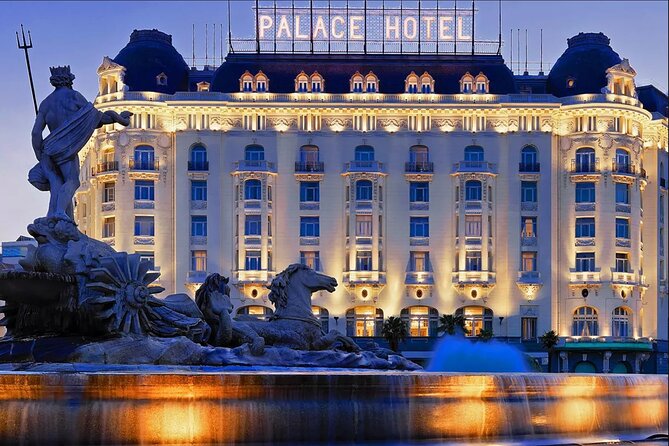
The final major stop is the Mandarin Oriental Ritz, Madrid. This grand hotel served as a place for secret negotiations and a residence for some of the most important spies in the story. The stop is planned for about 10 minutes.
Hotels are useful settings for espionage because they bring together diplomats, wealthy officials, business people, and temporary visitors. A hotel also provides a natural reason for someone to be in town, which makes it a fitting place for negotiations and meetings.
The Ritz gives the route a polished final chapter before the walk ends at Neptune Fountain. It connects high society with the practical business of intelligence. You get a sense of the different levels at which espionage operated, from embassy offices to cafés and from church communities to luxury hotels.
The description does not include hotel access, so plan on hearing the story from outside. That is not a serious drawback if you enjoy urban history. The building and its former role are the point, while Carlos provides the context you cannot see from the street.
From Chamberí to Neptune Fountain
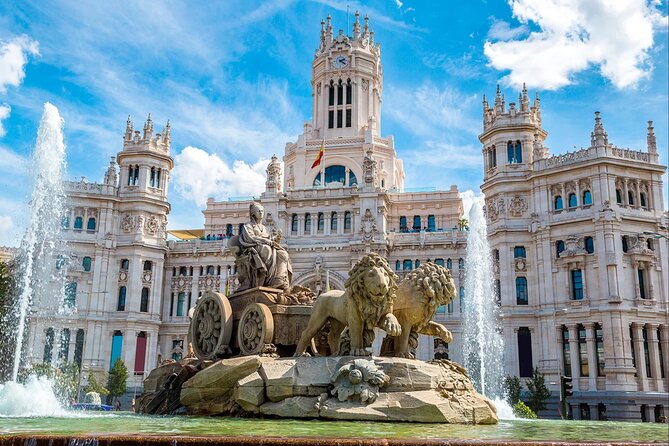
The route starts in Chamberí and finishes at Neptune Fountain on Plaza de Cánovas del Castillo. This one-way design works well for a sightseeing day because you do not need to return to the starting point.
The endpoint is near central Madrid, making it a practical place to continue exploring after the walk. The tour does not list a return transfer, and none is needed for a route designed around a central finish.
The six listed stops account for roughly 70 minutes of scheduled stop time. The rest of the two-hour experience allows for walking between locations and for Carlos to explain the connections along the way. You should wear comfortable shoes and be ready for a moderate amount of walking.
The group maximum is 20 people. That is not a private tour, but it is small enough for questions to remain part of the experience. Since Carlos’s careful answers are one of the tour’s most praised qualities, the group limit matters.
What Carlos adds to the experience
A spy walk can easily become a string of dramatic names. Carlos appears to avoid that trap by explaining how the networks worked during different periods and by answering questions with care.
That approach suits Madrid. The city’s espionage story involves several countries, two world wars, diplomatic institutions, and people whose roles changed over time. You need more than dates to understand it. You need someone to explain who was meeting whom, why a particular place mattered, and how the agents fitted into the period.
Carlos also provides a list of films related to the subject. That is a small but useful extra. If you like to prepare before a trip or keep exploring after a walking tour, the films give you a way to continue the story at home.
The strongest reason to choose this tour is the guide’s command of the subject. Buildings alone will not tell you why the former embassy mattered or what made a café useful to German spies. The guide is the bridge between the address in front of you and the international events behind it.
Price, language, and timing
At $3.44 per person, this is an exceptional value if the price shown at booking remains available. For roughly two hours, you receive a guided route through six significant locations, with no separate admission charges listed.
The low price also makes this a sensible choice for a first-time visitor who wants to test a specialized subject without committing to a costly half-day activity. It can work as an addition to a larger Madrid itinerary rather than replacing a major museum or palace visit.
Language requires planning. English tours run on Monday, Tuesday, and Saturday. Spanish tours run Wednesday, Friday, and Sunday. You will need to choose the day that matches the language you want, since the schedule does not offer English every day.
The experience is booked an average of 65 days ahead. That does not guarantee that every date sells out, but it is a useful sign that you should not leave the booking until the last minute if your Madrid schedule is fixed.
Confirmation arrives at booking, and the ticket is mobile. Service animals are allowed. The activity asks for a moderate level of physical fitness, so consider the walking time and the outdoor format before booking.
Free cancellation is available if you cancel at least 24 hours before the start time. A cancellation made inside that window is not refunded, and changes are not accepted inside the same period. The tour also requires a minimum number of people, so a cancellation by the operator would bring an offer of another date or experience, or a full refund.
Who should book this Madrid spy walk
I would choose this tour if you enjoy wartime politics, intelligence stories, famous agents, or the way ordinary places acquire unusual meaning. It is also a good fit if you have already seen Madrid’s main sights and want a focused route that takes you away from the standard palace-and-museum circuit.
It suits curious adults and older children who can follow a spoken story while walking. The guide’s question-and-answer style is especially useful if you prefer an interactive tour rather than a fixed speech.
You might choose something else if you want to go inside every building, sit down for a meal, or spend most of the time viewing artworks. The stops are presented as historical sites along a city walk, and the details do not promise indoor admissions.
You should also allow for the subject matter. This is espionage during the world wars, not a light city stroll with occasional spy jokes. The appeal comes from political intrigue, covert networks, and the people caught up in them.
Should you book the Madrid of spies tour?
Book it if you want a low-cost, tightly focused walk led by Carlos, especially if you can join an English tour on Monday, Tuesday, or Saturday. The route gives you six distinct settings, a clear start and finish, and enough time for the guide to explain how Madrid became a meeting ground for international espionage.
The best reason to go is the storytelling tied to real addresses. The former British Embassy, Peace Church, Café Lion, Horcher, and the Ritz each show a different side of the spy world. The main caution is that you will be walking outdoors and viewing the locations as part of the city rather than entering them.
At $3.44, the risk is small. If the subject interests you, the combination of price, strong rating, small group size, and Carlos’s detailed answers makes this an easy Madrid add-on.
FAQ
How long is the guided tour of the Madrid of spies?
The tour lasts approximately two hours.
Where does the tour begin?
It begins at the former British Embassy, C. de Fernando el Santo, 16, in Madrid’s Chamberí district.
Where does the tour end?
The walk ends at Neptune Fountain on Plaza de Cánovas del Castillo.
What languages are available?
English tours run on Monday, Tuesday, and Saturday. Spanish tours run on Wednesday, Friday, and Sunday.
How many people can join the tour?
The maximum group size is 20 people.
What level of fitness is needed?
A moderate level of physical fitness is recommended because this is a walking tour between several city locations.
Can I cancel for a full refund?
Yes. You can cancel for a full refund if you do so at least 24 hours before the experience start time. Changes or cancellations made less than 24 hours ahead are not accepted for a refund.
Just added around Madrid
- Private Vacation Photography Session with Photographer in Madrid★ 5.0 · 3 reviews
- Arrival Private Transfer from MAD Airport to Madrid in a Minibus★ 5.0 · 3 reviews
- Segovia: 3-Hour Private Walking Tour★ 5.0 · 3 reviews
- Tour Segovia and La Granja de San Ildefonso from Madrid★ 5.0 · 3 reviews
- Madrid: Prado & Reina Sofia Museum Skip-the-Line Guided Tour★ 5.0 · 3 reviews
- Salamanca: Private Guided Customizable Walking Tour★ 5.0 · 3 reviews
- Total Reboot and Renew with top wellnes 3 hours couple experience★ 5.0 · 3 reviews
- Madrid: Prado Museum Private Tour★ 5.0 · 3 reviews
Guided, compared.
Royal Palace Expert Guided Tour with Skip-the-Line
Read our review →
Toledo & Segovia Full Day Guided Tour with Alcázar
Read our review →