
Review · MADRID
Inquisition, The Executioner, Witches, Expulsion Jews and Muslims
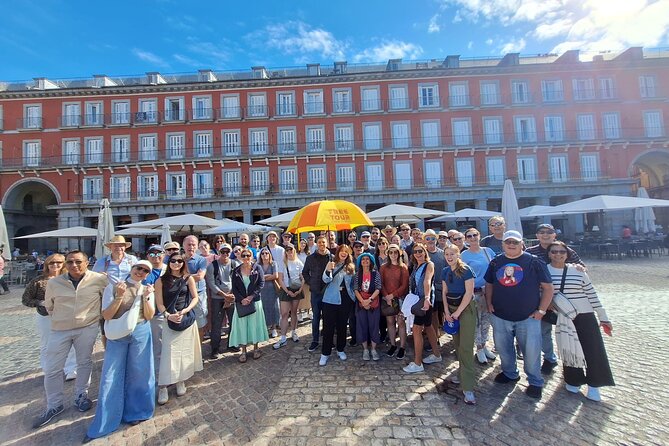
Madrid’s old center becomes a classroom on this walking tour, with the Spanish Inquisition examined through Christianity, Judaism, and Islam. You move from Plaza Mayor toward the Royal Palace area, stopping at churches, squares, and former civic buildings tied to trials, public punishment, and religious control.
I like the clear route through central Madrid and the way each stop adds one piece to the story. I also like the use of printed material and teaching tools, since a subject this heavy can become hard to follow when it is told only through dates and names. Guides Jackie and David Onion are specifically praised for making the subject easy to follow and holding attention with dramatic storytelling.
The main caution is that the subject matter is grim. Torture, executions, forced religious identity, and false accusations are central themes, and the walk may feel intense for children or anyone looking for a light sightseeing outing. The very low advertised price also reflects the free-tour model, so plan to tip if you value the guide’s work.
In This Review
- Key points before you book
- Plaza Mayor to the Church of Santa Cruz
- Investigation and torture at Plaza de la Provincia
- Autos-da-fé at Casa de la Carnicería
- Religious suspicion at the Basilica of San Miguel
- Cisneros and Torquemada at Casa Cisneros
- Punishment at Plaza de la Cruz Verde
- Almudena Cathedral and the end of the Inquisition
- Plaza de la Armería and the closing reflection
- What the guide adds to a difficult subject
- Price, group size, and the real value
- Who will get the most from this walk
- Booking and cancellation details
- Should you book this Madrid Inquisition tour?
- FAQ
- Where does the tour start?
- Where does the tour end?
- How long does the tour last?
- What language is the tour offered in?
- What is included?
- Are food and drinks included?
- Do I need to pay admission at the stops?
- How many people can join?
- Are service animals allowed?
- Can I cancel for a refund?
Key points before you book
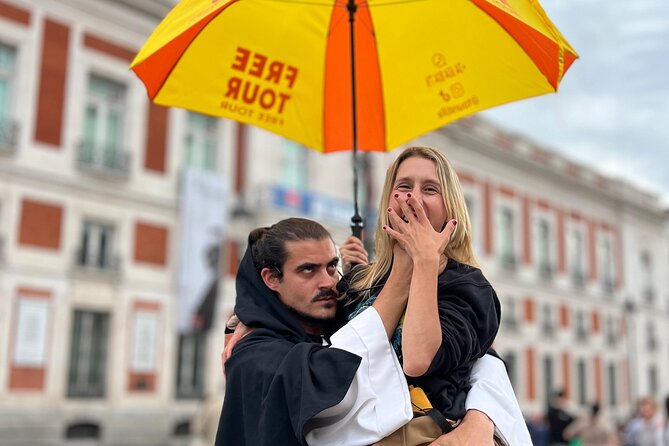
- Eight historic stops: The route links Plaza Mayor with churches, civic buildings, execution sites, Almudena Cathedral, and Plaza de la Armería.
- A three-religion focus: The guide explains the Inquisition’s treatment of Christians, Jews, and Muslims, including forced conversions and religious suspicion.
- Torture and execution are examined directly: Expect discussion of confessions, the gallows, beheading, the garrote vil, and burning at the stake.
- English-speaking local guide: The tour is offered in English, with printed material and teaching tools used along the way.
- A practical central route: It begins at Plaza Mayor and ends at Plaza de la Armería, about a 10-minute walk from the starting point and three minutes from Ópera Metro.
- Free cancellation with a strict cutoff: You can cancel for a full refund up to 24 hours before the start time.
Plaza Mayor to the Church of Santa Cruz
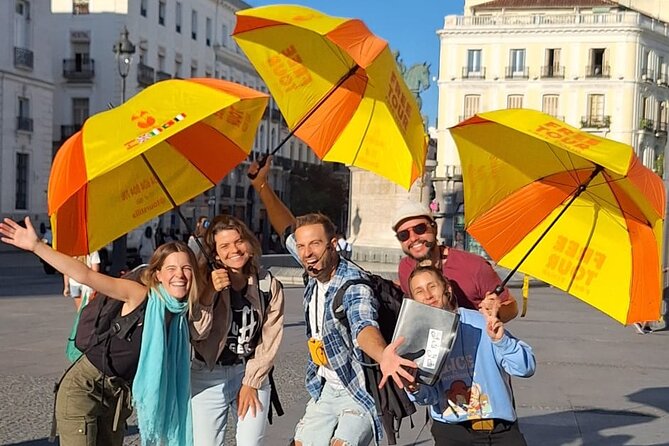
The meeting point is Plaza Mayor, one of Madrid’s easiest places to find and a useful starting point in the old center. From there, the walk reaches Iglesia de Santa Cruz, where the guide sets up the central question: how did the Inquisition relate to Christianity, Islam, and Judaism?
This opening is important because the tour is not presented as a simple list of punishments. You are introduced to the religious and political setting that allowed suspicion to become an official process. The guide’s job here is to give you enough background for the later stops to make sense.
The church itself is not listed as requiring admission, and the route uses outdoor locations rather than depending on paid entries. That keeps the tour accessible and helps the focus remain on the streets and public spaces where Madrid’s story unfolded.
Other Madrid days people book alongside this one:
- Madrid: Tour Bernabéu Entry Ticket
★ 4.5 · 21,573 reviews - Madrid: Prado Museum Entry Ticket
★ 4.6 · 17,509 reviews - Madrid: Royal Palace Fast-Access Admission Ticket
★ 4.6 · 13,856 reviews
Investigation and torture at Plaza de la Provincia
At Plaza de la Provincia, the subject turns from belief to procedure. You hear how the Inquisition investigated accusations, sought confessions, and used torture as part of that process.
This is one of the most useful stops for understanding how fear worked. The Inquisition was not only about the final sentence. It also involved suspicion, interrogation, evidence, confession, and public pressure. I appreciate this part of the route because it explains the machinery behind the famous stories instead of jumping straight to the spectacle of an execution.
The stop lasts about 15 minutes. That is enough time for a focused explanation, but not enough for every legal detail, so you should expect a guided overview rather than a specialist seminar. The tone may also become especially serious here.
Autos-da-fé at Casa de la Carnicería
Casa de la Carnicería introduces the autos-da-fé, the public ceremonies connected with Inquisition trials. The tour also covers the large trial and the most famous painting associated with the subject.
This stop helps you see how punishment could become public theater. A trial was not simply a private legal event. The ceremony, the crowd, the religious message, and the public display all mattered. The guide’s visual teaching tools are especially useful at a stop like this, where a painting can preserve the look and mood of an event better than a bare date can.
You should expect the guide to explain what these ceremonies represented and how the public experienced them. The stop takes about 15 minutes, so it is brisk and focused.
Religious suspicion at the Basilica of San Miguel
At the Basilica of San Miguel, the tour asks two unsettling questions: how could authorities identify a false Jew, and how could they identify a false Moorish person?
These questions lead into the Edicts of Faith and the problem of false allegations. The language of identity is central here. People could be judged not only for what they openly practiced, but also for what authorities believed they secretly believed or privately did.
I find this section valuable because it shows how religious persecution reached into ordinary life. It also gives the tour a human scale. You are not only hearing about institutions. You are considering what it meant to live under suspicion, especially when accusations could be false.
The Basilica stop lasts around 15 minutes. No entry ticket is required for the tour, according to the supplied details, so you should not assume that the walking experience includes a visit inside every church.
A different sort of afternoon around Madrid:
- Madrid: “Emociones” Live Flamenco Performance
★ 4.8 · 12,866 reviews - Madrid: Panoramic Route City Tour
★ 4.1 · 12,259 reviews - Madrid: Live Flamenco Show with Food and Drinks Options
★ 4.5 · 9,901 reviews - Avila & Segovia Tour with Tickets to Monuments from Madrid
★ 5.0 · 9,762 reviews
Cisneros and Torquemada at Casa Cisneros
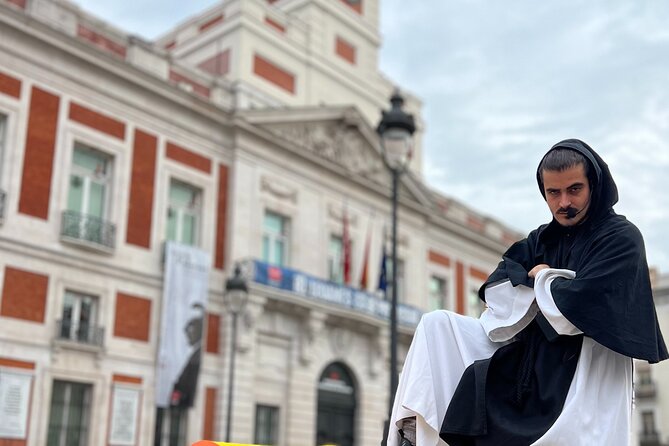
Casa Cisneros provides a pause for historical personalities, especially the contrast between Cisneros and Torquemada. The names matter because the Inquisition is often reduced to one or two villains, while the actual story involved several powerful figures and institutions.
This stop gives the guide room to compare roles and influence. It is a short 10-minute section, so you will get the key points rather than a full biography of each man. Still, it helps keep the tour from becoming a string of anonymous horrors.
I like this kind of stop in a walking tour. A place becomes easier to remember when it is connected to people, decisions, and competing roles. If you enjoy political and religious history, this may be one of the more useful sections.
Punishment at Plaza de la Cruz Verde
Plaza de la Cruz Verde is the tour’s most graphic stop. Here, the guide explains the symbol of the Inquisition, its implementation, and several forms of punishment: the gallows, beheading, the garrote vil, and burning at the stake. Bruges is also included in the discussion, though the supplied details do not explain exactly how it connects to this stop.
This part is not designed to soften the subject. You are asked to consider how execution methods were used and how punishment carried a public message. The garrote vil receives particular attention, and the tour later connects it with a 1974 execution described as the last execution using that method.
The stop takes about 20 minutes, longer than several earlier locations. That extra time makes sense, since the guide is covering several forms of punishment and their place in the story. Still, you should decide in advance if this is the kind of historical detail you want during a city walk.
Almudena Cathedral and the end of the Inquisition
At Catedral de Santa María la Real de la Almudena, the story moves toward the Inquisition’s end and its later legacy. Topics include the Vatican Archives, John Paul II and the Catholic Church’s pardon, the end of the Inquisition, and the question of the last execution associated with it.
The tour also returns to the garrote vil and the 1974 execution mentioned earlier. Since the subject is presented through several dates, institutions, and interpretations, listen closely to the guide’s wording. This is a good place to ask questions if you want to separate the formal end of an institution from later executions and related practices.
The final part of this stop turns toward Jewish and Muslim legacies in Spain. That shift matters. The tour does not end with punishment alone. It asks what remains in Spanish culture, memory, and identity after expulsion and persecution.
This is another 20-minute section. You will be near one of Madrid’s major landmarks, but the experience is primarily an outdoor historical walk. Do not book it expecting a standard cathedral tour or guaranteed interior access.
Plaza de la Armería and the closing reflection
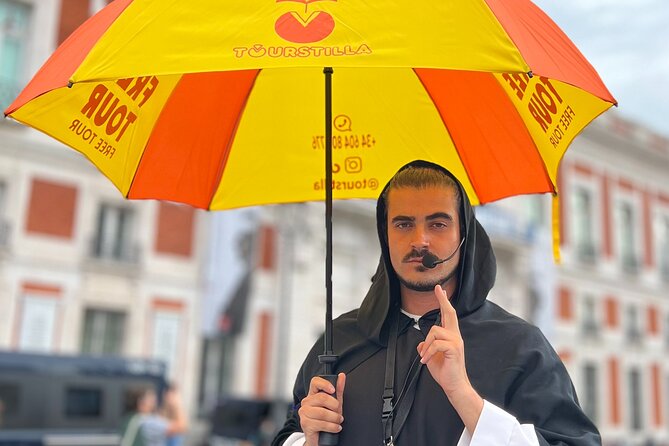
The route ends at Plaza de la Armería, near the Royal Palace complex. The guide brings the discussion into the present with current religious conflicts, the idea of holy wars, and the continuing legacies of Jews and Muslims in Spain.
I like this ending because it asks you to connect the past with the way religious conflict is discussed now. The guide also offers a closing reflection rather than simply pointing you toward the next attraction. The final section lasts about 20 minutes.
From the start at Plaza Mayor, the route finishes about 10 minutes away on foot. Plaza de la Armería is also close to major sights, so you can continue sightseeing afterward. The nearest listed Metro access is Ópera, about three minutes from the meeting point.
What the guide adds to a difficult subject
A strong guide matters greatly on a tour about torture and persecution. The supplied experience details name Jackie and David Onion as guides who have led the walk. Jackie is described as making the material interesting and easy to follow, while David Onion is noted for using dramatic skill to keep the group engaged.
That does not mean every departure will have one of those guides. Guide assignments can change, so treat those names as useful examples rather than a promise. What you should expect from the format is a local guide speaking in English, supported by printed material and teaching tools.
One practical point deserves attention: the tour explains the usual tipping procedure at the end, but the guide described by one participant did so tactfully and without pressure. This is a free-tour style experience, so the posted $3.61 price per group should not be treated as the full measure of its value. If the guide gives you two hours of clear research, storytelling, and personal attention, a tip is the normal way to recognize that work.
Price, group size, and the real value
At about $3.61 per group of up to 15, the advertised price is unusually low for a two-hour-15-minute guided walk. The value is strongest if you want context around Madrid’s old center but do not need paid museum admission or a formal indoor tour.
The supplied details also say the activity can have a maximum of 30 people, while the price information refers to a group of up to 15. That difference is worth checking when you book. A group of 15 can feel personal enough for questions, while 30 people may make it harder to hear or speak with the guide.
No food, drink, or site entry is included. The route lists admission as free at each stop, and entries are not required, so the main cost is the guide’s time and the tip you choose to give. Bring your own drink if you need one during the 2-hour-15-minute walk.
Most people can participate, and service animals are allowed. The activity is near public transportation. The information provided does not give a detailed mobility assessment, so if stairs, uneven pavement, or standing for long periods are concerns, ask the provider before booking.
Who will get the most from this walk
I would choose this tour if you want a serious look at Madrid’s religious and political past, especially the treatment of Jews and Muslims and the tools used to enforce religious conformity. It suits readers who like guided interpretation more than simply photographing monuments.
It is also a good fit if you want a compact introduction before visiting other historic sites in Madrid. The central route, free admissions, and English presentation make it easy to add to a city break.
I would be more cautious if you want a gentle introduction to Spain or a tour aimed at young children. The subjects include torture, executions, false accusations, forced identity, and burning at the stake. The dramatic style that makes the material memorable may feel too intense for some people.
The tour is also not ideal if you want extensive time inside churches or buildings. The supplied route is built around exterior meeting points and explanations at significant locations. Its strength is the story connecting the sites, not long visits to individual monuments.
Booking and cancellation details
Confirmation is received at the time of booking, and the activity is offered in English with a mobile ticket. You can cancel for a full refund up to 24 hours before the local start time.
Changes or cancellations made less than 24 hours before the start are not accepted for a refund. There has also been at least one last-minute cancellation because a replacement guide was not available, so it is sensible not to schedule an important paid activity immediately afterward.
Should you book this Madrid Inquisition tour?
Book it if you want a focused, street-level history lesson that connects Madrid’s churches and squares with religious persecution, public trials, execution, and the continuing Jewish and Muslim legacy of Spain.
The strongest reasons are the thoughtful route, the three-religion focus, the visual teaching material, and the guides’ ability to make a difficult subject clear. Jackie and David Onion are examples of the kind of engaging presentation this format can offer, though guide assignments are not guaranteed.
Skip it if graphic history is not for you, or if you need a fully indoor tour with guaranteed entry to landmarks. Also confirm the group-size details and remember that the very low price belongs to a free-tour model. For the right audience, this is a useful and unusually direct way to understand a part of Madrid that ordinary sightseeing often leaves unexplained.
FAQ
Where does the tour start?
It starts at Plaza Mayor in central Madrid, Spain.
Where does the tour end?
It ends at Plaza de la Armería, about a 10-minute walk from the meeting point at Plaza Mayor.
How long does the tour last?
The tour lasts approximately 2 hours and 15 minutes.
What language is the tour offered in?
The tour is offered in English.
What is included?
A local guide, printed material, and teaching tools used during the route are included. You also receive a link with personalized recommendations for things to do in Madrid and ongoing personalized attention from the guide after the tour.
Are food and drinks included?
No. Food and drinks are not included.
Do I need to pay admission at the stops?
No entries are required for the tour, and the listed stops show free admission.
How many people can join?
The price information refers to a group of up to 15 people, while the additional activity details list a maximum of 30 participants. Confirm the expected group size when booking.
Are service animals allowed?
Yes. Service animals are allowed.
Can I cancel for a refund?
Yes. You can cancel at least 24 hours before the experience start time for a full refund. Cancellations or changes made less than 24 hours before the start are not accepted for a refund.
Just added around Madrid
- Private Vacation Photography Session with Photographer in Madrid★ 5.0 · 3 reviews
- Arrival Private Transfer from MAD Airport to Madrid in a Minibus★ 5.0 · 3 reviews
- Segovia: 3-Hour Private Walking Tour★ 5.0 · 3 reviews
- Tour Segovia and La Granja de San Ildefonso from Madrid★ 5.0 · 3 reviews
- Madrid: Prado & Reina Sofia Museum Skip-the-Line Guided Tour★ 5.0 · 3 reviews
- Salamanca: Private Guided Customizable Walking Tour★ 5.0 · 3 reviews
- Total Reboot and Renew with top wellnes 3 hours couple experience★ 5.0 · 3 reviews
- Madrid: Prado Museum Private Tour★ 5.0 · 3 reviews