
Review · HISTORICAL TOURS
Madrid Historic with an architect : Arabs, Austrias and Bourbons
Madrid makes more sense when you read its buildings in order. This private walk follows the city from its ninth-century Arab walls through Habsburg plazas and Bourbon royal planning, with architect Emilio explaining how politics, religion, and urban design changed the capital.
I like the use of plans and historic photos, which help you picture streets and buildings that no longer exist. I also like the private format: your own group can ask questions, pause for coffee, and set the pace more easily than on a large city walk.
The main consideration is its strong history component. You will certainly discuss architecture, but the tour also spends time on Madrid’s rulers, religious institutions, and social changes. If you want only a technical study of facades and building materials, this may feel broader than expected.
In This Review
- Key points to know before booking
- Why this Madrid walk feels different
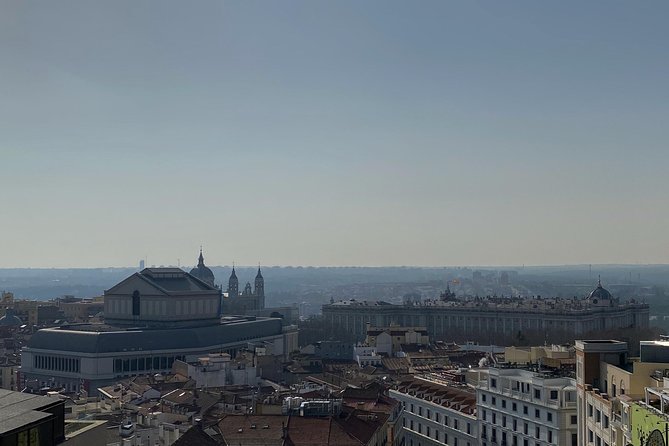
- Teatro Real and Plaza de Oriente: meeting royal Madrid
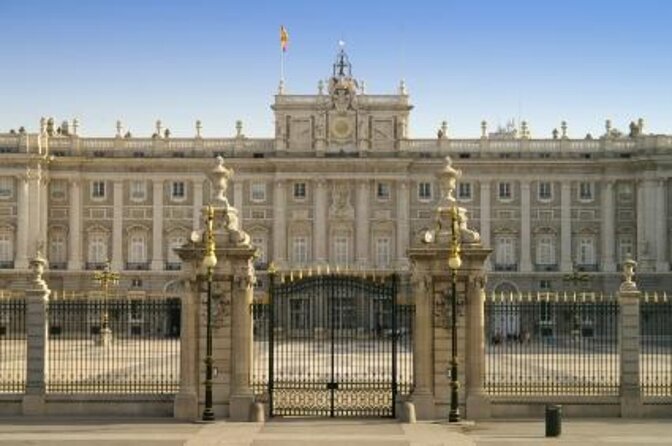
- The Royal Palace: facades, kings, and architects
- Plaza de Ramales and the churches of old Madrid
- San Nicolás and the oldest church on the route
- La Almudena and the Arab Wall
- Plaza de la Villa and the city’s civic heart
- Mercado de San Miguel and Plaza Mayor
- Puerta del Sol and the practical end of the walk
- What the $65.89 price buys you
- Who will enjoy this walk most
- Should you book Madrid Historic with an architect?
- FAQ
- How long does the tour last?
- Where does the tour begin?
- Where does the tour end?
- Is the Royal Palace interior included?
- Is the tour private?
- Is the tour offered in English?
- What does the tour include?
- Are food, drinks, or tips included?
- Can I cancel for a full refund?
Key points to know before booking
- A private walk with architect Emilio: Your group receives direct explanations rather than a standard script delivered to a crowd.
- Madrid in three historical chapters: The route connects Arab foundations, Habsburg Madrid, and Bourbon-era planning.
- The Royal Palace is viewed from outside: You examine its facades and architects, but interior admission is not included.
- Historic Madrid on foot: The route covers the Teatro Real, royal quarter, Arab wall, Plaza de la Villa, Plaza Mayor, and Puerta del Sol.
- Plans and old photographs add context: These visual aids show how Madrid’s streets and buildings developed over 12 centuries.
- Allow three to three and a half hours: The walk includes many short stops, with time for questions and possibly a coffee pause.
Why this Madrid walk feels different
Many city walks point out a church, palace, or square and give you a date. This experience tries to explain why the city looks the way it does. That difference matters in Madrid, where a medieval church may sit beside a Bourbon palace and a modern food market, all within a few minutes of one another.
Architect Emilio uses the built city as the main source. Plans and historic photographs help you compare Madrid at different stages, rather than treating each monument as an isolated sight. You learn how royal decisions changed the street plan, how older religious buildings survived, and how public squares shifted from ceremonial spaces to places for daily life.
The route is also personal in scale. Only your group participates, so you can ask about a detail that catches your eye or request more explanation about a period that interests you. Past feedback particularly highlights Emilio’s command of Madrid’s history and architecture, his humor, and his willingness to give the walk the time it needs.
That last point cuts both ways. The scheduled duration is about three hours to three and a half, but one account describes a much longer visit because the guide did not rush. That can be a pleasure if you enjoy an extended conversation. It may be less appealing if you have a tight schedule or expect a brisk sightseeing circuit.
More history tours in Madrid:
- Madrid Essential: Historic Center, Plaza Mayor & Royal Palace
★ 5.0 · 6,416 reviews - Madrid Historical Tour with Local Guide in Eco Tuk Tuk Private
★ 5.0 · 876 reviews - Madrid Historic Centre Food Tour with Authentic Tapas & Wines
★ 5.0 · 814 reviews
Teatro Real and Plaza de Oriente: meeting royal Madrid
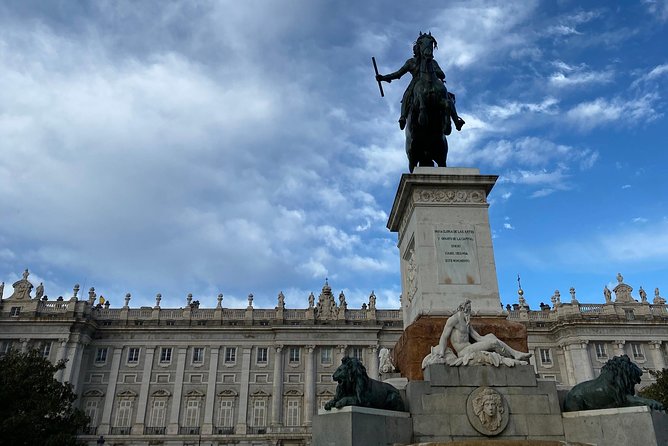
The walk begins at Plaza de Isabel II, beside the Teatro Real. The opera house gives Emilio a useful opening subject: Madrid’s changing taste in grand public buildings and the role of royal patronage in shaping the city.
You spend about ten minutes examining the exterior and discussing the theater’s history. Since the visit is focused on the building rather than a performance, do not expect an opera-house tour or a ticketed interior visit. The value here is the architectural introduction and the way the theater fits into the royal quarter.
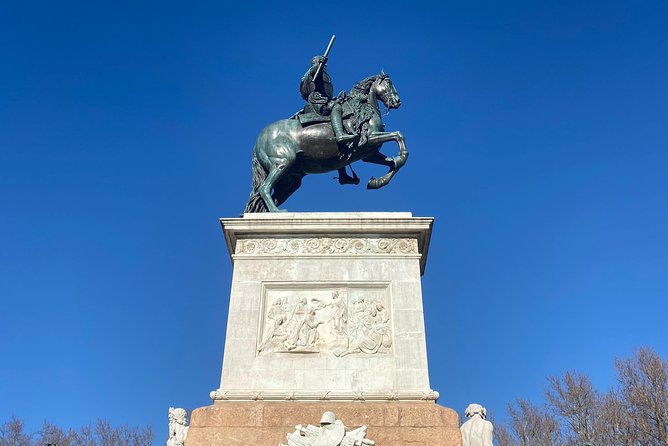
Next comes Plaza de Oriente, another short stop. The square offers a clear example of urban planning around the palace district. Emilio explains how this space developed from the Arab period to the present, giving you a long view of Madrid’s growth instead of treating the plaza as a finished monument.
This is an early sign of the tour’s method. You are not simply told what a building is called. You are shown how the surrounding streets and open spaces changed with each ruling period.
The Royal Palace: facades, kings, and architects
At the Royal Palace of Madrid, you examine the exterior facades and learn which architects and monarchs shaped the project. This is one of the most useful stops for anyone trying to understand the Bourbon imprint on Madrid.
The tour does not include entry to the palace. That keeps the focus on the outside and avoids turning the walk into a palace interior visit, but it also means you will need a separate ticket if you want to see the rooms and collections. At ten minutes, this is an overview rather than a full architectural survey.
I would treat this stop as a framework. Emilio can explain why the palace looks the way it does and how its design relates to royal power, while you save the detailed interior visit for another part of your schedule. If the palace is a top priority, plan extra time before or after the walk.
Plaza de Ramales and the churches of old Madrid
Plaza de Ramales brings the story down to a smaller scale. Here you see the remains of the Church of San Juan, associated with the burial place of painter Diego Velázquez, along with the nearby Church of Santiago.
The remains are not a complete church interior, so keep your expectations realistic. Their appeal lies in the clues they offer about what once occupied this part of the city. A ruined foundation can tell you as much about urban change as a grand facade, especially when a guide explains what disappeared and why the space looks different today.
The Real Iglesia Parroquial de Santiago y San Juan Bautista receives a brief stop of about five minutes. It is dedicated to the apostle Santiago, and Emilio places it within the religious life of historic Madrid.
Short stops are a feature of this route. You see many places without entering each one in depth. That makes the walk broad and useful for orientation, but anyone wanting long interior visits should allow separate time for them.
A different sort of afternoon around Madrid:
- Madrid: Tour Bernabéu Entry Ticket
★ 4.5 · 21,573 reviews - Madrid: Prado Museum Entry Ticket
★ 4.6 · 17,509 reviews - Madrid: Royal Palace Fast-Access Admission Ticket
★ 4.6 · 13,856 reviews - Madrid: “Emociones” Live Flamenco Performance
★ 4.8 · 12,866 reviews
San Nicolás and the oldest church on the route
The Church of St. Nicholas of the Servitas is one of the most distinctive stops. Its Mudejar tower, with horseshoe arches, points to an older architectural layer than the later royal buildings nearby.
The church is presented as the oldest church in Madrid, and the tower gives you a direct look at the city’s medieval character. This is the sort of detail that can be easy to miss when walking alone. You might see an old brick tower, take a quick photograph, and continue. With the architectural explanation, its form becomes evidence of Madrid’s earlier building traditions.
The stop lasts about five minutes, so the emphasis is on seeing and interpreting the exterior or accessible view rather than spending a long time inside. If religious architecture is your main interest, ask Emilio to expand on the tower and its Mudejar features during your private visit.
La Almudena and the Arab Wall
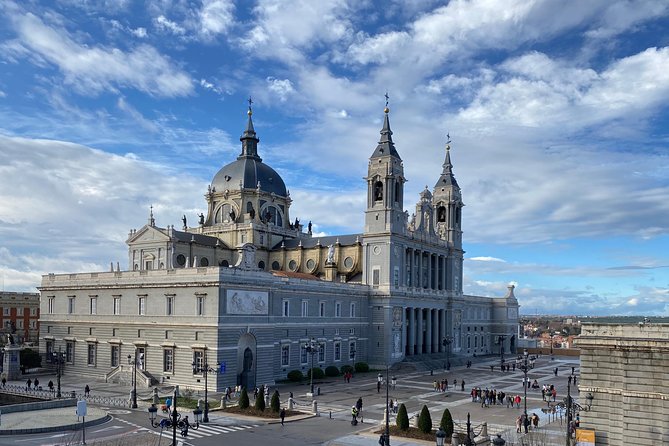
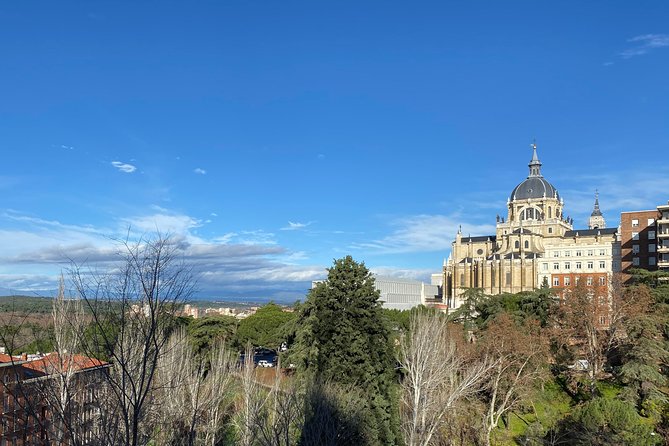
The Museo de la Catedral de la Almudena provides a viewing point for discussing the Cathedral of La Almudena and its place in Madrid’s story. The stop is brief, around five minutes, and is framed as an explanation of the cathedral rather than a museum visit.
That distinction is important. You are not buying admission to the cathedral museum as part of this experience. Instead, the stop helps connect the cathedral area with the older royal and medieval quarters around it.
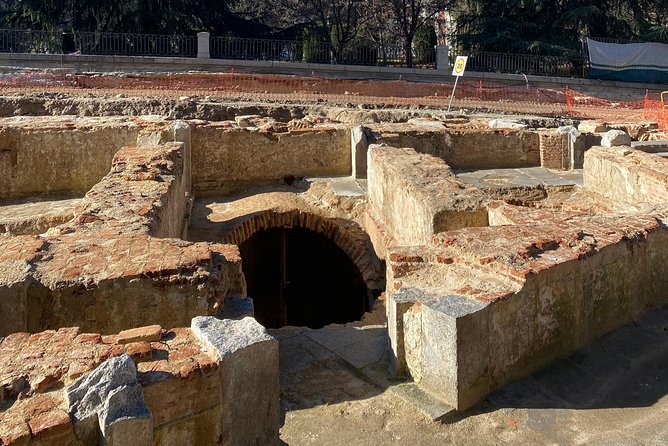
The Arab Wall is one of the strongest historical stops on the route. Madrid’s oldest settlement is linked to the ninth century, and the remaining wall is among the clearest physical signs of that early period. You see the surviving section and learn how the original defensive edge shaped the city that came later.
This is where the title’s Arab, Austrias, and Bourbons theme becomes especially clear. The wall represents the early foundation. The later plazas, churches, and palaces show how Madrid expanded beyond it. I like this kind of progression because it lets you read the city as a series of layers rather than a collection of unrelated sights.
Plaza de la Villa and the city’s civic heart
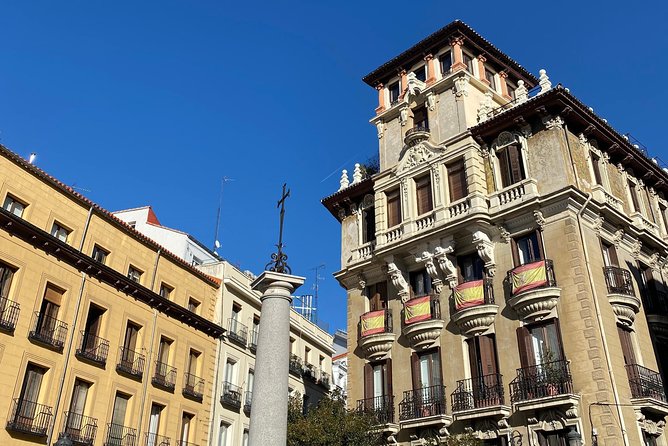
Plaza de la Villa brings the focus to civic Madrid. You examine the old City Hall and the buildings around the square, including Casa de Cisneros and Casa de los Lujanes.
The square is compact, but it contains several periods and building styles close together. Casa de los Lujanes is particularly useful for understanding the older town, while Casa de Cisneros helps show how later buildings filled out the civic center. Emilio’s job here is to explain how the buildings relate to one another and how the square functioned as part of Madrid’s government.
This is one of the stops where a private guide can add real value. You can ask why one facade looks older than another, how the buildings were used, or how the city hall fit into the surrounding neighborhood. The walk gives you a stronger sense of Madrid as a lived-in capital, not just a royal stage.
Mercado de San Miguel and Plaza Mayor
Mercado de San Miguel is the most relaxed stop on the route. Its iron structure makes it different from the stone churches and royal buildings you have just seen. You have about ten minutes here, with the option to stop for a drink or tapas.
The market is a practical pause as well as an architectural one. Food and drinks are not included, so bring a little extra money if you want to eat. Ten minutes is enough for a quick look or a short refreshment, but not for a leisurely meal.
From there, the walk continues to Plaza Mayor, Madrid’s great public square. For roughly 400 years, it has served as a social and commercial center. The square also offers a strong lesson in how public spaces can change function while keeping their physical identity.
You will hear about its Castilian design, its role in city life, and the way Madrid gathered commerce and public activity here. It is a natural place to finish the main route, though Puerta del Sol is also included as the final central stop in the schedule. The supplied meeting details list Plaza Mayor as the end point, so confirm the exact finishing point with the provider when you book.
Puerta del Sol and the practical end of the walk
The final stop is Puerta del Sol, home to Madrid’s Kilometer 0. This is a useful place to end because it gives you a clear geographic reference for the capital’s road network and puts you in the middle of central Madrid.
The stop is short, about five minutes. Think of it as a final orientation point rather than another long monument visit. After three hours of walking, you will also be close to public transportation and many parts of the central city.
Because the route passes through several busy public areas, wear comfortable shoes and expect to remain outdoors for most of the experience. The tour requires good weather, and poor conditions can lead to a new date or a full refund. Service animals are allowed, and most people can participate, but anyone with mobility concerns should ask about the walking conditions before booking.
What the $65.89 price buys you
At $65.89 per person, the cost is easiest to judge by comparing it with the format. This is not a basic group stroll. It is a private activity led by an architect, offered in English, with plans and historic photographs used during the walk.
For a group that wants to understand Madrid rather than simply collect photographs, that can be a fair price. You are paying for direct access to the guide, a carefully connected route, and an explanation of the city’s development across 12 centuries. Group discounts may improve the value for larger parties.
The price does not include tips, Royal Palace admission, market food, drinks, or any interior museum visits. Those omissions are reasonable for an outdoor architecture walk, but you should budget separately if you want to enter the palace or spend more time at the market.
The tour is often booked about 63 days ahead, which suggests that planning early is sensible, particularly if your Madrid dates are fixed. Confirmation is immediate in normal circumstances, though bookings made within one day of departure are confirmed as soon as possible, subject to availability.
Who will enjoy this walk most
I would recommend this experience to you if you like buildings but want the political and social story behind them. It suits first-time visitors who want a strong orientation to the old center, as well as returning visitors who have seen the major sights but never connected them.
It is especially good for:
- Couples or families who prefer a private guide
- Students and architecture enthusiasts
- Visitors interested in medieval, Habsburg, and Bourbon Madrid
- People who enjoy asking questions and taking time at each stop
- Anyone who wants to understand how the city grew around its oldest core
You may want a different experience if you expect entry to the Royal Palace, long visits inside churches, or a fast list of architectural styles with little historical context. The guide’s approach treats history as part of architecture, not as a separate lecture.
The strongest praise centers on Emilio’s expertise, personal attention, humor, and ability to connect modern Madrid with its past. One account also describes a rainy day that still worked because the guide kept the discussion engaging and explained Madrid’s changing architectural trends. Good weather will make the walk more comfortable, but the intellectual focus remains the main reason to book.
Should you book Madrid Historic with an architect?
Book it if you want Madrid to become legible. The Arab Wall, royal palace, Mudejar tower, civic buildings, market, and grand squares make a much stronger impression when you understand how they fit into the city’s long development.
At $65.89, the tour offers its best value to a private group that wants a thoughtful introduction and is happy to remain outside rather than tour interiors. Go in expecting history, architecture, urban planning, and plenty of walking. If that mix appeals to you, Emilio’s personal, architect-led approach should give you a sharper sense of what makes central Madrid distinctive.
FAQ
How long does the tour last?
The experience lasts approximately three hours to three and a half hours.
Where does the tour begin?
It begins at Pl. de Isabel II, 4, in central Madrid, near the Teatro Real.
Where does the tour end?
The meeting information lists Plaza Mayor as the end point, while the route also includes Puerta del Sol as its final stop. Confirm the exact finish with the provider before departure.
Is the Royal Palace interior included?
No. The tour examines the Royal Palace facades and discusses its architects and monarchs, but interior admission is not included.
Is the tour private?
Yes. Only your group participates in the activity.
Is the tour offered in English?
Yes. The experience is offered in English.
What does the tour include?
It includes the guided visit with a local architect, plus plans and historic photographs used to explain Madrid’s buildings and urban development.
Are food, drinks, or tips included?
No. Tips are not included, and any food or drink purchased at Mercado de San Miguel is also your responsibility.
Can I cancel for a full refund?
Yes, if you cancel at least 24 hours before the local start time. Cancellations or changes made less than 24 hours in advance are not refunded or accepted. Poor weather or failure to meet the minimum number of participants may result in a new date, another experience, or a full refund.
Just added around Madrid
- Private Vacation Photography Session with Photographer in Madrid★ 5.0 · 3 reviews
- Arrival Private Transfer from MAD Airport to Madrid in a Minibus★ 5.0 · 3 reviews
- Segovia: 3-Hour Private Walking Tour★ 5.0 · 3 reviews
- Tour Segovia and La Granja de San Ildefonso from Madrid★ 5.0 · 3 reviews
- Madrid: Prado & Reina Sofia Museum Skip-the-Line Guided Tour★ 5.0 · 3 reviews
- Salamanca: Private Guided Customizable Walking Tour★ 5.0 · 3 reviews
- Total Reboot and Renew with top wellnes 3 hours couple experience★ 5.0 · 3 reviews
- Madrid: Prado Museum Private Tour★ 5.0 · 3 reviews
Historical Tours, compared.
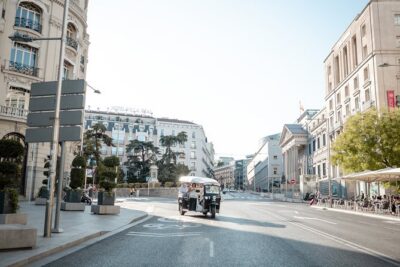
Madrid Historical Tour with Local Guide in Eco Tuk Tuk Private
Read our review →
Madrid Historic Centre Food Tour with Authentic Tapas & Wines
Read our review →
Madrid in a Day Tour:Royal Palace, Historic Center & Prado Museum
Read our review →
Madrid Local’s Tapas Tour Dinner with a side of History
Read our review →
Guided Tour of Madrid of the Austrias and the Historic Center
Read our review →
Segway Private Tour in the Historic Center of Madrid
Read our review →
Historic Madrid Virtual Reality Experience with an Official Guide
Read our review →Browse the lists this tour appears in