
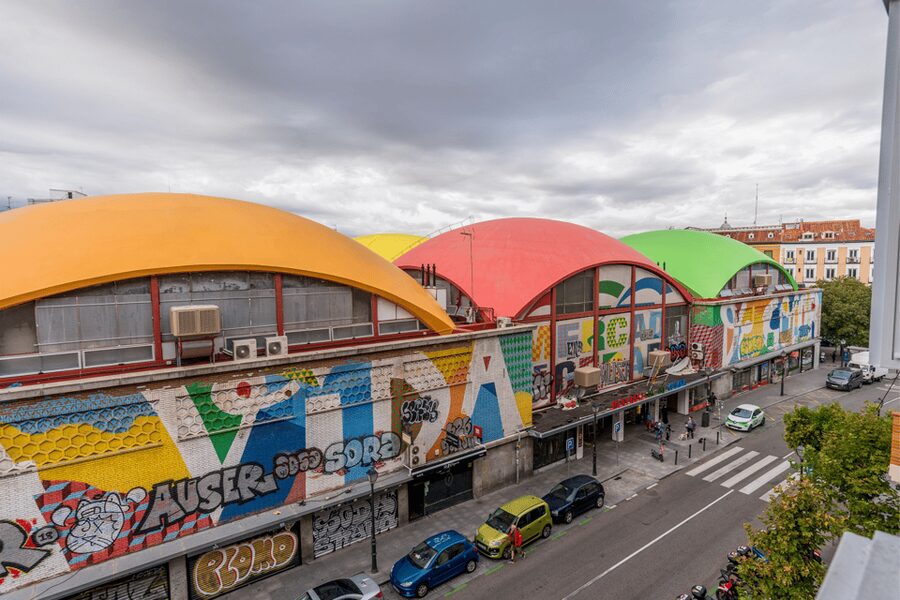
Review · MADRID
Madrid Insolite En Français : Hors des Sentiers Battus
Madrid shows its true character in the streets between the grand sights. This two-hour walk takes you through La Latina and Lavapiés, where old churches, quiet squares, local shops, and Sunday market life offer a more grounded view of the capital. You begin near Puerta Cerrada and return there after a loop through the city’s older quarters.
I like the small groups of up to 10 and the chance to adjust the pace, especially since Leire is praised for clear French, patience, and thoughtful answers. I also like the route itself: Plaza de la Paja, Puerta de Moros, the San Isidro area, and the Rastro give you a useful picture of Madrid beyond the usual central postcard stops. The main caution is the four-person minimum, and the two-hour format means the walk provides an introduction rather than a full study of these neighborhoods.
In This Review
- Key points
- Starting near Puerta Cerrada and San Miguel
- Plaza de la Cruz Verde and Plaza de la Paja
- San Pedro el Viejo and the San Isidro area
- Puerta de Moros and the old city’s edges
- From La Latina toward Lavapiés
- The Pavón Theatre and local culture
- El Rastro on Sunday mornings
- What the $40 price really buys you
- Guide style and language
- Who should book this walk
- Should you book Madrid Unusual in French?
- FAQ
- Where does the tour start?
- Where does the tour end?
- How long is the tour?
- What language is the tour offered in?
- Is the tour private or shared?
- What neighborhoods does the route visit?
- Does the tour include El Rastro?
- What places are visited along the route?
- Is the tour wheelchair accessible?
- What happens if fewer than four people book?
- Can I cancel the booking?
- Do I have to pay when I reserve?
Key points
- La Latina and Lavapiés without the usual tourist circuit: See old Madrid through lanes, churches, neighborhood squares, and local streets.
- A route built around small places: Plaza de la Cruz Verde, Plaza de la Paja, Puerta de Moros, and Calle Embajadores give the walk its character.
- French-speaking guidance: Leire is specifically praised for fluent French, clear explanations, and adapting to the group’s pace.
- Sunday option at El Rastro: On Sunday mornings, the route reaches Madrid’s famous flea market when local activity is at its highest.
- Small or private groups: A maximum of 10 people makes questions and conversation easier than on a large city tour.
- Good value for a short orientation: At $40 per person, you are paying for a focused, guided introduction to two central neighborhoods rather than a long sightseeing day.
Starting near Puerta Cerrada and San Miguel
The meeting point is Puerta Cerrada Square, next to the large cross. This places you close to one of the oldest parts of Madrid and gives the walk a fitting start: you begin in the city’s traditional core, not at a major museum entrance or a grand boulevard.
The route then heads toward the Basilica of San Miguel. The basilica is one of the area’s most striking churches, with a handsome exterior and a location tucked into the compact street pattern of old Madrid. Even if you do not spend much time inside, the stop helps explain how religious buildings shaped the neighborhoods around them.
From the start, this is a walking tour rather than a checklist of major sights. You should expect to pause at streets and squares where the guide explains how Madrid developed, rather than spend long stretches inside monuments. That approach is useful if you want to understand the city’s everyday structure.
Wear comfortable shoes. The route uses alleys, lanes, and older streets, and the value comes from walking at street level. The tour is listed as wheelchair accessible, but you may still want to confirm the exact route and conditions when booking if you need specific mobility assistance.
Other Madrid days people book alongside this one:
- Madrid: Tour Bernabéu Entry Ticket
★ 4.5 · 21,573 reviews - Madrid: Prado Museum Entry Ticket
★ 4.6 · 17,509 reviews - Madrid: Royal Palace Fast-Access Admission Ticket
★ 4.6 · 13,856 reviews
Plaza de la Cruz Verde and Plaza de la Paja
Plaza de la Cruz Verde is one of the small urban spaces that can be easy to miss on your own. It offers the kind of pause that makes this tour different from a march between famous landmarks. You get a look at how Madrid’s older quarters open suddenly into small gathering places.
Next comes Plaza de la Paja, one of La Latina’s best-known historic squares. Its name refers to hay, a reminder of the practical work once tied to this part of town. Today, its shape and surrounding buildings give you a sense of old Madrid’s scale. This is not the grand, formal Madrid of the Royal Palace. It is a more intimate city of irregular streets and neighborhood life.
I especially like this part of the walk for first-time visitors who have already seen the main sights but still find Madrid hard to read. A guide can connect the square to the streets around it and point out how the neighborhood’s older layout survives beneath the modern city.
Do not expect every stop to come with a long formal visit. The tour is only two hours and covers several areas. Much of the pleasure comes from the sequence: a square, a church, a narrow lane, then another small public space. The connections between places matter as much as the places themselves.
San Pedro el Viejo and the San Isidro area
The Church of San Pedro el Viejo adds another religious landmark to the route. Its name points to its age, and its presence helps set the tone of the walk. La Latina is filled with reminders that Madrid was once a smaller town built around parishes, local trades, and close neighborhood ties.
The route also passes the Museum of San Isidro. This museum focuses on Madrid’s origins and early development, making it a useful reference point even if the tour does not include an extended museum visit. You get historical context without giving up the walking rhythm.
The nearby Church of San Andrés continues the religious thread. Together, these churches show how much of old Madrid’s identity is tied to local worship and community spaces. They also give you more than a list of dates. You can see how churches sit within the neighborhood rather than apart from it.
This section should appeal to you if you enjoy city history in manageable portions. The guide can explain the past while you remain connected to the present street scene. If your priority is entering every church or spending time inside museum galleries, the schedule may feel too tight. The tour is designed to connect several sites, not provide a full interior visit at each one.
Puerta de Moros and the old city’s edges
Plaza de Puerta de Moros is another important stop because it reflects Madrid’s medieval past and its changing borders. The name recalls the city’s Muslim period and the old entrances that once marked movement through Madrid. A visit here helps you picture a city that grew in layers, with newer streets built around older routes.
The square also fits the tour’s larger idea: Madrid is best understood through small pieces. A major palace can tell you about royal power, but a place like Puerta de Moros helps you consider how the city’s ordinary districts formed and changed.
The route between the square and the surrounding churches is part of the lesson. You are not simply transported from one attraction to another. You walk through the spaces that link them, which gives you a clearer sense of La Latina as a neighborhood.
This is where a good guide matters. The walk’s appeal depends on explanation, not just scenery. Leire is praised for speaking fluent French, answering questions, and adjusting to the pace of the group. That makes the tour a better fit for you if you prefer conversation and local context over a memorized speech.
A different sort of afternoon around Madrid:
- Madrid: “Emociones” Live Flamenco Performance
★ 4.8 · 12,866 reviews - Madrid: Panoramic Route City Tour
★ 4.1 · 12,259 reviews - Madrid: Live Flamenco Show with Food and Drinks Options
★ 4.5 · 9,901 reviews - Avila & Segovia Tour with Tickets to Monuments from Madrid
★ 5.0 · 9,762 reviews
From La Latina toward Lavapiés
The route then moves north into Lavapiés, a neighborhood with a different feel from the older church quarter. Calle Embajadores is one of the main points along this section. It is a busy local artery with a long connection to movement, trade, and daily life in the southern part of central Madrid.
The change from La Latina to Lavapiés is one of the walk’s strengths. You can compare two nearby areas rather than treating Madrid as one uniform old town. La Latina gives you old squares and parish churches. Lavapiés brings a more mixed, active neighborhood setting, with streets that connect local commerce and public life.
The tour also includes the Church of San Cayetano. Its ornate appearance gives the route another clear architectural marker, while its setting keeps you close to the working streets of Lavapiés. The church is not presented as an isolated monument. It is one part of a neighborhood walk that links faith, architecture, theater, markets, and ordinary movement.
You may find this section more useful than a standard central-city stroll because it shows how Madrid changes from block to block. The route remains close to the center, but it avoids the feeling of simply circling the same famous plazas.
The Pavón Theatre and local culture
The Pavón Theatre adds a cultural stop that is different from the churches and squares. Its presence points to Lavapiés as a place of performance and local entertainment, not only old buildings. Including it broadens the tour’s view of the neighborhood.
The theater also gives the route a modern counterpoint. You move from religious buildings and medieval references to a venue linked with Madrid’s continuing cultural life. That balance keeps the walk from becoming a lesson in the distant past alone.
Since the tour lasts two hours, the Pavón Theatre is best understood as an exterior or neighborhood stop unless your guide states otherwise. The supplied details do not promise a performance or theater admission. You should book this walk for street-level context, not for tickets to an indoor show.
El Rastro on Sunday mornings
The route includes the Rastro flea market, especially on Sunday mornings when the area comes alive with stalls and local activity. This timing matters. On another day, you may see the streets without the full market atmosphere, so check the available start time if El Rastro is a major reason for booking.
El Rastro is one of Madrid’s most recognizable local traditions, but it can also be crowded. That creates a useful contrast with the quieter lanes earlier in the walk. You get both sides of the neighborhood: small historic spaces and a lively public market that draws people from across the city.
The market stop is not a promise of a dedicated shopping session. With only two hours and several locations on the route, you will likely have limited time to browse. Treat it as a chance to understand how the district works on a Sunday, with the option to return later if you want to shop.
If you dislike crowded markets, you may prefer a weekday departure or a time that does not overlap with the busiest Sunday period. If you want a strong sense of local Madrid, Sunday morning is likely the most atmospheric choice.
What the $40 price really buys you
The listed price is $40 per person. For two hours, that is not the cheapest way to simply walk around Madrid, since you can visit many streets and plazas on your own. The value comes from the French-speaking guide, the organized route, and the interpretation that ties the stops together.
At a maximum of 10 people, the price also buys a more personal setting. You can ask questions without competing with a large crowd, and the guide can adjust the pace more easily. The private option costs more than a shared place in most cases, though the exact private price is not provided.
I would call this good value if you care about history, neighborhood structure, and clear French-language guidance. It is less compelling if you want entry tickets, a long museum visit, or a full-day overview of Madrid’s major monuments. Those are not the purpose of this walk.
The customized itinerary is another factor. It suggests that the route can be shaped around the group, though the exact level of customization is not specified. Ask before booking if you have a particular interest in architecture, religious history, theater, markets, or the social story of Lavapiés.
Guide style and language
French is the listed tour language. Leire is specifically praised for speaking excellent French, explaining Madrid’s past clearly, answering questions, and matching the group’s walking pace. Those details matter because a neighborhood tour depends on communication more than a standard hop-on, hop-off route.
One separate account identifies a guide named Abdul and describes clear English. Since the activity information lists French, you should confirm the language and guide assigned to your date if that distinction matters to you. Do not assume that every departure has the same guide.
The group size helps here. A small group gives you more room to stop, ask about a church or square, and request clarification. It also makes the tour less anonymous. For a private walk, you can expect an even more personal format, though the exact private group terms are not provided.
The focus on respectful tourism is worth noting. This is a residential part of Madrid, not a stage set. A good visitor keeps voices down near homes and churches, does not block narrow lanes, and treats the market and neighborhood as places where people live and work.
Who should book this walk
I would recommend it to you if you have already seen the Royal Palace, Plaza Mayor, or the Prado area and want a different side of Madrid. It also works early in a visit if you want a street-level introduction before exploring La Latina or Lavapiés on your own.
French-speaking couples, families, and small groups are the clearest audience. The route also suits anyone who prefers old neighborhoods, churches, local markets, and cultural context over a long list of headline attractions.
You should think twice if you have only one short day in Madrid and have not yet seen the city’s main sights. This tour is a complement to those landmarks, not a replacement. You should also consider the pace if walking for two hours is difficult, even though the activity is listed as wheelchair accessible.
The four-person minimum is the main practical risk. If fewer than four people sign up, you will be offered another date or a full refund. That policy protects you financially, but it can affect your plans, so avoid placing this tour at the center of a tightly timed itinerary.
Booking is flexible: you can cancel up to 24 hours ahead for a full refund, and the reserve-now, pay-later option means you do not need to pay at the time of booking. Those terms are useful when your Madrid schedule is still shifting.
Should you book Madrid Unusual in French?
Book this walk if you want local streets explained in French, a small group, and a thoughtful route through La Latina and Lavapiés. The mix of Plaza de la Paja, old churches, Puerta de Moros, Embajadores, the Pavón Theatre, and Sunday Rastro offers a fuller picture of Madrid than the standard central circuit.
Skip it if you need major museum entry, royal sights, or a long, in-depth visit at each stop. The two-hour route moves at a steady pace, and its strength is the connection between places.
For the best fit, choose a Sunday morning if El Rastro matters to you, confirm the guide’s language before booking, and remember the four-person minimum. At $40, it is a sensible choice for a focused neighborhood walk with personal guidance rather than a grand sightseeing tour.
FAQ
Where does the tour start?
It starts at Puerta Cerrada Square, next to the large cross.
Where does the tour end?
The walk ends back at the meeting point.
How long is the tour?
The walking tour lasts two hours.
What language is the tour offered in?
The listed tour language is French.
Is the tour private or shared?
You can choose a private tour or a small-group format. Small groups have a maximum of 10 people.
What neighborhoods does the route visit?
The route visits the historic La Latina neighborhood and the northern part of Lavapiés.
Does the tour include El Rastro?
Yes, the route includes the Rastro flea market, with the local market activity highlighted for Sunday mornings.
What places are visited along the route?
Stops and areas include the Basilica of San Miguel, Plaza de la Cruz Verde, Plaza de la Paja, the Church of San Pedro el Viejo, Puerta de Moros, the Church of San Andrés, the Museum of San Isidro area, Calle Embajadores, the Church of San Cayetano, the Pavón Theatre, and El Rastro.
Is the tour wheelchair accessible?
The activity is listed as wheelchair accessible.
What happens if fewer than four people book?
The tour does not run without at least four participants. You will be offered an alternative date or a full refund.
Can I cancel the booking?
Yes. You can cancel up to 24 hours in advance for a full refund.
Do I have to pay when I reserve?
No. The reserve-now, pay-later option allows you to book without paying immediately.
Just added around Madrid
- Private Vacation Photography Session with Photographer in Madrid★ 5.0 · 3 reviews
- Arrival Private Transfer from MAD Airport to Madrid in a Minibus★ 5.0 · 3 reviews
- Segovia: 3-Hour Private Walking Tour★ 5.0 · 3 reviews
- Tour Segovia and La Granja de San Ildefonso from Madrid★ 5.0 · 3 reviews
- Madrid: Prado & Reina Sofia Museum Skip-the-Line Guided Tour★ 5.0 · 3 reviews
- Salamanca: Private Guided Customizable Walking Tour★ 5.0 · 3 reviews
- Total Reboot and Renew with top wellnes 3 hours couple experience★ 5.0 · 3 reviews
- Madrid: Prado Museum Private Tour★ 5.0 · 3 reviews