
Review · RETIRO PARK TOURS
Madrid Monumental and Retiro Park : Gran Vía, Cibeles and more
Madrid reveals itself best on foot, and this 2-hour-30-minute route links its grandest squares, avenues, fountains, and parkland in one steady walk. You begin at Puerta del Sol and finish among the Crystal Palace and Big Pond in Retiro Park, with the city’s central story unfolding between them.
I like the route for two clear reasons: it connects monuments rather than treating them as isolated photo stops, and the guides add anecdotes, historical timelines, restaurant suggestions, and museum advice. Guides including Stuart, Carlota, Paula, and Charlotte have been singled out for their warmth, clear storytelling, and ability to make architecture easier to understand.
The main drawback is the pace. You cover a lot of ground in a short time, and most sights are viewed from outside. If you want long museum visits or unhurried time in Retiro, you will need to return on your own.
In This Review
- Key points to know before you book
- From Puerta del Sol to the city’s main stage
- Gran Vía, theaters, and ambitious architecture
- Calle de Alcalá and Madrid’s financial story
- Banco de España and the myths behind the doors
- Cibeles, Madrid’s civic symbol
- Paseo del Prado and the Art Walk
- Neptune Fountain and Madrid’s football traditions
- Retiro Park, Crystal Palace, and the Big Pond
- How the guides shape the experience
- Price, group size, and practical value
- Who will get the most from this Madrid walk
- Should you book it?
- FAQ
- Where does the tour start?
- Where does the tour end?
- How long does the experience last?
- What language is the tour offered in?
- What sights are included?
- Is museum admission included?
- What is included in the price?
- Can I cancel for a full refund?
Key points to know before you book
- A complete central-Madrid walk: The route runs from Puerta del Sol to Retiro Park through Gran Vía, Calle de Alcalá, Cibeles, and Paseo del Prado.
- Strong guide-led storytelling: Stuart, Carlota, Paula, and Charlotte are noted for lively explanations, historical timelines, anecdotes, and practical city advice.
- A very low group price: The listed price is $3.11 per group of up to six, making this unusually inexpensive if the price remains available at booking.
- Mostly exterior sightseeing: You see major buildings and museums from the outside, rather than entering them.
- A useful first-day orientation: The route gives you a map of Madrid’s core districts, key monuments, and museum zone.
- A park finish: Retiro Park provides a calmer ending after the traffic, shops, and grand avenues of central Madrid.
From Puerta del Sol to the city’s main stage
The meeting point is Trip Tours Madrid at Puerta del Sol, in central Madrid. This is a practical place to begin because the square is one of the city’s main meeting points and transport hubs. You do not simply walk through it for a quick photograph. The guide explains why it matters.
You will see the Bear and the Strawberry Tree, one of Madrid’s best-known symbols, along with the Kilometer Zero marker. This point marks the beginning of Spain’s radial road system, so the guide can give you a useful sense of how Madrid functions as the country’s center.
The 20-minute stop is short, but that works well here. Puerta del Sol can feel crowded and noisy, so a focused explanation helps you read the square instead of wandering through it without context. You also get an early lesson in the way Madrid mixes civic symbols, royal history, local identity, and daily city life.
More Retiro Park walks:
- Madrid Walking Tour from Puerta del Sol to Retiro Park
★ 5.0 · 2,285 reviews - Madrid: Iconic Retiro Park Segway Tour
★ 4.9 · 848 reviews - Madrid Private Segway tour. Retiro Park – Centro Historico
★ 4.9 · 636 reviews
Gran Vía, theaters, and ambitious architecture
From Sol, the walk continues to Gran Vía, often described as Madrid’s main roadway. This is the stretch where the tour shifts from old symbols to the city’s grand commercial face.
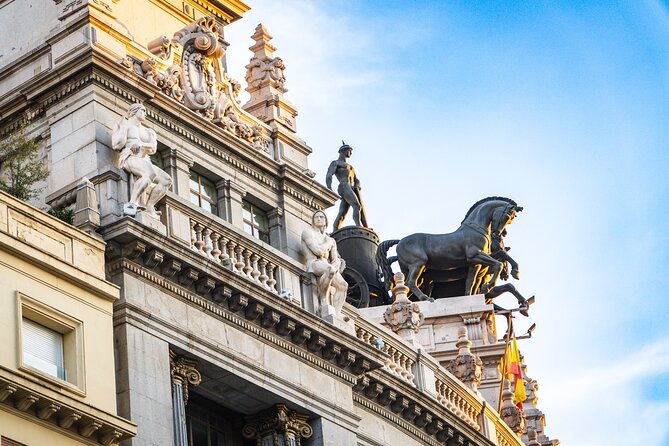
Allow your eyes to travel upward. Gran Vía is best appreciated through its façades, towers, signs, theaters, and large corner buildings. The Metropolis Building is one of the key visual moments, while the Telefónica building brings a different kind of architectural interest. The guide explains the stories behind these buildings, rather than leaving you with only a list of names.
You have about 20 minutes here. That is enough for an introduction and a few photographs, but not enough to explore the shops or theaters at length. I see this as a strength for a first orientation, especially if you plan to return later. The street is easy to revisit, and you will know which buildings deserve a second look.
Gran Vía can also be the least peaceful part of the walk. Traffic, crowds, and commercial signs are part of its character. If you prefer quiet streets and small-scale architecture, this section may feel busy. If you want to understand Madrid’s modern city center, it earns its place.
Calle de Alcalá and Madrid’s financial story
The next stop is Calle de Alcalá, one of Madrid’s oldest and longest streets. It offers a useful change of mood. Instead of focusing only on shops and theaters, the guide places the street within the city’s older growth and explains its role as a major connection through Madrid.
The Circle of Fine Arts building is a highlight. Its exterior is grand, and the building helps show how culture, public life, and architecture meet along this part of the city. The stop lasts about 20 minutes, giving the guide time to connect the building with the wider story of Calle de Alcalá.
This part of the route is valuable because it supplies the links between the headline monuments. You begin to see that Madrid is not just a collection of famous photographs. Its streets were routes for movement, trade, government, art, and ceremony.
Banco de España and the myths behind the doors
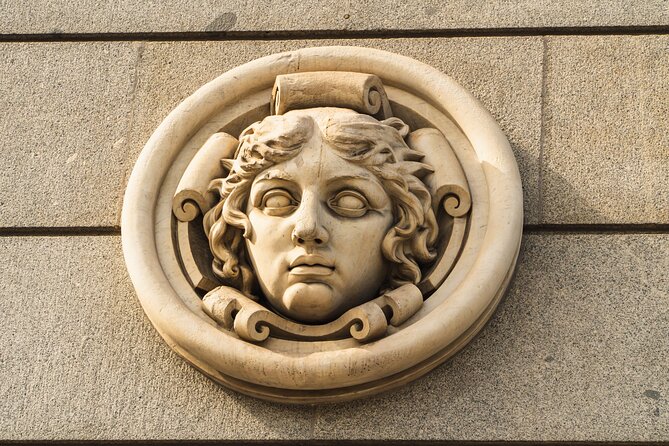
The tour then pauses outside Banco de España for about 15 minutes. You will not go inside, but the exterior is monumental and the guide explains why this institution matters to Spain’s economy.
The more entertaining part is the discussion of the building’s treasure and security system. Urban legends tend to stick in the mind better than dates, and this stop uses those stories to make a serious financial institution more approachable.
Keep your expectations measured. This is an exterior explanation, not a bank tour. Still, it adds variety to the route. After streets centered on art, shopping, and public monuments, you get a glimpse of the financial power behind the capital.
A different sort of afternoon around Madrid:
- Madrid: Tour Bernabéu Entry Ticket
★ 4.5 · 21,573 reviews - Madrid: Prado Museum Entry Ticket
★ 4.6 · 17,509 reviews - Madrid: Royal Palace Fast-Access Admission Ticket
★ 4.6 · 13,856 reviews - Madrid: “Emociones” Live Flamenco Performance
★ 4.8 · 12,866 reviews
Cibeles, Madrid’s civic symbol
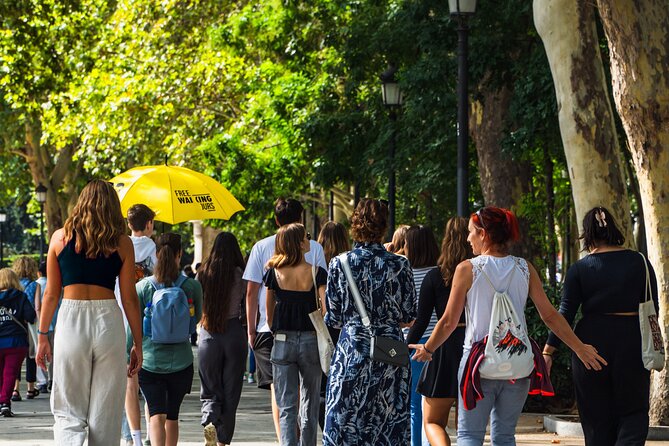
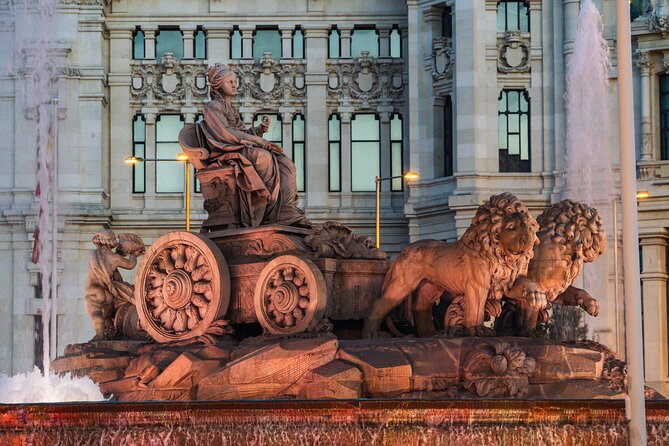
Plaza de Cibeles is one of the tour’s strongest visual stops. At its center is the fountain of the goddess Cibeles, one of Madrid’s defining symbols. The guide explains its place in the city and its connection with sporting celebrations.
The surrounding buildings give the square much of its impact. You will see the City Hall and the Palace of Cibeles, both of which help frame the fountain as more than a decorative feature. This is a civic space, a ceremonial setting, and a familiar gathering point.
The stop lasts about 15 minutes. That can feel brief if you want to study every façade, but it keeps the walk moving. I would use the guide’s explanation to decide if you want to return later for photographs or a closer look at the buildings.
Cibeles also provides one of the clearest examples of how Madrid uses monuments in everyday life. Mythology, city government, football celebrations, and public identity all meet in one square. That mix makes the stop more memorable than a standard fountain photograph.
Paseo del Prado and the Art Walk
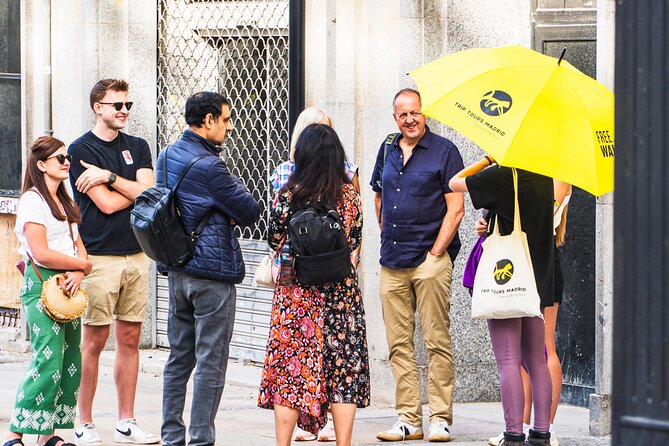
From Cibeles, the route follows Paseo del Prado, a historic avenue recognized as a World Heritage Site. This is the cultural center of the walk, with gardens, classical fountains, and links to three of Madrid’s most important museums.
The guide explains the avenue’s cultural role and helps you understand why this stretch is often called the Art Walk. You may find the shift from traffic-heavy Gran Vía to tree-lined Prado especially welcome. It gives your legs and eyes a break while adding an important part of Madrid’s public history.
The stop is planned for about 15 minutes, so you are receiving an introduction rather than a museum district tour. That distinction matters. If your main goal is to see paintings, this experience will not replace a visit inside the museums. If you want to understand how the museums relate to one another and to the avenue, it is a useful primer.
The Prado Museum receives a separate exterior stop. You can learn about its history and the works associated with masters such as Velázquez, Goya, and El Bosco. No interior admission is listed, so plan a separate museum visit if those collections are high on your list.
Neptune Fountain and Madrid’s football traditions
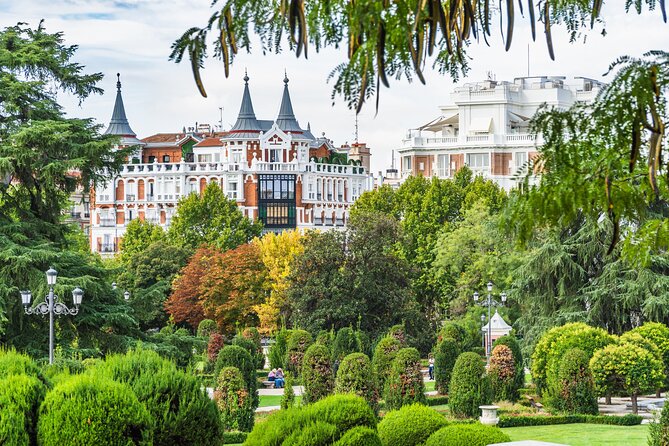
The Neptune Fountain follows at the next 15-minute stop. Like Cibeles, it is rooted in mythology, but it also has a modern role in city life. Atlético Madrid supporters use the fountain for victory celebrations, giving the monument a strong sporting identity.
The guide explains how Neptune fits into the design of Paseo del Prado and how the two famous fountains complement one another. This is a small but worthwhile detail. You see how Madrid’s public spaces carry several layers of meaning at once: classical imagery, urban design, football loyalty, and public celebration.
The stop is short, and the fountain itself does not require a long visit. Its value comes from the connection to Cibeles and the wider avenue. You are not just collecting monuments. You are learning how different parts of Madrid’s identity gather around them.
Retiro Park, Crystal Palace, and the Big Pond
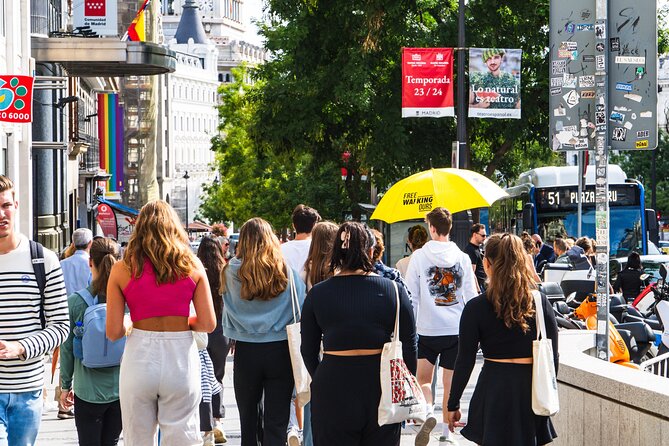
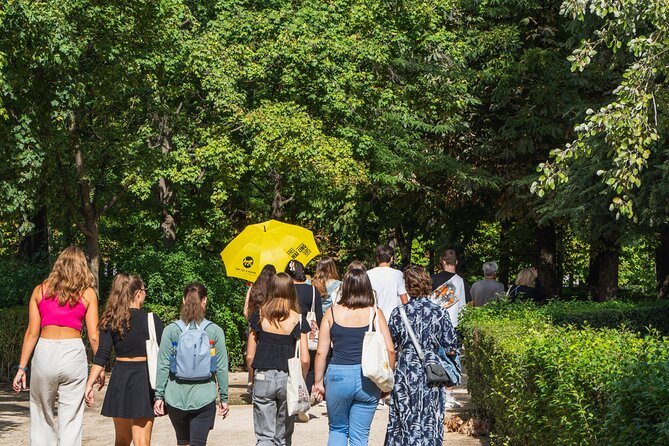
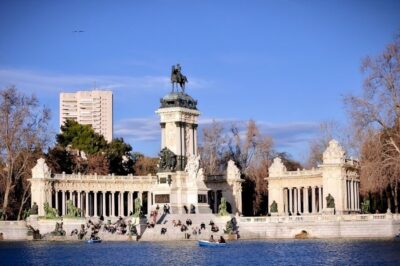
The walk ends in Retiro Park, a major green space and World Heritage Site. After central streets and monumental avenues, the change is welcome. The park gives the tour a softer finish, with historic gardens and open areas where you can slow down.
The guide points out the Crystal Palace and the Big Pond, two of Retiro’s best-known sights. You also hear about the park’s gardens and historic character. The planned stop lasts around 20 minutes, which is enough to orient you but not enough for a full park visit.
I like ending here because it gives you an easy decision about the rest of your day. You can stay in Retiro and explore at your own pace, return toward the museums, or use the guide’s recommendations for food and other activities. The walk does not leave you at an awkward roadside corner. It finishes in a place where you can continue independently.
Do not expect a quiet private garden during every visit. Retiro is a major city park, and its popular sights can draw plenty of people. Still, it is a better ending than finishing beside a busy avenue. The park lets you absorb the route without immediately rushing to the next attraction.
How the guides shape the experience
The route depends heavily on the guide. The most praised qualities are clear explanations, humor, expressive delivery, and the ability to build a timeline instead of firing dates at you.
Stuart is described as friendly, funny, and especially good at creating a relaxed group atmosphere. He has also been noted for taking excellent photos, which can be a welcome extra on a walking tour. Carlota receives strong praise for detailed explanations of Madrid’s Bourbon-era monuments and for answering questions in an engaging way.
Paula is described as cheerful and willing to add practical advice about restaurants, museums, and other places to visit. Charlotte, also referred to as Carlota in some translated comments, is praised for making the route detailed, pleasant, and easy to follow. Since guide assignment can vary, you should not assume a particular person will lead your departure, but these names give you a sense of the style offered.
The support materials and anecdotes are another plus. I prefer a guide who gives you a timeline and a few memorable stories over one who tries to recite every date. This route appears designed for that balance: enough historical detail to give the buildings meaning, but enough conversation and humor to keep a long walk moving.
Price, group size, and practical value
The listed price is $3.11 per group of up to six people. That is exceptionally low for a guided city walk if the same price is available when you book. For a small group, the value is hard to argue with: you receive a professional English-speaking guide, a connected route, historical explanations, and suggestions for continuing your visit.
The tour can accept up to 25 people, so your actual group may be larger than six. The group price detail makes most sense for a private or small-party booking, but you should check the final booking terms carefully before paying. Gratuity is not included and is given to the guide at the end.
The total duration is about two and a half hours. The scheduled stops add up to a brisk series of explanations, and walking time fills the gaps. Wear comfortable shoes and expect to remain on your feet. Snacks are not included, so eat beforehand or plan food after reaching Retiro.
The experience is offered in English and uses a mobile ticket. Confirmation arrives at booking. It is near public transportation, service animals are allowed, and most people can participate. Because the walk depends on good weather and a minimum number of participants, a cancellation may result in another date or a full refund.
Free cancellation is available until 24 hours before the start time. Changes or cancellations inside that window are not refunded, so do not wait until the last minute if your plans are uncertain.
Who will get the most from this Madrid walk
I would choose this tour for a first visit, a short stay, or a morning when you want a clear introduction before exploring museums and neighborhoods alone. It works especially well if you like architecture, public squares, local symbols, and short historical stories.
Families and small groups may also find the format useful, since the route keeps changing and the guide adds stories instead of relying only on formal lectures. The $3.11 group price, when available, makes it particularly attractive for up to six people traveling together.
I would be more cautious if you have limited mobility, although the information says most people can participate. The route covers several central streets and ends in a large park, but the exact walking conditions and rest opportunities are not specified. Ask the provider if you need a precise accessibility assessment.
Museum lovers should treat this as an outside orientation. The Prado connection is useful, but museum entry is not part of the experience. Book extra time for the collections you want to see.
Should you book it?
Book this walk if you want a fast, story-led introduction to Madrid’s monumental center and like having a guide connect the dots between symbols, streets, fountains, museums, and parkland. The route is broad, the price is unusually modest, and the guide style appears warm, lively, and practical.
Skip it if you want long stops, quiet corners, or interior visits. For everyone else, especially first-time visitors, it is a sensible way to get your bearings, learn which sights deserve a return visit, and finish with time to wander Retiro Park on your own.
FAQ
Where does the tour start?
It starts at Trip Tours Madrid at Puerta del Sol, Centro, 28013 Madrid, Spain.
Where does the tour end?
The tour ends in El Retiro Park, Retiro, 28009 Madrid, Spain.
How long does the experience last?
It lasts approximately 2 hours and 30 minutes.
What language is the tour offered in?
The tour is offered in English.
What sights are included?
The route includes Puerta del Sol, Gran Vía, Calle de Alcalá, Banco de España, Plaza de Cibeles, Paseo del Prado, Neptune Fountain, an exterior museum stop, and Retiro Park.
Is museum admission included?
The museum stop is outside only. Interior museum admission is not listed as included.
What is included in the price?
The experience includes a professional guide, a guided walking tour, historical stories and anecdotes, personalized recommendations, and tips about restaurants and other activities.
Can I cancel for a full refund?
Yes. You can cancel at least 24 hours before the experience start time for a full refund. Cancellations made less than 24 hours before the start time are not refunded.
Just added around Madrid
- Private Vacation Photography Session with Photographer in Madrid★ 5.0 · 3 reviews
- Arrival Private Transfer from MAD Airport to Madrid in a Minibus★ 5.0 · 3 reviews
- Segovia: 3-Hour Private Walking Tour★ 5.0 · 3 reviews
- Tour Segovia and La Granja de San Ildefonso from Madrid★ 5.0 · 3 reviews
- Total Reboot and Renew with top wellnes 3 hours couple experience★ 5.0 · 3 reviews
- Madrid: Prado & Reina Sofia Museum Skip-the-Line Guided Tour★ 5.0 · 3 reviews
- Salamanca: Private Guided Customizable Walking Tour★ 5.0 · 3 reviews
- Madrid: Prado Museum Private Tour★ 5.0 · 3 reviews
Retiro Park Tours, compared.
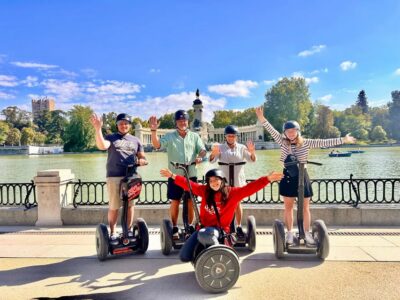
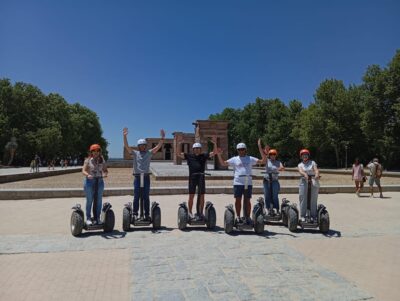
Madrid Private Segway tour. Retiro Park – Centro Historico
Read our review →
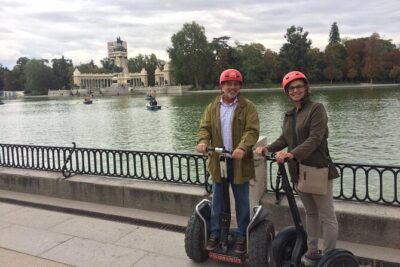
Magical and Iconic Retiro Park Segway Tour in Madrid
Read our review →
Browse the lists this tour appears in