
Review · WALKING TOURS
Madrid Old City Guided Exclusive Guided Walking Tour
Madrid’s old center unfolds quickly on this 2.5-hour walking tour, beginning at the Royal Palace and ending at Puerta del Sol. You move from royal courtyards and a medieval Islamic wall to narrow La Latina lanes, market stalls, grand plazas, and the city’s most famous clock.
I like the way the route gives first-time visitors a useful mental map, and I like the mix of major sights and smaller corners such as Plaza de la Paja and Plaza de los Carros. Guides including Isabella, Jake, Sergio, Michele, Flo, Leti, and Alfonso are praised for adding food advice, folklore, religious context, and stories from Spain’s more recent past.
The main thing to weigh is the pace and group setup. Some departures feel almost private, while others can be larger, and one reported experience involved a group of 12 without headsets. If you stand near the back, you may miss parts of the commentary.
In This Review
- Key Things to Know Before You Book
- Starting Beside the Royal Palace
- Almudena Cathedral and the Oldest Madrid Walls
- Calle Mayor and Medieval Civic Madrid
- Narrow Streets in La Latina
- Puerta Cerrada, Arco de Cuchilleros, and Plaza Mayor
- Mercado de San Miguel and Madrid’s Food Scene
- Real Casa de Postas and Puerta del Sol
- How the Guides Shape the Experience
- Price, Pace, and Practical Value
- Who Should Book This Madrid Walk
- Should You Book the Madrid Old City Tour?
- FAQ
- How long does the Madrid Old City Guided Walking Tour last?
- Where does the tour begin?
- Where does the tour end?
- Is admission to the Royal Palace included?
- Is admission to the Almudena Cathedral Museum included?
- Is transportation included?
- Can I cancel for a full refund?
Key Things to Know Before You Book
- The route covers Madrid’s historic core: You see the Royal Palace, Almudena Cathedral, Arab Wall, La Latina, Plaza Mayor, Mercado de San Miguel, and Puerta del Sol.
- The tour is built for first-time visitors: It helps you understand how Madrid’s oldest neighborhoods fit together before you explore alone.
- Several guides receive especially strong praise: Isabella, Jake, Sergio, Michele, Flo, Leti, and Alfonso are all noted for clear explanations and friendly local advice.
- Royal Palace entry is not included: The palace is part of the route, but admission costs extra, and some sights may be viewed only from outside.
- It is an urban walk, not a strenuous hike: You cover plenty of ground, but there are regular standing pauses and opportunities to take in the surroundings.
- The meeting point is central but easy to miss in city traffic: Allow extra time to reach Plaza de la Armería, especially during celebrations or heavy traffic.
Starting Beside the Royal Palace
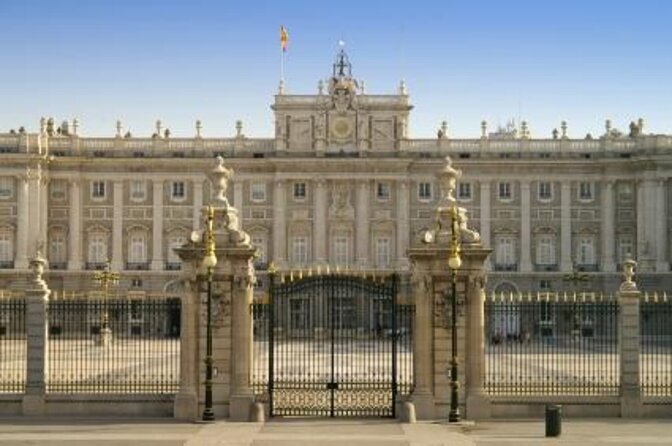
The tour begins at Plaza de la Armería, the broad square in front of the Royal Palace. This is a strong opening because Madrid’s royal center gives you an immediate sense of the city’s scale and political importance.
The palace served as a home for Spanish monarchs from Charles III through Alfonso XIII. Today, it is used for state ceremonies rather than as a regular royal residence. Your guide explains that background before moving on to the next landmark.
The important point is that palace admission is not included. The listed stop allows about 10 minutes, so you should think of this portion as an introduction and exterior visit unless your specific booking includes a longer palace visit. One experience focused heavily on entering the palace and seeing 23 rooms, but that was clearly different in emphasis from the standard old-city walk.
If seeing the palace interiors is your top goal, confirm exactly what your departure includes before paying. If your aim is to get oriented, the exterior setting is a sensible place to start.
More walking tours in Madrid:
- Toledo Tour & Vineyard Walk with Wine Tasting from Madrid
★ 5.0 · 2,546 reviews - Madrid Walking Tour from Puerta del Sol to Retiro Park
★ 5.0 · 2,285 reviews - Madrid Old Town & Royal Palace Walking Tour Skip the Line Ticket
★ 4.5 · 1,829 reviews
Almudena Cathedral and the Oldest Madrid Walls
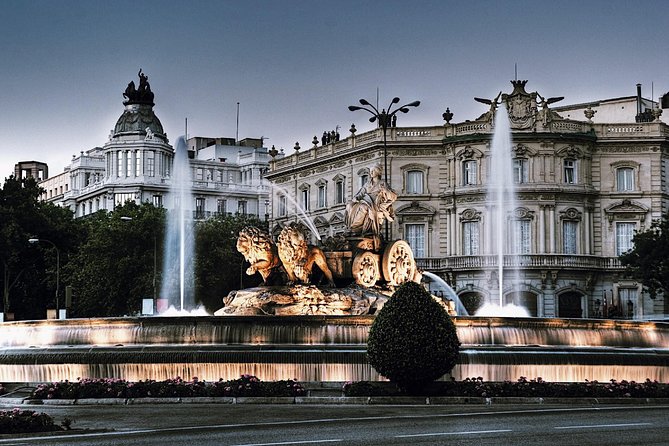
From the palace, the route continues to the Museo de la Catedral de la Almudena and the cathedral itself. Almudena Cathedral was consecrated by Pope John Paul II in 1993, making it a relatively modern church compared with the much older parts of Madrid around it.
That contrast is useful. Madrid’s old center is not one perfectly preserved medieval town. It is a layered city, where royal buildings, religious landmarks, Islamic foundations, later streets, and modern civic spaces sit close together.
The cathedral museum is listed as a 10-minute stop, with admission not included. As with the palace, security or operating conditions may affect interior access. You should not book this walk assuming that every building on the route will be entered.
The Arab Wall, on Cuesta de la Vega, is a smaller but more revealing stop. These Muslim walls are linked to Madrid’s origins and are probably the oldest surviving construction in the city. They do not have the drama of a huge fortress, but they help explain why Madrid began here.
I especially like this part of the walk because it moves beyond the standard postcard sights. The wall gives you a physical clue to the city’s Islamic beginnings before the tour turns into the streets of later Madrid.
Calle Mayor and Medieval Civic Madrid
Calle Mayor runs from Puerta del Sol toward Cuesta de la Vega. It began as a medieval road and became one of Madrid’s main thoroughfares during the early modern period.
Your guide uses this street to connect the landmarks. Rather than treating each square as a separate photo stop, the walk shows how Madrid developed outward from its oldest center. The 10-minute timing at each location means the guide has to keep the story moving, but the route still leaves room for questions.
Plaza de la Villa is one of the best-preserved historic spaces in the center. It sits near the old Puerta del Sol area and was an important medieval civic point. This is the sort of place where a guide makes a real difference, since the square is compact and its importance is easy to miss if you are simply walking past.
The tour is strongest when the guide adds context instead of reciting dates. Jaime was praised for bringing in both religious and political history, while Jake was noted for explaining Spain’s more recent past along with earlier events. That range can make the city easier to understand than a tour focused only on kings and buildings.
Narrow Streets in La Latina
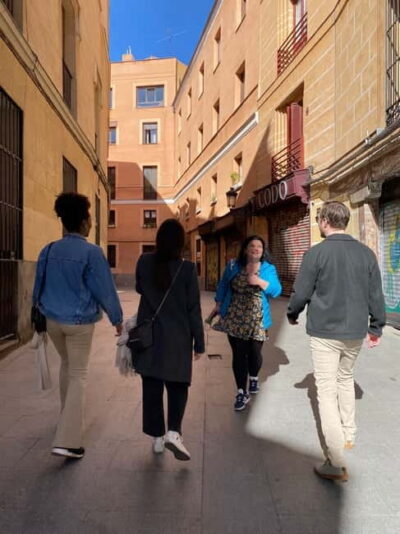
The walk then enters La Latina, one of central Madrid’s oldest neighborhoods. Its narrow streets occupy much of the city’s early core, and the change from broad ceremonial spaces to tight lanes is noticeable.
La Latina is a good place to slow down and look around. You may find small squares, old façades, lively corners, and streets that feel more local than the grand plazas near the palace. The tour gives you a quick introduction rather than a full neighborhood exploration, but it helps you decide where to return later.
Plaza de la Paja was once a major marketplace during the 13th and 14th centuries. Today, it offers a more varied atmosphere, with crowded streets in some directions and quieter pockets nearby. The guide can help you notice how the square worked in medieval Madrid and how its role has changed.
Plaza de los Carros is smaller and more relaxed, with a fountain and places where you can stop for a drink. It is not a headline attraction, and that is exactly why it earns its place here. The square gives the walk a breather between larger sights.
One useful detail from the tour experiences is that the route is not nonstop marching. Some groups pause for coffee or stand in shaded spots, and one guide made a point of finding shelter during rain. Still, you should wear comfortable shoes and bring water. The route covers a fair amount of ground.
A few more Madrid days to weigh up
- Madrid: Royal Palace Expert Guided Tour with Skip-the-Line
★ 4.7 · 6,986 reviews - From Madrid: Guided Day Trip to Toledo by Bus
★ 4.1 · 5,280 reviews - Madrid: Toledo & Segovia Full Day Guided Tour with Alcázar
★ 4.6 · 4,394 reviews - From Madrid: Toledo Guided Day Trip
★ 4.3 · 3,501 reviews
Puerta Cerrada, Arco de Cuchilleros, and Plaza Mayor
Plaza de Puerta Cerrada lies in La Latina’s historic center, an area built over an earlier medieval Islamic fort. The name and setting reflect the tangled layers of old Madrid, where a modest square can carry a long civic story.
From there, the route heads toward Arco de Cuchilleros. The archway and its stairs lead up to Plaza Mayor, creating one of the walk’s best changes in viewpoint. You move from a lower, enclosed passage into one of Madrid’s grandest public spaces.
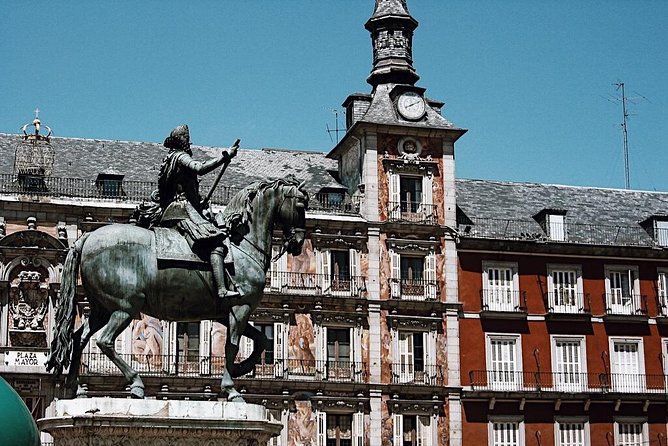
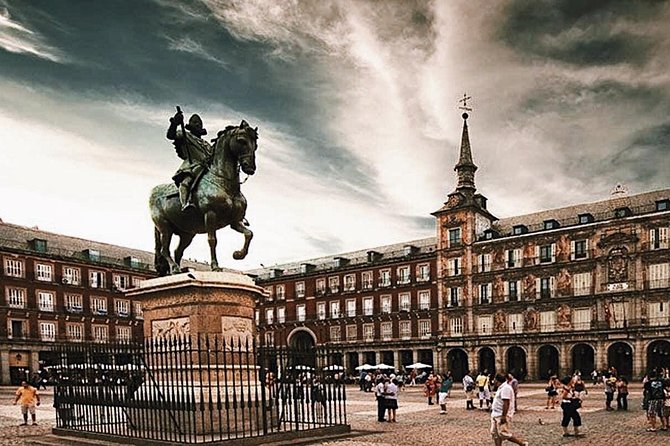
The arch is associated with the approach to the 16th-century Plaza Mayor. Once you reach the square, your guide explains its Habsburg-era origins and its place in the life of Madrid. It was shaped during the reign of Philip III and served as the center of old Madrid.
Plaza Mayor is large, formal, and hard to miss. It is also a place where a guide can keep the visit from becoming a quick photo stop. Look up at the arcades, notice the uniform façades, and listen for the stories tied to royal ceremonies and public life.
The route allows about 10 minutes at each listed stop, so do not expect a long, leisurely sitting in the square. The goal is orientation and interpretation. You can return later for a slower visit.
Mercado de San Miguel and Madrid’s Food Scene
Mercado de San Miguel sits beside Plaza Mayor and offers a quick look at Spain’s food culture in one central setting. The historic market is known for its handsome iron-and-glass structure and its selection of food from across the country.
The market is useful early in a Madrid stay because it shows you ingredients, regional specialties, and the city’s habit of eating in small portions throughout the day. It is also a practical place to ask your guide what to seek out elsewhere.
Several guides, including Isabella, Michele, and Jake, are praised for recommending places to eat and drink. Jake is also known for explaining the origin of churros and chocolate. Those details make the tour more useful than a simple march between monuments.
Keep your expectations realistic. A 10-minute market stop is enough to look around and get suggestions, but not enough for a full meal. If you want to eat there, plan to return after the tour.
Real Casa de Postas and Puerta del Sol
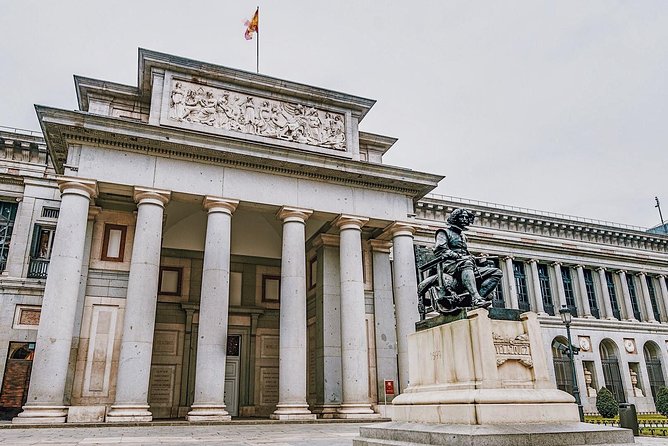
Near the end of the route, you see the Real Casa de Postas, a neoclassical administrative building. It once housed telegraph offices connected with the National Police and was later acquired by Madrid’s regional government in 1985.
This is another modest-looking building with a useful civic story. It helps show that Madrid’s center is not only palaces and churches. Government offices, communications, policing, trade, and public administration all shaped these streets.
The final stop is Puerta del Sol, one of Madrid’s best-known squares. It is the center of Spain’s radial road network and a natural place to finish a first orientation walk.
The square is also home to the famous clock whose bells mark the traditional eating of the Twelve Grapes on New Year’s Eve. Your guide may add local details about the square, but the key value is practical: once you understand Sol, you can navigate to many other parts of central Madrid more easily.
Ending here works well. You are close to transport and surrounded by streets leading toward other major areas. The tour does not provide transportation, but none is needed between stops because the route is designed as a walk.
How the Guides Shape the Experience
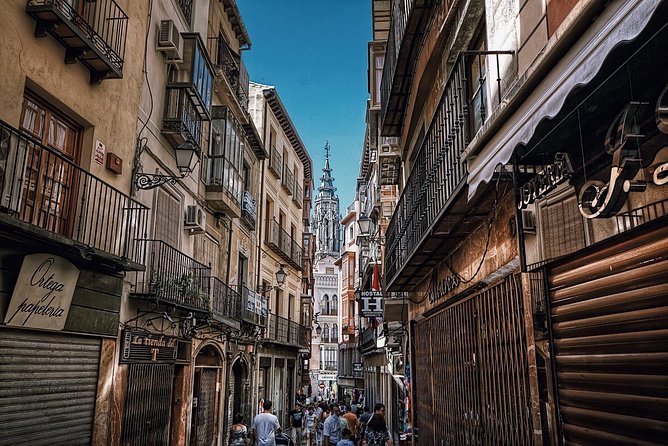
The guide is the heart of this tour. The strongest accounts describe guides who explain history clearly while adding food, legends, personal recommendations, and recent Spanish history.
Isabella is praised for making a small group feel personal, learning names, and suggesting local places to eat and drink. Jake is described as especially strong on Spanish history, from early colonial events to the 20th century, and as someone who mixes historical facts with local details.
Sergio is noted for careful explanations and a friendly manner. Michele is praised for adjusting the pace and pointing out both important monuments and places to return for food or entertainment. Flo combines history with folklore and food stories, while Leti is described as offering a warm introduction to central Madrid.
Guide quality can vary from one departure to another, but these names give you an idea of the tone you may encounter. The best version of this tour is interactive rather than scripted. You should ask questions, especially if you want help planning meals, museums, or evening activities.
One practical caution concerns sound. Headsets are not always supplied for smaller groups. A group of 12 found it difficult to hear at times, especially when the guide began speaking before everyone had gathered. Stay close to the guide and speak up if you cannot hear.
Price, Pace, and Practical Value
At $56.52 per person, this is not the cheapest way to see Madrid’s old center. The price makes more sense if your group receives a private or semi-private format and you value a guide’s explanation, local advice, and time-saving route.
You are paying for more than a list of sights. In two and a half hours, you get a coherent introduction to Madrid’s origins, royal center, medieval streets, public squares, market culture, and present-day city layout. That can save you from wandering without context during your first day.
The value is weaker if you mainly want interior access. Palace and cathedral museum admission are not included, and the schedule gives only short periods at most stops. This is an orientation walk, not a full museum tour.
The physical demand is moderate. You walk through old streets and cover a good section of central Madrid, but the experience includes standing pauses and occasional rest opportunities. Comfortable shoes are essential. Bring water, a hat in summer, and an umbrella when rain is possible.
The tour operates in all weather. National celebrations can alter the route, and no refund or discount is offered when an alternative route is needed. Large bags and suitcases are not allowed, so arrive with only what you can comfortably carry.
You receive confirmation at booking, and you must provide a mobile phone number with the country code. Free cancellation is available until 24 hours before the start time. Madrid traffic can be slow, so leave extra time to reach Plaza de la Armería.
Who Should Book This Madrid Walk
I would choose this tour for a first visit, especially if you have only a short stay and want to understand the center before visiting museums or exploring neighborhoods alone.
It also suits you if you enjoy history presented through streets and buildings rather than through a lecture. The route includes major landmarks, but it also makes time for less obvious places such as the Arab Wall, Plaza de la Paja, and Plaza de los Carros.
Families and mixed-age groups can manage the walk if everyone is comfortable standing and walking on old city streets. The pace is generally described as manageable, though one departure moved quickly and had no seated or bathroom break. Tell the guide early if your group needs a slower rhythm.
I would look elsewhere if you want a long interior visit to the Royal Palace, a food tour with tastings, or a relaxed photography walk. You can still use this tour as a starting point, but those are not its main strengths.
Should You Book the Madrid Old City Tour?
Book it if you want a clear first look at Madrid’s oldest neighborhoods, a guide who can connect royal, Islamic, religious, and modern history, and useful advice on where to eat and what to explore next.
Choose a private or smaller departure when possible, and confirm whether palace entry is part of your particular booking. Arrive early, stay close enough to hear, and treat the route as a city introduction rather than a series of full attraction visits.
At its best, this walk leaves you knowing where you are in Madrid and why the streets look the way they do. That is solid value for a first day in the city.
FAQ
How long does the Madrid Old City Guided Walking Tour last?
The tour lasts approximately 2 hours and 30 minutes.
Where does the tour begin?
It begins at Plaza de la Armería, Pl. de la Armería, Centro, 28013 Madrid, Spain.
Where does the tour end?
The tour ends at Puerta del Sol in central Madrid.
Is admission to the Royal Palace included?
No. Admission to the Royal Palace of Madrid is not included in the tour price.
Is admission to the Almudena Cathedral Museum included?
No. Admission to the Museo de la Catedral de la Almudena is not included.
Is transportation included?
No. Transportation is not included. The experience is a walking tour between the listed areas.
Can I cancel for a full refund?
Yes. You can cancel at least 24 hours before the experience start time for a full refund. Cancellations or changes made less than 24 hours in advance are not accepted for a refund.
Just added around Madrid
- Private Vacation Photography Session with Photographer in Madrid★ 5.0 · 3 reviews
- Arrival Private Transfer from MAD Airport to Madrid in a Minibus★ 5.0 · 3 reviews
- Segovia: 3-Hour Private Walking Tour★ 5.0 · 3 reviews
- Tour Segovia and La Granja de San Ildefonso from Madrid★ 5.0 · 3 reviews
- Madrid: Prado & Reina Sofia Museum Skip-the-Line Guided Tour★ 5.0 · 3 reviews
- Salamanca: Private Guided Customizable Walking Tour★ 5.0 · 3 reviews
- Total Reboot and Renew with top wellnes 3 hours couple experience★ 5.0 · 3 reviews
- Madrid: Prado Museum Private Tour★ 5.0 · 3 reviews
Walking Tours, compared.

Toledo Tour & Vineyard Walk with Wine Tasting from Madrid
Read our review →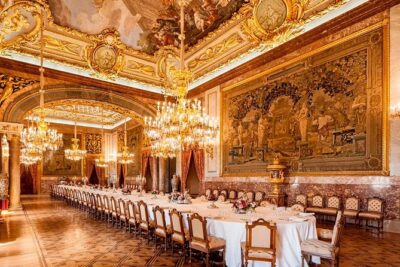
Madrid Old Town & Royal Palace Walking Tour Skip the Line Ticket
Read our review →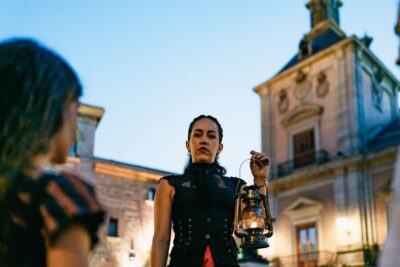
Spanish Inquisition and Legends Evening Walking Tour
Read our review →
6-Hour Day Trip to Toledo with Guided Walking Tour
Read our review →
Guided Monument Walking Tour with Wristband Pass
Read our review →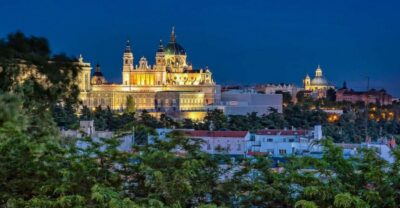
Browse the lists this tour appears in