
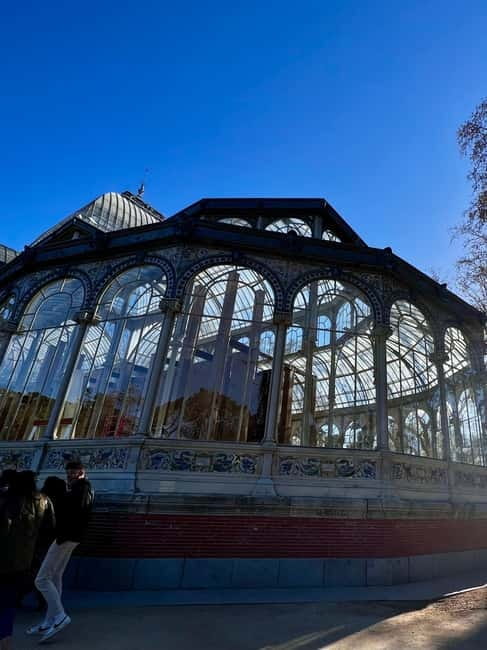
Review · RETIRO PARK TOURS
Madrid on foot: From Debod to Retiro
Madrid puts its best sights along one long, rewarding walk. This tour begins with an Egyptian temple in Plaza de España, passes the Royal Palace and Plaza Mayor, then follows Calle Alcalá toward Cibeles, Puerta de Alcalá, and Retiro Park. The route gives you a useful map of central Madrid instead of treating each sight as a separate stop.
I like the small group, limited to seven people, and the way the guide connects buildings with odd little stories: Galileo’s link to a statue, the meaning of Mucha mierda at the Royal Theater, and Quevedo’s old route through Calle del Codo. I also like the clear three-hour plan and the chance to choose English or Spanish. The drawback is the pace. This is a long city walk, and it is not suited to people with mobility impairments, low fitness, children under eight, babies under one, or people over 70.
In This Review
- Key points at a glance
- One walk that explains Madrid’s layout
- Starting at Cervantes and the Temple of Debod
- Royal Palace, Almudena Cathedral, and the Royal Theater
- Madrid de los Austrias and Calle del Codo
- Plaza Mayor and four centuries of public life
- Puerta del Sol and the streets feeding Gran Vía
- Calle Alcalá, Cibeles, and Puerta de Alcalá
- Retiro Park and the final sights
- What the small group changes
- Is $28 a fair price?
- Who should book this Madrid walking tour?
- Should you book it?
- FAQ
- Where does the tour start?
- Where does the activity end?
- How long does the tour last?
- What languages are available?
- How large is the group?
- What sights are included on the route?
- Does the tour include entry to the Royal Palace?
- What should I bring?
- Is the tour suitable for children?
- Can I cancel for a refund?
Key points at a glance
- Egyptian temple in Plaza de España: Begin with the unusual Temple of Debod and learn why it sits in Madrid.
- Seven-person maximum: The small group leaves more room for questions and conversation with the cultural mediator.
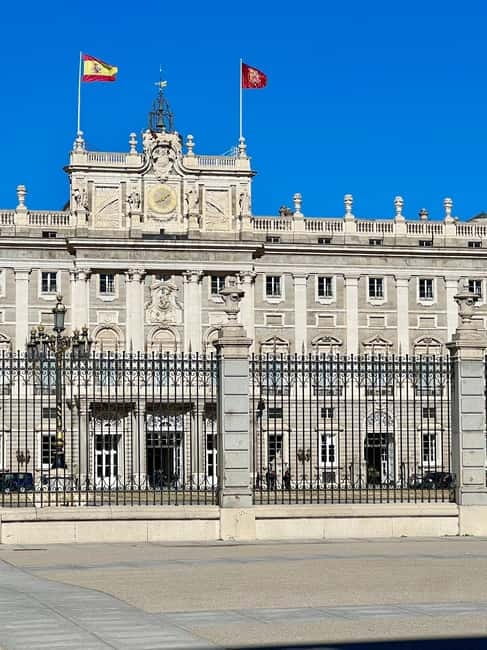
- Royal Madrid in one stretch: See the Royal Palace, Almudena Cathedral, Royal Theater, and nearby statues without changing transport.
- Old Madrid on foot: Walk through Madrid de los Austrias, Calle del Codo, Plaza Mayor, and Puerta del Sol.
- A grand final stretch: Follow Calle Alcalá past Cibeles and Puerta de Alcalá toward Retiro Park.
- A demanding three hours: Wear proper walking shoes and dress for the season. The route is not designed for everyone.
One walk that explains Madrid’s layout
At $28 per person, this is priced as an affordable introduction to central Madrid. You are paying for three hours with a live guide, a small group, and a route that links many of the city’s major sights. It does not replace admission to the Royal Palace or other attractions, but it can help you decide which places deserve a later, longer visit.
I like this format for a first day in Madrid. You move from the western edge of the central sightseeing area toward the east, passing from royal monuments to old streets, grand avenues, and parkland. By the end, you have a working sense of how the center fits together.
The tour is led in English or Spanish by a cultural mediator. That wording matters. The experience is built around explanation and interpretation, not simply a list of photo stops. You will hear about people, customs, architecture, political power, and the small details that make the city easier to read.
The advertised duration is three hours. That is enough time for a strong orientation, but not enough for long interior visits. Expect to see the major sights from the outside and hear their stories while walking between them. If your priority is entering the Royal Palace, touring the Prado, or spending quiet time in Retiro, you will need separate plans.
More Retiro Park walks:
- Madrid Walking Tour from Puerta del Sol to Retiro Park
★ 5.0 · 2,285 reviews - Madrid: Iconic Retiro Park Segway Tour
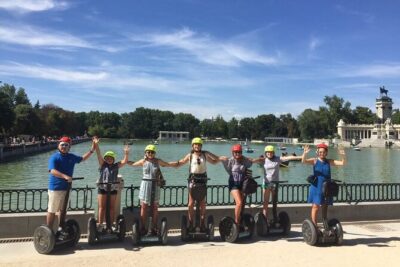
★ 4.9 · 848 reviews - Madrid Private Segway tour. Retiro Park – Centro Historico
★ 4.9 · 636 reviews
Starting at Cervantes and the Temple of Debod
Meet in front of the Cervantes monument in Plaza de España. This gives the walk a literary starting point, with Miguel de Cervantes watching over a busy part of central Madrid.
The first major subject is the Temple of Debod, an ancient Egyptian temple placed in Madrid. Its presence can feel surprising at first, and that is exactly why it works well as an opening story. You begin with a question about how an Egyptian monument came to Spain, then use that curiosity to understand the city’s habit of collecting layers from different periods and cultures.
The temple also sets the tone for the tour. Madrid is not presented only as a city of palaces and museums. You get the unexpected detail first, then move into the official, royal, and historic center.
Plaza de España is also a practical meeting point. It is easy to identify the Cervantes monument, and the route starts in an area with several important sights nearby. Since the exact starting time depends on availability, check the schedule before building other plans around the walk.
Royal Palace, Almudena Cathedral, and the Royal Theater
From Plaza de España, the walk continues toward the Royal Palace of Madrid, described as the official residence of the monarchy and the largest palace in Western Europe. Even if you do not enter, the exterior gives the guide plenty to discuss: royal power, ceremony, scale, and Madrid’s role as Spain’s capital.
Nearby, you will also see the Almudena Cathedral. The tour treats the palace and cathedral as a pair, which helps explain how political and religious authority shared this part of the city. You will also hear about the Royal Theater, where the guide explains the Spanish expression Mucha mierda, a theatrical good-luck phrase that sounds far less polite when translated directly.
One especially unusual detail concerns a statue whose construction involved Galileo Galilei. That kind of story is useful on a walking tour because it gives you something precise to remember. Rather than hearing only dates and names, you leave with a connection between Madrid and a famous figure in science.
This section is likely to appeal to you if you enjoy stories about court life, public monuments, and the odd facts behind familiar landmarks. It may feel quick if you want to study every facade or take a large number of photographs. The tour has many stops still ahead, so the guide must keep the group moving.
Madrid de los Austrias and Calle del Codo
The route then enters Madrid de los Austrias, the old central district linked to the Habsburg period. Here, the scale changes. Instead of broad royal spaces, you walk through older streets and tighter corners where the city feels more intimate.
One stop involves a curious neighbor who looks toward the foundations of the old Almudena. It is a small detail, but it fits the style of the walk: Madrid’s character is found not only in its main monuments, but also in figures and street details that many people pass without noticing.
Calle del Codo adds another literary connection. The writer Francisco de Quevedo once walked here, and the narrow street offers a sense of the older city that broad avenues cannot provide. You will want comfortable shoes here, since the route is entirely on foot and the streets of the old center are not the place for flimsy footwear.
I like this part because it slows the visual rhythm of the tour without slowing the story. You move from the grand public face of Madrid into streets where writers, residents, courtiers, and merchants once shared the same tight urban space.
A different sort of afternoon around Madrid:
- Madrid: Tour Bernabéu Entry Ticket
★ 4.5 · 21,573 reviews - Madrid: Prado Museum Entry Ticket
★ 4.6 · 17,509 reviews - Madrid: Royal Palace Fast-Access Admission Ticket
★ 4.6 · 13,856 reviews - Madrid: “Emociones” Live Flamenco Performance
★ 4.8 · 12,866 reviews
Plaza Mayor and four centuries of public life
A few steps later, you reach Plaza Mayor. Today it is one of Madrid’s most recognizable squares, surrounded by orderly facades and arcades. The guide presents it as a former market with more than four centuries of history, including fires, war memories, and changing public uses.
This is a good place to pause and understand the square as a stage for city life. It was not built merely to look attractive. Markets, gatherings, ceremonies, and difficult chapters in Madrid’s past all belong to its story.
The tour also points out the oldest restaurant in the world. That claim is part of Madrid’s food lore, and it adds a simple, useful idea: the city’s historic center is not just something to photograph. It is still tied to eating, meeting, and daily life.
You should not expect a meal or a restaurant visit as part of the $28 price. The value here is the context. After the guide explains what happened in the square, you can return later for a meal or a closer look with more appreciation.
Puerta del Sol and the streets feeding Gran Vía
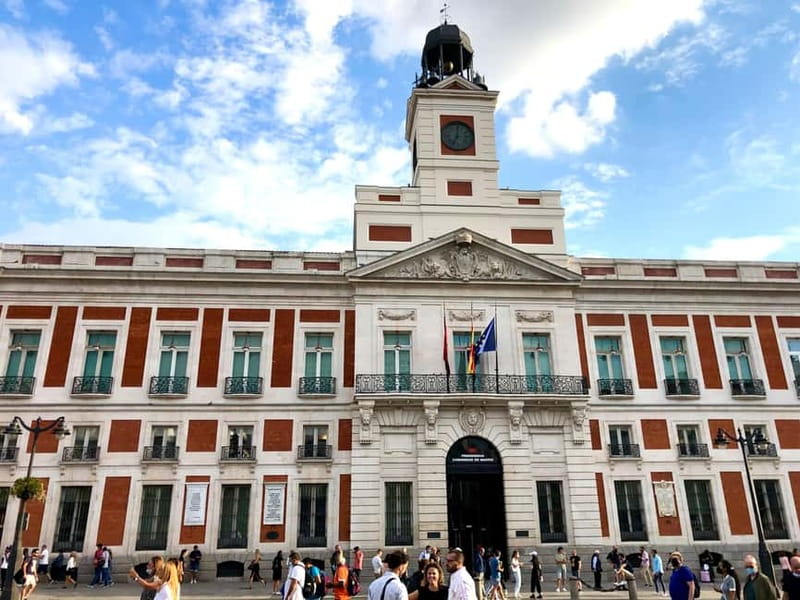
From Plaza Mayor, the walk reaches Puerta del Sol, the heart of Madrid. Sol is not simply another square on a sightseeing route. It is the place where several important streets meet, and the tour uses that position to explain how central Madrid works.
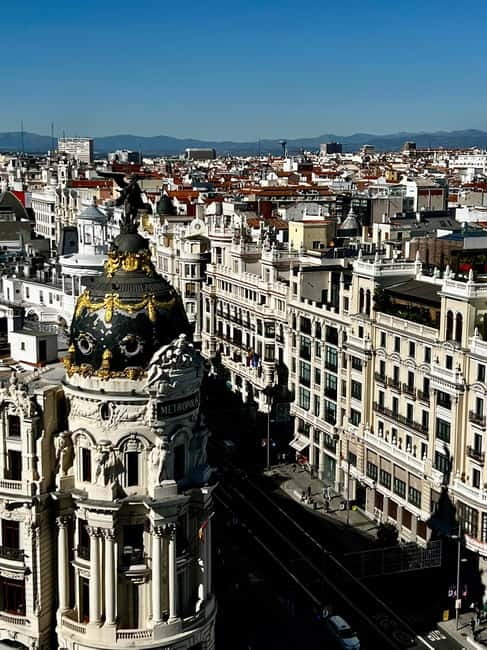
The guide enters and leaves the square several times through the streets connecting it with Gran Vía, Madrid’s main artery. This gives you more than a single view of Sol. You begin to see how the city’s traffic, shopping streets, historic routes, and major avenues fit together.
This part may be especially useful if you are still finding your way around Madrid. Afterward, streets that first seemed to radiate randomly from Sol should feel easier to place. You can use the square as a reference point for later visits to nearby sights.
It is also one of the busier portions of the route. Stay close to the guide and group, especially when moving between the square and surrounding streets. The small group size helps, but the route still passes through a central public space with plenty of movement.
Calle Alcalá, Cibeles, and Puerta de Alcalá
The tour then follows Calle Alcalá, one of Madrid’s best-known avenues. The change is clear: older streets give way to grand civic buildings, financial institutions, fountains, and monumental views.
You will pass the Círculo de Bellas Artes, a major cultural building, and the real Banco de España. The guide makes a playful distinction from the bank shown in La Casa de Papel, which is useful for anyone who knows Madrid through film and television but wants to separate fiction from the actual city.
Next comes the fountain and palace of Cibeles. This is one of the places where Madrid’s public image becomes especially grand. The palace and fountain create a strong visual pair, and the guide can connect the scene to the city’s civic identity and architecture.
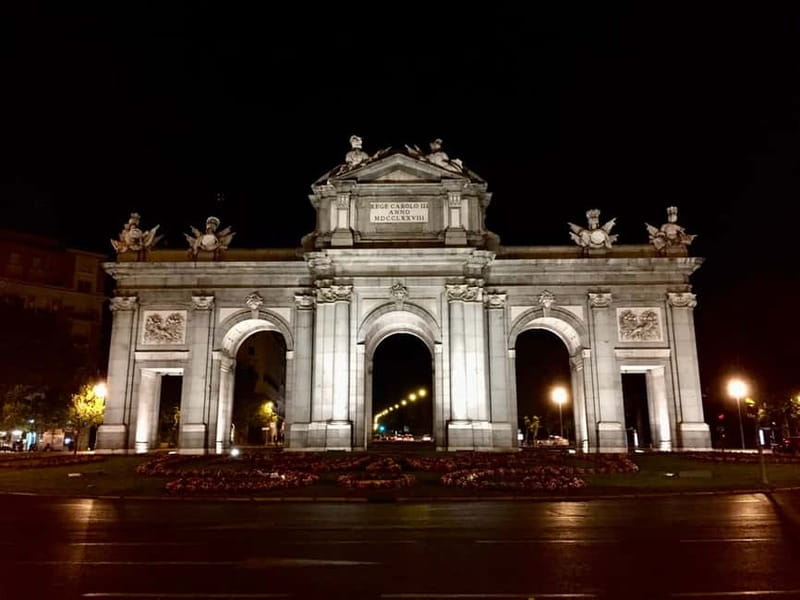
Puerta de Alcalá follows. The gate is one of Madrid’s best-known monuments and marks the transition toward Retiro. This stretch is attractive, but it can also be tiring because you have already covered much of the city on foot. Keep water with you, wear seasonal clothing, and do not underestimate Madrid’s heat in warm weather.
Retiro Park and the final sights
The walk ends in Retiro Park, where the city opens into ponds, paths, and formal park spaces. After the palace districts and busy streets, Retiro gives the route a calmer final chapter.
The tour includes the park’s ponds, the Palacio de Cristal, and the Ángel Caído. Each offers a different view of Madrid. The ponds bring a sense of leisure and public recreation. The Crystal Palace adds a distinctive architectural stop. The Ángel Caído, or Fallen Angel, provides one of the tour’s more unusual final details.
The stated meeting information says the activity ends back at the meeting point, even though the route description finishes in Retiro Park. Check the exact end-point instructions when you reserve, especially if you need to meet someone, catch transport, or plan another timed visit immediately afterward.
Ending with Retiro is a smart choice for a long city walk. You can continue exploring the park if you still have energy, or use the final stop as a natural break before your next Madrid plan. The tour itself lasts three hours, so any extra time in Retiro is your own.
What the small group changes
The group is limited to seven participants. That is one of the strongest practical features of this experience. A small group makes it easier to hear the guide near busy streets, ask about a curious building, and keep the walk moving without long waits.
The two available languages are Spanish and English. Choose the language in which you can follow quick explanations while walking. A route with this many landmarks depends on attention, so listening comfort matters more than simply understanding basic phrases.
The high praise focuses on the route being very complete and well documented, with a friendly and proper guide. One note also points out that an adult child joined a family group, which suggests the stated age rules should be read carefully rather than treated as a judgment about every older child. The formal restriction remains clear: children under eight are not accepted.
Is $28 a fair price?
For $28, you get three hours, a live guide, and a route linking a large share of Madrid’s central landmarks. That is fair value if you want orientation, local stories, and a compact introduction before exploring individual sights on your own.
The price is less compelling if you want entry tickets, extended time inside monuments, or a slow photography walk. Those are not part of the stated experience. You are paying for the guided route and the information that ties the places together.
The small group strengthens the value. You are not paying for a large coach ride or spending much of the time waiting for a crowd to gather. You are paying for a focused walking format that covers a lot of ground.
Free cancellation up to 24 hours before the activity adds useful flexibility, and you can reserve now and pay later. Those terms matter in Madrid, where hot weather, changing plans, and crowded sightseeing days can make a fixed schedule harder to manage.
Who should book this Madrid walking tour?
I would choose this tour for a first or early visit to Madrid, especially if you want a clear overview before deciding where to spend more time. It suits people who enjoy stories about architecture, writers, monarchy, theater, public squares, and local oddities.
It is also a good match for solo visitors and couples who prefer a small group to a large city tour. Families with children eight and older should check the pace and fitness demands carefully, since the route is long and the age rule does not guarantee that every child will enjoy three hours of walking.
You should skip it if walking is difficult, if you have a low level of fitness, or if you need a route designed for a mobility impairment. The stated restrictions also exclude babies under one and people over 70. Those limits are unusually specific, so take them seriously before booking.
Bring comfortable shoes. Wear clothing suited to the season and weather, and remember that much of the experience takes place outdoors. Alcohol and drugs are not allowed.
Should you book it?
Book this tour if you want a lively three-hour map of central Madrid with unusual details woven into the major sights. The Egyptian temple, Galileo connection, Quevedo’s street, the theatrical good-luck phrase, and the distinction between the real Banco de España and its television version give the route more personality than a basic landmark checklist.
Skip it if you want interior visits, a relaxed pace, or a short walk. For fit adults who enjoy city history and can keep moving, $28 is a sensible price for a small-group introduction that can make the rest of your Madrid stay easier to plan.
FAQ
Where does the tour start?
It starts in Plaza de España, in front of the monument to Cervantes.
Where does the activity end?
The meeting information says the activity ends back at the meeting point. The route description finishes in Retiro Park, so check the exact end-point instructions when booking.
How long does the tour last?
The tour lasts three hours.
What languages are available?
The live guide speaks Spanish or English.
How large is the group?
The group is limited to seven participants.
What sights are included on the route?
The route includes Plaza de España and the Temple of Debod, the Royal Palace, Almudena Cathedral, the Royal Theater, Madrid de los Austrias, Calle del Codo, Plaza Mayor, Puerta del Sol, Calle Alcalá, the Círculo de Bellas Artes, Banco de España, Cibeles, Puerta de Alcalá, and parts of Retiro Park.
Does the tour include entry to the Royal Palace?
The supplied activity details do not include Royal Palace admission. The experience is described as a guided walking tour.
What should I bring?
Bring comfortable shoes. Comfortable clothing suitable for the season and weather is also recommended.
Is the tour suitable for children?
It is not suitable for children under eight years old. The information also says it is not suitable for babies under one year.
Can I cancel for a refund?
Yes. You can cancel up to 24 hours in advance for a full refund. You can also reserve now and pay later.
Just added around Madrid
- Private Vacation Photography Session with Photographer in Madrid★ 5.0 · 3 reviews
- Arrival Private Transfer from MAD Airport to Madrid in a Minibus★ 5.0 · 3 reviews
- Segovia: 3-Hour Private Walking Tour★ 5.0 · 3 reviews
- Tour Segovia and La Granja de San Ildefonso from Madrid★ 5.0 · 3 reviews
- Madrid: Prado & Reina Sofia Museum Skip-the-Line Guided Tour★ 5.0 · 3 reviews
- Salamanca: Private Guided Customizable Walking Tour★ 5.0 · 3 reviews
- Total Reboot and Renew with top wellnes 3 hours couple experience★ 5.0 · 3 reviews
- Madrid: Prado Museum Private Tour★ 5.0 · 3 reviews
Retiro Park Tours, compared.
Madrid Private Segway tour. Retiro Park – Centro Historico
Read our review →
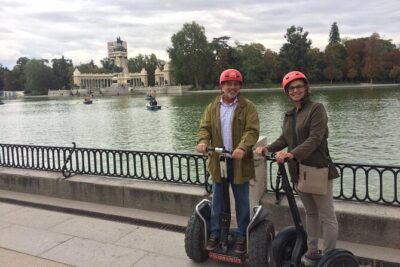
Magical and Iconic Retiro Park Segway Tour in Madrid
Read our review →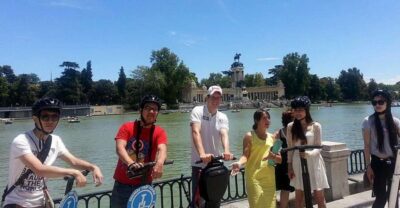
Browse the lists this tour appears in