
Review · TAPAS TOURS
Spanish Cooking Class Paella Tapas and Sangria in Madrid
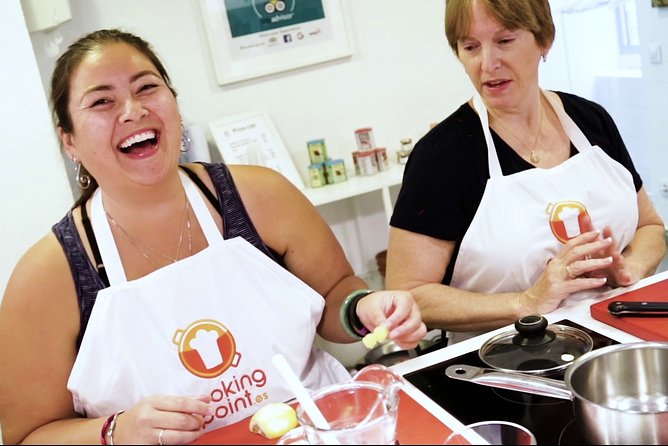
Madrid’s best food lessons often start with a cutting board, not a lecture. At Cooking Point, you work in pairs with an English-speaking chef to prepare Spanish dishes from scratch, then sit down and eat what you made. The morning class adds a local market visit, where you help choose ingredients for paella.
I like the small group of up to 12 and the fact that you actually cook rather than watch a chef do all the work. I also like the choice between a paella lunch and an evening tapas menu. The main thing to watch is the booking choice: the tapas class does not also include paella, and the two formats are different.
In This Review
- Key points before you book
- Picking between paella and tapas
- Starting at Cooking Point in central Madrid
- The morning market visit and paella class
- What you learn while the paella cooks
- The evening tapas menu
- Cooking in pairs, then eating together
- The instructors make a real difference
- Food, drinks, and dietary needs
- Timing, group size, and practical planning
- Who will enjoy this Madrid cooking class
- Should you book it?
- FAQ
- Where does the cooking class begin?
- How long does the experience last?
- Is the class offered in English?
- What is included in the price?
- Does the morning class include a market visit?
- Can dietary requirements be accommodated?
Key points before you book
- Choose paella in the morning or tapas in the evening: These are separate menus, not two parts of one class.
- Shop at a local market: The morning option includes a guided ingredient visit with your chef.
- Expect real participation: You chop, mix, season, cook, and help bring the meal together.
- Meet experienced instructors: Angel, Elisa, Eduardo, and Teresa have led classes praised for clear teaching and friendly humor.
- Plan on four hours: The class includes cooking, drinks, conversation, and a sit-down meal.
- Tell the operator about dietary needs: Requirements can be accommodated when given at booking.
Picking between paella and tapas
The first decision is simple, but important. The morning paella class centers on paella, gazpacho, and sangria. The evening tapas class includes a broader spread: Spanish potato omelet, garlic shrimp, chorizo in cider, patatas bravas, tomato bread with ham, crema catalana, and sangria.
I would choose the morning class if you want a clear introduction to one of Spain’s best-known dishes. It also gives you the extra market visit, which adds a useful local-food lesson before you enter the kitchen.
The evening class is better if you want variety and the social feel of a Spanish tapas table. You make several smaller dishes rather than focusing on one large pan. It is also a good choice if you enjoy sampling many flavors and want to learn recipes that are easy to repeat at home.
Do not assume that booking tapas means you will also make paella. The menus are separate. This is the one point most likely to cause confusion, so check the exact class name before paying.
More tapas crawls in Madrid:
- Madrid: Small Group of Prado Museum Tour & Optional Tapas
★ 4.6 · 2,437 reviews - Madrid: Tapas & Wine Tasting Tour with Local Guide
★ 4.8 · 2,171 reviews - Madrid Tapas & Wine Tour with Rooftop Views and Local Guide
★ 5.0 · 2,047 reviews
Starting at Cooking Point in central Madrid
The class begins at Cooking Point, C. de Moratín, 11, in Madrid’s Centro area. The location is near public transportation, and the activity returns to the same meeting point when the four hours are over.
There is no hotel pickup or drop-off. You need to make your own way there and back, so leave enough time to find the kitchen without rushing. The meeting point is in a central part of Madrid, which makes the class easy to fit into a day of sightseeing.
I would avoid scheduling a major attraction immediately after the class. Cooking times can vary when several people are working together, and the meal is part of the experience rather than a quick snack between appointments.
The morning market visit and paella class
The morning option begins with a visit to a local market to shop for fresh ingredients. This is more useful than a quick photo stop. Your chef explains how food is sourced and used in Spain, and you get to see the ingredients before they become lunch.
Angel, Eduardo, Elisa, and Teresa are among the instructors who have led these sessions. The teaching style can vary by chef, but the strongest part of the experience is the combination of practical instruction and food talk. You can ask about Spanish eating habits, ingredient choices, regional customs, or the dishes on your menu.
The market visit also gives you a better sense of proportion. Paella is not just rice with ingredients thrown on top. The shopping stage helps connect the finished dish with the products used to make it.
Back at the cooking space, you work with a partner. If you arrive alone, you are matched with a cooking buddy. That arrangement keeps the class social and lets you share tasks without making you feel stranded at a workstation.
The cooking is hands-on. You help prepare the ingredients and follow the chef’s instructions as the meal comes together. The chef is there to guide you, but the point is not simply to watch a demonstration. People who enjoy learning by doing will get the most from this format.
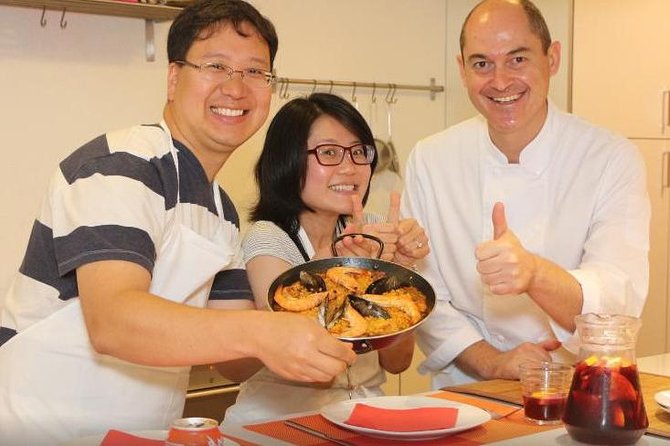
The morning menu includes gazpacho as a starter, paella as the main dish, and sangria. The food is substantial enough to serve as lunch, and the class ends with everyone eating together.
What you learn while the paella cooks
A good paella class needs patience. The cooking process gives the chef time to explain the dish, its variations, and the role of the ingredients. You may also learn small techniques that are more useful than a long history lecture, such as how to build flavor and how to judge the stages of cooking.
The class is not aimed only at experienced cooks. The chef gives instructions step by step, and the format works for beginners as well as people who already cook at home. Parents should note that children have also been welcomed, including a six-year-old in one class.
The meal is paired with sangria, and the recipe booklet lets you try the dishes again after returning home. That booklet adds real value because the memory of a cooking class fades quickly unless you have measurements and steps to follow.
More paella classes in Madrid:
- Madrid: Paella and Sangria Workshop in the City Center
★ 4.9 · 1,264 reviews - Paella Cooking Class in Madrid with Bottomless Wine Pairing
★ 5.0 · 985 reviews - Paella Workshop with Bottomless Sangria in Central Madrid
★ 5.0 · 763 reviews - Madrid Tapas & Paella Cooking Experience with Local Market Visit
★ 5.0 · 432 reviews
The evening tapas menu
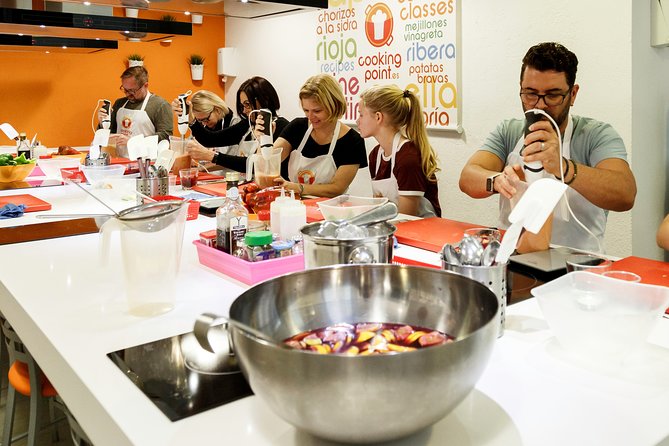
The evening class changes the pace and the purpose. Instead of building one central dish, you prepare several small plates that show different parts of Spanish cooking.
The listed menu includes Spanish potato omelet, garlic shrimp, chorizo in cider, patatas bravas, tomato bread with ham, crema catalana, and sangria. That is a generous meal, so arrive hungry. The amount of food can be more than you expect from the word tapas.
The potato omelet teaches a basic Spanish favorite. Garlic shrimp brings seafood and strong seasoning to the table. Chorizo in cider adds a regional-style combination of sausage and sauce, while patatas bravas gives you one of the most familiar tapas dishes to try at home.
Tomato bread with ham is simpler, but that simplicity is useful. It shows how Spanish food often depends on good ingredients and straightforward preparation. Crema catalana gives the class a sweet finish and adds a custard technique to the lesson.
I like this menu for people who want practical recipes rather than one large project. You leave with several ideas for a casual dinner, though you should remember that the evening class is not a paella lesson.
Cooking in pairs, then eating together
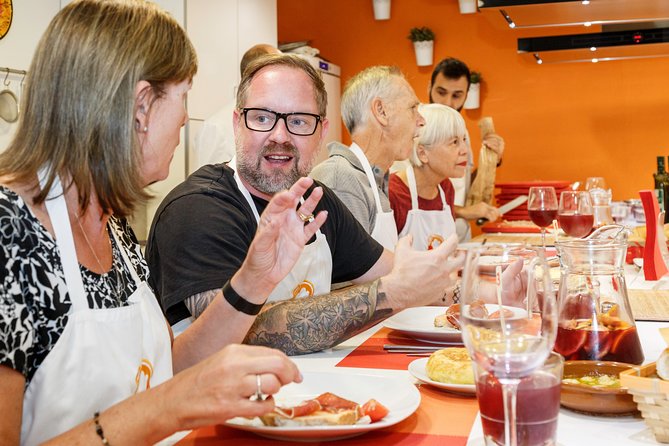
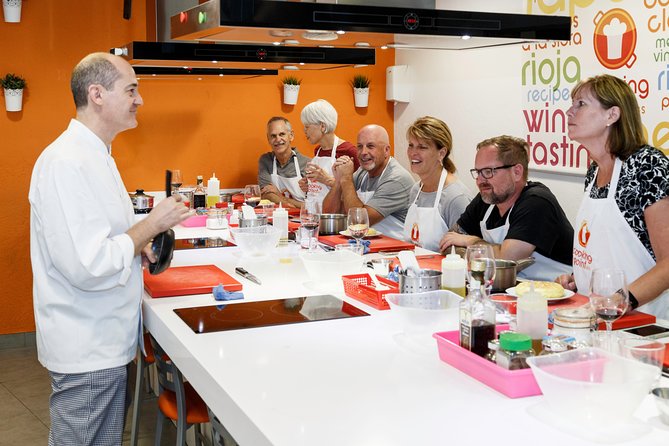
The pair system is a sensible choice for a class limited to 12 people. You get enough room to participate, while the chef can still move around and answer questions. A smaller group also makes it easier to chat with the other people at the table.
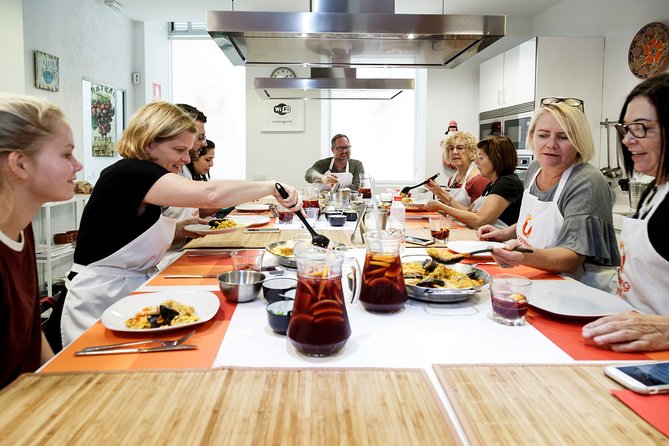
The social side matters here. Once the cooking ends, everyone eats together and shares travel stories. You are not simply handed a plate and sent away. The meal is the reward for the work, and it gives the class a natural finish.
This format can suit families, couples, solo visitors, and small groups of friends. Solo participants are paired with someone else, which removes some of the awkwardness of arriving alone. Couples can work together, or you can use the class to meet people from different places.
The tone is friendly and relaxed, but you still need to pay attention. One instructor may give a clear step while several people are talking and chopping at once. If you want to learn, listen closely and ask when you are unsure.
The instructors make a real difference
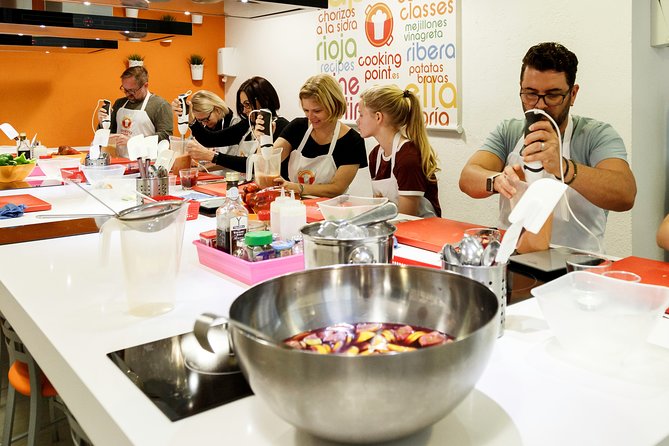
The class has been led by several chefs, including Angel, Elisa, Eduardo, and Teresa. Their personalities differ, but the most praised qualities are consistent: patience, humor, clear instructions, and a willingness to answer questions.
Angel is described as engaging and witty, with a good balance between food instruction and Spanish culture. Elisa brings a personable, funny approach and explains the dishes in a way that keeps the class moving. Eduardo is noted for allowing people to create while stepping in with advice at the right time.
Teresa has been praised for her energy, organization, and practical cooking help. She has also been described as passionate about both food and culture. These details matter because the chef controls the pace of a hands-on class. A good instructor lets you do the work without allowing the meal to go off course.
The setting is reported as clean and well organized, another important point when several people are cooking at once. Still, no group class can provide unlimited one-on-one coaching. If you want private instruction or a long technical lesson on every dish, this may feel too social.
Food, drinks, and dietary needs
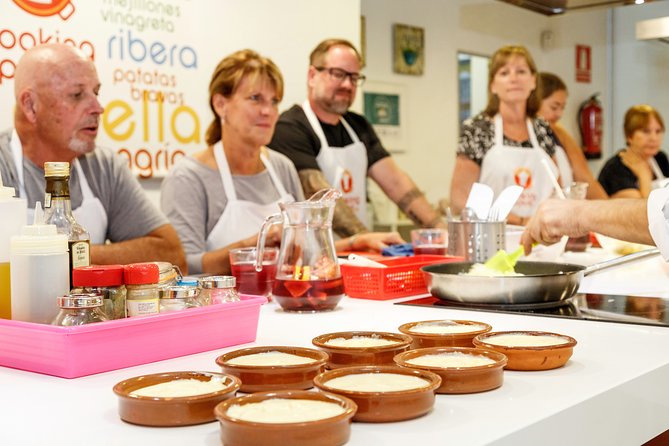
The price is $102.79 per person for about four hours. That includes the cooking class, local guide, drinks, and recipe booklet. You also receive the meal you prepare, which makes the price easier to assess than a simple food demonstration.
I see the strongest value in the combination of instruction and a full meal. You are paying for the chef’s guidance, the ingredients, the market visit if you choose the morning option, the cooking space, drinks, and time around the table. Compared with a restaurant meal alone, the class gives you a skill to take home.
The value is better for people who plan to use the recipes again. If you only want to eat paella or tapas, a restaurant will usually be simpler. If you want an activity that connects food, culture, and conversation, the four-hour format earns its keep.
Dietary requirements can be accommodated, but you must advise the operator when booking. Do not wait until you arrive. The menu includes seafood, meat, ham, dairy, and other ingredients, so early notice is important.
The minimum drinking age is 18. Sangria is part of both the morning and evening menus, so anyone under that age or anyone avoiding alcohol should clarify the available arrangements before booking.
Timing, group size, and practical planning
The class lasts roughly four hours. The morning session includes the market visit, so it takes more than a simple cooking demonstration followed by lunch. The evening class keeps the focus on the kitchen and the tapas meal.
The maximum group size is 12. That is small enough for direct contact with the instructor, but it is still a shared class. You will cook with other people, share equipment, and eat at a common table.
The experience is offered in English. This is useful if you want detailed explanations about techniques and ingredients rather than relying on gestures or a translated recipe.
It is booked, on average, 37 days in advance. That suggests you should reserve ahead, especially if you need a certain morning or evening time. Confirmation is normally issued at booking, unless you reserve within one day of the activity. Last-minute bookings depend on availability.
Free cancellation is available if you cancel at least 24 hours before the start time. Cancellations made less than 24 hours ahead are not refunded, and late changes are not accepted.
Who will enjoy this Madrid cooking class
I would recommend it to you if food is part of the reason you came to Spain, not just something you need between museums. It is especially good for first-time visitors who want a practical introduction to Spanish dishes before a longer trip through the country.
Families can enjoy the shared work, provided children can follow kitchen instructions. Couples will find it a pleasant daytime or evening activity, and solo visitors have a built-in partner and group conversation.
It also suits confident home cooks. The class does not reserve every task for the chef, so you can take part rather than watch. Beginners should feel comfortable too, since the instructors guide the process and explain the steps.
I would think twice if you dislike group activities, have a very tight schedule, or want only paella but can attend solely in the evening. I would also check the menu carefully if a specific dish matters to you.
Should you book it?
Book this class if you want to make your own Spanish meal, meet people over the food, and take recipes home. Choose the morning paella option for the market visit and a focused lesson, or choose evening tapas for a wider menu of small plates.
At $102.79, it is not the cheapest way to eat in Madrid. But the price includes four hours of activity, a substantial meal, drinks, instruction, and a recipe booklet. For a food-focused afternoon or evening, that is a fair package.
My clearest advice is to read the menu before selecting your time. If you make that choice carefully and share your dietary needs in advance, Cooking Point offers a useful, tasty way to understand Madrid through its kitchen.
FAQ
Where does the cooking class begin?
It begins at Cooking Point, C. de Moratín, 11, Centro, 28014 Madrid, Spain.
How long does the experience last?
The activity lasts approximately four hours and ends back at the meeting point.
Is the class offered in English?
Yes. The class is offered in English and includes an English-speaking local chef.
What is included in the price?
The price includes the tapas or paella cooking class with drinks, a local guide, and a recipe booklet.
Does the morning class include a market visit?
Yes. The morning class includes a visit to a local market to shop for fresh ingredients.
Can dietary requirements be accommodated?
Yes. Dietary needs can be accommodated, but you must provide the details when booking.
More Workshops in Madrid
- Madrid: Paella & Sangria Classes- Seafood, Chicken & Vegan option
★ 5.0 · 265 reviews - 10 Tapas Cooking Class Experience in Madrid with Sangria
★ 5.0 · 137 reviews - Madrid: Paella and Sangria Workshop with Tapas
★ 4.9 · 128 reviews - Madrid: Flamenco Class Experience
★ 4.9 · 75 reviews
More Cooking Classes in Madrid
- Taste of Spain: Tapas Cooking Class with Bottomless Wine Pairing
★ 5.0 · 414 reviews - Madrid: Half-Day Spanish Cooking Class
★ 5.0 · 345 reviews - Madrid: 10 Tapas 2.5-Hour Cooking Class
★ 4.7 · 222 reviews - Tapas & Paella Cooking Class in Madrid with a Professional Chef
★ 5.0 · 177 reviews
Just added around Madrid
- Private Vacation Photography Session with Photographer in Madrid★ 5.0 · 3 reviews
- Arrival Private Transfer from MAD Airport to Madrid in a Minibus★ 5.0 · 3 reviews
- Segovia: 3-Hour Private Walking Tour★ 5.0 · 3 reviews
- Tour Segovia and La Granja de San Ildefonso from Madrid★ 5.0 · 3 reviews
- Salamanca: Private Guided Customizable Walking Tour★ 5.0 · 3 reviews
- Total Reboot and Renew with top wellnes 3 hours couple experience★ 5.0 · 3 reviews
- Madrid: Prado & Reina Sofia Museum Skip-the-Line Guided Tour★ 5.0 · 3 reviews
- Madrid: Prado Museum Private Tour★ 5.0 · 3 reviews
Tapas Tours, compared.

Small Group of Prado Museum Tour & Optional Tapas
Read our review →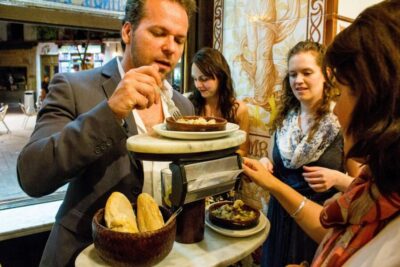

Madrid Tapas & Wine Tour with Rooftop Views and Local Guide
Read our review →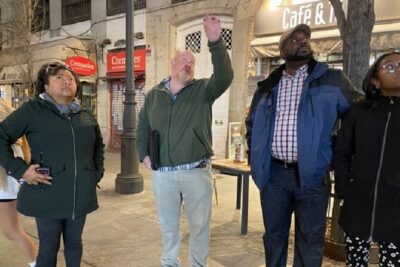
Madrid by Night Small Group Tour: Stories, Sights and Tapas Bites
Read our review →
Highlights Guided Vintage Bike Tour and Tapas Option
Read our review →
Royal Palace Expert Guided Tour with Optional Tapas
Read our review →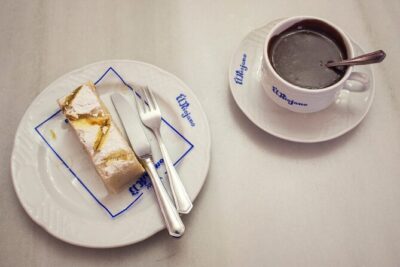
Madrid Historic Centre Food Tour with Authentic Tapas & Wines
Read our review →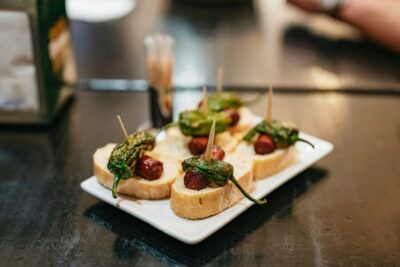
Browse the lists this tour appears in