
Review · ARANJUEZ TOURS
Aranjuez: Garden of The Prince Entry Ticket and Guided Tour
The most surprising part of Aranjuez’s Prince’s Garden is how much history hides among its trees, fountains, islands, and quiet paths. This is not simply a pleasant royal park. Your guide connects the garden to botanical experiments, foreign seedlings, cinnamon from the Philippines, and political struggles tied to the Spanish court.
I like the tour’s focus on overlooked corners, especially the Pond of the Chinescos and its Chinese-style gazebo. I also like the price: $14 for two hours of guiding and garden entry is fair. The main drawback is that the tour is in Spanish, and wheelchair users cannot take part because of the garden’s access conditions.
In This Review
- Key points to know before you book
- Why the Prince’s Garden deserves two hours
- Meeting at Avenida de Palacio
- Fountains that show royal ambition
- The Swiss Mountain viewing point
- American and Asian Islands
- The Pond of the Chinescos and its Chinese gazebo
- Botany, trade, and the work behind the beauty
- When the garden becomes a political stage
- How the guide shapes the experience
- What the $14 price really buys
- Who will enjoy this garden walk
- Practical details that affect your day
- Should you book the Prince’s Garden tour?
- FAQ
- How long does the Prince’s Garden tour last?
- What is included in the price?
- Is the Royal Palace included?
- What language is the tour conducted in?
- Where do I meet the guide?
- What should I bring?
- Can wheelchair users take part?
Key points to know before you book
- The Pond of the Chinescos is the garden’s visual prize, with a traditional Chinese-style gazebo and a setting that gives the tour its strongest sense of place.
- The tour covers botany and politics together, showing how imported plants and royal garden design were tied to power.
- Guide Fran may lead the visit, bringing a well-documented, lively approach to Aranjuez’s past.
- You see more than the main paths, including lesser-known corners that are easy to miss on a solo walk.
- The $14 fee includes garden admission and guiding, but not the Royal Palace.
- Comfortable shoes matter, since the two-hour visit takes place on foot across a large garden.
Why the Prince’s Garden deserves two hours
Aranjuez sits in the Community of Madrid, south of the capital, and its royal gardens form part of a UNESCO World Heritage Cultural Landscape. The Prince’s Garden is one of the largest gardens in Spain, so its scale changes how you should visit it.
You can walk through a garden on your own and enjoy the shade, water, and formal views. You can also spend two hours learning why those features exist. This tour chooses the second approach. It gives you a framework for reading the garden rather than treating it as a backdrop for photographs.
I find that useful in royal gardens, where the details can otherwise blur together. A fountain is not only decoration. An imported tree is not only a tree. A viewing point may reflect royal taste, military concerns, or a desire to display control over nature and distant parts of the world.
The guide’s job is to connect those pieces. The strongest part of this experience is its mix of visual beauty and explanation. You get a walk through an attractive place, but you also learn how Aranjuez became tied to royal planning, botanical exchange, and political life.
More Aranjuez trips:
- Day Tour to Chinchón, Aranjuez and Toledo from Madrid
★ 4.5 · 142 reviews - From Madrid: Guided Day Trip to Chinchon, Aranjuez & Toledo
★ 4.3 · 132 reviews - Aranjuez: Royal Palace Guided Tour
★ 4.5 · 93 reviews
Meeting at Avenida de Palacio
You meet your guide outside the Cafe de Damas, on the corner of the square where Avenida de Palacio begins. This is an important detail, because the garden is large and the meeting point is not simply described as the garden entrance.
Arrive with enough time to identify the cafe and the square. The tour lasts two hours, and a late start would mean missing part of a carefully planned route. Your guide will lead you into the Prince’s Garden from there.
The guiding is in Spanish. If you understand Spanish well enough to follow a historical explanation, you should get much more from the visit than you would from a casual stroll. The tour is not designed as a multilingual experience, so language ability is the first practical question to settle before paying.
Comfortable clothing and shoes are recommended. That advice is not filler. You will be on foot for the full visit, and the garden covers a substantial area. Choose shoes for walking, not just for looking smart beside the palace.
Fountains that show royal ambition
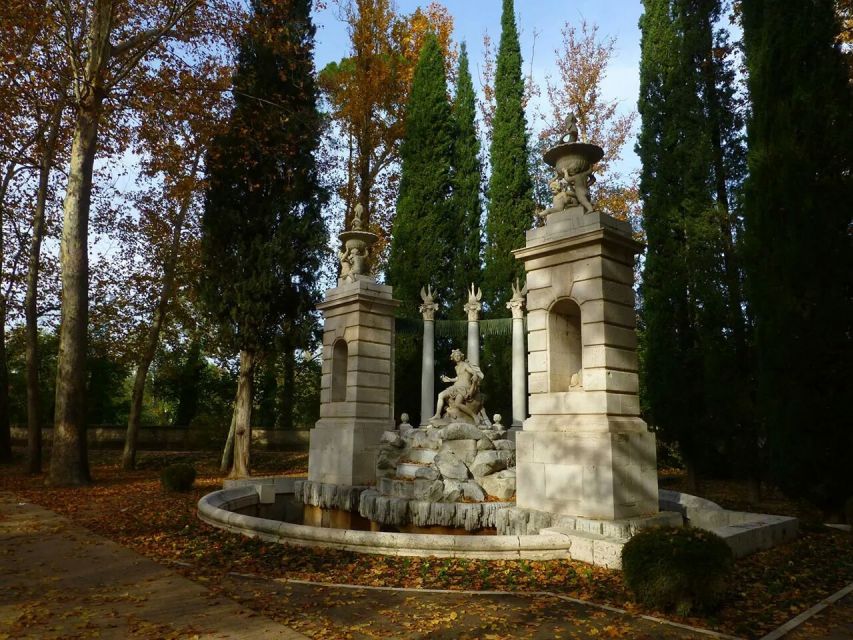
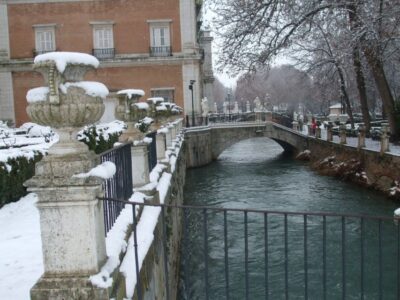
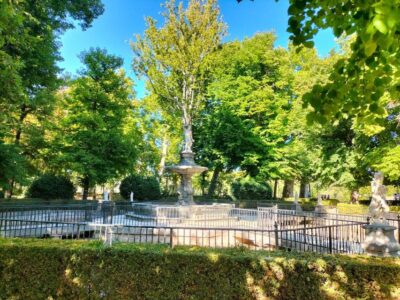
The route includes the garden’s important and beautiful fountains. Their appeal is obvious, but the guide adds the part you cannot get from a quick photograph: how the garden was planned, what the fountains were meant to convey, and how water helped shape the experience of royal space.
Fountains in a formal garden do several jobs at once. They provide sound, movement, decoration, and a sense of order. They also require planning, engineering, upkeep, and money. In a royal setting, all of that points back to power.
I like this kind of explanation because it turns a pretty stop into a useful lesson. You begin to notice how the garden directs your attention. Water marks important spaces, frames views, and gives the grounds a theatrical quality.
The tour does not promise every fountain in the garden, and the supplied information does not give a fixed list of stops or a precise route order. Expect to see the best-known examples, while allowing the guide to adjust the walk to the group and the conditions on the day.
The Swiss Mountain viewing point
One of the named stops is the Swiss Mountain viewing point, built in the 18th century. This gives the tour a change of pace. Instead of looking only at paths, trees, and water at eye level, you gain a place designed to shape the way the garden is seen.
The viewing point matters because royal gardens are planned as sequences of views. A raised position can reveal the garden’s structure and help you understand how separate areas relate to one another.
Your guide can also place the feature in its period. The 18th century was a time when European courts used garden design to display taste, wealth, control, and access to foreign ideas. Swiss references, Chinese-style structures, American and Asian plantings, and carefully arranged water features all form part of that larger story.
Do not expect a mountain hike. The name refers to a garden feature and viewpoint, not a natural alpine setting. The value is the perspective and the explanation, not a demanding climb.
A few more Madrid days to weigh up
- Madrid: Tour Bernabéu Entry Ticket
★ 4.5 · 21,573 reviews - Madrid: Prado Museum Entry Ticket
★ 4.6 · 17,509 reviews - Madrid: Royal Palace Fast-Access Admission Ticket
★ 4.6 · 13,856 reviews - Avila & Segovia Tour with Tickets to Monuments from Madrid
★ 5.0 · 9,762 reviews
American and Asian Islands
The American and Asian Islands are among the garden’s more unusual named areas. They point to the way royal gardens served as collections of plants, styles, and ideas from beyond Spain.
This is where the botanical side of the tour becomes especially interesting. The guide explains the logistics of bringing foreign seedlings into the garden. That subject gives you a practical sense of how difficult plant exchange once was.
Today, an exotic plant may seem like a simple garden choice. In the royal period, moving a seedling across long distances meant dealing with transport, timing, climate, protection, and survival. The garden became a place where distant species could be displayed and tested.
The tour also covers the introduction of cinnamon into Aranjuez from the Philippines. That is a small detail with a wide reach. It links the garden to Spain’s overseas connections and shows how a local royal setting could reflect events taking place thousands of miles away.
I especially like this part for visitors who enjoy gardens but do not consider themselves botany experts. You do not need to know plant names in advance. The explanation gives each area a reason to matter.
The Pond of the Chinescos and its Chinese gazebo
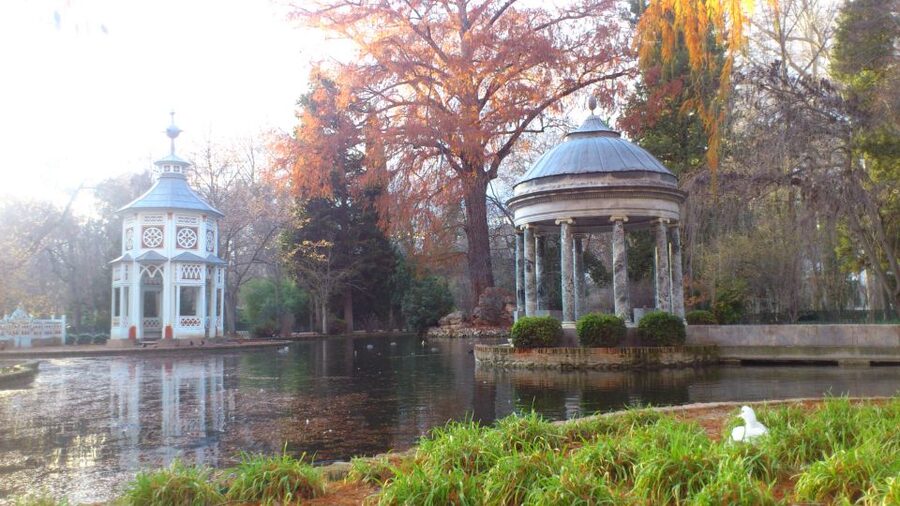
The Pond of the Chinescos is described as the garden’s seventh wonder, and it is easy to see why it receives special attention. Its centerpiece is a gazebo designed in a traditional Chinese architectural style, set beside the water.
This is likely to be the most memorable stop on the walk. The pond gives you a strong visual pause after the larger garden spaces, while the gazebo introduces an international style into a Spanish royal garden.
The guide can help you see the feature in two ways. First, it is a beautiful object, framed by water and greenery. Second, it represents European fascination with Asian design and the way royal gardens borrowed, adapted, and displayed styles from elsewhere.
The information provided does not promise a long stop or a special photo session, so keep your expectations practical. You will see the pond and gazebo as part of the guided route. The pleasure comes from the setting and the story, not from a formal performance or a separate attraction inside the garden.
Botany, trade, and the work behind the beauty
A garden this large can look effortless. It is not. The imported seedlings, carefully arranged islands, fountains, viewing points, and ornamental buildings all required planning and labor.
The tour’s botanical history helps correct the usual royal-garden impression. These grounds were not made only for quiet walks. They were also places of display, trial, collection, and cultural exchange.
The cinnamon story is a good example. A plant associated with the Philippines becomes part of Aranjuez’s identity through royal interest and international movement. You get a clearer picture of how plants traveled and why a court would care about them.
The tour also explains the garden’s cultural mythology. That phrase suggests stories and beliefs that gathered around the grounds over time, though the exact myths are not specified in the available details. Your guide is the person to ask for the local stories attached to particular places.
If you are hoping for a detailed plant-identification class, this may not be the right tour. Its scope is broader. You get botany connected to history, culture, and politics rather than a specialist inventory of every species.
When the garden becomes a political stage
The Prince’s Garden also played a role in political battles throughout history. This gives the walk a sharper edge. Royal gardens can seem removed from conflict, but they often sit close to power and reflect the interests of the people who commissioned them.
Your guide explains how the garden figured in political struggles. The provided information does not specify each battle or event, so you should not expect a complete political history of Spain in two hours. Instead, you get selected stories that show why Aranjuez mattered beyond its fountains and trees.
That focus is valuable because it changes the mood of the visit. You begin with ornamental beauty, then see the garden as part of a royal system. Decisions about space, access, planting, and display were linked to authority.
The best guiding here is interpretive rather than merely factual. A good explanation tells you why a place mattered. Fran, one guide associated with this experience, is described as friendly, well prepared, and able to transfer his passion for history to the group. That style suits a garden tour, where the story can easily be lost among attractive views.
How the guide shapes the experience
The guide is the main reason to choose this tour instead of entering the garden alone. The experience is conducted in Spanish, and the strongest feedback points to clear explanations, strong preparation, friendliness, and an easy-to-follow route.
One guest described learning how to move through a garden, which is a useful way to think about the tour. Large formal gardens can be confusing. You may see a path, a fountain, and an island without understanding their relationship. A guide gives you a sequence and helps you notice the intended connections.
The tour is also described as an agreeable afternoon walk. That matters if you want history without the pressure of a long museum visit. You are outside, moving at a measured pace, with frequent points of visual interest.
Do keep the language limit in mind. The guides can be excellent, but their explanations are in Spanish. If you need English or another language, this activity does not meet that need.
What the $14 price really buys
At $14 per person, the tour offers good value if you want both entry and interpretation. You are paying for admission to the Prince’s Garden plus two hours with a live guide, not simply for access to a public-looking park.
The value is strongest for first-time visitors to Aranjuez and for anyone who likes context. You could enter and wander, but you might miss the garden’s botanical links, the history of imported seedlings, the cinnamon connection, and the political role of the grounds.
The fee does not include the Royal Palace. That separation is important when planning your day. If you want to see the palace as well, you need to arrange that separately and allow extra time.
For a budget-conscious visit, this tour can be a smart add-on because it is relatively short and focused. Two hours gives you a substantial introduction without taking the entire day. You also have the option to reserve now and pay later, which helps if your schedule is still changing.
Free cancellation is available up to 24 hours before the activity for a full refund. That policy is useful when Madrid weather or transport plans remain uncertain.
Who will enjoy this garden walk
I would choose this tour for you if you enjoy architecture, royal history, gardens, or stories about how plants moved around the world. It also suits anyone who prefers a guided route through a large site instead of making sense of it alone.
Families with older children may find the islands, fountains, and Chinese gazebo more engaging than a room-by-room palace tour. The political and botanical stories can also give younger visitors something concrete to look for as they walk.
Spanish speakers get the clearest benefit because all guiding is in Spanish. If you only know a little Spanish, the garden itself will still be pleasant, but the historical value will be reduced.
This is not the best fit for wheelchair users, since the activity is not suitable for wheelchair access. It may also disappoint anyone seeking a fast photo stop. The tour lasts two hours and is built around walking and explanation.
Practical details that affect your day
The meeting point is outside the Cafe de Damas, at the corner of the square where Avenida de Palacio begins. Bring comfortable shoes and clothes, and plan for an outdoor walk rather than a palace visit.
The advertised duration is two hours. Starting times vary, so check availability before booking. The activity includes garden entry and a live Spanish-speaking guide.
The Royal Palace is not included. That means you should treat this as a focused Prince’s Garden experience, not a combined palace-and-garden ticket.
The activity has a rating of 4.9 from eight reviews, with praise centered on the guides’ teaching style, preparation, warmth, and ability to make Aranjuez’s past easy to follow. Those strengths match what you should value here: the guide is not an extra detail, but the heart of the experience.
Should you book the Prince’s Garden tour?
Book it if you want Aranjuez to make sense, not just look pretty. The $14 price is reasonable for entry plus two hours of guiding, and the route brings together fountains, the Swiss Mountain viewpoint, the American and Asian Islands, and the Pond of the Chinescos.
I would be especially keen to book if Fran is leading, since his approach is described as friendly, well documented, and passionate. Still, the activity is in Spanish, does not include the Royal Palace, and is not suitable for wheelchair users.
For a Spanish-speaking visitor who likes gardens with a story, this is an easy recommendation. If you need an accessible route or a tour in another language, choose a different way to see Aranjuez.
FAQ
How long does the Prince’s Garden tour last?
The guided tour lasts two hours.
What is included in the price?
The $14 price includes entry into the Prince’s Garden and the guided tour.
Is the Royal Palace included?
No. Entry to the Royal Palace is not included.
What language is the tour conducted in?
The live tour is conducted in Spanish.
Where do I meet the guide?
Meet outside the Cafe de Damas, on the corner of the square where Avenida de Palacio begins.
What should I bring?
Bring comfortable shoes and comfortable clothing for the two-hour walk.
Can wheelchair users take part?
No. The activity is not suitable for wheelchair users.
Just added around Madrid
- Private Vacation Photography Session with Photographer in Madrid★ 5.0 · 3 reviews
- Arrival Private Transfer from MAD Airport to Madrid in a Minibus★ 5.0 · 3 reviews
- Segovia: 3-Hour Private Walking Tour★ 5.0 · 3 reviews
- Tour Segovia and La Granja de San Ildefonso from Madrid★ 5.0 · 3 reviews
- Total Reboot and Renew with top wellnes 3 hours couple experience★ 5.0 · 3 reviews
- Madrid: Prado & Reina Sofia Museum Skip-the-Line Guided Tour★ 5.0 · 3 reviews
- Salamanca: Private Guided Customizable Walking Tour★ 5.0 · 3 reviews
- Madrid: Prado Museum Private Tour★ 5.0 · 3 reviews
Aranjuez Tours, compared.

Day Tour to Chinchón, Aranjuez and Toledo from Madrid
Read our review →


Mystery and Legends Guided Nighttime Walking Tour
Read our review →
Browse the lists this tour appears in