
Review · ROYAL PALACE TOURS
Gallery of the Royal Collections with option to visit the Royal Palace
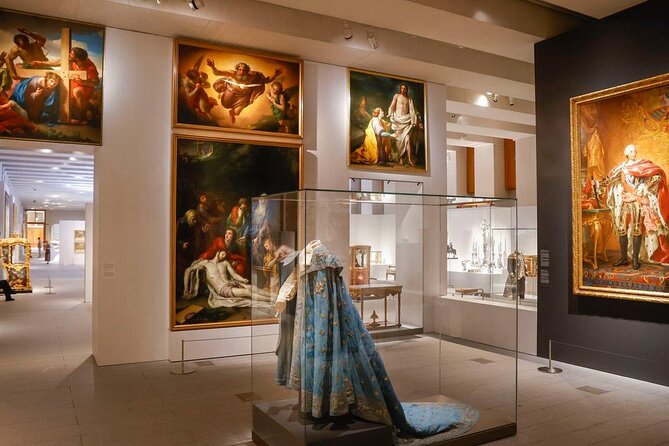
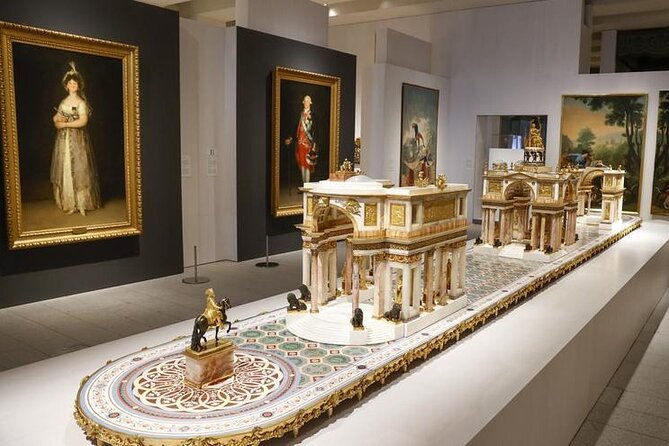
Madrid’s Royal Collections Gallery brings together more than 650 works owned by Spain’s monarchs, from the Catholic Monarchs through the Bourbon dynasty. You move across three floors with an official art and history guide, seeing paintings, royal furnishings, clocks, porcelain, and striking Belgian woven hangings.
I like the focus on objects made for royal life, not just famous paintings. I also like the small group limit of 15 people, which should make it easier to hear the guide and ask questions. The main consideration is scope: the gallery tour lasts about two hours, and the collection itself may feel less satisfying if you hoped to see the Royal Palace interiors too.
In This Review
- Key points to know
- Why the Royal Collections Gallery deserves two hours
- Three floors, 650 works, and a clear historical route
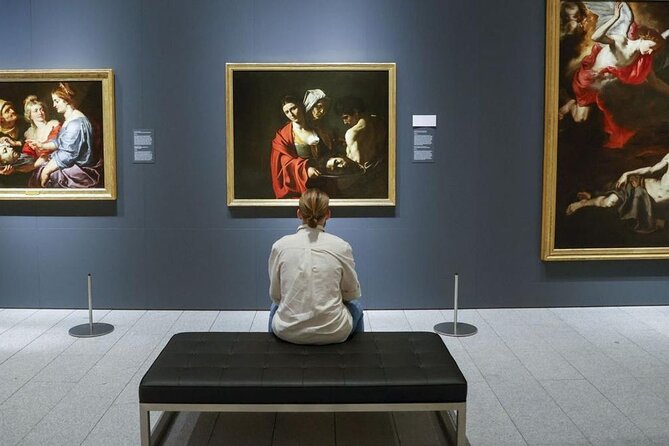
- The paintings: Caravaggio, Velázquez, Goya, and Coxie
- The woven works are not just decoration
- Royal factories, porcelain, clocks, and palace supply
- What Amaya adds to the visit
- The Royal Palace option: worth adding if available
- Is $54.13 a fair price for two hours?
- Meeting point and practical planning
- Who will get the most from this tour?
- Should you book the Royal Collections Gallery?
- FAQ
- Where does the Royal Collections Gallery tour begin?
- Where does the tour end?
- How long does the experience last?
- Is admission included in the price?
- Is the tour offered in English?
- How many people can join the tour?
- Can I cancel for a full refund?
Key points to know
- Three floors of royal collections: The tour covers more than 650 works from several Spanish dynasties.
- Famous names among the objects: Look for works linked to Caravaggio, Diego Velázquez, Goya, and Coxie.
- The woven hangings are a highlight: One unusual treasure is a version of Bosch’s Garden of Earthly Delights made as a wall hanging.
- An art and history guide leads the visit: Amaya has been praised for explaining the Spanish dynasties and making the objects easier to understand.
- Small group, fixed length: The group can include up to 15 people, and the visit lasts about two hours.
- Palace access needs attention: The Royal Palace may be available as an extension, but the basic experience described here is centered on the gallery.
Why the Royal Collections Gallery deserves two hours
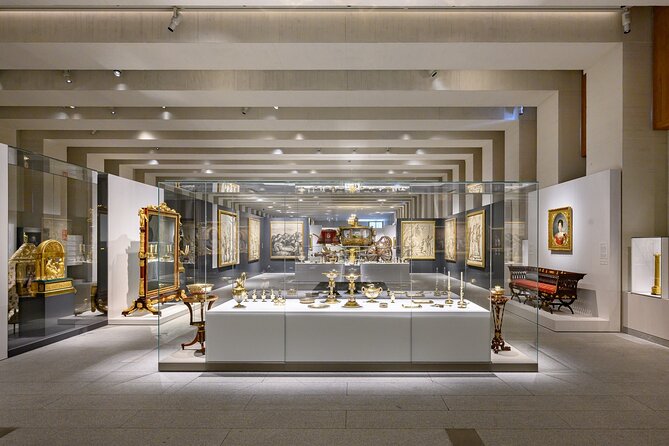
The Royal Collections Gallery gives you a different view of Spain’s monarchy than a grand palace room-by-room tour. Instead of focusing mainly on bedrooms, throne rooms, and ceremonial halls, it shows the objects the crown gathered, commissioned, and used to furnish royal foundations and palaces.
That makes the visit useful for understanding how Spanish kings and queens displayed power. A painting tells one part of the story. A clock, porcelain service, or finely made wall hanging tells another. These objects reveal what the royal household valued, bought, and used to decorate its residences.
The collection spans the Catholic Monarchs to the Bourbon dynasty. That long time frame helps you see changes in taste and royal culture. You are not looking at one ruler’s collection frozen in time. You are following several generations of Spanish monarchy through art and craft.
I would choose this tour if you want a guided introduction rather than a quick walk through a museum. The guide’s job is not simply to point out names on labels. The better guides connect an object to the dynasty, palace foundation, or royal workshop behind it.
More Royal Palace visits:
- Madrid: Royal Palace Fast-Access Admission Ticket
★ 4.6 · 13,856 reviews - Madrid: Royal Palace Expert Guided Tour with Skip-the-Line
★ 4.7 · 6,986 reviews - Madrid Essential: Historic Center, Plaza Mayor & Royal Palace
★ 5.0 · 6,416 reviews
Three floors, 650 works, and a clear historical route
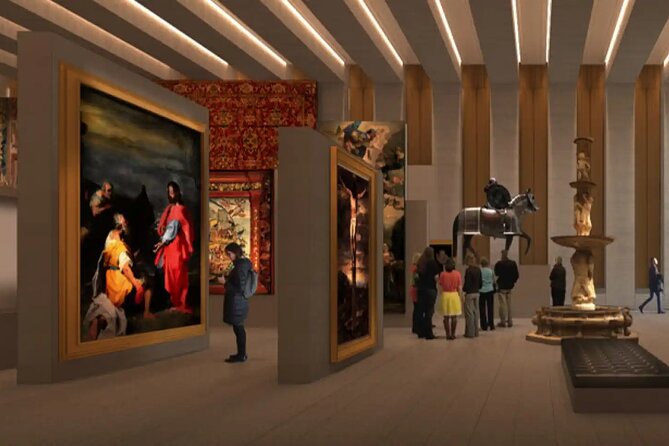
The visit takes place across three floors and includes more than 650 pieces. That is a lot to take in, especially in two hours, so the guide’s selection matters.
You should expect the tour to focus on notable works rather than give every item equal attention. That is the right approach. Trying to explain every object would leave you with a blur of names and dates. A good guide gives you a framework, then uses a few memorable pieces to make the larger collection understandable.
The route covers royal art and decorative objects linked to the foundations of the monarchy. You may see paintings alongside items made for practical royal use. The result is broader than a standard fine-art tour.
I like this mix because it keeps the experience from becoming a parade of portraits. Royal collections are often most interesting when you see the less obvious objects. Clocks, porcelain, and woven works can tell you how the court decorated its rooms and supported specialist manufacturing.
The two-hour length is also sensible. It gives you enough time to see the main works without turning the visit into an exhausting half-day lecture. Still, the collection is large, and you should not expect to absorb everything in one pass.
The paintings: Caravaggio, Velázquez, Goya, and Coxie
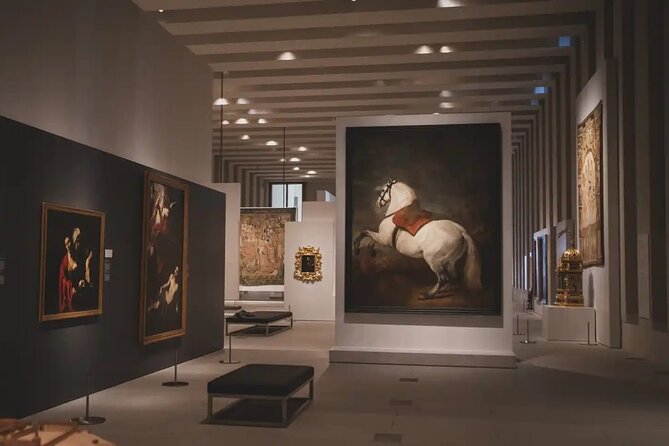
The gallery includes works associated with several major artists. Caravaggio brings the drama and force of Italian painting. Diego Velázquez connects the collection to Spain’s royal court and one of the country’s most important painters. Goya adds a later, more personal view of Spanish royal culture, while Coxie represents an earlier Northern European tradition.
These names give the tour strong artistic appeal, but the visit is not only about ticking off famous painters. The guide can explain why a particular work entered the royal collection and how it related to the monarchy’s wider taste.
Velázquez is especially important in a Spanish royal setting. His work is closely tied to the court, so seeing his paintings here can help place him in the world that supported his career. Goya offers a different tone, with work shaped by a changing Spain and a more complex relationship between art and power.
The presence of Caravaggio also broadens the story beyond Spain. Royal collections were shaped by international trade, diplomatic links, commissions, and collecting habits. You get a sense of the European connections behind the Spanish court.
Coxie may be less familiar to many people than Velázquez or Goya, but that is part of the value of taking a guided tour. The guide can give context to artists you might otherwise pass by.
The woven works are not just decoration
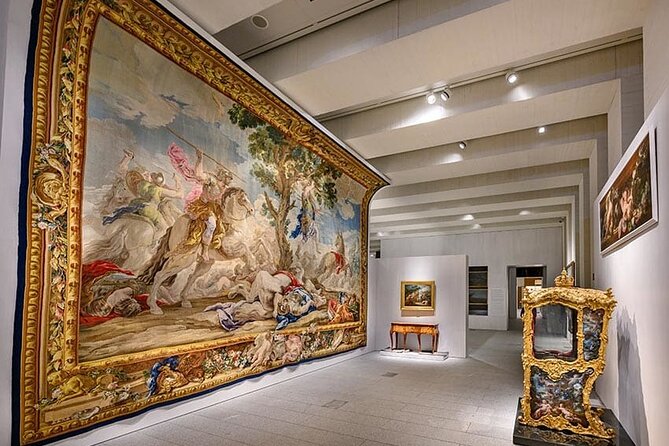
One of the most unusual details in the collection is a woven version of Bosch’s Garden of Earthly Delights. Seeing a famous scene translated into woven form changes the way you look at it.
A painting depends on brushwork, color, and surface. A woven wall hanging has its own texture and craft. It was also suited to the grand rooms of palaces, where such works could cover walls and signal wealth, taste, and access to skilled workshops.
The collection includes Belgian pieces made with gilded silver. That detail alone shows how elaborate royal decoration could become. These are not simple household furnishings. They represent expensive materials, specialist labor, and the international reach of the court.
I would give these pieces extra time. They may not have the immediate name recognition of a Caravaggio or Velázquez, but they explain royal life in a more physical way. You can better picture how palaces were decorated and why royal factories were established to supply clocks, porcelain, woven works, and other objects.
The source information uses the word tapestry for this type of work, but the important point for you is that these are large, finely made wall hangings with their own artistic and historical value.
More museums in Madrid:
- Madrid: Prado Museum Entry Ticket
★ 4.6 · 17,509 reviews - Madrid: Reina Sofía Museum Entrance Ticket
★ 4.5 · 6,889 reviews - Madrid: Small Group of Prado Museum Tour & Optional Tapas
★ 4.6 · 2,437 reviews - Madrid: Prado Museum Guided Tour with Skip-the-Line Ticket
★ 4.5 · 2,018 reviews
Royal factories, porcelain, clocks, and palace supply
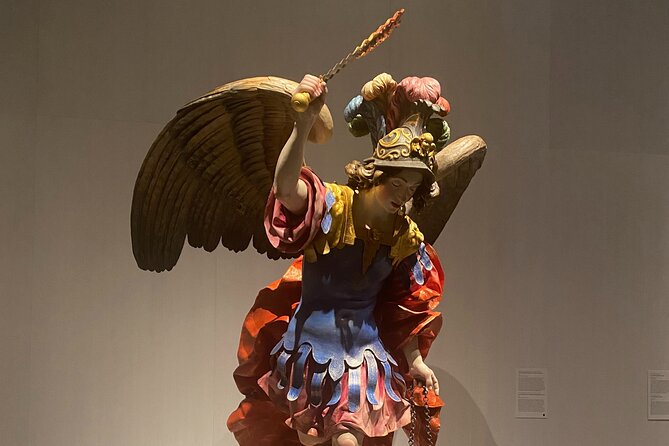
The tour also covers the royal factories created to supply decoration for the monarchy’s residences. This is one of the strongest reasons to choose a guide.
Without context, a clock is simply a clock and a porcelain object is simply a decorative piece. With the story of royal production behind them, these objects become evidence of how the crown organized its household and supported luxury manufacturing.
The factories reveal a practical side of monarchy. Palaces needed constant supplies of furnishings, decorations, tableware, and other objects. The court did not depend only on random purchases. It developed systems for making and obtaining the items needed to present royal power.
That subject should appeal to you if you enjoy design, craft, or the working side of history. It also gives the gallery a human scale. You are not only thinking about kings and queens. You are considering the artists, makers, workshops, and production methods that made royal interiors possible.
The guide’s art and history background is useful here. This material could easily become a dry list of factories and dates. A clear explanation should help you see how the objects fit together.
What Amaya adds to the visit
Amaya is the guide named in the available feedback, and she has received specific praise for explaining the Spanish dynasties and the collection. One account describes her as making the gallery far more worthwhile by helping connect the objects to their setting.
That is exactly the sort of help you want in a collection this large. The gallery has enough material to reward a second visit, but on a first visit you need a route through it. A guide can point out what matters, explain unfamiliar names, and prevent you from spending too much time on less important displays.
The tour is offered in English, which makes the historical explanations accessible to English-speaking visitors. The maximum group size is 15. That is not a private tour, but it is small enough to feel more personal than a large museum group.
You should still remember that guides vary, and the experience depends partly on how much time is spent at each work. Amaya’s strong reputation is encouraging, but there is no promise that every departure will be led by her.
The Royal Palace option: worth adding if available
The gallery and the Royal Palace are related, but they offer different experiences. The gallery focuses on the royal collection and the objects behind palace life. The palace shows the grand rooms and ceremonial setting where monarchy was performed.
Combining both can give you a fuller picture of Spanish royal culture. One part explains the collection. The other lets you see the rooms that gave those objects their purpose.
The extension appears to cost more than the gallery-only experience, though the supplied information does not give the extra price or exact palace schedule. Check the booking details carefully before you assume the palace is included.
This matters because one person found the collection itself below expectations and felt the palace should be added for a fuller visit. That is a fair warning for anyone who mainly wants lavish interiors. If your priority is seeing the Royal Palace, confirm that you are selecting the combined option rather than the basic gallery tour.
If you are more interested in art, royal manufacturing, and the story of collecting, the gallery alone may be enough for a focused two-hour visit. If you want the grandest possible introduction to the Spanish monarchy, the combined option makes more sense.
Is $54.13 a fair price for two hours?
At $54.13 per person, this is not a bargain-priced museum entry. You are paying for more than admission, though. The fee includes the guided visit and all taxes and fees, with an official guide leading a small group through a major royal collection.
The value depends on how much you want interpretation. If you are happy reading labels and choosing your own route, you may find the price high for a two-hour museum visit. If you want the dynasties, artists, royal workshops, and decorative objects explained in a logical order, the guide can make the cost easier to justify.
The maximum of 15 people also matters. A smaller group usually gives you a better chance of hearing the explanation and staying close to the guide. It does not make the tour private, but it should feel more manageable than a large coach-style group.
The price does not include bottled water or a tip. Bring your own water if you want it, and treat tipping as optional rather than an automatic part of the cost.
The tour is commonly reserved well ahead of the date, with bookings averaging 69 days in advance. That does not mean you must book that early, but it is a useful signal if your Madrid dates are fixed.
Meeting point and practical planning
The meeting point is the Galería de las Colecciones Reales, on Calle de Bailén in central Madrid. The tour ends back at the same meeting point, so you do not need to arrange a separate return transfer.
The gallery is near public transportation. That makes it practical to fit into a day of sightseeing, though you should allow enough time to reach the meeting point before the start. The information provided does not give a specific meeting procedure, so read the confirmation carefully once you book.
Confirmation arrives at the time of booking. The group can include a maximum of 15 people, and most people can participate. Service animals are allowed.
The cancellation policy is flexible if your plans are uncertain. You can receive a full refund by canceling at least 24 hours before the local start time. Cancellations or changes inside that 24-hour window are not accepted for a refund. The tour also requires a minimum number of people, and if the provider cancels because that number is not reached, you will be offered another date or experience, or a full refund.
Who will get the most from this tour?
I would recommend the gallery tour to you if you:
- Like art but want historical context too
- Enjoy decorative arts, clocks, porcelain, and specialist craft
- Want a structured first visit to a large collection
- Prefer an English-speaking guide
- Have about two hours for a focused cultural stop
- Are curious about the Catholic Monarchs and Bourbon dynasty
- Prefer a small group to a large sightseeing crowd
You may want the palace extension if you mainly want royal rooms and grand interiors. The gallery is not a substitute for the palace. It explains the objects and systems behind royal life, while the palace gives you the setting.
Families and mixed-interest groups may also find the guided format useful, since the guide can shift between paintings, objects, and history. The supplied information says most people can participate, but it does not provide detailed information about every mobility need or the building’s full accessibility arrangements. Contact the provider if you need specific access information.
Should you book the Royal Collections Gallery?
Book it if you want more than a quick look at paintings. The strongest part of this experience is the way it connects major artists with the wider world of Spanish monarchy: royal foundations, palace decoration, clocks, porcelain, and large woven works made for display.
The two-hour format is efficient, the English guide adds useful context, and the group size is limited to 15. Amaya has been singled out for making the collection easier to understand, especially the Spanish dynasties.
I would choose the palace extension if your main goal is a complete royal visit. I would choose the gallery-only tour if you prefer art and objects, or if you want a manageable introduction before exploring more of Madrid on your own.
At $54.13, it is best for you if guided interpretation matters. If admission alone is your priority, the price may feel steep. If you want someone to connect Bosch, Caravaggio, Velázquez, Goya, royal factories, and Bourbon collecting into one clear story, this is a sensible use of two hours.
FAQ
Where does the Royal Collections Gallery tour begin?
The tour begins at the Galería de las Colecciones Reales, C. de Bailén, s/n, Centro, 28013 Madrid, Spain.
Where does the tour end?
The activity ends back at the meeting point at the Royal Collections Gallery.
How long does the experience last?
The guided gallery visit lasts approximately two hours.
Is admission included in the price?
Yes. Admission and all fees and taxes are included.
Is the tour offered in English?
Yes. The experience is offered in English.
How many people can join the tour?
The activity has a maximum group size of 15 people.
Can I cancel for a full refund?
Yes. You can cancel at least 24 hours before the local start time for a full refund. Cancellations or changes made less than 24 hours before the start are not accepted for a refund.
Just added around Madrid
- Private Vacation Photography Session with Photographer in Madrid★ 5.0 · 3 reviews
- Arrival Private Transfer from MAD Airport to Madrid in a Minibus★ 5.0 · 3 reviews
- Segovia: 3-Hour Private Walking Tour★ 5.0 · 3 reviews
- Tour Segovia and La Granja de San Ildefonso from Madrid★ 5.0 · 3 reviews
- Madrid: Prado & Reina Sofia Museum Skip-the-Line Guided Tour★ 5.0 · 3 reviews
- Salamanca: Private Guided Customizable Walking Tour★ 5.0 · 3 reviews
- Total Reboot and Renew with top wellnes 3 hours couple experience★ 5.0 · 3 reviews
- Madrid: Prado Museum Private Tour★ 5.0 · 3 reviews
Royal Palace Tours, compared.

Royal Palace Expert Guided Tour with Skip-the-Line
Read our review →
Madrid Old Town & Royal Palace Walking Tour Skip the Line Ticket
Read our review →
Royal Palace Guided Tour with Skip the Line Ticket
Read our review →
Royal Palace & Prado Museum Skip the Line Guided Tour
Read our review →
Guided Tour of the Royal Palace with Fast Access
Read our review →Browse the lists this tour appears in