
Review · TOLEDO CATHEDRAL TOURS
Guided tour of the Toledo Cathedral (Input no included)
Toledo Cathedral saves its biggest surprises for inside: a golden monstrance linked to Columbus, a choir packed with carved detail, and a Baroque opening called the Transparent that seems to pull light through the church. This 90-minute Spanish-language tour gives you a focused route through the cathedral’s major works.
I like the chance to see Enrique de Arfe’s monstrance and the sacristy paintings in one short visit. I also like the clear meeting point at Calle Armas 3, near Plaza de Zocodover, where the guide carries a pink flag. The main drawback is that the cathedral ticket is not included, and some visitors may find the explanations too broad, especially if they want much discussion of the exterior.
In This Review
- Key points to know before you book
- Why Toledo Cathedral deserves your time
- Meeting at Calle Armas 3 near Plaza de Zocodover
- The cathedral’s enormous naves and changing styles
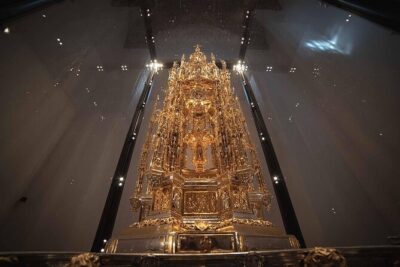
- The monstrance, Toledo’s most precious ceremonial object
- The choir, carved stalls, and powerful pipe organs
- The main chapel and its sixteenth-century altarpiece
- The sacristy, where the art becomes the main event
- The Transparent, Toledo’s Baroque light trick
- The chapter room and its painted ceiling
- What $11 gets you, and what it does not
- Who will get the most from this cathedral tour
- Should you book the Toledo Cathedral tour?
- FAQ
- Where does the Toledo Cathedral tour meet?
- How long does the guided cathedral visit last?
- Is the cathedral entrance ticket included?
- What language is the tour conducted in?
- What sights are included inside the cathedral?
- Is the tour wheelchair accessible?
- Are pets and hats allowed?
Key points to know before you book
- The monstrance is the cathedral’s star treasure: Look closely at its Gothic silver filigree and the smaller gold monstrance inside.
- The sacristy works like a compact art museum: You can see paintings connected with El Greco, Velázquez, Goya, Caravaggio, and other major artists.
- The Transparent is a rare architectural surprise: Narciso Tomé created a Baroque effect that lets light enter behind the main altar.
- The tour is short and tightly focused: One and a half hours is enough for the principal rooms, but not for a slow, exhaustive study.
- The guide speaks Spanish: Santiago is one guide associated with especially warm, attentive service.
- The entrance ticket costs extra: At $11 per person for the guide, the price is modest, but you must budget separately for cathedral admission.
Why Toledo Cathedral deserves your time
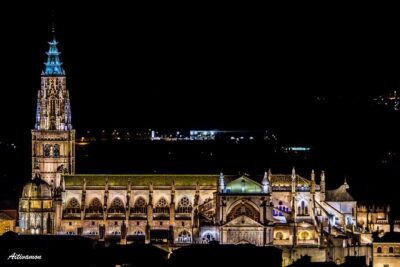
Toledo Cathedral is the city’s great indoor sight. From outside, Toledo can feel like a maze of stone lanes, old walls, and tightly packed buildings. Inside the cathedral, the scale changes at once. You move among broad naves, tall arches, chapels, carved stalls, painted ceilings, and works of art gathered over centuries.
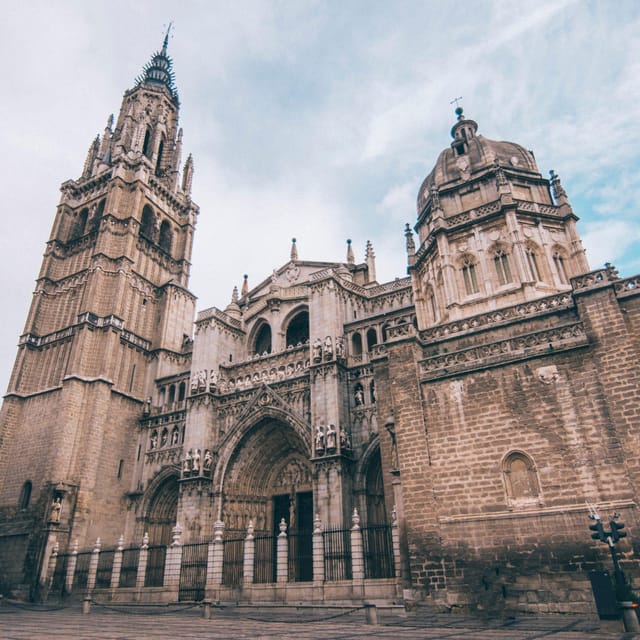
The building is primarily French Gothic, but that label only tells part of the story. You will also encounter Baroque drama and Neoclassical touches. The result is not a single clean design. It is a long record of changing taste, devotion, wealth, and ceremony.
That is why a guide helps. Without one, you can easily walk past a carved choir stall or a side chapel without knowing why it matters. The route is built around the cathedral’s major interiors, so you get a useful framework rather than a random stroll.
The tour is conducted in Spanish. If you understand Spanish well, you can expect a spoken explanation of the spaces and their art. If you do not, the cathedral still offers plenty to see, but the value of the guide will depend on how much of the commentary you can follow.
A few more Toledo days to weigh up
- Toledo Cathedral Guided Tour in Spanish
★ 4.5 · 88 reviews - Private: Guided visit to the Toledo Cathedral
★ 4.0 · 29 reviews - Toledo Cathedral and its 5 treasures
★ 4.5 · 25 reviews
Meeting at Calle Armas 3 near Plaza de Zocodover
The starting point is Calle Armas 3, opposite the Rodilla café at the beginning of Plaza de Zocodover. Look for the guide with the pink flag.
This is a sensible meeting place because Plaza de Zocodover is one of Toledo’s main reference points. Still, give yourself enough time to find number 3. Old Toledo streets can twist in short distances, and a café landmark is useful only if you are already close.
The same spot is used when the tour ends. That makes the outing easy to pair with other sightseeing around the square. You will not need to arrange transport between the meeting point and the cathedral, since the experience returns you to Calle Armas 3 after the guided visit.
The tour requires at least six people to operate. That condition matters if your schedule is tight, so check the status of the departure before building your whole day around it. If you cannot attend, cancel rather than simply failing to appear, since the guide may be waiting for you.
The cathedral’s enormous naves and changing styles
Once inside, the first effect is scale. The naves give you a sense of the cathedral as a place built for public ceremony, not just private prayer. Look upward and outward as you walk, since the vertical structure can be just as striking as the individual objects.
Your guide’s job here is to connect the parts. The Gothic structure provides the broad frame, while later additions bring in Baroque movement and Neoclassical restraint. These changes can seem confusing if you expect one uniform style. I find the mixture more interesting because the building reads like a long conversation between different periods.
The tour does not promise a full exterior study. One visitor specifically felt that the outside received little or no attention and that the interior explanations stayed at a general level. If you want a close reading of the façade, portals, towers, or construction history, you may need to study those areas on your own before or after the tour.
That limitation is worth keeping in mind. The experience is best understood as an inside route through the cathedral’s principal treasures, not as a complete architectural course.
The monstrance, Toledo’s most precious ceremonial object
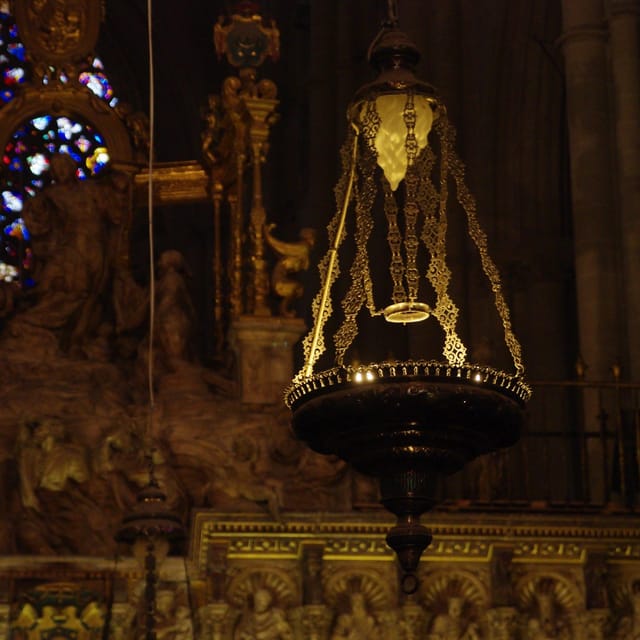
The monstrance of Enrique de Arfe is one of the tour’s most distinctive stops. It is associated with Corpus Christi, Toledo’s major religious celebration, and carries a strong connection to local tradition.
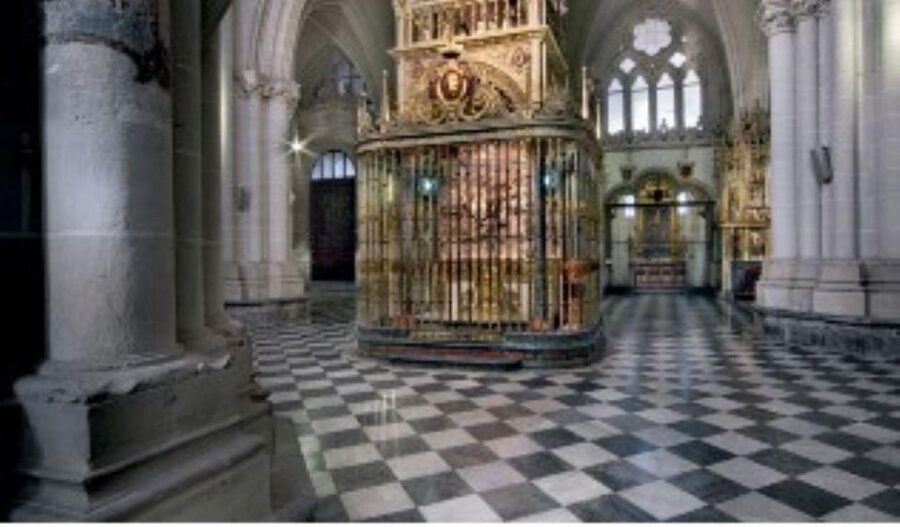
The outer structure uses a great number of pieces of Gothic silver, worked into delicate filigree that resembles lace. From a distance, it may read as an ornate tower. Up close, the fine metalwork gives you a reason to slow down.
Inside is the smaller monstrance that holds the consecrated host. This inner piece is made of pure gold and is linked with the first gold brought from the Americas by Christopher Columbus, later belonging to the Catholic Monarchs. That story gives the object a wider historical reach, but the craftsmanship remains the main visual draw.
This is a good example of why a guided explanation matters. The object is not simply an expensive church ornament. Its shape, materials, use in Corpus Christi, and royal associations all affect how you read it. Ask your guide to point out the smaller gold section if the viewing arrangement makes it difficult to identify.
More Toledo day trips:
- Guided Walking Tour of Immortal Toledo
★ 5.0 · 1,116 reviews - Toledo Private Tour with Licensed Local Guide
★ 5.0 · 884 reviews - Toledo: City Sightseeing Hop-On Hop-Off Bus Tour & Extras
★ 4.3 · 683 reviews - Madrid: Full-Day Guided Tour of Toledo with Cathedral Visit
★ 4.6 · 647 reviews
The choir, carved stalls, and powerful pipe organs
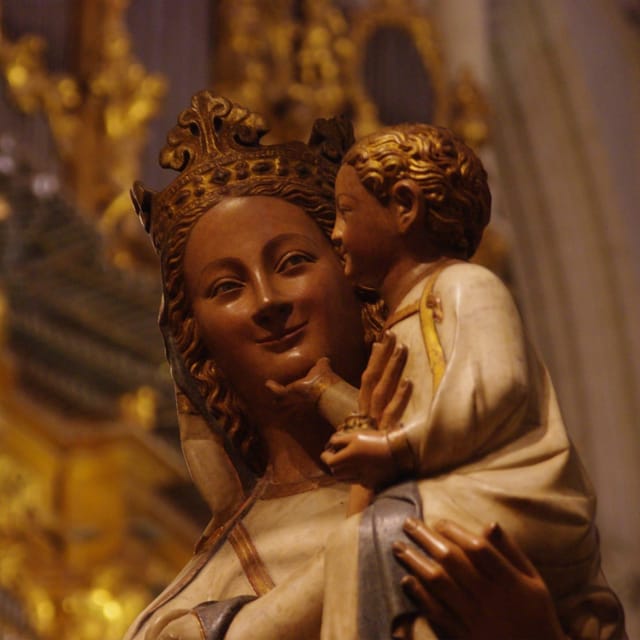
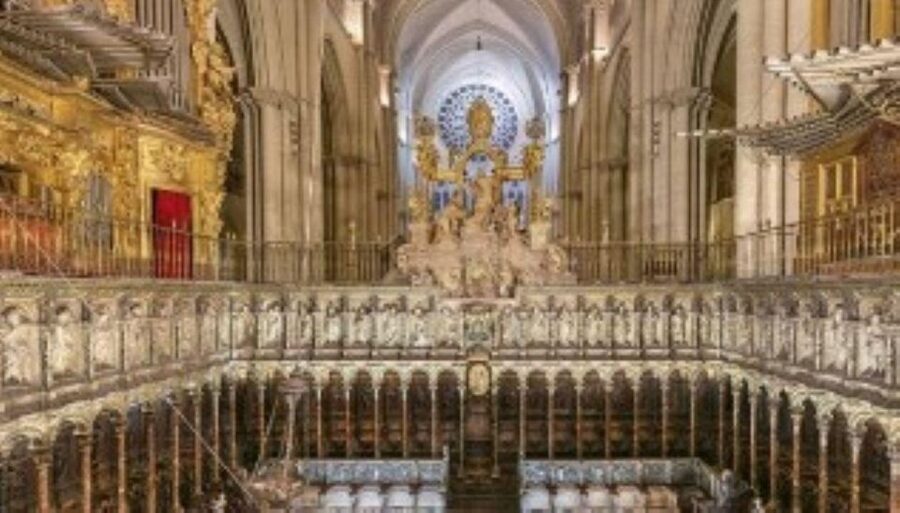
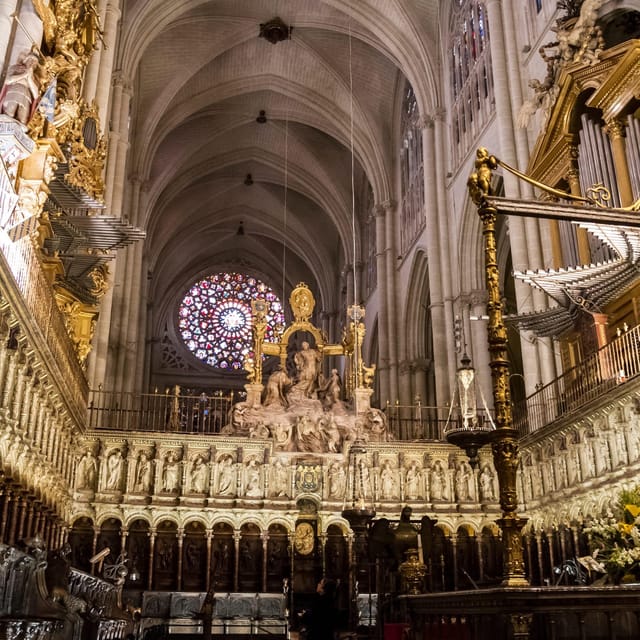
The choir offers a different kind of spectacle. Here, the attention shifts from precious metal to wood carving, engraved surfaces, relief work, and the large pipe organs above.
The stalls reward close looking. You may find that individual carvings catch your eye only after you stop viewing the choir as one grand block. Reliefs and engravings turn the area into a lesson in detail, while the organs bring a sense of sound even when they are silent.
I like this portion of the route because it balances the glitter of the monstrance. The cathedral is not only a container for paintings and gold. It is also a place designed for music, ritual, and a large community gathered together.
The guide can help you understand how the choir fits into the cathedral’s ceremonies. Since the tour lasts only 90 minutes, do not expect to study every carving at leisure. If a particular organ or stall catches your attention, note it and return to it if the cathedral’s visiting rules and time allow.
The main chapel and its sixteenth-century altarpiece
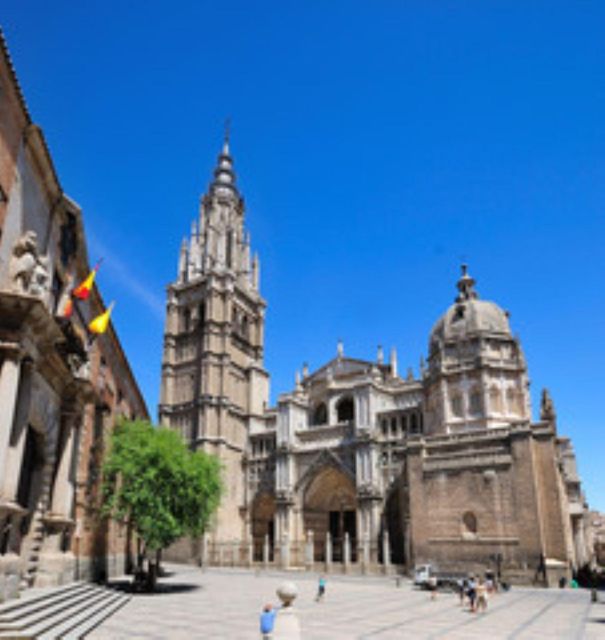
The main chapel brings the route back to the cathedral’s central religious focus. Its sixteenth-century altarpiece is one of the major visual stops, and the guide places it within the larger arrangement of the church.
Altarpieces can be difficult to read without direction. They often contain several levels, figures, scenes, and decorative frames competing for your eye. A short explanation can help you decide where to look first and how the work relates to the altar below it.
The main chapel also gives you a useful sense of procession and ceremony. After seeing the choir and its instruments, you can understand how music, movement, painting, and architecture worked together in the cathedral.
Keep your expectations measured. The tour highlights the altar rather than promising a long art-history lecture about every figure. If you prefer a slow, specialist examination of the altarpiece, 90 minutes for the entire cathedral will feel brisk.
The sacristy, where the art becomes the main event
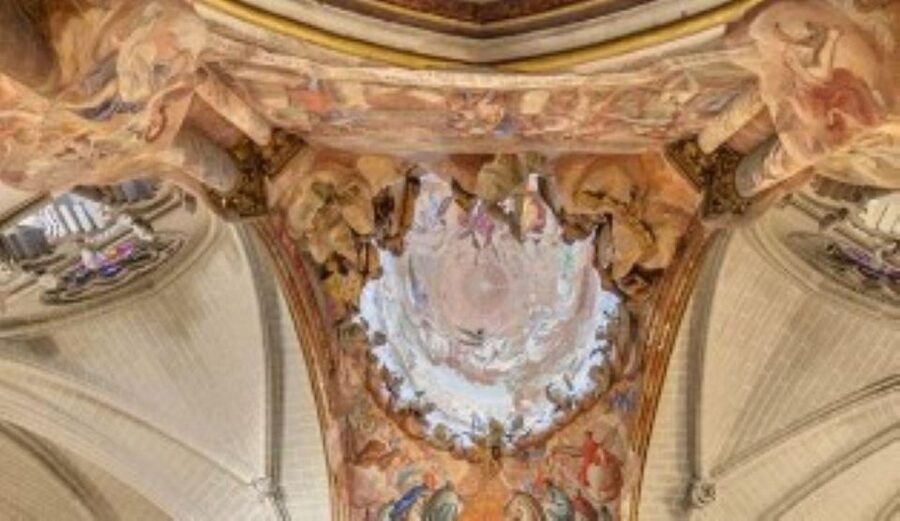
The sacristy is likely the strongest stop for art lovers. Its ceiling fresco by the Italian painter Luca Giordano is designed to seize your attention as soon as you enter. Look up first, then turn to the paintings displayed around the room.
The collection includes works by El Greco, Velázquez, Goya, and Caravaggio, among other artists. That range gives the sacristy a different character from the nave. You are no longer looking mainly at the structure of the church. You are looking at a compact museum within it.
El Greco has a special connection with Toledo, so his presence here helps tie the cathedral to the city’s artistic identity. Velázquez, Goya, and Caravaggio bring different approaches to religious painting, color, drama, and human expression. Even if you are not an art specialist, the names give you a useful way to compare what you see.
The ceiling fresco deserves a moment of stillness. It is easy to rush toward the wall paintings and miss the sense of movement overhead. The comparison with Rome’s Sistine Chapel is ambitious, but the practical advice is simple: look above the doorway and take in the ceiling before you start studying the canvases.
The guide may not have time to explain every painting in detail. If art is your main reason for coming, ask which works are considered the key pieces and use the remaining minutes to focus on those.
The Transparent, Toledo’s Baroque light trick
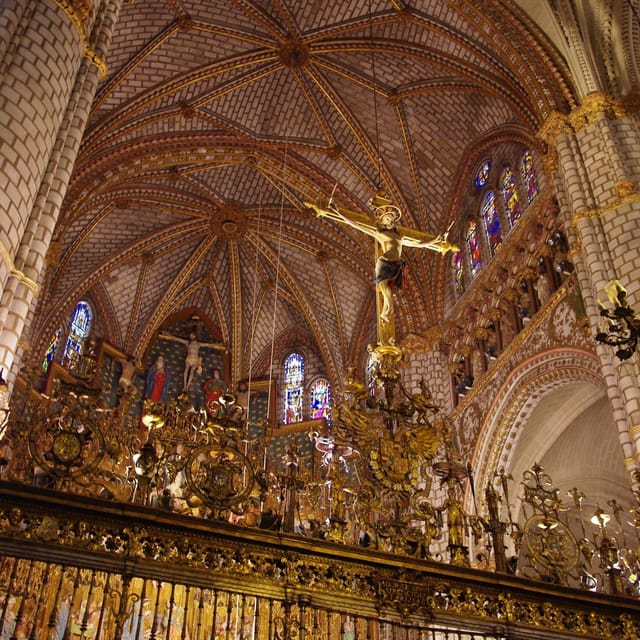
Following the cathedral’s ambulatory, often called the giracola in the tour description, you reach the Transparent. This is one of the building’s most unusual features.
Narciso Tomé created a Baroque opening behind the main altar, using architecture and light to produce a theatrical effect. The design is meant to surprise you as you move through the cathedral. Instead of treating the wall behind the altar as a solid endpoint, it opens the space to light and decoration.
This stop shows how different the Baroque approach can feel from the cathedral’s Gothic framework. Gothic architecture often draws your eye upward through structure and height. The Transparent adds motion, brightness, and visual drama.
You may want to view it from more than one angle, if the route and crowd allow. The effect depends on position, so a quick glance from one spot may not show the full relationship between the opening, sculpture, and light.
The Transparent is also a good reason to take this tour even if you have already read about the cathedral. It is not the kind of feature that makes sense from a simple list of names. You need to see how it changes the wall and the space around it.
The chapter room and its painted ceiling
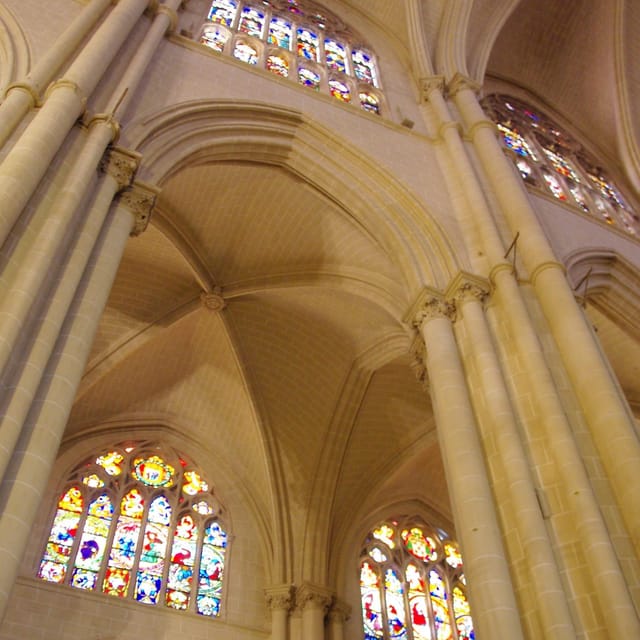
The chapter room closes the main sequence with another change of mood. Its frescos give the room a more enclosed, decorative feel than the huge naves.
This is an easy place to overlook if you are focused only on the famous names in the sacristy. Pay attention to the ceiling and the arrangement of the room itself. The chapter room shows how important cathedral life also depended on private meetings, administration, and religious community, not only grand public worship.
The room adds variety to the route. You move from Gothic scale, to ceremonial silver, to carved wood, to famous paintings, to Baroque theater, and then to a more intimate painted interior. That range is what makes the cathedral visit feel substantial despite the short duration.
What $11 gets you, and what it does not
The guided portion costs $11 per person. The cathedral entrance ticket is not included, so you must add that admission to the total cost.
At $11, the guide fee is reasonable if you want help finding the cathedral’s key objects and understanding their purpose. You are paying for a structured 90-minute explanation, not for entry itself. The value is strongest when you would otherwise walk past the monstrance, Transparent, choir details, or sacristy paintings without much context.
The price is less compelling if you already know the building well or plan to spend a long time studying every room independently. You may prefer to buy admission and explore at your own pace, especially if Spanish is not a language you follow comfortably.
The short format also keeps the cost and time commitment manageable. You can fit the tour into a day of Toledo sightseeing without giving up half a day. Just remember that the minimum group requirement is six people, and that the tour may feel quick for serious art students.
Who will get the most from this cathedral tour
I would choose this experience for a first visit to Toledo Cathedral when you want an organized introduction rather than an all-day study session. It suits you especially well if you enjoy art, church architecture, or unusual details such as the gold within the monstrance and the light behind the Transparent.
It also fits visitors who prefer a guide to point out the main rooms and explain why they matter. The kind, attentive style associated with Santiago has been singled out, while another guide was praised as friendly and cultured. Those comments suggest that personal service can be a strong part of the experience, though the guide assigned to your departure may differ.
I would think twice if you need English commentary, since the stated guide language is Spanish. I would also be cautious if your main goal is a detailed exterior tour or a long explanation of every work. One assessment found the coverage too general and felt the outside was not discussed.
The tour is wheelchair accessible, and pets are not admitted. Hats are also listed as not allowed, so plan to remove one before entering.
Should you book the Toledo Cathedral tour?
Book it if you want the cathedral’s major sights explained in Spanish, and you value a direct route through the monstrance, choir, main chapel, sacristy, Transparent, and chapter room. The $11 guide fee is fair for that compact introduction, provided you remember to buy cathedral admission separately.
Skip it if you want an English-language visit, a detailed exterior study, or plenty of time for independent looking. In that case, the short guided format may feel too general.
For most Spanish-speaking first-time visitors, I would consider it a useful add-on to a Toledo day. Keep the ticket cost in your budget, arrive at Calle Armas 3 with a little spare time, and watch for the pink flag.
FAQ
Where does the Toledo Cathedral tour meet?
Meet at Calle Armas 3, opposite the Rodilla café at the beginning of Plaza de Zocodover. The guide carries a small colored flag, described as pink.
How long does the guided cathedral visit last?
The guided tour lasts 1.5 hours, or 90 minutes.
Is the cathedral entrance ticket included?
No. The $11 price covers the official guide, but admission to Toledo Cathedral is not included.
What language is the tour conducted in?
The live tour guide speaks Spanish.
What sights are included inside the cathedral?
The route includes the monstrance, choir and pipe organs, main chapel and altar, sacristy, Transparent, and chapter room.
Is the tour wheelchair accessible?
Yes. The activity is listed as wheelchair accessible.
Are pets and hats allowed?
No. Pets are not admitted, and hats are listed among the items not allowed.
Just added around Toledo
- Toledo: Private tour with an official guide★ 5.0 · 3 reviews
- Toledo Scavenger Hunt and Highlights Self-Guided Tour★ 4.5 · 3 reviews
- Toledo: Marzipan Convent Route with Tasting and Wine★ 3.7 · 3 reviews
- Guided Tour of Underground Toledo★ 5.0 · 4 reviews
- Toledo: Private Minivan tour from Madrid★ 5.0 · 4 reviews
- Toledo : Private Walking Tour with a Pro guide★ 4.6 · 4 reviews
- Private Walking History Tour in Toledo★ 5.0 · 4 reviews
- Toledo: 3-Hour Private Walking Tour★ 5.0 · 5 reviews
Toledo Cathedral Tours, compared.
Toledo Experience Tour from Madrid with optional Toledo Cathedral
Read our review →
Browse the lists this tour appears in