
Review · ROYAL PALACE TOURS
Guided Walking Tour of the Royal Collections Gallery
The most unusual part of this Madrid tour comes at the end. After viewing royal art and objects from the Habsburg and Bourbon dynasties, you finish on floor -3 with temporary displays and the Cube, where royal carriages share the stage with racing cars dating from the late 19th century to today. That final change of pace gives the visit more range than a standard palace-art tour.
I like the small maximum of 10 people, which should make it easier to hear the guide and ask questions. I also like the planned chronological route, moving from the Austrian rulers to the Bourbons instead of sending you through a jumble of names and objects. The main consideration is time: two hours is enough for a focused introduction, but not enough to examine every piece in the gallery at length.
In This Review
- Key points to know
- Why this gallery visit feels different from a palace tour
- Starting at the tourist information point near the Royal Palace
- Floor -1 and the Habsburg collection
- Preserved traces of Madrid before the royal collections
- Floor -2 and the Bourbon dynasty
- The Cube, royal carriages, and racing cars
- What a two-hour, 10-person group means
- Is $50.43 a fair price?
- Who should choose this Royal Collections Gallery tour?
- Booking and cancellation details worth knowing
- Should you book this two-hour gallery visit?
- FAQ
- Where does the tour start?
- Where does the tour end?
- How long does the experience last?
- Is admission to the gallery included?
- How many people can join the tour?
- What royal periods does the tour cover?
- What can you see on floor -1?
- What can you see at the Cube?
- Can you cancel for a full refund?
Key points to know
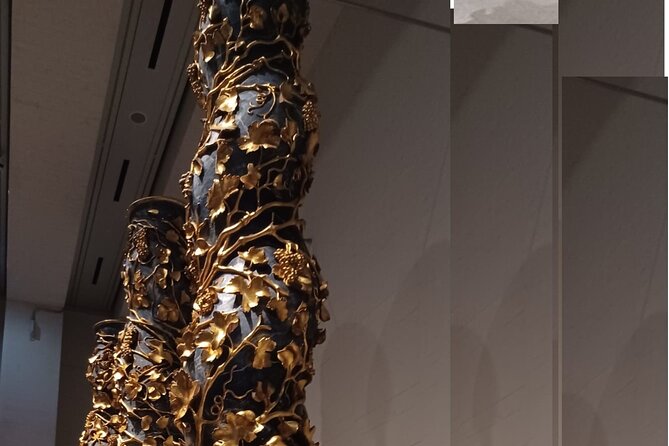
- Austrian treasures begin on floor -1, including votive crowns, tapestries, golden columns, and a carriage linked to Charles II.
- The Bourbon section continues on floor -2, with more elaborate decorative art.
- Madrid’s Islamic past appears along the route, through preserved remains cared for by National Heritage.
- The tour ends on floor -3, with a temporary exhibition and the Cube.
- The Cube includes royal carriages and early racing cars, connecting court life with modern transport.
- The group is limited to 10 people, and the tour lasts about two hours.
Why this gallery visit feels different from a palace tour
The Royal Collections Gallery is built around objects collected, commissioned, or used by Spain’s ruling families. That gives the visit a different purpose from walking through rooms in the Royal Palace of Madrid. Instead of focusing mainly on architecture and royal chambers, you spend your time looking closely at art, ceremonial objects, furnishings, vehicles, and displays tied to the monarchy.
The route is designed to make the succession of dynasties easy to follow. You begin with the Habsburg, or Austrian, period and then move to the Bourbon dynasty. For anyone who finds Spanish royal names hard to keep straight, this order helps. You can connect changes in style with changes in the ruling family.
A guide such as Rubén brings experience from tours of the Royal Palace of Madrid and familiarity with key works in the gallery. That matters here because the collection covers a lot of ground. Without a guide, it would be easy to spend too much time on one ornate object and miss the larger story.
The format also suits you if you prefer a guided visit with a clear focus. The tour selects major pieces rather than attempting to explain every display. You get a readable introduction to the collection, then can return on your own if you want a slower look at particular works.
More Royal Palace visits:
- Madrid: Royal Palace Fast-Access Admission Ticket
★ 4.6 · 13,856 reviews - Madrid: Royal Palace Expert Guided Tour with Skip-the-Line
★ 4.7 · 6,986 reviews - Madrid Essential: Historic Center, Plaza Mayor & Royal Palace
★ 5.0 · 6,416 reviews
Starting at the tourist information point near the Royal Palace
The meeting point is the Tourist Information Point by the Royal Palace, at Calle Bailén and Calle de Requena. The visit then continues to the Royal Collections Gallery on Calle de Bailén.
Give yourself enough time to find the meeting point. The address includes a street corner, so checking the location before setting out will help you avoid a rushed start. The meeting area is near public transportation, another practical advantage if you are crossing central Madrid from another part of the city.
The tour finishes inside the gallery, rather than returning you to the starting point. That is useful if you plan to continue sightseeing near the palace or head toward another central Madrid attraction. It also means you should not leave anything at the meeting point or assume you will end where you began.
The experience lasts about two hours. That is a sensible length for a museum visit with a guide. You get enough time to establish a story and see the main sections, while avoiding the fatigue that can set in during a much longer art tour.
Floor -1 and the Habsburg collection
The first major section is on floor -1 and covers the reign of the Austrians, better known as the Habsburgs. This part introduces the older royal collection and its formal, ceremonial character.
Expect objects made to signal power, faith, and status. Votive crowns, golden columns, and tapestries are among the types of decorative pieces included in the visit. These are not ordinary household objects. Their purpose was often public and symbolic, designed for religious ceremonies, court settings, or important royal occasions.
A carriage associated with the reign of Charles II adds a practical object to the display. It helps you imagine how royalty moved through the city and attended ceremonies, rather than seeing the monarchy only through paintings and decorations.
I like this opening because it gives the collection a strong visual start. Crowns and gold catch your eye immediately, but the guide can also explain how these items functioned. The value of the tour is not simply identifying an object. It is understanding why a ruler would commission or preserve it.
The Habsburg section may appeal most to you if you enjoy European dynastic history, religious art, and formal objects. If you prefer modern design or everyday social history, some of the ornate pieces may feel distant. The guide’s selection helps by keeping the emphasis on the most important works rather than every display in the room.
Preserved traces of Madrid before the royal collections
The gallery visit also includes remains connected with Madrid’s Islamic origins. These traces offer a useful reminder that the city’s story began long before the Habsburgs and Bourbons.
The information provided for the tour does not specify the exact remains or how much time the group spends with them. You should think of this as a historical layer within the route, not a separate archaeological visit. The material has been preserved and maintained by National Heritage, giving the royal collection a broader setting.
This part is especially valuable because royal museums can sometimes make a city seem as if its story began with kings and palaces. The Islamic remains place Madrid in an older timeline. They also break up the procession of royal objects with a reminder of the city that existed before later dynasties shaped it.
The guide’s chronological plan should help connect these remains to the larger story. Still, if archaeology is your main interest, you may find the section brief compared with the dynastic collections. The tour’s focus remains the Royal Collections Gallery and its major royal pieces.
More museums in Madrid:
- Madrid: Prado Museum Entry Ticket
★ 4.6 · 17,509 reviews - Madrid: Reina Sofía Museum Entrance Ticket
★ 4.5 · 6,889 reviews - Madrid: Small Group of Prado Museum Tour & Optional Tapas
★ 4.6 · 2,437 reviews - Madrid: Prado Museum Guided Tour with Skip-the-Line Ticket
★ 4.5 · 2,018 reviews
Floor -2 and the Bourbon dynasty
The route continues on floor -2 with the Bourbon dynasty. The decorative art becomes more elaborate, according to the tour description, and the change in style gives you a useful visual contrast with the Habsburg section.
This is where the chronological approach earns its keep. You do not have to treat every royal object as part of one long, unchanging tradition. Instead, you can watch the collection shift as a different dynasty takes power and royal taste changes.
The Bourbon displays may appeal to you if you like highly finished decorative art, elaborate interiors, and court culture. They also help explain how a royal collection grows over time. Objects are not just gathered in one period and left untouched. New rulers add their own preferences, commissions, and styles.
Two hours imposes a limit here. You will see a chosen group of principal works rather than every Bourbon object in detail. That is a fair trade for a small guided group, especially if you want a coherent overview. If you already know the gallery well, you may prefer a self-guided visit that lets you set your own pace.
For a first visit, though, the selection should keep the experience manageable. You can spend your attention on the pieces the guide considers central, rather than trying to decide what deserves your time in a large national collection.
The Cube, royal carriages, and racing cars
The tour ends on floor -3 with a temporary exhibition and the Cube. This final section changes the mood of the visit.
The Cube allows you to see major royal carriages alongside the first racing cars used from the late 19th century through today. That pairing is one of the tour’s most distinctive features. Carriages show royal ceremony, hierarchy, and travel before the motor age. Racing cars bring the story into a more recent period of speed, engineering, and public spectacle.
You may find the contrast more memorable than another room of gilded objects. It also gives the tour a wider reach. The Royal Collections Gallery is not presented only as a place for paintings and palace decoration. Vehicles become part of the story of status, technology, and public life.
The temporary exhibition can change over time, so the exact material on display is not fixed. The permanent elements described here are the royal carriages and racing cars, while the temporary collection may offer something different on a later visit.
Because the tour finishes here, you can remain in the area afterward and look more closely if the gallery’s rules and opening arrangements allow. The tour itself is timed for about two hours, so do not assume the guide will provide unlimited time for every car or carriage.
What a two-hour, 10-person group means
A maximum of 10 people is one of the strongest practical features. Small groups usually make it easier to stay near the guide, hear explanations, and ask a question without interrupting a large crowd.
The format also gives the visit a more personal feel than a large museum group. The available feedback gives the tour a 5 out of 5 rating from six ratings, and a Spanish comment specifically praises the treatment and the information provided. That matches what you should want from this kind of experience: clear explanations and a friendly guide, not a rushed march from object to object.
Still, a small group does not guarantee a private tour. You are sharing the two-hour route with other participants, and the experience requires a minimum number of people to run. If that minimum is not met, the provider can offer another date or experience, or a refund.
The guide’s ability to select works is just as important as group size. A two-hour gallery visit needs judgment. The guide must decide which objects explain the Habsburgs, which show Bourbon taste, and how much attention to give the Islamic remains and the Cube.
Is $50.43 a fair price?
At $50.43 per person, this is not the cheapest way to enter a Madrid museum. The price makes more sense if you value interpretation, a planned route, and a small group.
You are paying for about two hours with a guide, admission included, and a focused selection from a large royal collection. If you walk through museums quickly and prefer reading labels, you may find the cost harder to justify. You could want the freedom to stop wherever you like and spend as long as you wish.
I think the price is more reasonable for a first visit to the gallery, especially if you are unfamiliar with Spanish dynasties. The chronological structure saves you from having to build the story yourself. It also gives you a better chance of noticing connections between the royal objects, the preserved remains, and the vehicles at the end.
The value depends on your museum habits. Book it if you want a guide to make sense of selected highlights. Skip it if you already know the collection well or want a long, unhurried art study session.
The experience is booked, on average, 17 days ahead. That is a useful planning signal. If your Madrid dates are fixed, reserving early is sensible, particularly because the group is capped at 10 people.
Who should choose this Royal Collections Gallery tour?
I would recommend it to you if you want a compact introduction to Spanish royal collections and prefer a human guide to a museum audio guide or printed labels. The route has enough variety to hold the attention of people who are interested in art, dynasties, architecture, transport, or Madrid’s earlier past.
It also suits couples, families with older children, and solo visitors who like a social but small-group format. The two-hour length is manageable when you have a full day of sightseeing planned.
You may want another option if your main goal is the Royal Palace interior rather than the Royal Collections Gallery. The guide’s experience with the palace is useful background, but this tour takes place at the gallery and ends there.
It may also be less suitable for anyone who needs a fully flexible pace. The group follows a selected chronological route, and the tour does not promise time to examine every object. Most people can participate, and the gallery is near public transportation, but the supplied details do not specify special accessibility arrangements, so you should ask the provider if you have particular mobility needs.
Booking and cancellation details worth knowing
Confirmation is sent when you book. The tour is near public transportation, and admission to the gallery is included.
You can cancel for a full refund up to 24 hours before the start time. Cancellations or changes made less than 24 hours before the local start time are not refunded or accepted.
The experience requires good weather and a minimum number of participants. If poor weather cancels it, you can receive a different date or a full refund. The same choice applies if the minimum group size is not reached.
Should you book this two-hour gallery visit?
Book this tour if you want a clear royal timeline, a small group, and an unusual finish with carriages and racing cars. The combination of Habsburg treasures, Bourbon decoration, Islamic remains, and modern vehicles gives you more variety than a narrow art-only visit.
I would be less quick to book it if you want to wander freely or spend half a day studying individual works. At $50.43, the strongest value comes from the guide’s selection and explanation, not from extra time inside the gallery.
For a first look at Madrid’s royal collections, this is a well-focused choice. Reserve ahead if your dates are firm, and arrive at the Royal Palace tourist information point with enough time to find the street corner before the two-hour story begins.
FAQ
Where does the tour start?
It starts at the Tourist Information Point by the Royal Palace, at Calle Bailén and Calle de Requena in central Madrid.
Where does the tour end?
The tour ends at the Royal Collections Gallery on Calle de Bailén, on floor -3.
How long does the experience last?
The guided visit lasts approximately two hours.
Is admission to the gallery included?
Yes. The admission ticket is included in the experience.
How many people can join the tour?
The tour has a maximum of 10 participants.
What royal periods does the tour cover?
The route covers collections from the Habsburgs, also called the Austrians, through the Bourbon dynasty.
What can you see on floor -1?
The Habsburg section on floor -1 includes decorative objects such as votive crowns, tapestries, golden columns, and a carriage associated with the reign of Charles II.
What can you see at the Cube?
The Cube includes major royal carriages and early racing cars dating from the late 19th century through today.
Can you cancel for a full refund?
Yes. You can cancel at least 24 hours before the experience start time for a full refund. Changes or cancellations made less than 24 hours before the start time are not accepted or refunded.
More Walking Tours in Madrid
- Toledo Tour & Vineyard Walk with Wine Tasting from Madrid
★ 5.0 · 2,546 reviews - Madrid Walking Tour from Puerta del Sol to Retiro Park
★ 5.0 · 2,285 reviews - Madrid Old Town & Royal Palace Walking Tour Skip the Line Ticket
★ 4.5 · 1,829 reviews - Madrid: Spanish Inquisition and Legends Evening Walking Tour
★ 4.7 · 1,396 reviews
Just added around Madrid
- Private Vacation Photography Session with Photographer in Madrid★ 5.0 · 3 reviews
- Arrival Private Transfer from MAD Airport to Madrid in a Minibus★ 5.0 · 3 reviews
- Segovia: 3-Hour Private Walking Tour★ 5.0 · 3 reviews
- Tour Segovia and La Granja de San Ildefonso from Madrid★ 5.0 · 3 reviews
- Madrid: Prado & Reina Sofia Museum Skip-the-Line Guided Tour★ 5.0 · 3 reviews
- Salamanca: Private Guided Customizable Walking Tour★ 5.0 · 3 reviews
- Total Reboot and Renew with top wellnes 3 hours couple experience★ 5.0 · 3 reviews
- Madrid: Prado Museum Private Tour★ 5.0 · 3 reviews
Royal Palace Tours, compared.

Royal Palace Expert Guided Tour with Skip-the-Line
Read our review →
Madrid Old Town & Royal Palace Walking Tour Skip the Line Ticket
Read our review →
Royal Palace Guided Tour with Skip the Line Ticket
Read our review →
Royal Palace & Prado Museum Skip the Line Guided Tour
Read our review →
Guided Tour of the Royal Palace with Fast Access
Read our review →Browse the lists this tour appears in