
Review · WALKING TOURS
Madrid: Hidden Gems and Secrets Small Group Walking Tour
Madrid’s story comes alive in its smallest corners on this walk. You move from a ninth-century Muslim fort to the royal city of the Bourbons, passing old walls, convents, market halls, and squares shaped by war, religion, and royal ambition. The route gives you a useful first look at the historic center without limiting itself to Madrid’s famous postcard stops.
I like the small group of 10 or fewer, which should make it easier to hear the guide and ask questions. I also like the mix of major sights and modest places, including the Corpus Christi convent, the old Muslim wall, and San Isidro Museum. The main caution is timing: although the walk is sold as 2.5 hours, one participant found it took about an hour longer, so do not book it immediately before a train, timed museum entry, or dinner reservation.
In This Review
- Key points to know
- From Plaza Puerta Cerrada into old Madrid
- Madrid’s changing rulers and architectural styles
- La Latina and the medieval city center
- The Royal Palace and the city of kings
- Convent cookies, tapas, and everyday Madrid
- Walls, gardens, and a tragic viaduct
- Inquisition history and Madrid’s cathedral
- Galileo, Napoleon, and Madrid’s royal statues
- Plaza de la Paja and Madrid’s oldest buildings
- What the 2.5-hour format really means
- Group size, language, and access
- Who should book this Madrid walk
- Should you book the Hidden Gems and Secrets tour?
- FAQ
- Where does the walking tour begin?
- Where does the tour finish?
- How long is the tour?
- What language is the tour conducted in?
- How large is the group?
- What is included in the price?
- Does the tour visit the Royal Palace?
- What should I bring?
- Can I cancel for a full refund?
- Is the tour suitable for wheelchair users?
Key points to know
- A wide view of Madrid’s past: Follow the city from Muslim origins through Habsburg and Bourbon rule.
- Small-group format: The group is limited to 10 participants, with an English-speaking guide.
- Many historic stops: See the Royal Palace, Plaza de la Villa, Almudena Cathedral, La Latina, and the medieval walls.
- Local details: Try cookies made by nuns, walk Calle de la Cava Baja, and learn how Galileo helped make a royal statue possible.
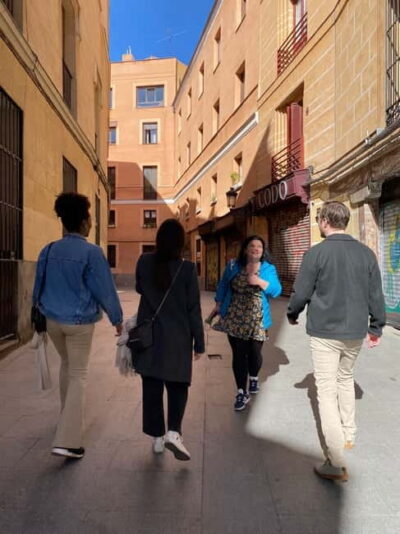
- A walk through old Madrid: Expect narrow lanes, steep or uneven stretches, plazas, churches, and frequent stops.
- Plan extra time: The advertised 2.5 hours may not be the final word, so leave a one-hour cushion.
From Plaza Puerta Cerrada into old Madrid
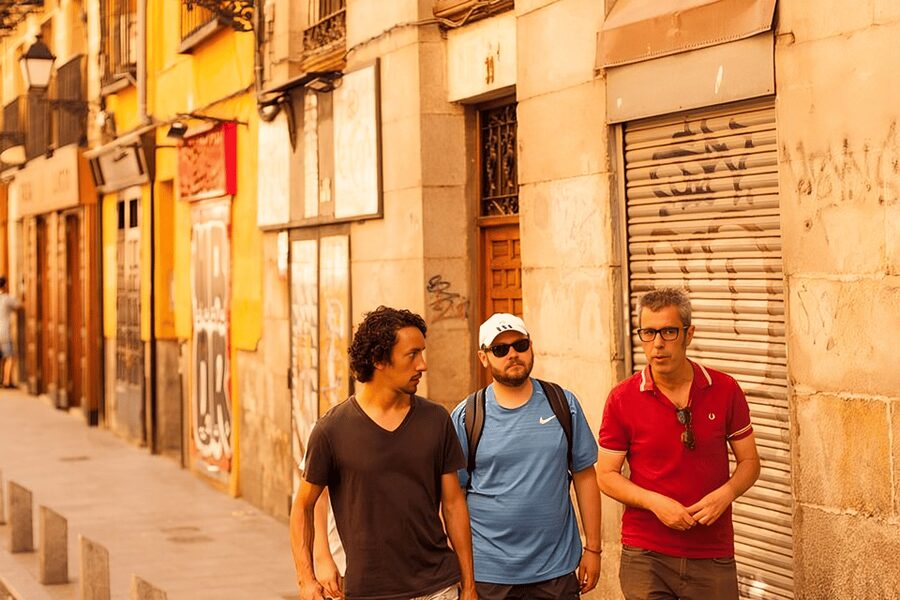
The meeting point is Plaza Puerta Cerrada, only about two minutes from Plaza Mayor. Look for the large cross in the center of the square, in front of Cafestic. The square sits at the end of Cuchilleros, between Lartoneros and Tintoreros.
This is a fitting place to begin. The name Puerta Cerrada refers to an old entrance into medieval Madrid, and the tour soon makes that connection clear. You are not simply walking between famous sights. You are tracing the shape of a city that grew from a fortified settlement into the center of a worldwide empire.
The group returns to the same place at the end. That makes the tour easy to fit into a day of sightseeing, though the narrow streets and long route mean you should wear shoes with good support. Bring water and a camera. Madrid’s old center offers plenty of architectural details that are easy to miss when you are rushing from one big sight to another.
More walking tours in Madrid:
- Toledo Tour & Vineyard Walk with Wine Tasting from Madrid
★ 5.0 · 2,546 reviews - Madrid Walking Tour from Puerta del Sol to Retiro Park
★ 5.0 · 2,285 reviews - Madrid Old Town & Royal Palace Walking Tour Skip the Line Ticket
★ 4.5 · 1,829 reviews
Madrid’s changing rulers and architectural styles
One of the best ideas behind this walk is its focus on change. Madrid was influenced first by Muslim rule, then by the Habsburgs, and later by the Bourbons. Each period left a different mark on the city’s buildings and public spaces.
Your guide explains how a ninth-century fort became the capital of an empire. Madrid later governed large parts of the Americas and other territories, while also enduring crime, a Napoleonic invasion, and the Spanish Civil War. That broad context helps the streets make more sense. A quiet lane may have once led toward a city gate, while a grand square may reflect royal planning rather than local civic life.
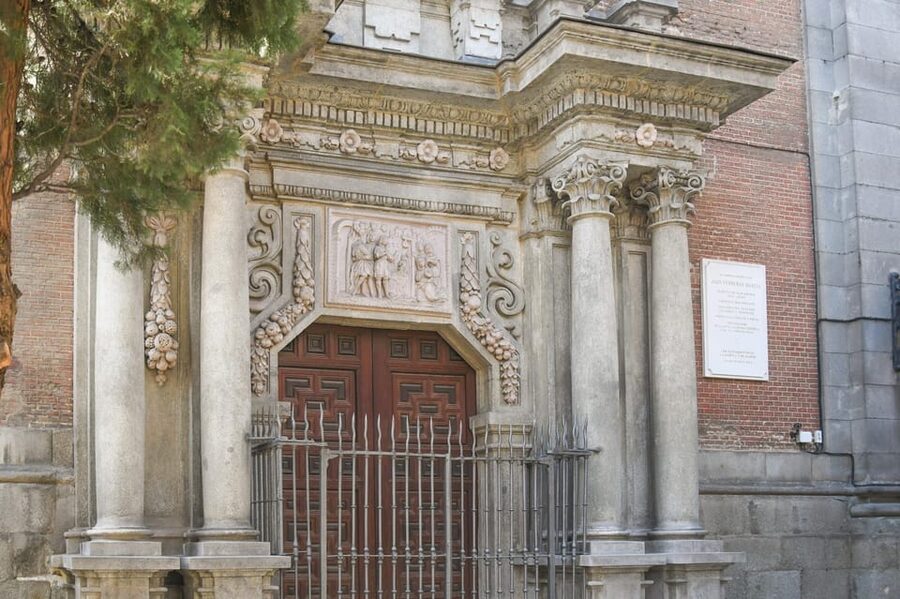
The architecture is just as varied. You may see Mudejar work associated with Islamic influence, Plateresque decoration from the early modern period, and the more formal style linked with the Habsburg and Bourbon courts. The value here is not just identifying styles. It is seeing how power, religion, and urban growth changed Madrid over time.
La Latina and the medieval city center
The route enters La Latina, one of Madrid’s oldest districts. This is the part of the city where the medieval street plan remains especially clear. Narrow lanes and irregular plazas give you a sense of the older settlement beneath the later royal city.
At Plaza de la Villa, the guide explains the city’s architectural evolution through three notable buildings. Casa Lujanes shows Mudejar influence, Palacio Cisneros reflects the Plateresque style, and Casa de la Villa represents the Habsburg period. Seeing these buildings together gives you a quick visual lesson in Madrid’s past.
The walk also reaches Plaza de los Carros, once an important transport area for the medieval city. The name points to the carts and carriages that served as the old city’s version of a taxi stand. This kind of detail is useful because it connects an ordinary-looking square with daily life in earlier Madrid.
Nearby, the Museo de San Isidro covers the early history of Madrid. The tour does not present it as a separate museum visit, so you should not expect an extended indoor stop. Instead, you get a brief introduction to the city’s beginnings and the traditions tied to its patron saint.
The Royal Palace and the city of kings
The Royal Palace of Madrid is one of the route’s major sights. With 3,418 rooms, it is described as the largest royal palace in Europe. You see it as part of the city around it, rather than through a long palace interior visit.
That distinction matters. If you want to tour the palace rooms, you will need a separate ticket and more time. This walk is better for understanding how the palace fits into Madrid’s urban story and why the surrounding streets and squares were shaped by the monarchy.
The route also includes the palace once used by Isabel La Católica and Charles V. These royal associations help show that Madrid’s power center developed over many centuries, not all at once. The guide’s role is especially useful here, since the buildings can otherwise seem like a series of grand façades without a clear connection.
At Plaza de Oriente, you see a square associated with Napoleon and statues of earlier Spanish kings. It is a good example of how one ruler could reshape a public space while still using it to present a long national story.
A different sort of afternoon around Madrid:
- Madrid: Tour Bernabéu Entry Ticket
★ 4.5 · 21,573 reviews - Madrid: Prado Museum Entry Ticket
★ 4.6 · 17,509 reviews - Madrid: Royal Palace Fast-Access Admission Ticket
★ 4.6 · 13,856 reviews - Madrid: “Emociones” Live Flamenco Performance
★ 4.8 · 12,866 reviews
Convent cookies, tapas, and everyday Madrid
The stop at the Monasterio del Corpus Christi adds a welcome human touch. You can try cookies made by the nuns, a small taste tied to the city’s religious traditions. This is not a major attraction in the usual sightseeing sense, which is precisely why it adds variety to the walk.
San Miguel Market offers another change of pace. It is a popular place for tapas and gives you a quick look at Madrid’s food culture. Since this is a walking tour rather than a food tour, the market stop should not be treated as a full meal or tasting program. You may want to return later if you would like more time to browse and eat.
Calle de la Cava Baja is another useful food stop, at least visually. The street is known for traditional restaurants and helps connect the historic center with the way Madrid is enjoyed today. I would note the places that catch your eye, then come back after the tour when you are not trying to keep pace with the group.
These stops also create a practical advantage. The walk is not all dates, battles, and royal buildings. Food, convent life, old transport routes, and neighborhood streets help you picture how people lived in the city.
Walls, gardens, and a tragic viaduct
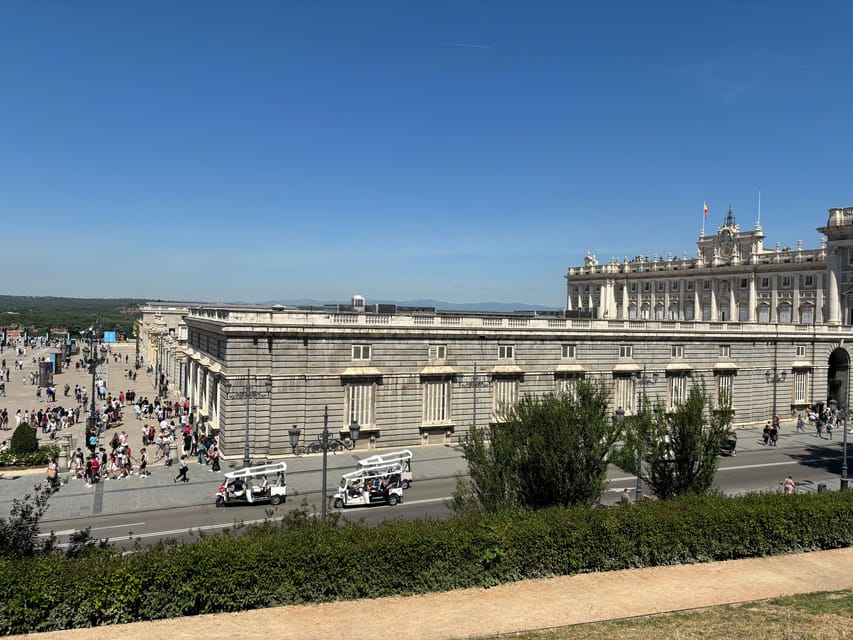
Calle de Bailén brings a different mood. The route passes a beautiful viaduct with a tragic background. The description does not specify the full story, so your guide’s explanation will be important here. It is the kind of place where a graceful structure carries a darker layer of Madrid’s past.
At Parque Emir Mohamed I, you see part of the old Muslim wall. This is one of the strongest stops for understanding Madrid before it became a royal capital. The remains are modest compared with the Royal Palace, but they point to the fortified settlement that came first.
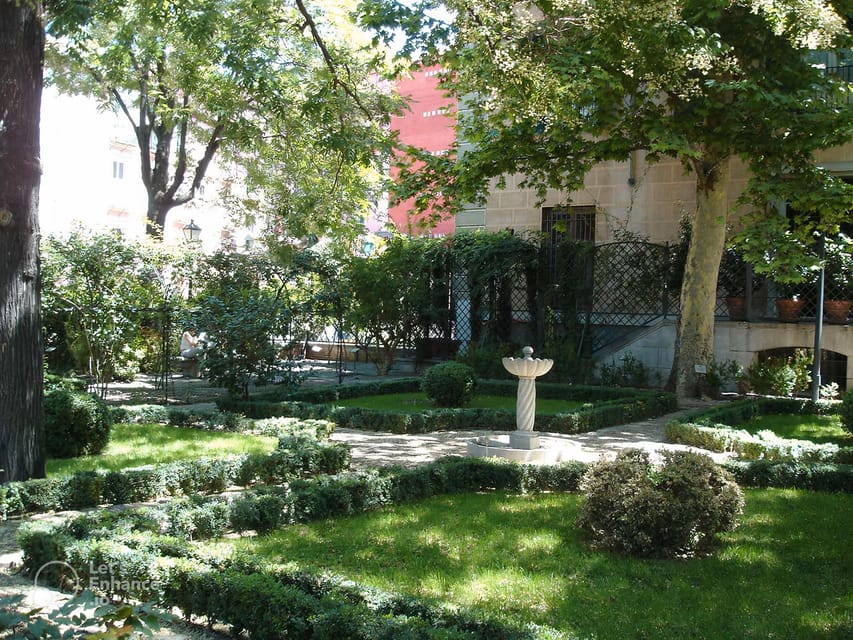
The nearby Jardín del Príncipe de Anglona offers a quieter setting. This late eighteenth-century garden gives the route a pause from the stone lanes and crowded central streets. It also shows how Madrid’s spaces changed from defensive and religious uses toward formal gardens and leisure.
The contrast between the Muslim wall and the later garden is worth noticing. In a short distance, you move through several stages of the city’s development. The walk works best when you pay attention to those transitions instead of treating each stop as an isolated photo opportunity.
Inquisition history and Madrid’s cathedral
Plaza de la Cruz Verde was the old square where Inquisition trials took place. It is a difficult part of Madrid’s story, and its inclusion keeps the tour from presenting the city as only royal, artistic, and festive.
The route then reaches the Catedral de Santa María la Real de la Almudena, Madrid’s cathedral. It is a relatively recent cathedral compared with the older churches on the route, which makes it useful for understanding Madrid’s changing status and religious identity.
The cathedral also connects to the city’s Muslim and medieval past through the Almudena area. You will see how later buildings occupy ground shaped by earlier settlements. The guide can provide the link between these periods, which is one reason a walking tour is more useful here than simply following a map from one attraction to the next.
Galileo, Napoleon, and Madrid’s royal statues
At the Monument to Felipe IV, the guide explains how Galileo Galilei helped make the statue possible. This is one of the route’s more unusual stories. The monument’s design required a difficult balance, with the horse rearing on two legs, and Galileo’s calculations played a part in solving the problem.
The stop at Plaza de Ramales brings in Napoleon’s role in Madrid’s urban center. The route uses this square to explain why parts of the city look the way they do today. Madrid’s streets were not shaped only by gradual growth. Military power and political decisions also cleared, redirected, and reorganized the center.
These details are well suited to a small group. In a large crowd, a story about engineering or city planning can get lost. With no more than 10 people, you should have a better chance of hearing the explanation and asking how the changes affected nearby streets.
Plaza de la Paja and Madrid’s oldest buildings
Plaza de la Paja is another important stop in the old center. The square helps show how medieval Madrid was arranged around open spaces, churches, and local activity rather than broad modern avenues.
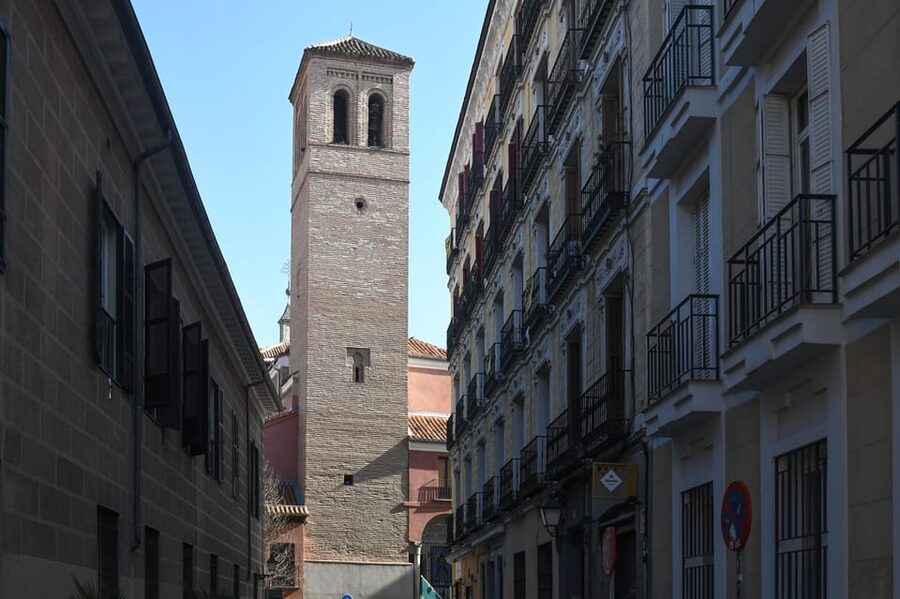
The Church of St. Nicholas of the Servitas is identified as the oldest building in Madrid. Its Mudejar tower is from the fourteenth century, making it a valuable reminder that Madrid’s early architectural remains are often found in plain sight.
The route later passes Calle de Codo, one of the narrower streets in the center. Streets like this are part of the pleasure of the walk, but they can also make the route slower. You will be stopping often, looking upward, and moving through areas where other pedestrians are present.
The final stop is Iglesia de San Pedro El Viejo, with its fourteenth-century Mudejar tower. It brings the tour back to medieval Madrid and reinforces the connection between the city’s early fortifications, churches, and street plan.
What the 2.5-hour format really means
At $31 per person, this is a fair price for a guided introduction to so many parts of central Madrid. You are paying for a live English-language guide, historical explanation, and a route that connects major sights with places you might otherwise walk past.
The value depends on what you want. If you prefer to spend two hours inside one museum or palace, this will feel too broad. If you want to get your bearings and understand how the old center fits together, the price is easier to justify.
The advertised duration is 2.5 hours, but I would schedule it as a three-and-a-half-hour commitment. One participant reported that it lasted an hour longer than expected. That does not necessarily mean every departure will run long, but the route contains many stops and stories, so a strict end time may be unrealistic.
The walking pace should be manageable for most people who are comfortable on city streets, but the tour covers a lot of ground. Comfortable shoes are essential. Water matters too, especially if you take the walk during a warm part of the day.
Group size, language, and access
The group is limited to 10 participants, and the tour is conducted in English. That is a good size for a walking route through narrow streets. It also makes it easier to stay together at busy squares and hear explanations near roads or market areas.
The access information needs careful attention. One part of the details describes the activity as wheelchair accessible, while another says it is not suitable for wheelchair users. Because the route includes old lanes, historic squares, and a viaduct area, I would contact the provider before booking if you use a wheelchair or have serious mobility concerns.
Cancellation is flexible if your plans may change: you can cancel up to 24 hours ahead for a full refund. You can also reserve and pay later, which is useful when you are still arranging Madrid days around museum bookings and meals.
Who should book this Madrid walk
I would choose this tour for a first or second day in Madrid, especially if you want a clear map of the old center before exploring on your own. It suits anyone who enjoys architecture, royal history, religious sites, and small urban stories more than a simple checklist of famous buildings.
It is also a good fit if you have already seen Plaza Mayor and the Royal Palace but want to understand what lies around them. The route reaches La Latina, the Muslim wall, Plaza de la Paja, San Isidro Museum, and several older churches, so it adds depth to the usual city-center visit.
I would skip it if you need a guaranteed finish time, dislike extended walking, or want lengthy interior visits. You may also prefer a food-focused tour if tapas and market tastings are your main goal. Here, food appears as part of the city story, not as the central subject.
Should you book the Hidden Gems and Secrets tour?
Book it if you want a compact history lesson on foot with a small group, an English-speaking guide, and a route that reaches well beyond Madrid’s biggest sights. The mix of royal buildings, Muslim remains, old churches, gardens, food streets, and unusual stories makes the $31 price sensible.
Just protect your schedule. Allow extra time beyond the stated 2.5 hours, wear sturdy shoes, and clarify the wheelchair information before paying. With those points handled, this is a practical way to see how Madrid grew from a fortified medieval town into a capital filled with royal ambition, difficult memories, and everyday pleasures.
FAQ
Where does the walking tour begin?
It begins in Plaza Puerta Cerrada, about two minutes from Plaza Mayor. Meet by the large cross in the center of the square, in front of Cafestic.
Where does the tour finish?
The walk ends back at the meeting point in Plaza Puerta Cerrada.
How long is the tour?
The advertised duration is 2.5 hours. You should allow extra time because one participant reported that the walk lasted about an hour longer than expected.
What language is the tour conducted in?
The live guided tour is conducted in English.
How large is the group?
The tour is limited to 10 participants.
What is included in the price?
All fees and taxes are included. The price is listed as $31 per person.
Does the tour visit the Royal Palace?
The route includes the Royal Palace of Madrid as a sightseeing stop. The information provided does not describe an interior palace visit or include palace admission.
What should I bring?
Bring comfortable shoes, water, and a camera.
Can I cancel for a full refund?
Yes. You can cancel up to 24 hours in advance for a full refund.
Is the tour suitable for wheelchair users?
The access information is conflicting. One detail describes the activity as wheelchair accessible, while another says it is not suitable for wheelchair users. Contact the provider before booking to confirm whether the route works for your needs.
Just added around Madrid
- Private Vacation Photography Session with Photographer in Madrid★ 5.0 · 3 reviews
- Arrival Private Transfer from MAD Airport to Madrid in a Minibus★ 5.0 · 3 reviews
- Segovia: 3-Hour Private Walking Tour★ 5.0 · 3 reviews
- Tour Segovia and La Granja de San Ildefonso from Madrid★ 5.0 · 3 reviews
- Madrid: Prado & Reina Sofia Museum Skip-the-Line Guided Tour★ 5.0 · 3 reviews
- Salamanca: Private Guided Customizable Walking Tour★ 5.0 · 3 reviews
- Total Reboot and Renew with top wellnes 3 hours couple experience★ 5.0 · 3 reviews
- Madrid: Prado Museum Private Tour★ 5.0 · 3 reviews
Walking Tours, compared.

Toledo Tour & Vineyard Walk with Wine Tasting from Madrid
Read our review →
Madrid Old Town & Royal Palace Walking Tour Skip the Line Ticket
Read our review →
Spanish Inquisition and Legends Evening Walking Tour
Read our review →
6-Hour Day Trip to Toledo with Guided Walking Tour
Read our review →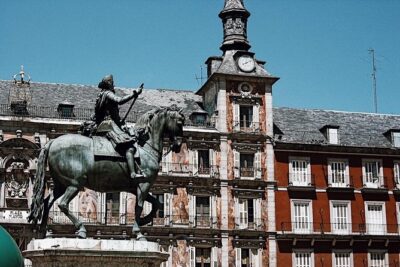
Madrid Old City Guided Exclusive Guided Walking Tour
Read our review →
Guided Monument Walking Tour with Wristband Pass
Read our review →Browse the lists this tour appears in