Review · TICKETS
Madrid: Prison Island Giant Indoor Escape Game Entry Ticket
Madrid’s Prison Island turns the escape-room idea into a large team contest. Instead of solving one puzzle and finding one exit, you move through 32 themed cells, earning points as you tackle physical, mental, and tactical tests. It is closer to a game show arena than a single locked room.
I like the freedom to choose your next challenge and the mix of skills each room demands. I also like that the final leaderboard gives your group a clear result, which adds a bit of friendly rivalry. The main drawback is that some challenges may not explain themselves fully, so you’ll need patience, teamwork, and a willingness to try again.
In This Review
- Key points at a glance
- What Prison Island in Madrid actually is
- Entering the futuristic prison
- How the two-hour session works
- The challenge rooms and the role of teamwork
- Why the leaderboard changes the mood
- Who will enjoy this most
- Planning your visit around Madrid sightseeing
- The $26 question: is it good value?
- Smart tactics for your first attempt
- Should you book Prison Island Madrid?
- FAQ
- How long does the Prison Island experience last?
- How much does entry cost?
- How many rooms are included?
- Is Prison Island a normal escape room?
- What skills do the challenges test?
- Can I see how well my team performed?
- Who can play?
- What should I wear?
- What languages are available?
- Is food or drink included?
- Can I cancel my booking?
- Do I have to pay when I reserve?
Key points at a glance
- 32 separate challenge cells: You can move around the indoor arena rather than remain in one escape room.
- Three kinds of skill: Expect tests built around physical ability, mental problem-solving, and tactical choices.
- Two hours of play: The time limit gives your group enough room to attempt many cells without making the visit an all-day commitment.
- A score to chase: Your team can check the leaderboard after playing and see how it ranks.
- Good for groups of mixed ages: The experience is designed for people from age 10 upward, with a stated restriction against people over 70.
- A practical team activity: Friends, families, and company groups can all play together, with English, French, and Spanish support at the venue.
What Prison Island in Madrid actually is
Prison Island is a large indoor escape game inspired by the television show Fort Boyard. The setting is a futuristic prison, but you are not trying to break out by following one fixed chain of clues. Instead, you enter a series of themed cells and decide which challenges to attempt.
That difference matters. In a standard escape room, one missed clue can slow the whole group. Here, you can leave a difficult cell and try another one. If your group gets stuck, you are not forced to spend the whole session staring at the same puzzle.
The concept is built for cooperation. One person may spot the pattern, another may handle a physical task, and someone else may keep track of the strategy. You are not simply racing against the clock. You are choosing how to use your time and which abilities your team can bring to the next cell.
The arena contains 32 rooms, each with its own task. The supplied information does not list the exact themes or equipment in every cell, so you should not expect a room-by-room escape-room guide before arriving. You can expect variety, though, with challenges that test physical, mental, and tactical skills rather than one narrow type of puzzle.
A few more Madrid days to weigh up
- Madrid: Tour Bernabéu Entry Ticket
★ 4.5 · 21,573 reviews - Madrid: Prado Museum Entry Ticket
★ 4.6 · 17,509 reviews - Madrid: Royal Palace Fast-Access Admission Ticket
★ 4.6 · 13,856 reviews
Entering the futuristic prison

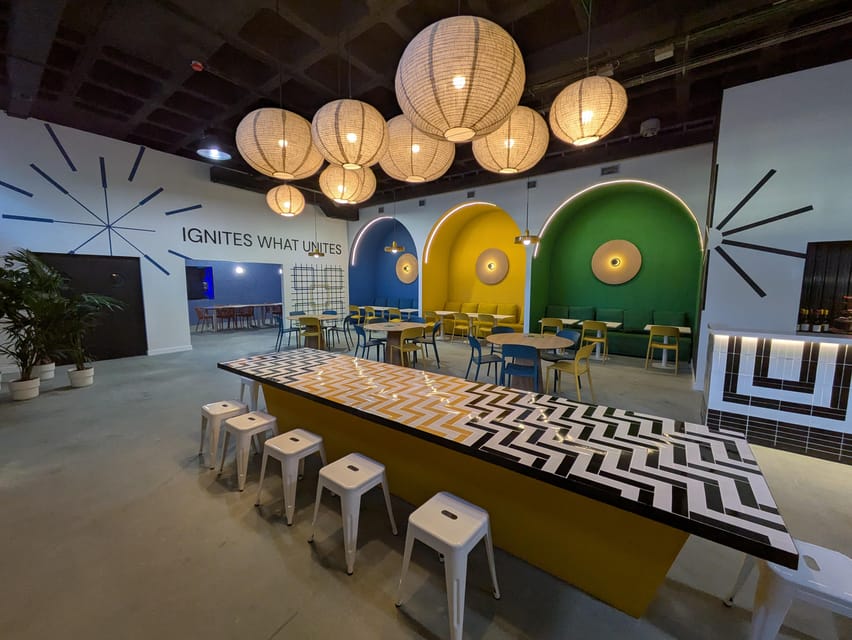
At the building, look for the sign with the Spark Island logo. Show your GetYourGuide voucher at the entrance, then prepare for the session inside the arena. The activity includes two hours in Prison Island, with the 32 challenge rooms available during that playing time.
The host or greeter may speak English, French, or Spanish. That language mix is useful for international groups, though the challenges themselves may still require you to understand instructions quickly. If your group includes people with different language abilities, agree on a simple plan before you start: read every instruction carefully, explain it aloud, and make sure everyone knows the goal before using up time.
Wear comfortable clothes. This is not a sit-down puzzle attraction. The exact physical demands vary from cell to cell, but the experience is designed as an action game, so restrictive clothing is a poor choice. Comfortable shoes and clothes that let you move freely are sensible.
How the two-hour session works

Once your team enters, you can work through the cells in the order that suits you. There is no single route through the attraction, and no single way to finish it. You collect points by completing challenges, then use the remaining time to improve your score or attempt rooms you have not yet tried.
A good group will divide its attention. Do not send everyone into the first cell and assume it will suit all five or six people equally. Watch how the room works, decide who has the best chance of helping, and keep the rest of the team ready to offer ideas or move on.
You might find that some cells reward careful thinking, while others call for speed, coordination, or a physical response. That mix keeps the session from becoming a test of only athletic ability. It also means a group with different strengths can work well together.
The two-hour format feels substantial for a paid indoor activity. At $26 per person, the cost works out to about $13 per hour if you use the full session. That is reasonable for an organized group attraction, especially when compared with a shorter single-room escape game. The value drops if your group arrives late or spends too long struggling with one task, so use the freedom to move on.
A Spanish family reported that two 14-year-olds completed all the cells in about an hour and a half. That gives you a useful sense of pace: motivated players may cover a lot of ground, though your own score and progress will depend on your group’s approach.
The challenge rooms and the role of teamwork
The strongest part of Prison Island is the range of tasks. The rooms are not presented as one long puzzle. You may need to decide if a challenge is worth attempting, work out the rules, and choose the right people for it.
That makes communication more important than individual cleverness. Before anyone rushes in, ask three basic questions:
- What are we trying to achieve?
- Who should handle which part?
- How long will we give this room before moving on?
You may also want one person to act as the team’s timekeeper. The attraction encourages free movement between cells, but two hours can pass quickly when a group becomes determined to solve a difficult task. A firm decision to leave and return later can produce more points than stubbornly repeating the same attempt.
The physical side is part of the appeal, but it is also the reason to take the age guidance seriously. The activity is listed as suitable from age 10 to 99, while the specific restrictions say it is not suitable for children under 10 or people over 70. Since those statements do not fully match, I would follow the stricter practical advice: plan for participants aged 10 through 70, and check directly with the provider if someone outside that range wants to play.
The game is also less suitable for anyone looking for a quiet, carefully guided puzzle session. You are expected to test ideas, cooperate, and keep moving. One French player liked the different activities but felt that some cells needed more clues to make the tasks easier to understand. That is worth knowing before you book. The attraction may reward initiative more than hand-holding.
A different sort of afternoon around Madrid:
- Madrid: “Emociones” Live Flamenco Performance
★ 4.8 · 12,866 reviews - Madrid: Panoramic Route City Tour
★ 4.1 · 12,259 reviews - Madrid: Live Flamenco Show with Food and Drinks Options
★ 4.5 · 9,901 reviews - Avila & Segovia Tour with Tickets to Monuments from Madrid
★ 5.0 · 9,762 reviews
Why the leaderboard changes the mood
The leaderboard gives the session a clear finish. You are not left wondering if your group did well. After the game, you can see how your team ranks, which adds a competitive edge without requiring a prize or formal tournament.
For friends, this can turn the outing into a light contest. For a company group, it gives everyone a shared target and a natural way to discuss the experience afterward. For a family, it can help older children stay engaged because the score makes each completed cell feel useful.
The leaderboard can also create pressure. If one or two people in your group care strongly about winning, agree early on that the goal is to play well together. Not every player will want to repeat a cell for a few extra points, and a mixed-age group may value variety over the highest possible score.
I like the fact that the score comes after a flexible session rather than a single timed escape. You can focus on the rooms that suit your team, then compare the result. It gives the game a clear competitive shape while preserving player choice.
Who will enjoy this most

Prison Island suits groups that enjoy active entertainment and do not mind learning by trial and error. It is a strong pick for:
- Families with children aged 10 and older
- Friends looking for a shared indoor activity
- Birthday groups and celebrations
- Company team-building sessions
- Groups that enjoy competition and scorekeeping
- Visitors who want a break from museums and outdoor sightseeing
It worked particularly well for a bachelorette party, where a group trying the format for the first time enjoyed moving between rooms with different themes. That is a useful clue for first-time players: you do not need escape-room experience to take part.
You should think twice if your group wants a highly polished narrative, a single mystery to solve, or constant hints from a game master. Prison Island is a newer style of escape game. Its strength is variety and movement, not a detailed story that unfolds in a set order.
It may also be a poor match for anyone uncomfortable with physical activity or with challenges that are not immediately clear. The attraction is designed to test agility, intelligence, and cooperation. You do not need to be an athlete, but you should be ready to participate rather than watch from the side.
Planning your visit around Madrid sightseeing
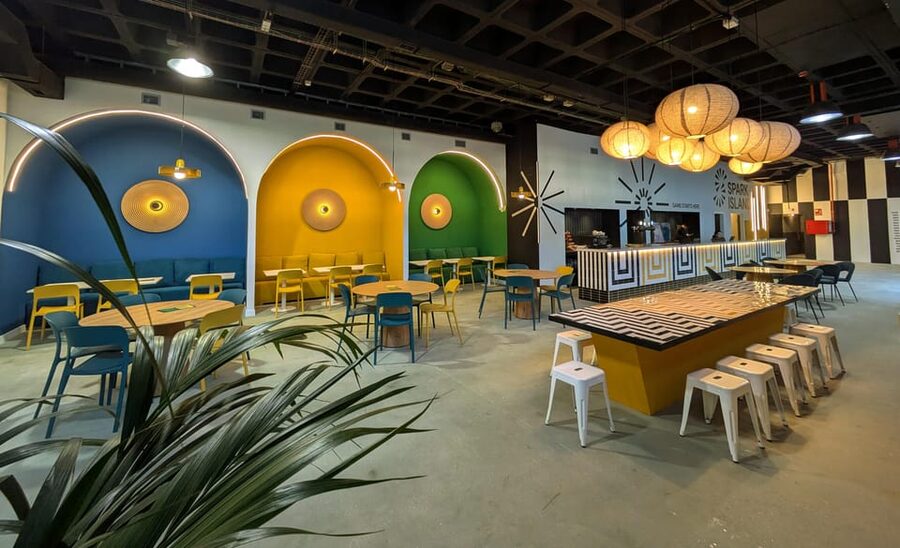
This is a useful rainy-day or hot-weather choice because the activity takes place indoors. The playing time is two hours, although availability may show a duration of one to two hours depending on the selected start time or booking format. Check the available session before building it into a tight day of sightseeing.
Because the game is group-based, book ahead when possible. The attraction can suit large social groups, but a popular start time may not be available when you want it. The practical advantage of reserving in advance is simple: your group can arrive together with a fixed plan instead of trying to organize the activity at the last moment.
There is no food or drink included. Plan to eat before or after the session, rather than expecting refreshments as part of the experience. You only need comfortable clothing and your booking voucher at the entrance.
Cancellation is flexible if your plans change. You can cancel up to 24 hours before the activity for a full refund, and the reserve-now, pay-later option lets you hold a place without paying immediately. Those terms are helpful when your Madrid schedule is still taking shape.
The $26 question: is it good value?

At $26 per person, Prison Island is not a cheap filler activity, but it offers up to two hours of organized play across 32 cells. The price makes the most sense when you use the full session and arrive with a group that genuinely wants to participate.
Compared with a standard escape room, the value comes from the number of challenges and the ability to move on when one does not suit you. You are paying for variety rather than a single carefully built story. Compared with a simple indoor attraction, the cost is higher, but you receive a competitive group experience with a visible score at the end.
I would be more cautious about the value for a very small group, since the game is designed around teamwork and group interaction. It is also less worthwhile if some people in your party plan to stand back while others do every task. The attraction works best when everyone takes a role.
The 4.8 rating from 19 published ratings suggests a strong overall response, but the sample is small. The individual feedback gives a more useful picture: groups praise the different themed rooms, the fun of the concept, and the welcoming reception, while at least one participant wanted clearer clues. I would treat that balance as fair. The experience is exciting for active groups, but it may require more self-direction than a traditional escape room.
Smart tactics for your first attempt

Start by spreading out rather than forming one large cluster. Since there are 32 cells, your group can inspect several options and decide where its strengths fit best. If the rules allow the whole team to move together, still take a moment to compare the rooms before committing your time.
Do not assume the most physical-looking task will produce the most points. A mental or tactical challenge may suit your group better, especially if you have someone who enjoys patterns, planning, or careful observation.
Give every participant a job. One person can read instructions, another can watch the time, and others can handle the main action. Rotate roles so that the strongest player does not take over every cell.
If a room remains confusing after a fair attempt, move on. One criticism of the experience is that some tasks may not offer enough clues to explain the objective. You can protect your score by treating difficult cells as optional rather than as tests of pride.
Finally, save a few minutes to try a room again if your group found a promising strategy. The leaderboard rewards progress, and a second attempt may work better once you understand the task.
Should you book Prison Island Madrid?
Book it if you want an active group outing with many short challenges, a competitive score, and enough freedom to choose your route. It is particularly well suited to families with older children, friend groups, and company events where cooperation matters more than a polished sightseeing experience.
Skip it if your group prefers a calm, story-led escape room or if anyone cannot comfortably take part in physical and tactical activities. Also check the age guidance carefully, especially for participants under 10 or over 70.
For $26, the best value comes from using the full two hours, wearing comfortable clothes, and arriving with a team willing to communicate. If that sounds like your kind of afternoon in Madrid, Spark Island’s Prison Island offers a playful change from the usual city attractions.
FAQ
How long does the Prison Island experience last?
The activity includes two hours in Prison Island with access to 32 challenge rooms. Available booking times may show a duration of one to two hours.
How much does entry cost?
The listed price is $26 per person.
How many rooms are included?
The experience includes 32 challenge rooms.
Is Prison Island a normal escape room?
No. It is a large indoor escape game with many themed cells. There is no single route or single exit. You move between challenges and collect points as you progress.
What skills do the challenges test?
The rooms combine physical, mental, and tactical tasks. The game can test agility, intelligence, strategy, and teamwork.
Can I see how well my team performed?
Yes. After the game, you can check the leaderboard and see how your team ranks.
Who can play?
The activity is described as suitable for ages 10 to 99, but the restrictions state that it is not suitable for children under 10 or people over 70.
What should I wear?
Wear comfortable clothes that allow you to move freely.
What languages are available?
The host or greeter may speak English, French, or Spanish.
Is food or drink included?
No. Food and drinks are not included.
Can I cancel my booking?
Yes. You can cancel up to 24 hours in advance for a full refund.
Do I have to pay when I reserve?
No. A reserve-now, pay-later option is available, so you can secure a place without paying immediately.
Just added around Madrid
- Private Vacation Photography Session with Photographer in Madrid★ 5.0 · 3 reviews
- Arrival Private Transfer from MAD Airport to Madrid in a Minibus★ 5.0 · 3 reviews
- Segovia: 3-Hour Private Walking Tour★ 5.0 · 3 reviews
- Tour Segovia and La Granja de San Ildefonso from Madrid★ 5.0 · 3 reviews
- Madrid: Prado & Reina Sofia Museum Skip-the-Line Guided Tour★ 5.0 · 3 reviews
- Salamanca: Private Guided Customizable Walking Tour★ 5.0 · 3 reviews
- Total Reboot and Renew with top wellnes 3 hours couple experience★ 5.0 · 3 reviews
- Madrid: Prado Museum Private Tour★ 5.0 · 3 reviews
Tickets, compared.




Avila & Segovia Tour with Tickets to Monuments from Madrid
Read our review →

Avila and Segovia Day Trip with Tickets to Monuments
Read our review →
La Cueva de Lola Flamenco Show Tickets with Drink
Read our review →