
Review · TUK-TUKS
Madrid Welcome Tour with Local Guide in Eco Tuk Tuk Private
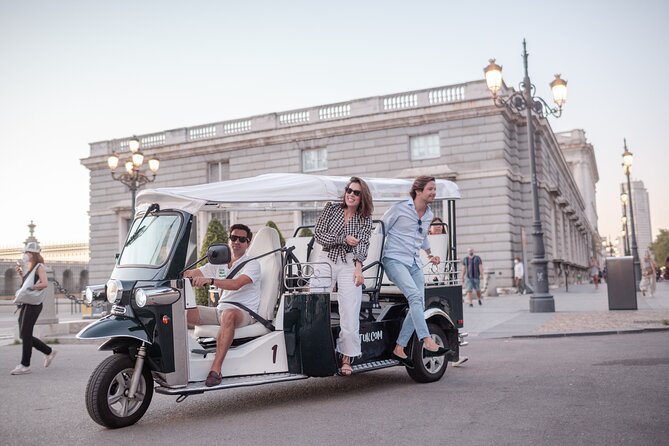
Madrid reveals itself quickly from the back of an electric tuk-tuk. In a short ride, you can pass the Royal Palace, Almudena Cathedral, Prado Museum, Atocha Station, and Puerta de Alcalá, then return with a better sense of where to spend your time on foot. It is a smart first look at a large city.
I like the private setup, since your group rides alone, and I like the guides’ personal touch. Carlos is praised for clear meeting directions and warm service, while Laura, Christian, Gustavo, Fernando, Manuel, and others are noted for their humor, local tips, and easy explanations. The main drawback is pace: on a one-hour ride, the sights come quickly, and you may finish with more suggestions than you can remember.
In This Review
- Key points at a glance
- Why a Madrid tuk-tuk tour works so well
- The practical shape of the ride
- From the covered market to San Francisco el Grande
- Atocha Station and the Spanish Parliament
- Neptune, Cibeles, and Madrid football
- The Prado area and Los Jerónimos
- Puerta de Alcalá and the Bank of Spain
- Plaza de Santa Ana and the heart of central Madrid
- Almudena Cathedral and the Royal Palace
- Ending at the Temple of Debod
- What the ride feels like in cold or wet weather
- Who gets the best value
- Should you book the Madrid Eco Tuk Tuk tour?
- FAQ
- How long does the Madrid Eco Tuk Tuk tour last?
- How many people can ride in one tuk-tuk?
- Where does the tour start?
- Is hotel pickup included?
- What happens if the weather is cold or rainy?
- Can people with mobility problems use the tuk-tuk?
Key points at a glance
- Cover central Madrid fast: The route links royal buildings, major squares, museums, monuments, and railway architecture in one ride.
- Ride privately: Only your own group shares the tuk-tuk, with a legal maximum of four passengers per vehicle.
- Expect a real local introduction: Guides explain what you pass and often point out places to revisit for food, drinks, or further sightseeing.
- Photo stops are planned: Stops are made at prearranged locations, so this is not a hop-on, hop-off tour.
- Cold weather is manageable: Blankets and protective layers against rain and wind are provided.
- Mind the meeting point: The tuk-tuk leaves from an underground bus station beside the Royal Palace, not from a plainly marked street address.
Why a Madrid tuk-tuk tour works so well
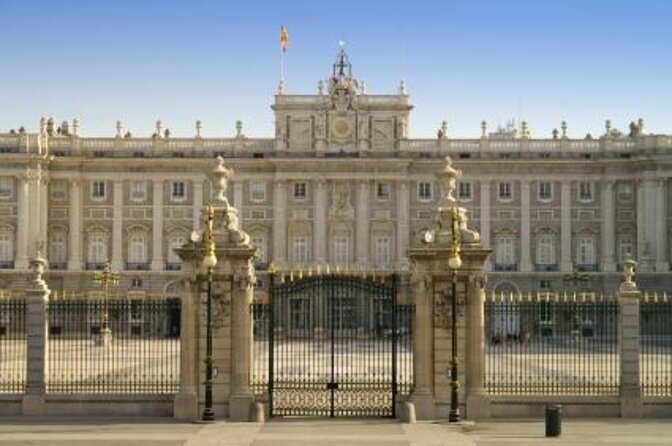
Madrid is walkable in pieces, but its major sights stretch across a broad central area. The Royal Palace sits west of the historic center, the Prado Museum and Atocha Station lie southeast, and Puerta de Alcalá is farther east. A tuk-tuk ties these zones together without asking you to spend your first day studying a transit map.
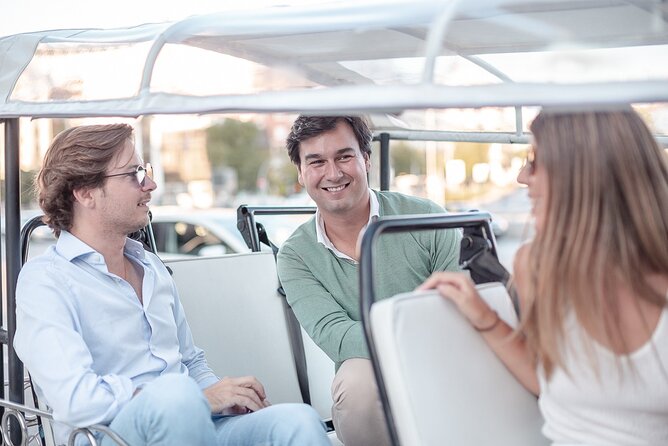
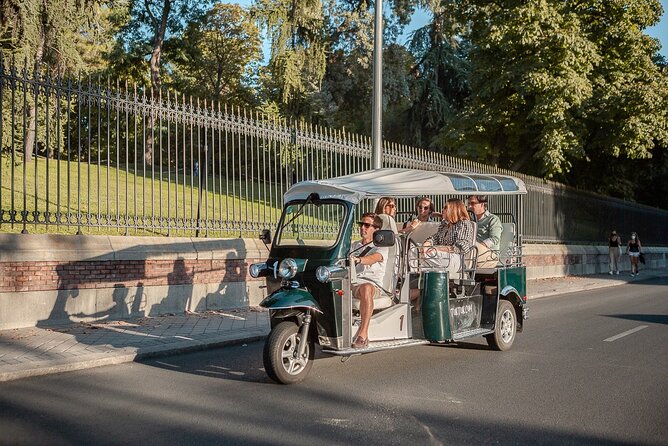
The electric vehicle is small enough to move through central streets more intimately than a sightseeing bus. You sit close to the guide, hear the commentary directly, and can ask questions as you go. The ride is also easier than a long walking tour if you are traveling with older relatives or simply want to save your legs for museums and neighborhoods.
I would treat this as an orientation ride, not a substitute for entering Madrid’s sights. You will see the exteriors and hear useful background, but the Royal Palace, Prado Museum, Almudena Cathedral, and Atocha Station each deserve more time if they interest you.
The strongest part of the experience is the human guide. Guides such as Christian, Laura, Carlos, Bobby, Roberto, and Gustavo are described as friendly, helpful, and enthusiastic about Madrid. That matters because a fast city tour can feel like a list of monuments unless someone explains what deserves a second look.
A few more Madrid days to weigh up
- Madrid: Private City Tour by Eco Tuk Tuk
★ 4.9 · 2,876 reviews - Madrid Historical Tour with Local Guide in Eco Tuk Tuk Private
★ 5.0 · 876 reviews - Madrid Express Tour with Local Guide in Eco Tuk Tuk Private
★ 5.0 · 413 reviews
The practical shape of the ride
The experience lasts roughly one to four hours, depending on the option you book. A one-hour trip is a brisk survey of central Madrid. Two hours gives the guide more room to explain neighborhoods and make the ride feel less like a race. Longer options should suit you if you want a broad circuit and more time to absorb the city from the road.
The tuk-tuk is private for your group, but it is not a large vehicle. Four passengers is the legal maximum per tuk-tuk, and larger parties may need more than one vehicle. At $28.66 per person, the price is appealing for a private introduction, though the total cost depends on how many vehicles your group needs.
There are no hotel pickups or drop-offs. The meeting point is beside the Royal Palace at Calle de Bailén 4, though the address can be confusing because the actual access is underground. Search for Calle Bailén 4 or Puerta del Príncipe on a map. Go to the area directly in front of the palace, then look for the stairs to the underground station and Eco Tuk Tuk signs.
If you have trouble with stairs, contact the operator by phone, WhatsApp, or email for elevator access. This is worth arranging before you arrive, since the pickup point is not obvious at street level.
Arrive early. A delay of more than 15 minutes can cancel the activity without a refund, and a shorter delay reduces the tour time. Streets may close for demonstrations or other city events, so the exact route can change.
From the covered market to San Francisco el Grande
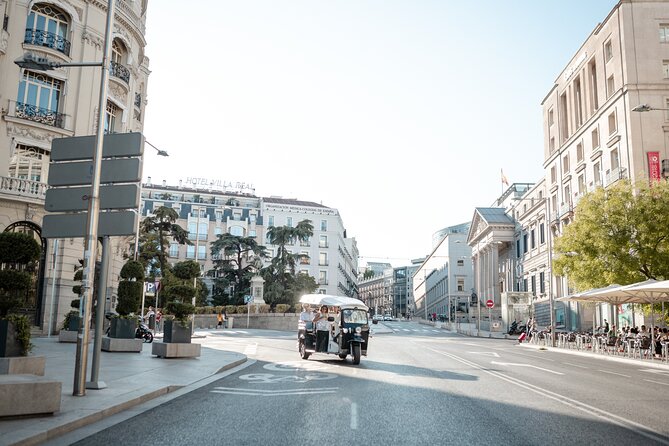
One early stop is a covered market dating from around 1916. Its elegant setting, food stalls, delis, and events offer a quick look at Madrid’s food culture. You may want to note it as a place to return when you have time to browse rather than simply passing through.
The market is a useful counterpoint to the grand monuments. Madrid is not only royal palaces and monumental fountains. Its food halls and local shops show how the city works day to day, and a guide may help you decide if it fits your plans for lunch or an evening bite.
The Royal Basilica of San Francisco el Grande follows a different mood. This Roman Catholic church in the historic Palace district is known officially as the Basilica of Our Lady of the Angels. From the vehicle, you get the setting and exterior context, while the interior is something to save for a separate visit if church art and architecture matter to you.
The route does not promise lengthy interior visits at each stop. That is an important distinction. You are collecting useful landmarks and visual clues, then choosing which ones merit a closer look.
Atocha Station and the Spanish Parliament
Atocha railway station gives the ride a more modern, practical face. It is Spain’s busiest passenger station and one of Europe’s major railway nodes, located near Emperor Charles V Square. Even if you arrive in Madrid by another route, the station helps you understand the city’s transport layout.
The tuk-tuk can save you a separate trip just to locate Atocha. If you plan to use high-speed trains later, seeing the station during this orientation ride may make the area feel less unfamiliar. Still, do not expect the tour to function as a station tour. The point is to identify the building and its place in Madrid.
The Palace of the Spanish Courts brings you to one of the city’s clearest examples of civic architecture. The building occupies the former site of the Convent of the Holy Spirit, which housed Congress from 1834 to 1841. Its neoclassical front has six fluted Corinthian columns, a triangular pediment with reliefs, and the famous iron lions beside the entrance.
Those lions were cast from cannon metal captured during the African war. The bronze door beneath the pediment opens only on major occasions, so even a quick exterior view gives you details to watch for. Inside are the Session Hall, library, and Conference Hall, also called the Hall of Lost Steps, but this ride does not include a general interior visit.
A different sort of afternoon around Madrid:
- Madrid: Tour Bernabéu Entry Ticket
★ 4.5 · 21,573 reviews - Madrid: Prado Museum Entry Ticket
★ 4.6 · 17,509 reviews - Madrid: Royal Palace Fast-Access Admission Ticket
★ 4.6 · 13,856 reviews - Madrid: “Emociones” Live Flamenco Performance
★ 4.8 · 12,866 reviews
Neptune, Cibeles, and Madrid football
Two grand fountains connect Madrid’s city identity with football rivalry. Neptune represents the sea god and sits in the square where Atlético Madrid supporters celebrate victories. Cibeles, depicting the Roman goddess of agriculture and fertility in a lion-drawn chariot, is the traditional celebration point for Real Madrid.
The fountains were originally positioned opposite one another along the Paseo del Prado under Ventura Rodríguez’s plan. In the late nineteenth century, they were moved to their present squares, Neptune at Plaza de Cánovas del Castillo and Cibeles at Plaza de Cibeles.
Cibeles is also one of Madrid’s best urban photo stops. It is framed by the Buenavista Palace, Linares Palace, the former communications palace, and the Bank of Spain. The surrounding buildings help explain why this intersection feels more important than an ordinary traffic circle.
Your guide can add the football connection, but you do not need to follow the sport to enjoy the setting. The fountain, surrounding architecture, and broad avenues make this one of the places where Madrid’s civic life, royal past, and popular culture meet.
The Prado area and Los Jerónimos
The Prado Museum is the artistic heavyweight on this route. Its collection covers European painting from the sixteenth through nineteenth centuries, with major holdings by Velázquez, El Greco, Goya, Titian, Rubens, and Bosch. It also includes important works by artists such as Murillo, Ribera, Zurbarán, Raphael, Veronese, Tintoretto, Van Dyck, and Poussin.
A tuk-tuk ride cannot do justice to the museum itself, but it can help you place it within Madrid’s central cultural district. If you have only one museum visit planned, seeing the Prado from the outside and hearing about its strengths may help you plan your time more wisely.
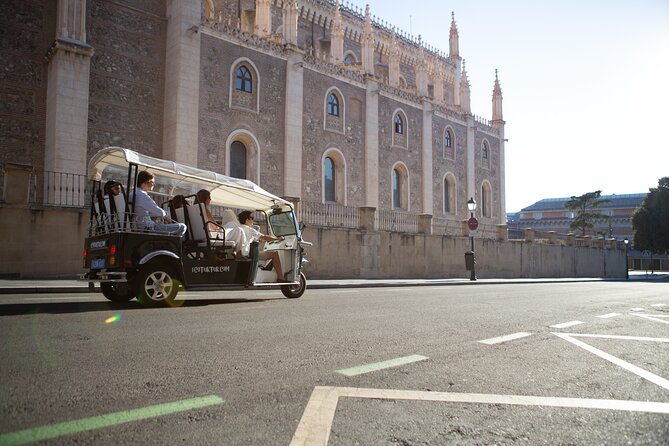
Next to the museum area is the former monastery of San Jerónimo el Real, usually called Los Jerónimos. It was once one of Madrid’s most important monasteries, and the nearby Royal Room later expanded into the Palace of the Good Retreat under Philip IV.
This is where the route rewards a second visit on foot. The Prado district is dense with important buildings, and the tuk-tuk gives you a useful first pass. Take notes or use your phone to mark places you want to revisit, since the ride covers many points in quick succession.
Puerta de Alcalá and the Bank of Spain
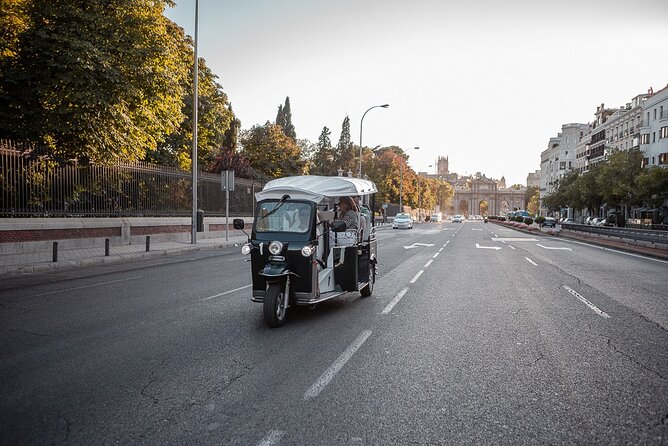
Puerta de Alcalá is one of Madrid’s five former royal gates. It now sits in the middle of the Independence Square roundabout, where traffic flows around a monument that once marked an entrance to the city.
The gate is photogenic from several angles, but your vehicle will make a planned stop rather than letting you wander freely around the roundabout. That arrangement keeps the tour moving, though it also means you cannot change the stop to suit your preferred view.
The Bank of Spain is another memorable exterior. The building was created to give the National Bank a headquarters suited to its role as the sole issuer of coins and banknotes for Spain. Its decorative design won recognition at the National Exhibition of Fine Arts in 1884.
The interior is tightly restricted. Visits are limited to educational groups and universities, with occasional access for cultural and nonprofit associations. So enjoy this as architecture and civic history rather than expecting a standard public tour inside.
Plaza de Santa Ana and the heart of central Madrid
Plaza de Santa Ana is an open square in the Cortes district, dating from 1810. It has gone through several redesigns over the years, which makes it a good place to think about Madrid as a living city rather than a preserved museum.
This is the kind of stop where a local guide adds real value. You may hear about nearby streets, restaurants, or places to return later. Several guides are praised for recommending authentic Spanish food, desserts, and less tourist-focused places, so ask directly if you want help shaping the rest of your visit.
A one-hour ride may pass through this area quickly. If you have booked two hours, you are more likely to get a fuller explanation of how the central districts connect. Either way, remember that the tuk-tuk is best at showing you the pattern of the city, not giving you long pauses in each square.
Almudena Cathedral and the Royal Palace
Almudena Cathedral is Madrid’s main religious building. Pope John Paul II consecrated it on June 15, 1993, making it the first cathedral consecrated outside Rome. Its museum contains objects tied to the history of the Madrid diocese, including mosaics, episcopal shields, and religious ornaments.
The cathedral sits beside the Royal Palace, making this one of the most impressive stretches of the route. You can compare the church’s role as Madrid’s spiritual center with the palace’s ceremonial role in Spain’s monarchy.
The Royal Palace of Madrid, also called the Royal Palace of the East, remains the official residence of the King of Spain. The current royal family lives at the Palace of Zarzuela, so the larger palace is used for state ceremonies and formal events.
Seeing the palace by tuk-tuk is a good opening move, especially if you plan to return for an interior visit. You will understand its position, nearby approaches, and relationship to the cathedral before you join a palace entry line another day.
The Sabatini Gardens lie opposite the palace’s north facade. These formal gardens cover about 2.66 hectares between Bailén Street and the San Vicente Coast. They are a calmer contrast to the traffic and grand stonework around the palace, and they make a worthwhile note for a later stroll.
Ending at the Temple of Debod
The final named stop is the Temple of Debod, an ancient Egyptian building now located in Madrid on high ground west of the Spanish Steps, beside the Paseo del Pintor Rosales. Admission is free, and the planned stop lasts about 10 minutes.
The temple adds a surprising change of subject after royal Spain, Catholic architecture, museums, and civic monuments. It also gives the route a western endpoint and helps you see how Madrid’s major viewpoints and open spaces relate to the palace district.
Ten minutes is enough to identify the temple and take photographs, but not enough for a long visit. If this unusual monument catches your interest, return later with more time. The tuk-tuk ride is doing its job here by telling you where the site is and helping you decide if it belongs on your walking list.
What the ride feels like in cold or wet weather
The vehicle is open enough for sightseeing, so weather matters. Tours operate in rain or heat and are canceled only in extreme conditions. In winter, blankets are available, along with protective layers against wind and rain.
That does not make the ride indoor-warm. Dress for the forecast, especially if you choose a longer duration or an evening departure. One Christmas-season ride was described as comfortable with blankets and warm drinks, but warm clothing remains the sensible plan.
The tuk-tuk is suitable for older people, and drivers can help passengers get on. The minimum age is two years, babies are not allowed, and each passenger must weigh at least 9 kilograms. Pets are not permitted for safety reasons.
Who gets the best value
I would book this for a first morning or first afternoon in Madrid. It gives you a citywide sketch, helps you choose museums and neighborhoods, and can save time if your stay is short. It also suits families and groups who want a private ride instead of sharing a large sightseeing vehicle.
It is especially useful if walking is difficult, if you are traveling with older parents, or if you have only a few hours in the city. Several guides have helped passengers find the meeting point, reach elevators, or manage mobility concerns, but you should still contact the operator ahead of time if stairs are a problem.
You may not love it if you want long stops, quiet time at monuments, or a fully flexible route. Photograph stops cannot be changed, and the driver cannot add transfers outside the planned route. The one-hour option is efficient but fast, while a longer ride costs more and still focuses mainly on outside views.
The private vehicle is the key value. At $28.66 per person, the price is reasonable for a short city introduction, particularly when split among a small group. If your party exceeds four people, confirm how many tuk-tuks are needed before you book, since the total rises with additional vehicles.
Should you book the Madrid Eco Tuk Tuk tour?
Book it if you want to get your bearings quickly, prefer a private experience, or have limited time in Madrid. The route covers an impressive range of sights, and a good guide can turn a rapid ride into a useful plan for the days ahead.
Choose the two-hour option if your schedule allows. It gives you more breathing room than a one-hour circuit and leaves space for questions, local food suggestions, and a better sense of the city’s layout.
Skip it if your main goal is interior access or detailed photography. For everyone else, this is a practical, low-effort way to meet Madrid’s grandest sights before exploring them properly on foot.
Free cancellation is available up to 24 hours before the start time. Cancellations or changes made later are not refunded or accepted.
FAQ
How long does the Madrid Eco Tuk Tuk tour last?
The experience lasts approximately one to four hours, depending on the option you select. A one-hour tour gives you a fast overview, while longer options allow more time for explanation and city orientation.
How many people can ride in one tuk-tuk?
The legal maximum is four passengers per tuk-tuk. The vehicles are reserved privately for your group, and larger groups may require more than one tuk-tuk.
Where does the tour start?
The meeting point is at C. de Bailén 4, beside the Royal Palace in central Madrid. The actual access is underground near the Puerta del Príncipe. Search for Calle Bailén 4 or Puerta del Príncipe and follow the Eco Tuk Tuk signs.
Is hotel pickup included?
No. Hotel pickup and drop-off are not included. The tour begins and ends at the designated meeting point.
What happens if the weather is cold or rainy?
Tours operate in rain or heat and are canceled only under extreme conditions. Blankets and protective layers against rain and wind are provided, though you should still dress for the forecast.
Can people with mobility problems use the tuk-tuk?
The vehicles are suitable for older people, and drivers can help passengers get on. If you need elevator access to the underground meeting point, contact the operator by phone, WhatsApp, or email before the tour.
Just added around Madrid
- Private Vacation Photography Session with Photographer in Madrid★ 5.0 · 3 reviews
- Arrival Private Transfer from MAD Airport to Madrid in a Minibus★ 5.0 · 3 reviews
- Segovia: 3-Hour Private Walking Tour★ 5.0 · 3 reviews
- Tour Segovia and La Granja de San Ildefonso from Madrid★ 5.0 · 3 reviews
- Madrid: Prado & Reina Sofia Museum Skip-the-Line Guided Tour★ 5.0 · 3 reviews
- Salamanca: Private Guided Customizable Walking Tour★ 5.0 · 3 reviews
- Total Reboot and Renew with top wellnes 3 hours couple experience★ 5.0 · 3 reviews
- Madrid: Prado Museum Private Tour★ 5.0 · 3 reviews
Tuk-Tuks, compared.
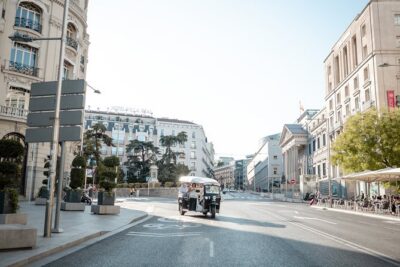
Madrid Historical Tour with Local Guide in Eco Tuk Tuk Private
Read our review →
Madrid Express Tour with Local Guide in Eco Tuk Tuk Private
Read our review →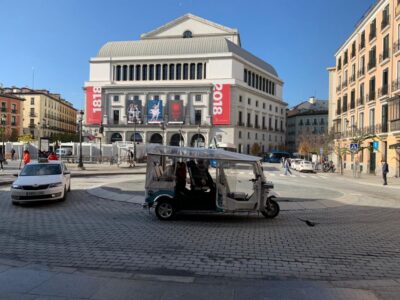
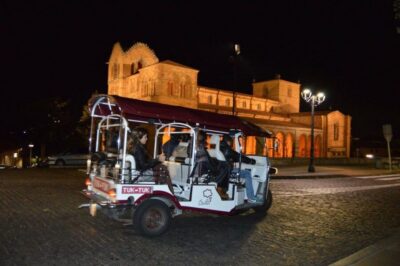
Tour Guiado En Tuk Tuk Recorre Avila De La Forma Mas Comoda
Read our review →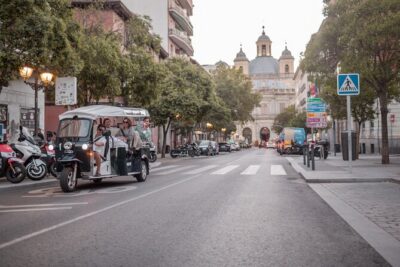
Madrid Expert Tour with Local Guide in Eco Tuk Tuk Private
Read our review →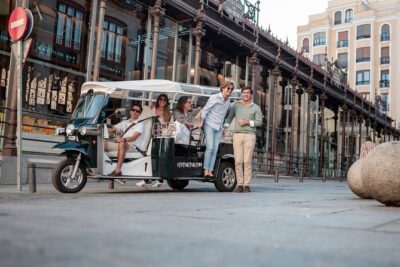
Madrid Expert Plus Tour with Local Guide in Eco Tuk Tuk Private
Read our review →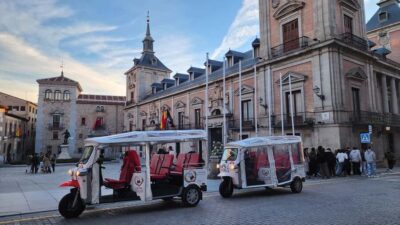

Christmas Lights Tour of Madrid in Eco Tuk Tuk Private
Read our review →Browse the lists this tour appears in