Review · GUIDED
Monumental Basin Day Guided Tour
Cuenca’s most striking feature is how abruptly its old town seems to break away above two river gorges. This walking tour gives you the city’s essential story while leading you from the colored facades of Plaza Mayor to the wooden balconies of the Hanging Houses and the iron span of San Pablo Bridge.
I like two things right away: the route gives first-time visitors a useful map of Cuenca, and it includes a rare look inside the tall houses of San Martín. At $10.31, the price is easy to justify. The main drawback is the group size, which can reach 50 people, so you should expect a public walking tour rather than a quiet, personal outing.
In This Review
- Key points to know before you book
- Why this is a smart first look at Cuenca
- Plaza Mayor and Cuenca’s colorful center
- Plaza de la Merced and the baroque side of town
- Mangana Tower and a high view of Cuenca
- The San Martín houses, Cuenca’s vertical surprise
- San Pablo Convent above the gorge
- Crossing San Pablo Bridge
- The Hanging Houses and their wooden balconies
- Alfonso VIII and the story of Castile
- Cuenca Cathedral and the unfinished facade
- What the $10.31 price really gives you
- Timing, meeting point, and practical planning
- Who will get the most from this walk?
- Should you book the Monumental Basin Day Guided Tour?
- FAQ
- How long does the Monumental Basin Day Guided Tour last?
- What time does the tour begin?
- Where does the tour meet?
- Where does the tour finish?
- What is the price?
- What sights are included?
- Is admission included?
- How many people can join the tour?
- Are service animals allowed?
- Can I cancel for a full refund?
- What happens if the tour is canceled?
Key points to know before you book
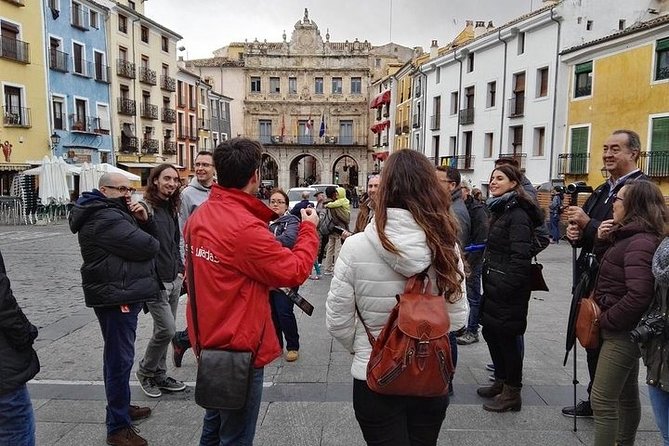
- Cuenca’s dramatic old town: See the main sights of the UNESCO World Heritage city in one compact walk.
- A practical first-day choice: The route helps you understand where the plazas, gorge edges, bridge, cathedral, and major monuments fit together.
- Inside the San Martín houses: Spend about five minutes seeing both the interior and exterior of Europe’s tallest houses from the 16th century.
- Guides with a friendly style: Hugo and Carlos have led tours praised for clear explanations, humor, and helpful advice for further sightseeing.
- A short, low-cost introduction: The tour lasts about 1 hour 45 minutes, starts at 11:30 a.m., and costs $10.31 per person.
- A few conditions to note: The maximum group size is 50, and the tour requires good weather and a minimum number of participants.
Why this is a smart first look at Cuenca
Cuenca rewards visitors who understand its shape. The city is not simply a flat old quarter with a cathedral in the middle. Its historic center stretches along a high ridge between the Júcar and Huécar gorges, with steep edges, bridges, narrow streets, churches, convents, and houses that cling to the rock.
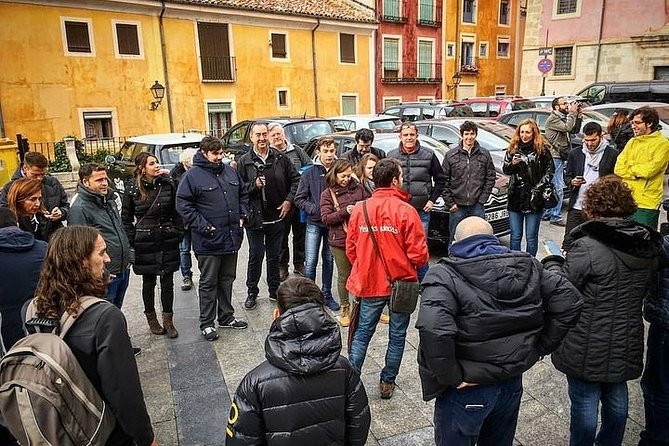
That can be confusing when you first arrive. This tour gives you a basic orientation before you set off on your own. You see the central meeting point, walk toward the city’s highest and most famous sights, and finish back at Plaza Mayor. That makes it easier to return later to the cathedral, the Hanging Houses, or the bridge without wasting time figuring out the route.
The commentary is another reason to consider it. The guides have included Hugo and Carlos, both praised for making the walk clear, friendly, and easy to follow. One especially useful feature is the practical advice about how to continue your visit after the tour. I would treat this as a city introduction, not as a substitute for spending extra time inside Cuenca’s major buildings.
The route is also efficient. It covers nine important points in less than two hours, but most stops are viewed from outside or explained in place. Only the San Martín houses are specifically given an admission period, about five minutes. If you want long interior visits, photography time, or a detailed architectural lecture at every stop, you may find the pace brisk.
A few more Cuenca days to weigh up
- Guided Walking Tour of Cuenca
★ 4.5 · 52 reviews - Guided tour: Cuenca + Cathedral
★ 5.0 · 28 reviews - Madrid: Royal Palace Expert Guided Tour with Skip-the-Line
★ 4.7 · 6,986 reviews
Plaza Mayor and Cuenca’s colorful center
The tour begins at Plaza Mayor, at Pl. Mayor, 1. This is the right place to start because it presents Cuenca in a single glance: colored facades, the baroque Town Hall, and the large Convent of Las Petras crowd the square.
Many of the surrounding buildings date from the 16th century. Their painted fronts give the plaza a softer, more welcoming feel than the rough gorge walls nearby. The Town Hall’s baroque facade adds a formal civic note, while Las Petras helps show how religious institutions shaped the old city.
You do not need an admission ticket for this stop. The value here comes from the guide’s explanation of what you are seeing and how the plaza connects with the rest of the old quarter. Pay attention to the layout because the tour ends here as well.
For a first visit, Plaza Mayor is a useful mental anchor. You can return to it after the walk for further sightseeing, and the surrounding streets lead toward some of Cuenca’s most important monuments.
Plaza de la Merced and the baroque side of town
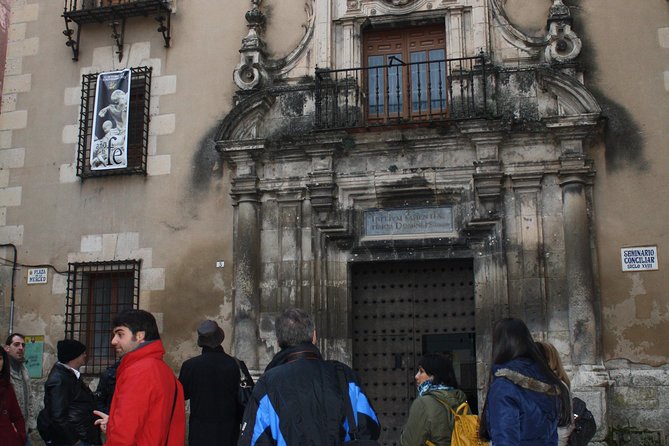
From Plaza Mayor, the walk continues to Plaza de la Merced. This smaller square brings together three baroque facades: the seminary, a church, and a cloistered convent.
The square is described as coquettish, and that fits its scale. It is less imposing than Plaza Mayor, but that is part of its appeal. You get a closer look at the relationship between religious buildings and the public spaces around them.
The guide’s job here is to make the architecture readable. Without context, a church, seminary, and convent can blur into one long stone frontage. With a short explanation, you begin to see the different roles these buildings played in Cuenca’s religious and civic life.
There is no admission fee for the stop. Keep your expectations in check, though. This is an exterior visit, so you should not book the tour expecting a full convent or seminary interior.
Mangana Tower and a high view of Cuenca
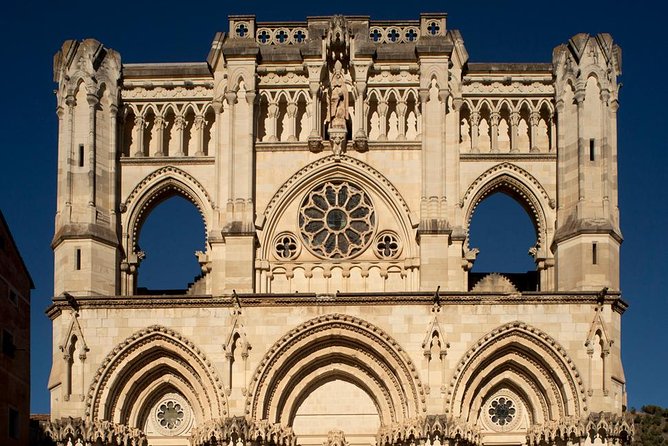
Next comes Torre Mangana, a beautiful 16th-century tower topped by two clocks. It offers broad views across the city, making it one of the route’s best orientation points.
A tower with clocks is not only an architectural object. It also tells you something about how public life once worked. The clocks marked the rhythm of the city, while the tower gave residents a visible point of reference above the surrounding streets.
The view matters just as much as the tower itself. From here, you can begin to understand Cuenca’s ridgeline, its dense historic center, and the sharp drop toward the gorges. That perspective will help later when you reach the Hanging Houses and San Pablo Bridge.
No admission ticket is listed for Torre Mangana. Since the tour stops at the tower rather than describing a climb, you should expect to see it and take in the views, not necessarily go inside.
A different sort of afternoon around Cuenca:
- Madrid: Cuenca Day Tour with or without Enchanted City
★ 4.8 · 398 reviews - Tour from Madrid to Cuenca and the Enchanted City
★ 4.5 · 191 reviews - Cuenca: Medieval Old Town
★ 4.7 · 152 reviews - Excursion to the Enchanted City
★ 5.0 · 90 reviews
The San Martín houses, Cuenca’s vertical surprise
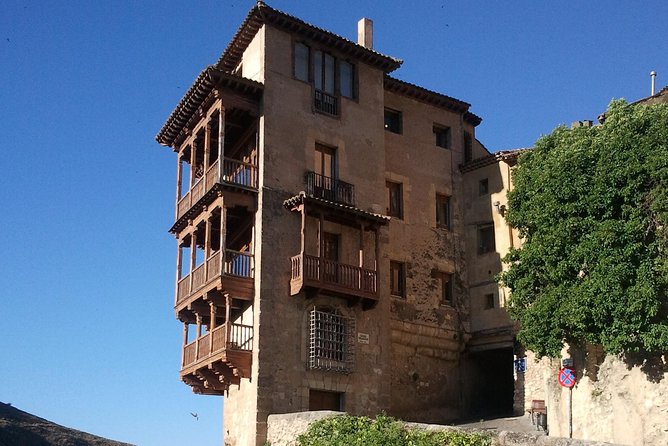
The visit to Los Rascacielos de Cuenca in the Barrio San Martín is the most unusual part of the route. These are described as the tallest houses in Europe from the 16th century, and the tour includes both their exterior and interior.
The name can sound like modern high-rise buildings, but the idea is much older and more local. Cuenca’s steep setting encouraged builders to work upward along the gorge walls. A building may look modest from one side while rising many stories above the drop on another.
You get about five minutes here. That is not long, but it adds something the rest of the tour does not: a chance to step inside one of these remarkable structures rather than viewing the old town only from public squares and bridges.
This stop is especially useful if you enjoy unusual urban details. It shows how people adapted homes to difficult terrain and how Cuenca’s vertical character extends beyond the better-known Hanging Houses.
The short visit is also the clearest limitation. Five minutes allows for a quick impression, not a full architectural study. Still, at this tour price, even a brief interior look is a welcome addition.
San Pablo Convent above the gorge
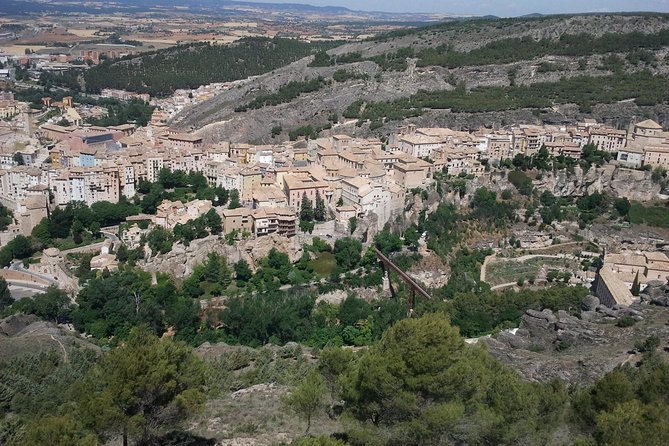
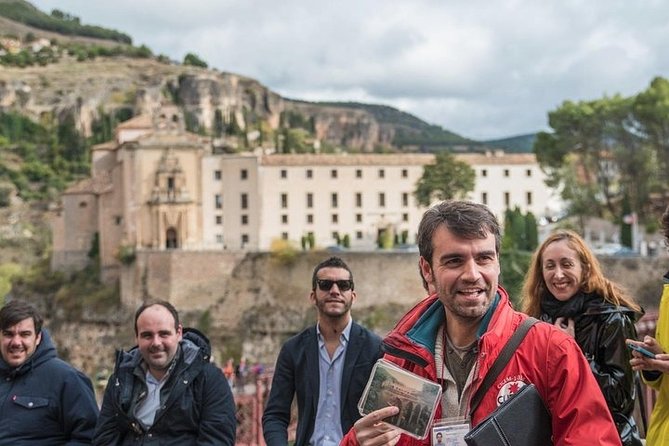
The route then reaches the Convento de San Pablo, now home to a Parador. Its position on the edge of the gorge is the main story. The building seems to occupy the threshold between the settled city and the open drop beyond it.
That setting gives the convent a strong visual presence. You are not just looking at another religious building. You are seeing how Cuenca’s institutions were placed into the rugged shape of the city.
The former convent’s current use as a Parador adds another layer to the stop. In Spain, historic buildings often continue serving as hotels, museums, or public spaces. Here, the building’s dramatic location remains central to its identity.
Admission is free for the tour stop, but the information provided does not indicate access to the Parador’s private areas. Expect an exterior visit and commentary about the building and its setting.
Crossing San Pablo Bridge
San Pablo Bridge is one of Cuenca’s most memorable viewpoints. The present iron bridge dates from 1903 and replaced an earlier stone bridge, fragments of which can still be seen.
The bridge does more than connect two points. It gives you a direct view into the gap between the old town and the San Pablo side, with the gorge below and the historic buildings above. It is also one of the places where Cuenca’s height becomes physical. You feel the city’s dramatic position rather than simply hearing about it.
The iron structure brings a different look from the stone churches and old houses along the route. That contrast helps show that Cuenca is not frozen in one period. Its historic setting includes later infrastructure built to make movement across the gorge possible.
If heights trouble you, this is a point to approach at your own pace. The tour information does not promise a particular amount of time on the bridge, so the guide may keep the group moving. Free admission means the experience costs nothing beyond joining the walk.
The Hanging Houses and their wooden balconies
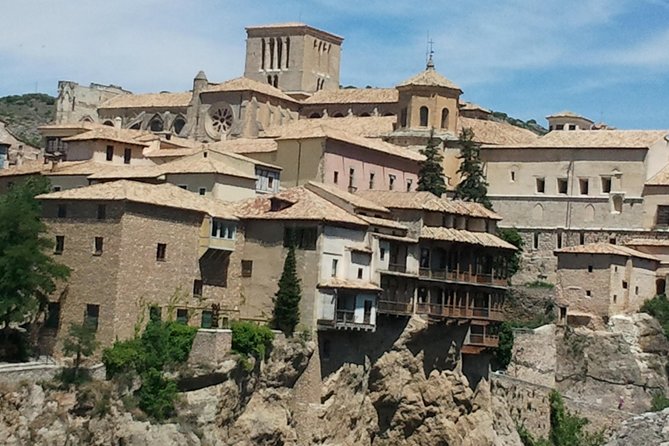
The Casas Colgadas are Cuenca’s signature sight. These noble houses date from the 14th century and hang over the Hoz del Río Huécar, with wooden balconies projecting above the gorge.
This is the image most people associate with Cuenca, but seeing the houses as part of the walking route gives them better context. You have already looked at the city from Plaza Mayor, seen its height from Mangana Tower, and crossed the bridge. By the time you reach the Hanging Houses, you understand that their dramatic position is not a trick of one facade. It is the result of an entire city built along the edge.
The wooden balconies are the visual detail to watch. They make the houses seem lighter and more precarious than the stone structures supporting them. At the same time, they remind you that these were noble homes, not only picturesque oddities.
The stop is free and appears to be an exterior visit. If you want to enter a specific museum or building connected with the Casas Colgadas, you would need to arrange that separately, since no interior admission is included here.
Alfonso VIII and the story of Castile
The bronze sculpture of Alfonso VIII adds a human figure to the route. The former King of Castile ruled for 44 years and is remembered for his victory in the Battle of Las Navas de Tolosa, an event that changed the course of Spanish history.
A statue can be easy to pass without a guide. The explanation gives it a reason to be there and connects Cuenca with the wider political history of medieval Castile.
This is a short stop, but it helps balance the tour. Much of the route focuses on buildings, cliffs, bridges, and views. Alfonso VIII brings the discussion back to rulers, battles, and the forces that shaped the kingdom.
Admission is free. The information does not specify a long presentation here, so expect a concise explanation rather than an extended history lesson.
Cuenca Cathedral and the unfinished facade
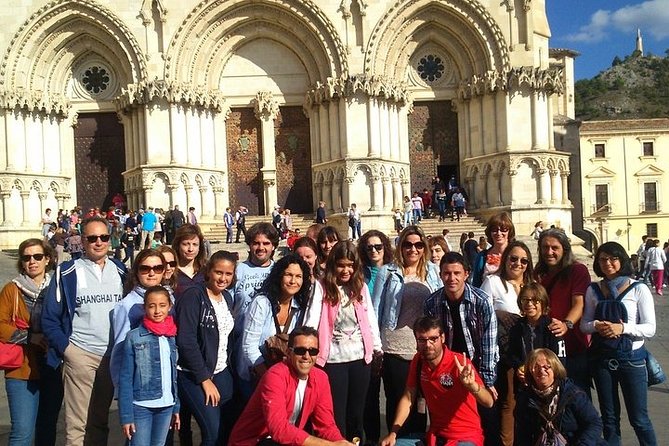
The final cathedral stop is one of the most important. Cuenca’s cathedral was among the first in the kingdom begun in the Gothic style, along with Ávila’s cathedral. It became one of the country’s largest, reflecting the wealth Cuenca held until the 16th century.
Its facade is Neogothic and unfinished, a detail worth noticing because it gives the building an unusual appearance. You are not looking at a perfectly completed medieval front. Instead, the cathedral reflects several periods of construction and change.
The cathedral’s size also makes more sense after the guide explains the city’s former wealth. Monumental churches required money, skilled labor, and political support. The building is therefore not just a religious site. It is evidence of Cuenca’s earlier importance.
The supplied route information does not state that cathedral entry is included. The stop should be understood as an exterior visit and explanation, with any interior visit handled separately. That is important when planning your day. If the cathedral is a priority, leave time after the walk rather than assuming the guided route includes a full interior tour.
What the $10.31 price really gives you
At $10.31 per person, this is a strong-value orientation walk. You receive nearly two hours of guided sightseeing, a route through the city’s principal landmarks, historical context, and a brief interior visit to the San Martín houses.
The value is not in admissions. Most stops are free, and the tour does not appear to include extended access to the cathedral or other major interiors. The value is in having the city explained in a logical order, especially if Cuenca is new to you.
I would be especially happy with the price if I planned to stay in Cuenca for at least one full day. The walk can help you decide which places deserve a second visit. It also reduces the chance that you will see the Hanging Houses, take a few pictures, and miss the less obvious details around Mangana Tower, Plaza de la Merced, or San Pablo.
The low cost also makes it a reasonable choice for families, couples, and solo visitors who want structure without paying for a private guide. The tradeoff is the possible group size of up to 50 people. If you want to ask many questions or move at a slow photographic pace, a smaller tour would likely suit you better, though no smaller option is described here.
Timing, meeting point, and practical planning
The tour starts at 11:30 a.m. at Plaza Mayor, 1, in Cuenca. It finishes at Plaza Mayor, so you can plan lunch or another old-town visit immediately afterward without arranging transport back to your starting point.
The 1-hour-45-minute duration is long enough to cover the main route but short enough to fit into a busy day. I would schedule the cathedral interior, a longer look at the Hanging Houses, or other independent sightseeing after the tour.
The tour operates as a group activity with a maximum of 50 people. Most participants can take part, and service animals are allowed. The meeting area is near public transportation, which makes arrival easier, though no specific transport lines are provided.
Confirmation is received at booking. The experience requires good weather and a minimum number of participants. If poor weather or insufficient enrollment cancels the tour, you are offered another date or experience, or a full refund.
Free cancellation is available up to 24 hours before the start time. Changes or cancellations inside that window are not accepted for a refund, so keep the local start time in mind when making plans.
Who will get the most from this walk?
I recommend it most strongly to first-time visitors who want a clear introduction before exploring alone. Cuenca’s steep streets and separated monuments make a guided overview genuinely useful, and the route touches the places you are most likely to seek out later.
It also suits you if history and architecture matter, but you prefer short explanations to a long lecture. The tour moves through civic, religious, royal, and residential sites, giving you a broad picture of the city in a manageable period.
Families may appreciate the straightforward route and modest price, although the gorges, bridge, and steep historic setting mean you should keep your own walking comfort in mind. The data says most participants can take part, but it does not provide a detailed mobility assessment.
I would be less likely to choose this tour if I had already spent several days studying Cuenca or if I wanted extensive cathedral access. The group can be large, and the interior component is brief. It works best as an introduction, not as a specialist architecture tour.
Should you book the Monumental Basin Day Guided Tour?
Book it if you want an inexpensive, well-organized way to understand Cuenca in your first few hours. The route covers the city’s essential sights, includes the unusual San Martín house visit, and gives you views that are hard to appreciate without some sense of the city’s geography.
The praise for guides such as Hugo and Carlos centers on clear explanations, friendly presentation, useful advice, and a pleasant pace. Those qualities matter here because Cuenca’s buildings are impressive, but their meaning is easier to grasp when someone connects the plazas, towers, gorges, and royal history.
Skip it only if you strongly dislike group walks, need long interior visits, or already know the old town well. For most first-time visitors, $10.31 is a small outlay for a practical start in one of Spain’s most unusual historic cities.
FAQ
How long does the Monumental Basin Day Guided Tour last?
The tour lasts approximately 1 hour and 45 minutes.
What time does the tour begin?
The tour starts at 11:30 a.m.
Where does the tour meet?
The meeting point is Plaza Mayor, 1, 16001 Cuenca, Spain.
Where does the tour finish?
The tour ends at Plaza Mayor, Cuenca, the same general location as the starting point.
What is the price?
The listed price is $10.31 per person.
What sights are included?
The route includes Plaza Mayor, Plaza de la Merced, Mangana Tower, the San Martín skyscraper houses, San Pablo Convent, San Pablo Bridge, the Hanging Houses, the Alfonso VIII sculpture, and Cuenca Cathedral.
Is admission included?
The tour includes admission for the brief visit to Los Rascacielos de Cuenca in Barrio San Martín. The other listed stops are marked as free, while cathedral interior admission is not specified as included.
How many people can join the tour?
The maximum group size is 50 participants.
Are service animals allowed?
Yes, service animals are allowed.
Can I cancel for a full refund?
Yes. You can cancel at least 24 hours before the experience start time for a full refund. Cancellations or changes made less than 24 hours in advance are not accepted for a refund.
What happens if the tour is canceled?
The tour requires good weather and a minimum number of participants. If it is canceled for either reason, you are offered a different date or experience, or a full refund.
Just added around Cuenca
- From Madrid: Private Tour to Toledo and Cuenca★ 5.0 · 5 reviews
- Excursion to the Enchanted City from Cuenca★ 5.0 · 5 reviews
- Enchanted city express★ 5.0 · 5 reviews
- Cuenca: Private Walking Tour of Medieval Cuenca★ 3.9 · 8 reviews
- Day Trip to Cuenca from Madrid with Cathedral Visit★ 4.5 · 9 reviews
- Jumping in Zipline with Unique Views of Cuenca★ 5.0 · 9 reviews
- Cuenca: Historic Center and Cathedral of Cuenca Walking Tour★ 4.8 · 10 reviews
- Legends Tour in Cuenca★ 5.0 · 14 reviews
Guided, compared.
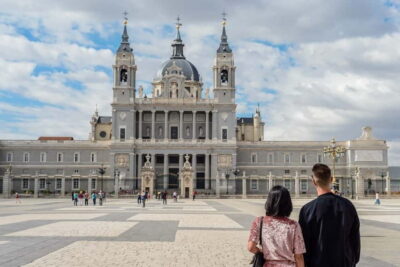
Royal Palace Expert Guided Tour with Skip-the-Line
Read our review →
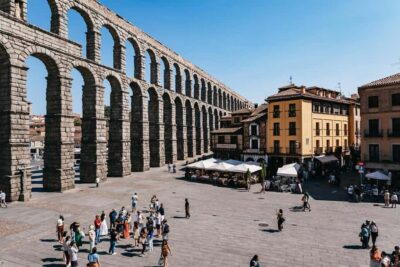
Toledo & Segovia Full Day Guided Tour with Alcázar
Read our review →