
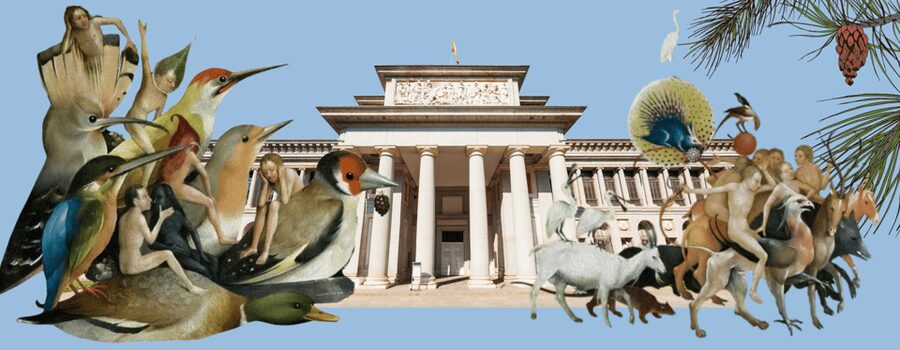
Review · PRADO MUSEUM TOURS
Prado Museum for kids & families: Private fun tour
The best thing about this Prado visit is its family focus. Instead of marching past dozens of famous paintings, Isabella Trébede uses stories, questions, drawing, and visual games to help children notice what they are seeing. Velázquez, Goya, Bosch, and Sofonisba Anguissola become characters in a lively museum adventure, not names on a wall.
I like the private format, which lets you pause for a child’s question or move on before attention fades. I also like the sensible 90-minute length: long enough to see major works, short enough to avoid the glazed-over look that can strike young museum visitors. The main consideration is that the $59 price is for the guide only. You must still arrange museum tickets, and the Prado prohibits food, drinks, and photography inside.
In This Review
- Key points to know before booking
- Why the Prado can be hard with children
- Meeting Isabella beside Goya’s statue
- Entering the Prado as a private family group
- Velázquez and the puzzle of Las Meninas
- Goya’s portraits and the darker side of the museum
- Bosch’s strange world of creatures and temptations
- Sofonisba Anguissola and artists you might miss
- Drawing and games in the medieval rooms
- A 90-minute route with room for questions
- How the tour handles different ages
- What the $59 price really buys you
- Practical rules and access details
- Who should book this Prado experience
- Should you book it?
- FAQ
- How long is the Prado family tour?
- Is the tour private?
- Which languages are available?
- Are museum tickets included in the $59 price?
- Where do you meet the guide?
- What should you bring and what cannot you take inside?
Key points to know before booking
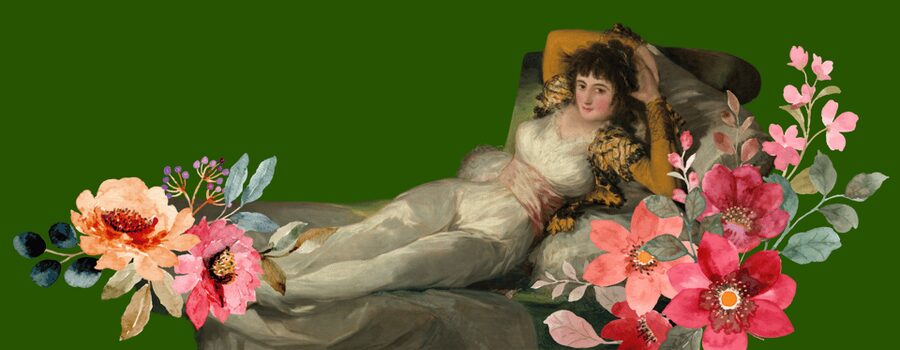
- Stories replace a standard lecture: Isabella uses tales, questions, and close looking to make major paintings easier for children to follow.
- The route includes Prado essentials: Expect Las Meninas, Goya’s portraits, Bosch’s Garden of Earthly Delights, and other selected works.
- It works for mixed ages: Families with children from about six through the teenage years can ask for a pace and level of detail that suits them.
- Drawing is part of the fun: Activities in the medieval rooms give children something active to do while they study the art.
- You control the pace: This is a private group, so breaks, questions, and extra explanations are possible.
- Tickets are separate: Adults pay €15, seniors over 65 pay €7.50, and children under 18 enter free with a reserved ticket.
Why the Prado can be hard with children

The Prado is one of those museums that can make even interested adults lose their bearings. Its collection includes more than 26,000 works, and the famous rooms can feel like a parade of royal portraits, saints, battles, and mythological scenes.
For a child, the problem is not a lack of things to see. It is too much to see, with too little reason to care. A private guide can turn that flood into a short sequence of questions: Who is looking at whom? Why is this person dressed that way? What strange detail appears in the corner? What would you draw if you were the artist?
That approach matters more here than a simple list of masterpieces. You will see fewer paintings than you would alone, but you should understand more of them. The aim is not to cover every room. It is to give your family a handful of memorable anchors so the museum feels approachable rather than exhausting.
More ways to see the Prado:
- Madrid: Prado Museum Entry Ticket
★ 4.6 · 17,509 reviews - Madrid: Small Group of Prado Museum Tour & Optional Tapas
★ 4.6 · 2,437 reviews - Madrid: Prado Museum Guided Tour with Skip-the-Line Ticket
★ 4.5 · 2,018 reviews
Meeting Isabella beside Goya’s statue
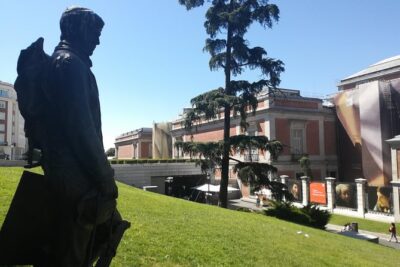
The tour begins at the monument to Goya, beside the museum’s ticket office. Look for Isabella carrying an Isabella Trébede tote bag and a GetYourGuide Prado for Families sign.
This meeting point is practical because it is easy to identify, but you still need to arrive with your family organized. You will need a passport or ID card, and a copy is accepted. Children under 18 and seniors over 65 must show valid identification at entry for the free or reduced ticket.
The booking process deserves attention. The guide provides assistance with choosing the correct museum time slot and sends instructions for obtaining official tickets after your reservation. That is useful because the guide’s availability and your museum entry time need to match. The $59 per-person tour charge does not include admission, so add the museum ticket cost when comparing this with a group tour.
The separate entrance and skip-the-line arrangement can save energy, especially with younger children. It does not mean you can ignore the ticket requirement. Every member of your party still needs the correct museum admission, including children who enter free.
Entering the Prado as a private family group

Once inside, you are not joining a large group with strangers or sharing headsets. The guide works only with your family, which changes the feel of the visit.
If your six-year-old wants to linger over an odd creature in a painting, you can stop. If your teenager prefers a more detailed talk about an artist’s choices, the guide can adjust. If grandparents are along, the pace can include more sitting and fewer quick room changes.
That flexibility is the main reason to choose this experience instead of a standard highlights tour. A large group must follow one rhythm. Here, Isabella can read the room and alter the route around crowds, attention spans, and family interests. The experience is still only 90 minutes, so it is not a full Prado survey, but the time should feel more purposeful.
Parents should keep expectations realistic. This is a guided museum visit, not a play session. Children are encouraged to participate, but they must remain with an adult throughout the tour. The private setting makes the visit calmer, not completely free of museum rules.
Velázquez and the puzzle of Las Meninas

Las Meninas is the natural centerpiece of a first Prado visit, and it gives Isabella plenty to work with. Velázquez’s painting is visually busy and full of questions. The royal family, the artist, the mirror, the open doorway, and the people looking out from the canvas all create a puzzle that children can inspect.
A child does not need a long lecture on Spanish court painting to become interested. It is enough to ask where each person is looking and what the mirror might be showing. From there, the painting can open into a talk about the artist, the royal household, and the unusual way Velázquez placed himself inside the scene.
This is also a good test of the guide’s method. The painting can feel intimidating when treated as a famous object you are expected to admire. With questions and visual clues, it becomes a mystery to solve. Adults get useful context, while children have a reason to keep looking.
Do not expect to spend the whole 90 minutes on Las Meninas. The point is to use it as one of several strong stops. Families who want a very detailed art-history lesson on Velázquez may find the family format too brisk. Families who want everyone to remember why the painting is special will likely appreciate the balance.
More museums in Madrid:
- Madrid: Reina Sofía Museum Entrance Ticket
★ 4.5 · 6,889 reviews - Madrid: Museum of Illusions Ticket
★ 4.1 · 1,909 reviews - Madrid: Prado Museum Guided Tour With Fast Access
★ 4.8 · 1,785 reviews - Prado Museum Small Group Tour with Skip the Line Ticket
★ 5.0 · 1,738 reviews
Goya’s portraits and the darker side of the museum

Goya gives the tour a different mood. His portraits can lead to conversations about power, clothing, expression, and the way a painter shows personality without writing a single word.
Children may first notice faces, uniforms, jewels, or unusual poses. Isabella can then guide them toward the choices behind those details. Why does one person look stiff while another appears relaxed? What does clothing tell you? What might a serious expression reveal, and what might it hide?
Goya also allows the visit to become more honest about difficult art. The Prado is not filled only with pretty scenes. Some works can be strange, frightening, or sad. A family guide can judge how far to go with those subjects and explain them in language that fits the ages in front of her.
That adjustment is especially useful for families with children several years apart. Younger children may focus on a demon or dramatic figure, while older children can discuss fear, religion, or the artist’s purpose. You are not locked into one script.
Bosch’s strange world of creatures and temptations

Hieronymus Bosch’s Garden of Earthly Delights is almost tailor-made for young eyes. Its crowded scenes, tiny figures, fantastic animals, and strange actions give children plenty to find.
The painting rewards close looking. Instead of asking a child to appreciate its place in European art, you can begin with a simple hunt for unusual details. What creature looks impossible? Which scene seems funny? Which one feels unsettling? Those questions invite children to use their own senses before receiving an explanation.
Adults can then connect the details to the painting’s broader religious and moral ideas. The family group does not have to absorb every symbol in one sitting. A few well-chosen examples are enough to show how Bosch built an entire world from small discoveries.
This stop also helps explain why a short tour can be valuable. Bosch’s work could occupy an hour by itself, but the guide’s job is to give you a strong introduction and then move on while interest remains high. You leave with a painting your family can talk about later, rather than a head full of names and dates.
Sofonisba Anguissola and artists you might miss
One of the most appealing parts of the route is its inclusion of Sofonisba Anguissola, an Italian Renaissance painter who is often left out of a basic Prado highlights walk.
That choice broadens the visit. Children see that museums are not only about the few names printed on postcards. They also hold artists who worked within difficult limits and whose stories can change how you look at the collection.
For adults, Anguissola adds welcome variety after the better-known Spanish masters. For children, the lesson is simple and important: art history contains more people than the short list you usually hear first.
The guide can use this kind of stop to make the museum feel less predictable. You may come for Velázquez, Goya, and Bosch, but an artist you did not know may become the person your family remembers most.
Drawing and games in the medieval rooms

The interactive work is not just talk with a few questions added. The children may take part in drawing activities in the medieval rooms, using imagination and observation to respond to what they see.
That is a smart fit for the Prado. Young visitors often need to switch between looking, listening, moving, and doing. A drawing task gives them a chance to process the art in their own way rather than simply trying to remember an explanation.
The games also help bridge age gaps. A six-year-old can search for visual details, a preteen can invent a story, and an adult can continue listening to the historical context. Nobody has to respond in exactly the same way.
Parents should know that the museum’s rules still apply. Food and drinks are not permitted inside and must be left at the cloakroom. Photography is also prohibited, so do not plan on recording the visit as you go. Your family will need to rely on memory, conversation, and the personalized list of additional works provided at the end.
A 90-minute route with room for questions
Ninety minutes is a good working length for a family museum visit. It gives you enough time for major works and several smaller discoveries without demanding an entire morning of concentration.
The precise route can change with crowds and family interests. That is a benefit of a private tour. You are not promised every famous room, and you should not expect to see the whole museum. Instead, you receive a selected group of paintings linked by stories and activities.
The pace is designed to include pauses. This matters if your child is jet-lagged, hungry, shy, or simply more interested in one painting than another. The guide can answer questions as they arise rather than pushing the group onward.
Still, ninety minutes passes quickly. If your family becomes excited by the collection, you may wish the visit lasted longer. Several families have found themselves wanting more Prado time with Isabella. The good news is that the guide gives you suggestions for additional works to see after the tour.
Treat that list as an optional second act, not an obligation. After the guided visit, you can choose one or two extra rooms, take a break, or leave while everyone is still in a good mood.
How the tour handles different ages
This experience has a wider age range than its title might suggest. It has worked for children around six, school-age groups, teenagers, and adults traveling with grandparents.
For younger children, the strongest elements are likely to be the strange figures, visual searches, drawing, and stories. The guide can keep explanations short and give them something specific to notice.
Teenagers may respond better to the stories behind the paintings and to questions that let them form an opinion. The private format avoids the awkwardness of asking a bored teenager to perform interest in front of a large group.
Adults are not pushed aside. You will receive context about the painters, the Prado, and the historical setting, with time to ask more detailed questions. That balance is one of the tour’s clearest strengths. Parents can learn something substantial without turning the visit into a classroom lecture.
If your family includes very young children who cannot manage 90 minutes in a museum, no guide can remove that basic challenge. But the pace, private setting, and active tasks give you better odds than a standard adult-focused tour.
What the $59 price really buys you
At $59 per person, plus museum admission, this is not the cheapest way into the Prado. The right comparison is not only with a self-guided visit. It is with the cost of losing an hour to confusion, choosing the wrong rooms, or watching children give up before the museum has made sense.
The fee covers a licensed private guide, family-focused planning, interactive material, and help with the ticket process. You are paying for attention as much as for facts. A group of four pays more in total than a public tour, but you also avoid strangers, fixed pacing, and generic commentary.
The value is strongest for families who might otherwise skip the Prado or rush through it unhappily. It is also strong for parents who care about the museum but do not want to spend the day managing everyone’s mood.
The value is weaker if you already know the Prado well, your children are comfortable exploring major museums alone, or you want a long specialist lecture on one painter. In those cases, self-guided exploration may be enough.
The tour offers free cancellation up to 24 hours ahead and a reserve-now, pay-later option. Those terms help if your Madrid schedule is still shifting, but remember that museum admission remains a separate booking task.
Practical rules and access details
The tour is offered in English or Spanish and is wheelchair accessible. It is a private group, and minors must remain accompanied by an adult.
Bring a passport or ID card. A copy is accepted, but children and seniors need identification to claim the relevant free or reduced admission.
Large bags and luggage are not allowed in the museum. Food and drinks must be left at the cloakroom, and photography inside is prohibited. Plan a snack before entering, especially if you are visiting with younger children.
Your museum ticket must be booked for the correct time slot. Use the official booking instructions supplied after reserving the tour, and check that every member of the family has a ticket, including children under 18.
Who should book this Prado experience
I would choose this tour for parents visiting the Prado with children from roughly six through the teenage years, especially if the adults want real art discussion rather than a quick photo stop.
It also suits mixed-age groups. Grandparents can enjoy the masterpieces, teenagers can ask questions without feeling trapped in a large group, and younger children can draw and play visual games.
The tour is a good match if you value a quiet pace, personal attention, and a guide who can change course when the family needs it. It is less suitable if you want to cover a huge number of rooms, take photographs, eat during the visit, or pay one all-inclusive price.
Isabella’s strongest quality is her ability to adjust the level of the tour. She has handled families with children aged six to twelve, teenagers, grandparents, single parents, and adults who do not think of themselves as art people. That range is useful evidence of a guide who can meet a family where it is.
Should you book it?
Book this private Prado tour if you want your children to remember paintings, not just survive a museum visit. The combination of Isabella Trébede’s storytelling, drawing activities, famous works, and flexible pacing gives the Prado a clear shape in a short time.
You should budget for the separate museum tickets and accept the no-food, no-photo rules. If those details are fine, the $59 guide fee can be good value for a family that wants the Prado to feel friendly and understandable.
I would especially book it early for a first Prado visit with children. The 90-minute length leaves you free to continue on your own, and the extra-art recommendation list gives you a simple way to keep exploring after the guided portion ends.
FAQ
How long is the Prado family tour?
The tour lasts 1.5 hours, or 90 minutes. Starting times vary, so you need to check availability when booking.
Is the tour private?
Yes. Only your family participates, and the guide can adjust the pace, explanations, pauses, and activities to your group.
Which languages are available?
The live guide is available in English or Spanish.
Are museum tickets included in the $59 price?
No. Museum admission is separate. Adults pay €15, seniors over 65 pay €7.50, and children under 18 enter free, but children still need a pre-booked free ticket.
Where do you meet the guide?
Meet beside the Goya statue, in front of the museum’s ticket office. Isabella Trébede will carry an Isabella Trébede tote bag and a GetYourGuide Prado for Families sign.
What should you bring and what cannot you take inside?
Bring a passport or ID card, with a copy accepted. Food, drinks, luggage, and large bags are not allowed inside, and photography is prohibited. Food and drinks can be left at the cloakroom.
Just added around Madrid
- Private Vacation Photography Session with Photographer in Madrid★ 5.0 · 3 reviews
- Arrival Private Transfer from MAD Airport to Madrid in a Minibus★ 5.0 · 3 reviews
- Segovia: 3-Hour Private Walking Tour★ 5.0 · 3 reviews
- Tour Segovia and La Granja de San Ildefonso from Madrid★ 5.0 · 3 reviews
- Madrid: Prado & Reina Sofia Museum Skip-the-Line Guided Tour★ 5.0 · 3 reviews
- Salamanca: Private Guided Customizable Walking Tour★ 5.0 · 3 reviews
- Total Reboot and Renew with top wellnes 3 hours couple experience★ 5.0 · 3 reviews
- Toledo Private Guided fullday tour from Madrid★ 5.0 · 3 reviews
Prado Museum Tours, compared.
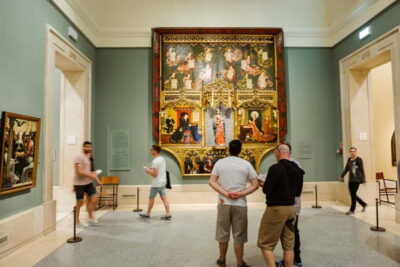

Small Group of Prado Museum Tour & Optional Tapas
Read our review →
Prado Museum Guided Tour with Skip-the-Line Ticket
Read our review →
Prado Museum Small Group Tour with Skip the Line Ticket
Read our review →
Royal Palace & Prado Museum Skip the Line Guided Tour
Read our review →
Prado Museum Guided Tour with Skip-the-Line Ticket
Read our review →Browse the lists this tour appears in