
Review · TOLEDO DAY TRIPS
Tour of the Inquisition and Witchcraft in Toledo
Toledo’s Inquisition story is less about spooky theatrics than the machinery of fear: public penance in Zocodover, prisons near the old city center, accusations of witchcraft, and the long process that could end in confiscation, torture, or execution. I like the way this walk connects those events to actual streets and buildings, especially Plaza de Zocodover and the old Jewish Quarter. I also like that the focus is historical rather than a parade of ghost stories.
The main caution is practical. This tour needs at least six people, and two recent bookings were canceled less than an hour before departure because there were not enough reservations. The guide speaks Spanish only, so you will get the most from it if you can follow a full Spanish explanation.
In This Review
- Key points at a glance
- Starting at Zocodover, where punishment became public
- Posada de la Hermandad and the machinery of punishment
- Toledo Cathedral and the religious setting
- The Jewish Quarter and the danger of broad accusations
- San Pedro Mártir and the first auto-da-fé
- Witchcraft stories without a horror-show script
- The Jesuit church and the city’s religious power
- San Vicente and the end of the Inquisition
- What the $10 price really offers
- The guides and the tone of the walk
- Who should book this Toledo walk?
- Should you book the Inquisition and Witchcraft tour?
- FAQ
- Where does the tour begin?
- How do I recognize the guide?
- How long does the tour last?
- What language is the tour conducted in?
- What is the price?
- What places are included in the walking route?
- Does the tour include entrance tickets?
- Is the tour wheelchair accessible?
- How many people are needed for the tour to operate?
- Can I cancel for a refund?
Key points at a glance
- Public trials in Zocodover: Begin where Toledo held many autos de fe, public ceremonies in which the condemned confessed and sought reconciliation with the Church.
- A look at the Inquisition’s chain of command: Learn how an accusation moved from detection to interrogation, judgment, and punishment.
- Witchcraft with a historical focus: Expect discussion of fear, superstition, alleged sorcery, and the treatment of accused people, not a theatrical ghost walk.
- Stops across old Toledo: The route passes the Posada de la Hermandad, Toledo Cathedral, the Jewish Quarter, San Pedro Mártir, the Jesuit church, and Plaza de San Vicente.
- A small-group limit: Groups of family or friends are limited to six people, though the tour requires at least six total participants to operate.
- Low-cost, short commitment: At $10 per person and 1.5 hours, it is an inexpensive way to add a serious historical walk to a day in Toledo.
Starting at Zocodover, where punishment became public
Meet at Calle Armas 3, opposite the Rodilla café, at the beginning of Plaza de Zocodover. Look for the guide holding a small colored flag, described as a pink flag on the side of the square. Zocodover is one of Toledo’s easiest places to find, but the meeting point is specific, so do not simply wait in the middle of the plaza.
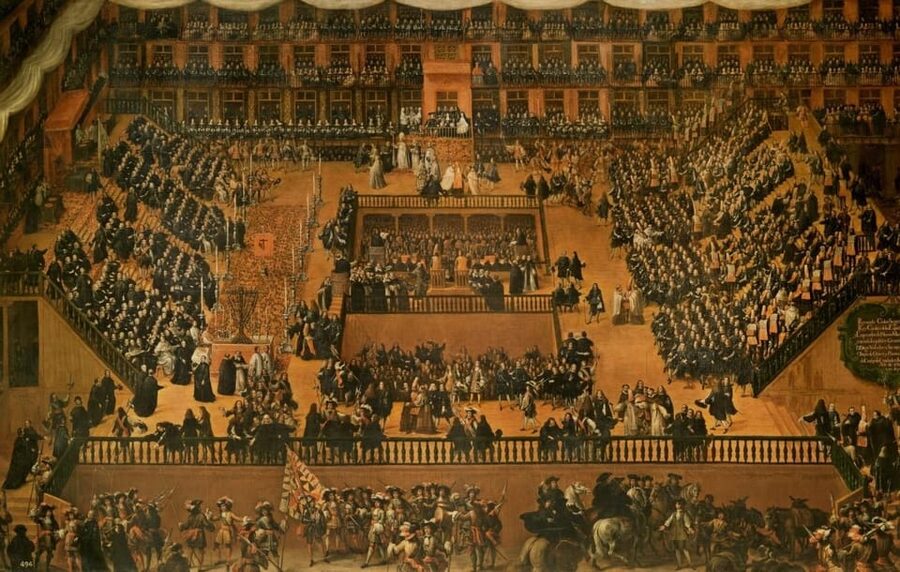
The square gives the tour a strong opening. It was a public stage for many autos de fe, formal ceremonies connected to the Inquisition. These events were not simply executions. The condemned appeared before the public, admitted or renounced their supposed sins, performed penance, and sought restoration to the Catholic Church. The ceremony itself helped display the power of religious and civic authorities.
I find this context useful because it separates the Inquisition from the vague image of secret tribunals hidden behind church walls. Its power worked in private rooms, but it also depended on public spectacle. A central square let the authorities turn punishment into a warning for everyone watching.
The tour begins with the Spanish Inquisition’s broad purpose. Established under Ferdinand and Isabella in the late 15th century, the institution pursued heresy and practices considered contrary to Catholic teaching. In Toledo, a major religious and cultural center, that scrutiny touched many parts of daily life.
More Toledo day trips:
- Guided Walking Tour of Immortal Toledo
★ 5.0 · 1,116 reviews - Toledo Private Tour with Licensed Local Guide
★ 5.0 · 884 reviews - Toledo: City Sightseeing Hop-On Hop-Off Bus Tour & Extras
★ 4.3 · 683 reviews
Posada de la Hermandad and the machinery of punishment
From Zocodover, the route continues through Toledo’s old streets toward the Posada de la Hermandad. Here, the discussion turns from public ceremony to prisons, punishments, and torture methods associated with the Holy Inquisition.
This is likely one of the more sobering sections of the walk. The subject is not presented as harmless medieval color. Accusations could lead to arrest and interrogation, while confessions might be sought under torture. Sentences could include confiscation of property, public penance, and, in the most serious cases, execution at the stake.
The useful thing about hearing this while walking through the historic center is the connection between legal procedure and ordinary urban space. You are not studying an abstract institution in a museum display. You are considering how a court, its prisons, its officials, and its public rituals operated inside the city people knew every day.
The tour also explains the Inquisition’s hierarchy. That matters because popular accounts often treat it as one faceless force. The walk looks at the organization of its headquarters and the stages followed from the alleged discovery of a crime to the prisoner’s final sentence.
Toledo Cathedral and the religious setting
Toledo Cathedral appears as one of the guided stops. The information provided does not specify an interior visit, so you should think of this as a discussion connected with the cathedral and its place in Toledo’s religious life, rather than assume that admission is included.
The cathedral helps explain why Toledo was such an important setting for this subject. Religious authority was not a side issue here. The Inquisition operated within a society where Catholic belief shaped law, public identity, and ideas about acceptable behavior.
That does not mean every story told on the route will concern the cathedral itself. Instead, the stop gives the guide a chance to place the tribunal within the city’s wider religious structure. You will hear about heresy, repentance, and the methods used to bring people back into line with official belief.
For me, this is where the tour’s serious tone becomes most useful. Toledo’s darker past can easily be reduced to dramatic tales about secret rooms and supernatural crimes. A stop near the cathedral keeps the focus on institutions, faith, and power.
The Jewish Quarter and the danger of broad accusations
The route passes through Toledo’s ancient Jewish Quarter. This is an important part of the walk, but it is also a place where you should listen carefully to distinctions. The Inquisition did not treat every person or community in exactly the same way, and a discussion of Toledo’s Jewish past can become muddled if centuries and institutions are blended together.
The supplied tour information specifically identifies the Jewish Quarter as part of the route and includes a reported example of guide Vanesa handling the subject with care when a Jewish participant was present. That suggests the discussion can be sensitive rather than sensational. It is a worthwhile quality in a tour dealing with religious persecution.
You will likely hear about how accusations of religious deviation affected people in a city shaped by Christian, Jewish, and Muslim traditions. The tour’s value here is not simply in pointing out old walls. It asks you to consider how suspicion can turn religious difference into a legal threat.
This section may be especially meaningful if you are interested in Toledo’s layered religious past. It also requires a guide who can avoid easy labels. Vanesa was praised for her sensitivity and for adapting her treatment of the subject to the people in the group.
A different sort of afternoon around Toledo:
- Madrid: Full-Day Guided Tour of Toledo with Cathedral Visit
★ 4.6 · 647 reviews - Toledo: Tourist Bracelet with Entry to 7 Attractions
★ 4.3 · 597 reviews - Night Guided Tour of Magical Toledo
★ 4.5 · 459 reviews - City Sightseeing Toledo Hop-On Hop-Off Bus Tour
★ 4.5 · 439 reviews
San Pedro Mártir and the first auto-da-fé
At the Convento de San Pedro Mártir, the guide discusses the first auto-da-fé to leave from this location in the 15th century. More than 700 people were involved, making this one of the route’s most striking details.
The figure is important not because it turns suffering into spectacle, but because it shows the scale of these public acts. An auto-da-fé could involve a large procession and a carefully ordered ceremony. It made religious judgment visible to the city and reinforced the authority of the tribunal.
This stop also returns to procedure. You will hear how the headquarters were organized and how a case moved from the detection of an alleged crime through investigation and judgment to the execution of a prisoner.
I like this part of the route because it turns a frightening subject into something you can follow step by step. You learn not only what punishments existed, but how the system reached a decision and how public participation helped support it.
Do not expect access to every building named along the way. The experience is a walking tour with a local official guide, and the supplied details describe guided stops rather than a package of interior admissions. The tour does not require extra ticket payments, which keeps the cost simple.
Witchcraft stories without a horror-show script
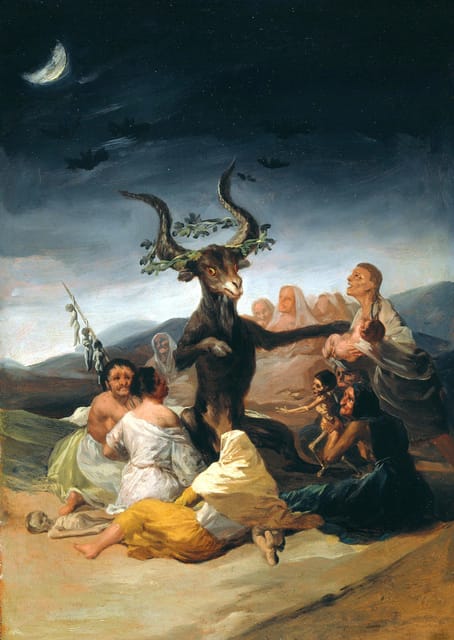
Witchcraft is a central theme, but the tone appears to be historical rather than theatrical. People accused of sorcery or witchcraft could be arrested, questioned, and tortured in the effort to secure a confession. The same climate of fear encouraged stories about witches and sorcerers meeting in secret places around Toledo.
Some of those tales may have grown in the telling. That is part of their value, but not proof that the events happened as described. They reflect the fears and superstitions of the period, and a good guide should help you tell folklore from documented practice.
One particularly useful detail is that the tour does not promise a parade of myths. A visitor who expected more dramatic or shocking stories might find the approach restrained. I see that as a strength if you want history, but it could feel less exciting if you came looking for a ghost walk.
The subject is still disturbing. The real horror lies in what could happen after an accusation: interrogation, loss of property, public humiliation, imprisonment, and possible execution. The tour’s historical approach gives those consequences more weight than a string of invented scares would.
The Jesuit church and the city’s religious power
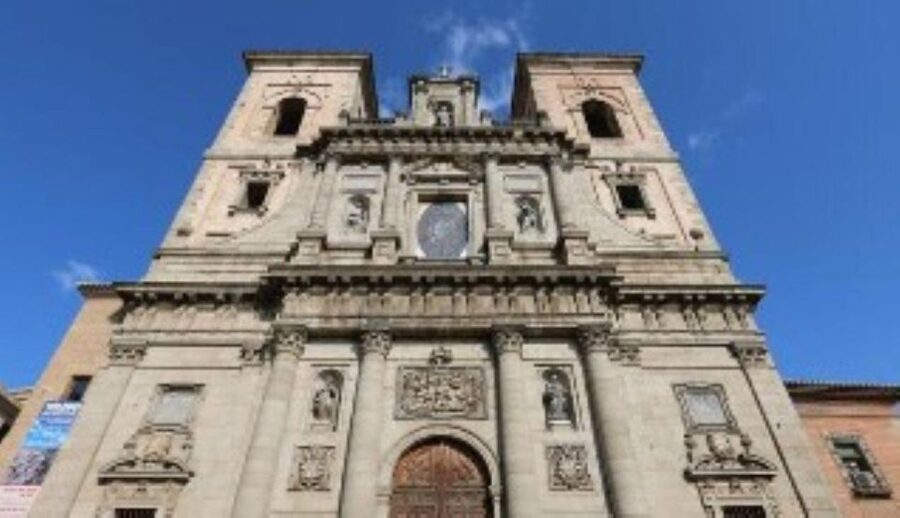
The itinerary includes the Iglesia de los Jesuitas, also known as the Jesuit church in Toledo. The supplied details do not say that the tour enters the church or that admission is included, so treat it as a guided point along the walking route.
Its role is to keep the conversation rooted in Toledo’s religious setting. The tour is not only about individual prisoners. It examines the institutions and beliefs that made the Inquisition possible and gave its judgments public force.
The route’s sequence also helps you see how tightly packed Toledo’s history is. A short walk can move from a public square to religious buildings, old streets, and former institutional sites. You do not need transport, and the 1.5-hour length keeps the subject from taking over an entire sightseeing day.
This is still Toledo, so expect streets that may be uneven or tight in places. The activity is listed as wheelchair accessible, but no further route details are provided. If you use a wheelchair, it is sensible to confirm the exact path and access arrangements before booking.
San Vicente and the end of the Inquisition
Near the old Church of San Vicente and Plaza de San Vicente, the guide discusses the end of the Inquisition in Spain. The institution began in the 15th century and continued into the 19th century, so the closing chapter matters. Without it, the story can sound like a sealed medieval episode rather than a system that lasted for centuries.
This final section also includes stories of some of Toledo’s most famous prisoners. Those individual cases can make the larger structure easier to understand. Instead of hearing only about rules and offices, you get a sense of the people caught inside the process.
The tour then returns to Calle Armas 3. That circular route is convenient, especially if you are planning other visits from Zocodover. It also gives you a clear endpoint rather than leaving you at an unfamiliar corner of the old city.
What the $10 price really offers
At $10 per person, this is a strong value if Spanish is comfortable for you and you want a focused history walk. The price covers an official local guide, and there are no ticket or added expense requirements for the tour itself.
The value comes from the explanation, not from a long list of paid attractions. You are paying for the route, the guide’s storytelling, and the link between Toledo’s streets and the Inquisition’s process. At 1.5 hours, it is also easy to fit around the Cathedral, Alcázar, or other Toledo sights.
The low price has one important condition: the tour requires a minimum of six people. A booking is not a guarantee that the walk will operate if that number is not reached. Two cancellations were reported less than an hour before the start, including one case where the customer was still waiting for a refund.
That risk deserves attention if you have built your whole day around the tour. You can cancel up to 24 hours ahead for a full refund, and reserve now while paying later. If the operator cancels, contact the booking platform promptly about the refund rather than assuming it will happen at once.
The guides and the tone of the walk
The guide speaks Spanish, and the quality of the experience depends heavily on how well you understand spoken Spanish. One guide named Vanesa received praise for her warmth, sensitivity, energy, and broad understanding of Toledo. Another booking described the guide as very pleasant.
Those comments point to the tour’s strongest personal quality: the right guide can handle a grim topic without turning it into cheap entertainment. The tone is reportedly centered on history, not myths, and that is useful for anyone who wants a grounded explanation.
At the same time, a Spanish-language walk may not suit you if you need English interpretation. No English option is provided in the information available here. The small-group rule also needs careful reading: family or friend groups may not exceed six people, while at least six total participants are needed for the tour to run.
Who should book this Toledo walk?
I would choose this tour if you want:
- A short introduction to the Spanish Inquisition in Toledo
- A history-focused alternative to a ghost or mystery walk
- A Spanish-language experience with a local guide
- A route connecting public squares, religious sites, the Jewish Quarter, and former institutional locations
- An inexpensive activity that does not require extra entrance tickets
- A serious discussion of witchcraft accusations, torture, and religious persecution
I would think twice if you want a highly theatrical experience, extensive interior visits, or a guaranteed departure regardless of group size. The tour is also a poor match if you do not understand Spanish well enough to follow a detailed live explanation.
The subject includes torture, execution, imprisonment, and religious persecution. That is not a flaw, but you should know the tone before booking. The historical approach may feel measured rather than shocking, which is exactly what I would prefer for this topic.
Should you book the Inquisition and Witchcraft tour?
Book it if you are comfortable in Spanish and want a compact, serious walk through one of Toledo’s darkest chapters. The $10 price is appealing, the route covers several meaningful parts of the old city, and guides such as Vanesa appear to bring care to sensitive religious and cultural subjects.
Before committing, check that the minimum group requirement has been met and avoid placing an important timed activity immediately afterward. The late-cancellation problem is the biggest concern here.
For the best fit, think of this as a historical walking lesson with folklore around the edges, not a haunted-night performance. If that sounds right, it offers a lot of context for very little money.
FAQ
Where does the tour begin?
It begins at Calle Armas 3, opposite the Rodilla café, at the beginning of Plaza de Zocodover.
How do I recognize the guide?
The guide will carry a small colored flag. The meeting instructions identify it as a pink flag on the side of Zocodover Square.
How long does the tour last?
The tour lasts 1.5 hours.
What language is the tour conducted in?
The live tour guide speaks Spanish.
What is the price?
The price is $10 per person.
What places are included in the walking route?
The route includes the Posada de la Hermandad, Toledo Cathedral, the Jewish Quarter, the Convento de San Pedro Mártir, the Iglesia de los Jesuitas, and Plaza de San Vicente before returning to Calle Armas 3.
Does the tour include entrance tickets?
The tour does not require payment for tickets or additional expenses. The information provided does not promise entry into every building on the route.
Is the tour wheelchair accessible?
Yes, the activity is listed as wheelchair accessible.
How many people are needed for the tour to operate?
A minimum of six people is required for the tour to take place.
Can I cancel for a refund?
Yes. You can cancel up to 24 hours in advance for a full refund.
Just added around Toledo
- Toledo: Private tour with an official guide★ 5.0 · 3 reviews
- Toledo Scavenger Hunt and Highlights Self-Guided Tour★ 4.5 · 3 reviews
- Toledo: Marzipan Convent Route with Tasting and Wine★ 3.7 · 3 reviews
- Guided Tour of Underground Toledo★ 5.0 · 4 reviews
- Toledo: Private Minivan tour from Madrid★ 5.0 · 4 reviews
- Toledo : Private Walking Tour with a Pro guide★ 4.6 · 4 reviews
- Private Walking History Tour in Toledo★ 5.0 · 4 reviews
- Toledo: 3-Hour Private Walking Tour★ 5.0 · 5 reviews
Toledo Day Trips, compared.

Three Cities in One Day: Segovia, Avila and Toledo from Madrid
Read our review →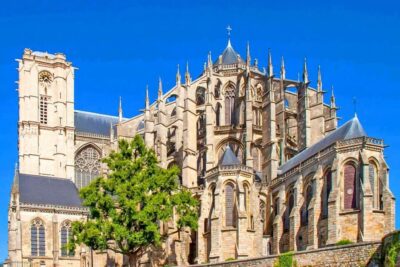
Segovia and Toledo Tour, Alcazar, and Cathedral
Read our review →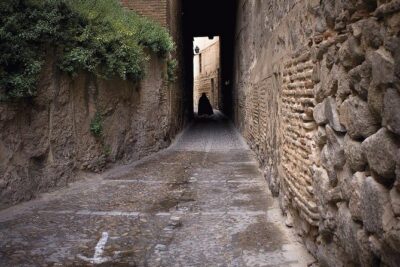
Toledo Tour from Madrid: Cathedral, Synagogue & St. Tome’s Church
Read our review →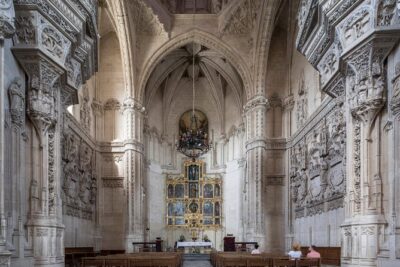
Toledo Half or Full Day Tour with Optional Lunch from Madrid
Read our review →
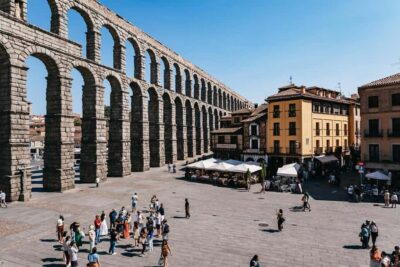
Toledo & Segovia Full Day Guided Tour with Alcázar
Read our review →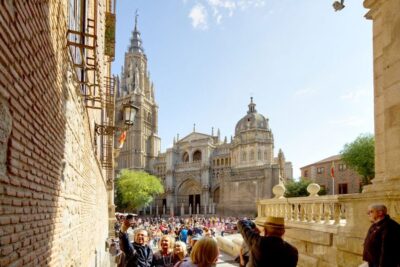

Toledo Tour & Vineyard Walk with Wine Tasting from Madrid
Read our review →Browse the lists this tour appears in