
Review · MADRID
Underground Visit
Toledo’s most surprising sights may be below your feet. This roughly two-hour walk opens five underground spaces that are usually closed to the public, including Roman baths, Arab hammams, and a cistern once linked to a mosque. I like the way the tour connects these sites to the streets above, and I like that it reveals several places you could easily pass without noticing.
The main consideration is simple: this is not a continuous walk through underground tunnels. You walk through Toledo between separate entrances and make stops below ground. The tour is conducted in Spanish, so you need a comfortable grasp of the language to get the full value from the explanations.
In This Review
- Key points to know before booking
- Toledo’s second city below the streets
- The Cenizal bath and Toledo’s Arab bathing culture
- Roman baths of Old Nuncio
- El Salvador well, an old cistern linked to a mosque
- The Baths of the Angel
- Baños del Caballel and the final Arab bath
- What the walk between sites is really like
- Spanish explanations and guide quality
- Is $14.90 a fair price?
- Who should book the Underground Visit?
- Should you book it?
- FAQ
- Where does the Underground Visit begin?
- Where does the tour finish?
- How long does the Underground Visit last?
- Is the tour conducted in English?
- Which underground sites are included?
- Is this a continuous underground tunnel tour?
- How large can the group be?
- What does the tour cost?
- Can I cancel for a full refund?
Key points to know before booking
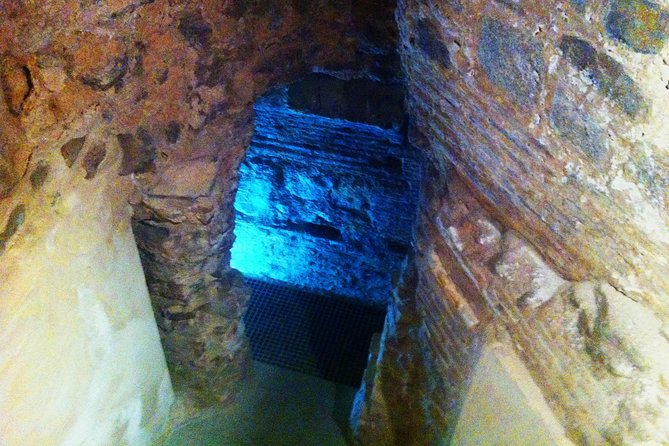
- Five normally closed spaces: Visit the Cenizal bath, Roman baths of Old Nuncio, El Salvador well, Baths of the Angel, and Baños del Caballel.
- A walking tour above and below street level: The underground rooms are separate, so the route includes outdoor walks through Toledo.
- Strong guide-led experience: Ruth, Javier, Luis, and Santiago are all named in the feedback, with particular praise for clear, lively explanations.
- A useful view of Toledo’s many cultures: Roman, Arab, Jewish, Christian, and other layers of the city appear through wells, baths, and reused structures.
- Small enough to remain manageable: The maximum group size is 24 people.
- Good value for history fans: At $14.90 per person, the price is modest for access to five spaces not normally open to tourists.
Toledo’s second city below the streets
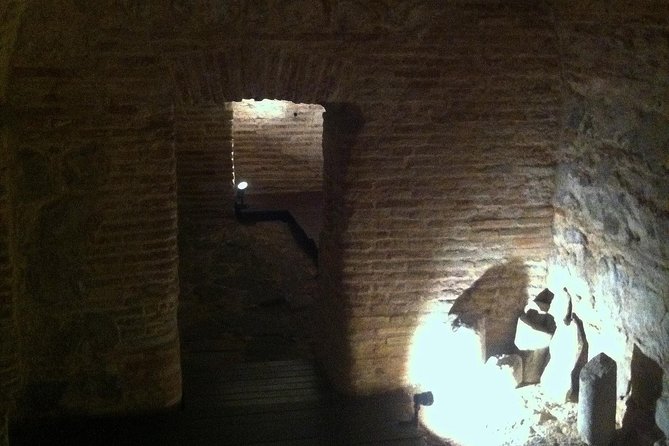
Toledo is often presented as the city of three cultures, but this tour adds another way to understand that idea: look beneath the pavement. Under the lanes are cisterns, baths, wells, and fragments of earlier buildings, each showing how later residents adapted what came before.
I like this approach because it changes the way you see the city above ground. After visiting an old bath or water chamber, an ordinary doorway or uneven wall can take on a new meaning. You begin to notice that Toledo is not just a collection of grand monuments. It is also a town built over earlier towns.
The experience begins at Calle del Hombre de Palo, 7, in central Toledo, and finishes at the same meeting point. The route lasts about two hours, although some descriptions of the experience suggest it may sometimes run closer to an hour and a half. Plan your schedule with a little flexibility, especially if you have a train, bus, or another timed visit afterward.
The tour has a maximum of 24 people. That is not an intimate private walk, but it is still a reasonable group size for narrow historic streets and small underground rooms. Access to several spaces depends on the guide opening them, and some are reached with a key. That is one reason this is difficult to reproduce on your own.
Other Toledo days people book alongside this one:
- Guided Walking Tour of Immortal Toledo
★ 5.0 · 1,116 reviews - Toledo Private Tour with Licensed Local Guide
★ 5.0 · 884 reviews - Toledo: City Sightseeing Hop-On Hop-Off Bus Tour & Extras
★ 4.3 · 683 reviews
The Cenizal bath and Toledo’s Arab bathing culture
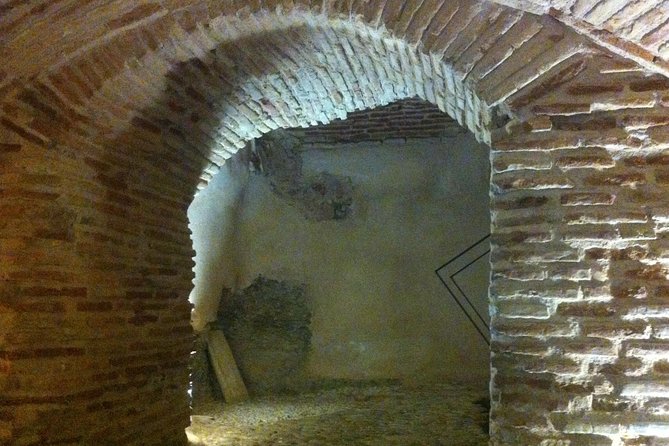
The first major stop is the Cenizal bath, an old hammam dating from the 11th century. The guide explains the structure, its architectural features, and how the bath was used.
This is more than a quick look at old masonry. A bathhouse was a social and practical place, not simply a room for washing. The shape of the space and the way it was built help explain how people used heat, water, and shared areas in medieval Toledo.
The room is also a good introduction to the style of the tour. You are not simply led underground, shown a chamber, and moved along. The guide links the physical details to the customs and daily life of the city. Ruth is particularly praised for making these explanations clear and entertaining, while Javier is noted for simplifying complicated ideas and adding anecdotes.
If you enjoy architecture, this stop gives you details to watch for. If you are mainly interested in dramatic ruins, the experience may feel quieter. These are enclosed archaeological spaces, not grand halls with restored decoration. Their appeal comes from their age, use, and connection to the city around them.
Roman baths of Old Nuncio
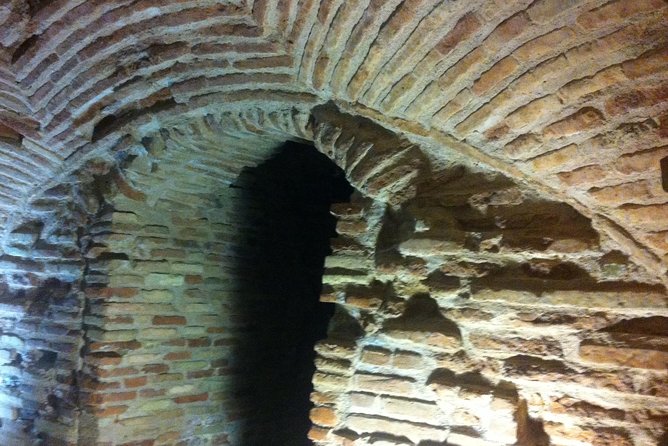
The Roman baths of Old Nuncio show an earlier layer of Toledo. Here, the focus shifts to Roman thermal culture, construction methods, and the way later buildings reused older structures.
This is one of the most useful stops for understanding how Toledo developed. The city was not rebuilt from scratch each time power changed hands. New communities adapted existing spaces, covered earlier remains, and built over them. The Roman baths are a clear example of that process.
The guide discusses the baths as both a thermal and social space. That distinction matters. Roman bathing was part of public life, and the complex says something about how the city functioned, not just how people kept clean.
I would pay close attention to the explanation of reused materials and structures. Without a guide, an old underground chamber can look like a collection of walls. With context, it becomes evidence of changing building habits and changing communities.
The Roman stop also helps balance the tour. The other spaces mainly focus on medieval water systems and Arab bathing traditions, while this one reaches farther back. Together, the five stops show that Toledo’s story is layered rather than neatly divided into separate periods.
El Salvador well, an old cistern linked to a mosque
The stop known as El Salvador well is an old 11th-century cistern that belonged to the mosque on the site now occupied by the Church of El Salvador.
This is a compact but important example of Toledo’s religious and architectural changes. The structure connects Islamic Toledo with the Christian building that came later. You are seeing how a place can change function while retaining physical traces of its earlier life.
The well also gives the tour a practical focus. Water storage was essential in a dense hilltop city, and underground cisterns helped support daily life. The site is valuable because it shows the less visible systems that made the city work.
The guide’s storytelling is especially important here. A well or cistern may not explain itself to the casual passerby. The meaning comes from knowing what it served, when it was built, and how later construction affected it.
Several people who joined the tour with children found the cisterns and Roman baths engaging for youngsters around eight years old. That makes this one of the better Toledo activities for families who want something more active than a church or museum visit. Still, the quality of the experience depends on your child’s patience with a Spanish-language historical explanation.
A different sort of afternoon around Toledo:
- Madrid: Full-Day Guided Tour of Toledo with Cathedral Visit
★ 4.6 · 647 reviews - Toledo: Tourist Bracelet with Entry to 7 Attractions
★ 4.3 · 597 reviews - Night Guided Tour of Magical Toledo
★ 4.5 · 459 reviews - City Sightseeing Toledo Hop-On Hop-Off Bus Tour
★ 4.5 · 439 reviews
The Baths of the Angel
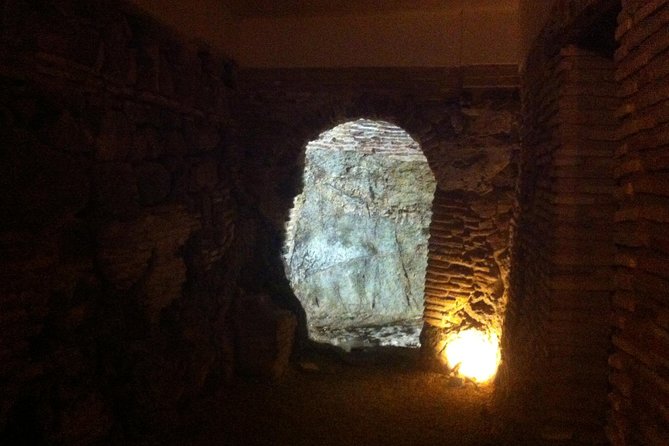
The Baths of the Angel form another stop on the route through Toledo’s buried spaces. The available information does not provide a detailed architectural description, so you should expect the guide to supply much of the interpretation on site.
That is not a weakness in itself. In fact, it is part of the appeal of a guided visit to spaces that are not set up like a large public museum. The value lies in gaining entry and hearing how the site fits into the wider story of Toledo.
The route’s movement between different baths and water structures also lets you compare them. You can listen for differences in construction, purpose, period, and later reuse. The guide may point out small features that would otherwise be easy to miss.
This is where the walking between stops matters. The tour does not place all five sites in one connected archaeological complex. You leave one space, return to the streets, and continue through the old city before entering another. If your ideal underground visit means staying below ground for two hours, this will not match your expectations.
Baños del Caballel and the final Arab bath
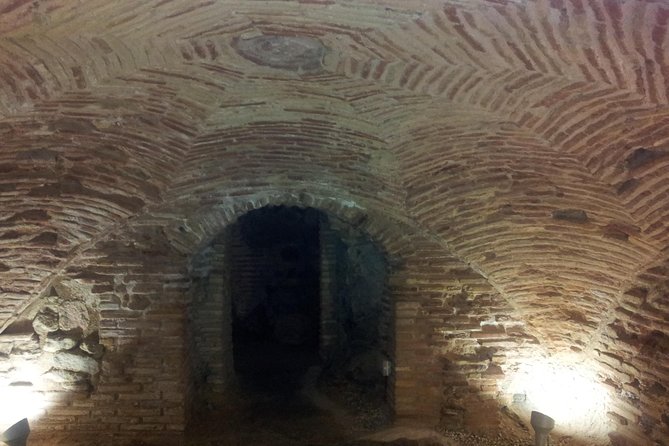
The final named site is Baños del Caballel, another Arab bath. Like the Cenizal bath, it helps explain the importance of hammams in medieval Toledo, but seeing more than one bath gives you a basis for comparison.
The repeated focus on baths may sound narrow when you read the itinerary. In practice, it creates a theme. You see how water, heat, construction, and public life shaped the old city. The cisterns and wells then add the supply side of the same story.
The guide also tells anecdotes, curiosities, and legends during the route. This keeps the walk from becoming a string of technical descriptions. Javier, Ruth, and Luis receive especially strong praise for warmth, humor, and clear communication. Luis is described as close and pleasant, while Javier is repeatedly singled out for making the information lively and looking after the group.
Names matter here because the guide is the heart of the experience. The physical spaces are small and sometimes plain. A good explanation turns them into meaningful places. A weaker presentation would leave you looking at dark rooms without much sense of why they matter.
What the walk between sites is really like
The phrase underground visit can create the wrong picture. This is not a continuous subterranean route through Toledo. The spaces are separate, some are distant from one another, and much of the experience takes place on the streets between entrances.
One person found the activity disappointing for exactly this reason, expecting a longer route below ground. The provider explains that later construction has blocked many passages and that private properties limit access to other underground areas. That is useful information to keep in mind before you book.
I would describe the experience as a guided city walk with five underground entries. You get both parts: the atmosphere of Toledo’s old lanes and access to spaces that are not normally available during a standard sightseeing stroll.
Wear comfortable shoes. That advice is based on the walking format rather than a promise about the condition of every underground room. The tour is near public transportation, and most people can participate, but the supplied information does not give detailed accessibility specifications for steps, low ceilings, or uneven surfaces. If those details matter to you, ask the operator before booking.
Spanish explanations and guide quality
The tour is conducted in Spanish, and this is the most important booking decision after understanding the route. One couple joined as the only non-Spanish speakers and found the visit thorough but mentally tiring because they could not understand everything.
If you speak Spanish well enough to follow a long historical explanation, the language adds to the experience. The guides use anecdotes and local stories, and the tour appears to benefit from a conversational style rather than a bare list of dates.
Ruth is often praised for being approachable, prepared, and able to make the visit fun. Javier is described as entertaining, professional, and good at reducing complex subjects to clear points. Luis is praised for his communication and friendly manner, while Santiago is also named as a strong guide.
Guide assignments can change, so you should not book on the assumption that one particular person will lead your visit. Still, the repeated pattern is encouraging: the experience depends heavily on human storytelling, and the guides are presented as a major strength.
Is $14.90 a fair price?
At $14.90 per person, this is an inexpensive addition to a day in Toledo. The value comes less from the length of the tour than from the access. Five underground spaces are usually closed to tourism, and some require the guide to open them with a key.
You are paying for entry, local interpretation, and a route that ties separate sites together. That is a good deal if you care about archaeology, architecture, urban history, or the practical life of earlier communities.
The price is less compelling if you want a large, visually dramatic attraction. These are not grand palace rooms, and the tour may include short stops in modest underground chambers. You are paying for context and access, not spectacle.
The mobile ticket makes booking simple, and confirmation is received at the time of booking. The tour is usually booked about 24 days ahead, so reserving early is sensible if your Toledo schedule is fixed. Free cancellation is available up to 24 hours before the start time for a full refund. Cancellations or changes inside that window are not refunded or accepted.
The activity requires good weather and a minimum number of participants. If poor weather or low enrollment causes cancellation, you are offered another date or experience, or a full refund.
Who should book the Underground Visit?
I would choose this tour if you have already seen Toledo’s headline monuments and want a different angle on the city. It also works well for history-minded visitors who enjoy asking how a city was built, supplied, reused, and altered over time.
Families can consider it too, especially with children who enjoy old wells, baths, and places that feel a little mysterious. The examples available suggest that children around eight can enjoy the visit, though the Spanish narration and extended explanations may test younger attention spans.
This is less suitable for you if:
- You expect to walk through one long underground tunnel system.
- You do not understand Spanish well enough for a detailed guided explanation.
- You want a fast tour with little standing or storytelling.
- Your schedule cannot absorb a route that may last closer to two hours.
- You need confirmed accessibility information about steps or narrow spaces.
For the right audience, the modest price is easy to justify. The tour gives you a better sense of the city’s hidden infrastructure and shows why Toledo can feel older and more layered every time you walk through it.
Should you book it?
Book the Underground Visit if you want access to five normally closed spaces and are happy to walk between them above ground. It is a thoughtful, guide-dependent experience rather than a dramatic subterranean adventure.
I would especially recommend it to Spanish-speaking visitors, repeat visitors to Toledo, and anyone who enjoys Roman and medieval urban history. If you are expecting a continuous tunnel tour, adjust that expectation before paying. With that one point clear, $14.90 buys an unusual and useful way to see the city.
FAQ
Where does the Underground Visit begin?
The tour begins at C. del Hombre de Palo, 7, 45001 Toledo, Spain.
Where does the tour finish?
The activity ends back at the meeting point.
How long does the Underground Visit last?
The stated duration is approximately two hours.
Is the tour conducted in English?
No. The tour is conducted in Spanish.
Which underground sites are included?
The route includes the Cenizal bath, the Roman baths of Old Nuncio, El Salvador well, the Baths of the Angel, and Baños del Caballel.
Is this a continuous underground tunnel tour?
No. You walk through Toledo between separate underground spaces and make stops at each location.
How large can the group be?
The maximum group size is 24 travelers.
What does the tour cost?
The listed price is $14.90 per person.
Can I cancel for a full refund?
Yes. You can cancel at least 24 hours before the experience start time for a full refund. Cancellations within 24 hours are not refunded.
Just added around Toledo
- Toledo: Private tour with an official guide★ 5.0 · 3 reviews
- Toledo Scavenger Hunt and Highlights Self-Guided Tour★ 4.5 · 3 reviews
- Toledo: Marzipan Convent Route with Tasting and Wine★ 3.7 · 3 reviews
- Guided Tour of Underground Toledo★ 5.0 · 4 reviews
- Toledo: Private Minivan tour from Madrid★ 5.0 · 4 reviews
- Toledo : Private Walking Tour with a Pro guide★ 4.6 · 4 reviews
- Private Walking History Tour in Toledo★ 5.0 · 4 reviews
- Toledo: 3-Hour Private Walking Tour★ 5.0 · 5 reviews