Review · STREET ART
Madrid: Hidden Street Art Tour
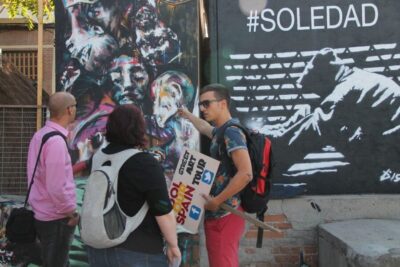
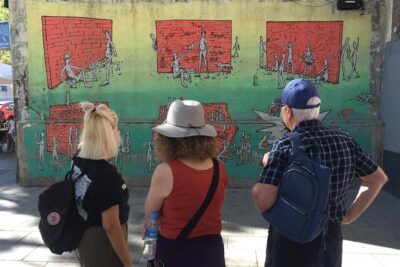
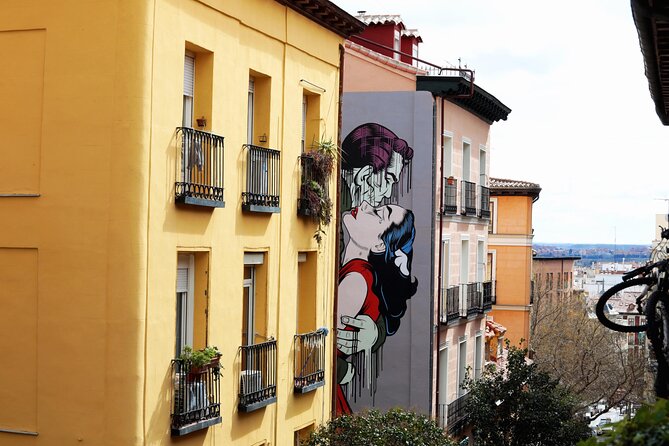
Lavapiés turns Madrid into an open-air art book, but the best pages are not always the giant murals. This two-hour walk moves from major works by internationally known artists to tiny paste-ups, tags, ceramic details, and urban sculpture that you could easily miss alone. Roberto is one of the named guides, and every guide is an artist or art historian.
I like the small group, limited to 10 people, and the mix of big visual stops with the neighborhood’s quieter details. I also like that the walk ends at a local gallery, where you can meet artists and see how street art connects with Madrid’s wider art scene. The main consideration is pace: two hours gives you a useful introduction, not a full survey of Lavapiés or Madrid’s street art.
In This Review
- Key points about Madrid’s Lavapiés art walk
- Why Lavapiés is the right place for street art
- Meeting at Portomarín and setting off
- Calle de Argumosa: an early look at local life
- Passing the Reina Sofía: street art beside major art
- Mercado Antón Martín and the everyday city
- Lola Gil’s ceramic trompe-l’oeil
- Calle de Embajadores and the main art hunt
- Finishing at a local gallery
- What the $33 price gets you
- Who will enjoy this walk most
- Booking details worth knowing
- Should you book the Madrid Hidden Street Art Tour?
- FAQ
- Where does the Madrid Hidden Street Art Tour meet?
- How long does the tour last?
- What language is the tour offered in?
- How large is the group?
- Is the tour wheelchair accessible?
- What neighborhood does the tour explore?
- Is the gallery visit included?
- Can I cancel the booking?
Key points about Madrid’s Lavapiés art walk
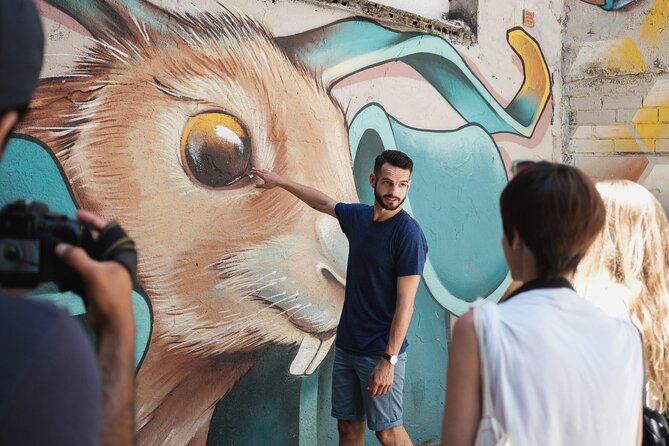
- Giant murals and tiny details: You’ll see large works that fill entire façades, along with small pieces tucked into corners.
- Guides with an art background: Guides are artists or art historians, including Roberto, who has led several tours.
- A real neighborhood setting: The route runs through Lavapiés, away from Madrid’s main monuments and into a local residential and cultural district.
- A gallery visit included: The walk finishes at a local gallery, with a chance to meet artists and browse work for sale.
- Small groups of up to 10: This keeps the walk fairly relaxed and makes it easier to ask questions.
- Good value at $33: The price covers two hours, a local guide, the walking route, and the gallery stop. Artwork at the gallery costs extra.
Why Lavapiés is the right place for street art
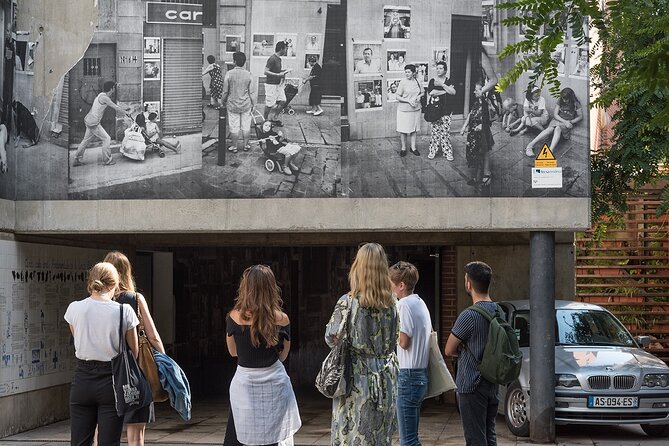
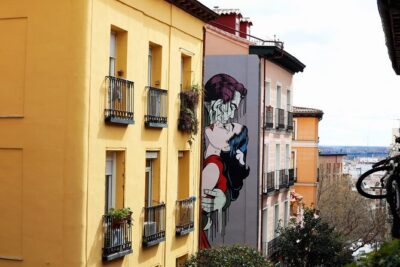
If you know Madrid mainly through the Prado, Royal Palace, and Puerta del Sol, Lavapiés gives you a different city. The neighborhood is known for its mixed population, informal energy, and strong art scene. Here, art is not kept behind museum doors. It appears on walls, shopfronts, shutters, lanes, and unexpected corners.
That setting matters. You are not only looking at paintings. You are seeing how art shares space with daily life. People live, shop, walk, and meet around the work. The street art becomes part of the neighborhood rather than a separate attraction built for visitors.
The walk also helps you separate different forms of urban art. You may see tags, paste-ups, large murals, ceramic work, and urban sculpture. Without some guidance, those forms can blur together. A good guide explains the difference and points out what to notice, from the artist’s technique to the cultural references behind an image.
I especially like the promise of small discoveries. The large murals are easy to photograph, but the tiny works often give Lavapiés its personality. A detail on a wall or a small pasted image may say as much about the area as a huge painted façade.
A few more Madrid days to weigh up
- Madrid: Street Art Tour with Local Graffiti Hunter
★ 4.8 · 270 reviews - Street Art Guided Tour in Madrid
★ 5.0 · 175 reviews - Madrid: Street Art Bike Tour
★ 4.5 · 21 reviews
Meeting at Portomarín and setting off
The meeting point is in front of the Portomarín restaurant. If you arrive early, you can stop inside for coffee or a refreshment, which is a useful touch if you have come straight from another part of Madrid.
The walk is in English, and group size is limited to 10 participants. That is small enough for a guide to keep the group together on narrow streets and still answer questions without turning the tour into a public lecture.
You should wear comfortable walking shoes. The tour is only two hours, but the route includes walking between several stops and exploring streets in the neighborhood. The pace has been described as manageable even during a hot afternoon, though Madrid’s summer sun is still something to take seriously.
The route is wheelchair accessible according to the activity details. Since this is an urban walk, you may still want to confirm current conditions if you have particular mobility needs, but the stated accessibility is a useful advantage.
Calle de Argumosa: an early look at local life
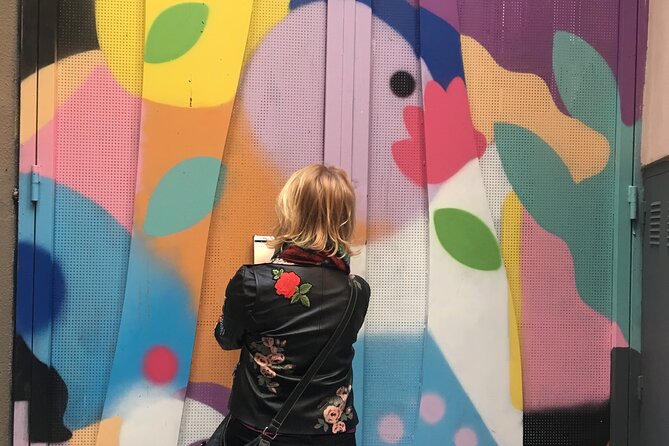
The first listed walk takes you along Calle de Argumosa, about 10 minutes from the meeting point. This street helps establish the tone of Lavapiés before the tour gets into its more focused art stops.
A street such as this is useful because it places the artwork in context. You are not walking from one isolated mural to another. You are moving through a lived-in district, where cafés, homes, businesses, and public art sit close together.
This is also where a guide can begin explaining how Madrid’s street art scene works. You may learn how artists use different surfaces, how styles are recognized, and why some pieces are bold while others are deliberately easy to overlook. The exact works can change over time, which is part of the nature of street art. Paint fades, walls are repainted, and new pieces appear.
That changing quality is both a strength and a limitation. The tour gives you a way to read the neighborhood, but you should not expect every piece to remain exactly as shown in photographs or promotional material.
Passing the Reina Sofía: street art beside major art
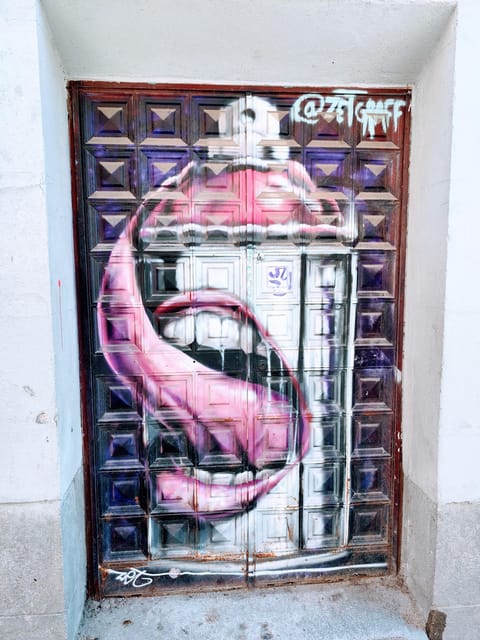
The route passes by the Museo Nacional Centro de Arte Reina Sofía for about five minutes. You do not visit the museum as part of this experience, but its presence creates a useful contrast.
The Reina Sofía represents Madrid’s formal modern art world. Lavapiés offers art in a less controlled setting. Seeing both within the same walk makes the city’s art life feel broader. One is framed, protected, and explained inside a museum. The other is exposed to weather, public reaction, and the changing needs of the street.
A guide with an art history background can make this contrast especially helpful. The point is not to claim that one form is better than the other. It is to show you that Madrid’s creative life extends beyond its famous collections.
If you plan to visit the Reina Sofía separately, this stop can also help you connect the museum with the surrounding neighborhood. Just remember that the museum entrance is not included in the street art tour.
A different sort of afternoon around Madrid:
- Madrid: Tour Bernabéu Entry Ticket
★ 4.5 · 21,573 reviews - Madrid: Prado Museum Entry Ticket
★ 4.6 · 17,509 reviews - Madrid: Royal Palace Fast-Access Admission Ticket
★ 4.6 · 13,856 reviews - Madrid: “Emociones” Live Flamenco Performance
★ 4.8 · 12,866 reviews
Mercado Antón Martín and the everyday city
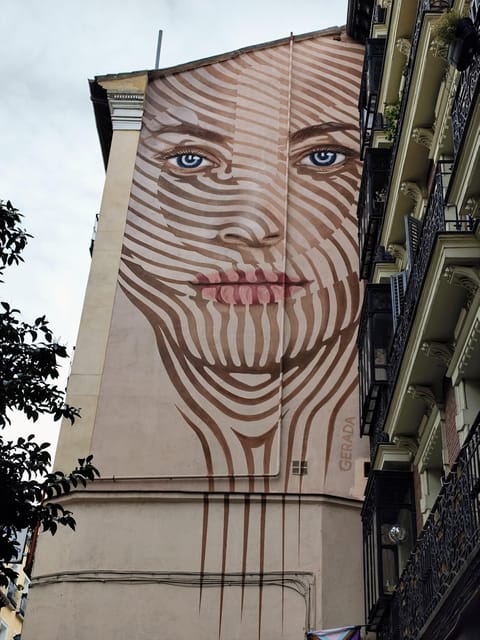
The itinerary includes a 10-minute visit for sightseeing at Mercado Antón Martín. Markets are practical places, but they also reveal how a neighborhood functions. You get a glimpse of local routines, food shopping, and the public spaces people use every day.
For a street art tour, the market offers a change of scale. Large murals can make you look up and across a whole building. A market brings you back to eye level and to the ordinary business of city life. That contrast helps keep the walk grounded.
You should not book this experience expecting a long food market visit or a tasting tour. The market stop is part of the wider route, with around 10 minutes set aside for sightseeing. Its value is mainly in showing you Lavapiés as a working neighborhood rather than an outdoor gallery made only for photographs.
Lola Gil’s ceramic trompe-l’oeil
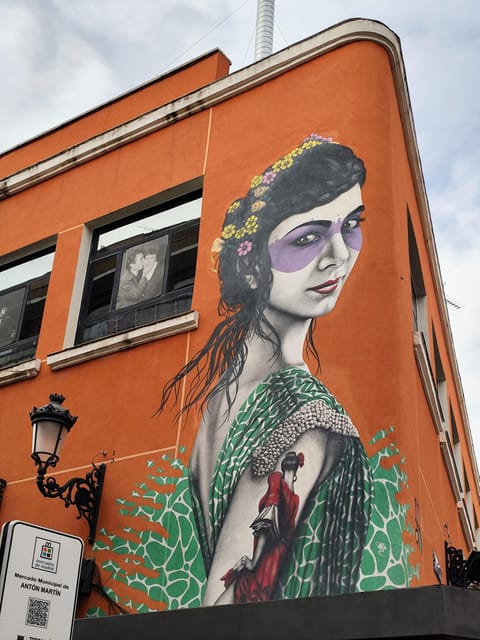
One of the specific art stops is Lola Gil’s ceramic trompe-l’oeil. The phrase refers to an artwork designed to create an illusion, and the use of ceramic gives this piece a different character from painted graffiti.
This is the kind of stop that rewards a guide’s explanation. You can look at a wall or surface and see a decorative detail, but the story of the work, its method, and its place in the neighborhood can change how you understand it. It also shows that street art is not limited to spray paint.
The 10-minute visit gives you enough time to examine the piece without making the tour feel slow. It is a good example of why this experience may suit you if you want more than a list of famous murals. The route includes works with different materials and visual languages.
Calle de Embajadores and the main art hunt
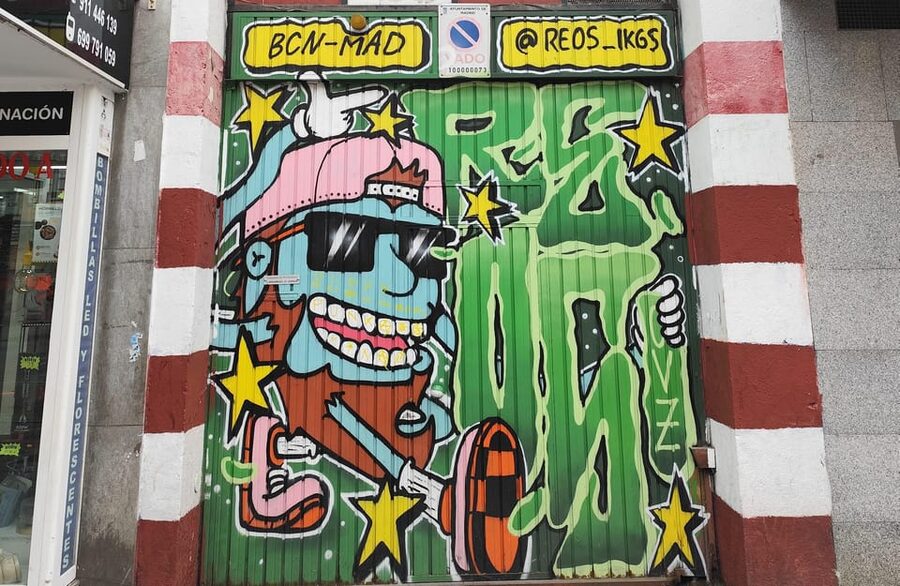
The walk then reaches Calle de Embajadores, with around 20 minutes of walking and sightseeing. This is one of the longer sections of the route, and it is where the tour’s mix of major and minor works can come together.
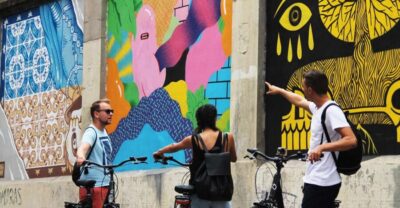
You can expect to see larger murals that make strong photographs, along with smaller details placed around the street. The guide explains the main artists working in Madrid, what their images may symbolize, and the cultural references that shape the work.
This interpretive part is the heart of the tour. You are not simply told where to point your camera. You are shown how to read a wall. You learn to notice style, scale, materials, placement, and the relationship between one work and its surroundings.
That skill has value after the tour ends. Madrid’s street art is not confined to this route, and you may start spotting pieces elsewhere in the city. The walk gives you a basic vocabulary for making sense of what you see.
The longer walking section can also be the most tiring part, especially in hot weather. One useful feature is the relaxed pace. The group is not rushed from wall to wall, and the guides can explain the setting rather than treating each stop as a quick photo break.
Finishing at a local gallery
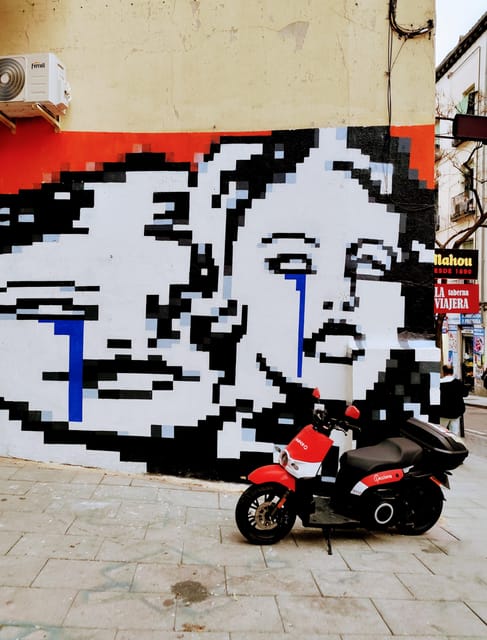
The tour ends at a local art gallery in Lavapiés. This gives the experience a clear finish. You begin with public art on the street and end inside a place where artists can present work in a more traditional setting.
You may have the chance to meet local artists at the gallery. That personal connection can add something a standard sightseeing walk cannot provide. It also helps explain how street artists work beyond the walls, including the kinds of pieces they may sell through galleries.
The gallery is not simply a shop stop, but you should know that artwork you like is not included in the $33 price. If you fall for a piece, you will need to buy it separately. There is no pressure stated in the activity details, but it is wise to treat purchases as optional and keep your budget clear.
For me, the gallery visit is one of the tour’s better details. It makes the walk feel connected to a living art community rather than ending abruptly at the last mural.
What the $33 price gets you
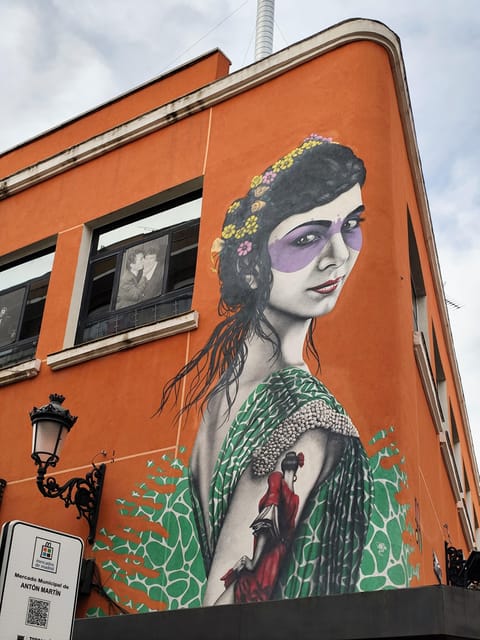
At $33 per person, this is reasonably priced for a two-hour guided experience in central Madrid. You are paying for the route, the guide’s art knowledge, the small group format, and access to a local gallery visit.
The value depends on what you want from a city walk. If you only want to photograph murals, you could explore Lavapiés on your own for less. But you would miss the explanations of artists, symbols, styles, and cultural references, and you might walk past the small pieces that make the area rewarding.
The price also buys efficiency. Instead of searching randomly, you follow a route chosen around the strongest known works and less obvious details. That matters in a neighborhood where the art can be scattered across side streets and easy-to-miss surfaces.
No food, drinks, or artwork are included. The meeting point allows you to buy a coffee before starting, but that cost is yours. The gallery pieces are also extra.
Who will enjoy this walk most
I would recommend this tour if you like art but do not want a formal museum lecture. It suits people who enjoy photography, urban culture, local neighborhoods, and the stories behind public art.
It is also a good choice for repeat visitors to Madrid. If you have already seen the major monuments, Lavapiés offers a fresh way to spend two hours. You get a sense of the city beyond its headline attractions.
Families with older children and teenagers may find the street setting more engaging than a traditional gallery. The mix of giant murals, tiny details, unusual materials, and recognizable styles gives younger visitors plenty to look for.
You may want to skip it if you dislike walking, have no interest in visual art, or want a long museum visit. The tour is also not designed as a food tour, a historical walking tour of all Madrid, or a full-day art program.
The 10-person limit helps keep the outing personal, but it does not guarantee a private tour. You will still share the route with other participants.
Booking details worth knowing
The experience lasts two hours, with starting times dependent on availability. It is offered in English with a live guide. You can cancel up to 24 hours in advance for a full refund, and you can reserve now and pay later.
Those terms are useful if your Madrid schedule is still shifting. I would place the walk early in your stay if learning to spot street art will improve the rest of your time in the city. An afternoon booking can work well too, though summer heat may make the pace feel warmer than the clock suggests.
The activity is wheelchair accessible, and the group is limited to 10. Confirm the meeting point at Portomarín before leaving, since arriving at the right restaurant is the simplest way to avoid a rushed start.
Should you book the Madrid Hidden Street Art Tour?
Book it if you want to see Madrid through its walls, learn how to tell a paste-up from a tag, and spend time in Lavapiés with a guide who understands art from the inside. The combination of large murals, tiny works, neighborhood context, and a gallery finish gives the $33 price solid value.
Skip it if you want only famous monuments or prefer to wander without a planned route. For most visitors who enjoy contemporary art and local streets, this is a compact, friendly introduction to one of Madrid’s most distinctive neighborhoods.
FAQ
Where does the Madrid Hidden Street Art Tour meet?
The meeting point is in front of the Portomarín restaurant. You can go inside for coffee or a refreshment if you arrive early.
How long does the tour last?
The tour lasts two hours.
What language is the tour offered in?
The tour is offered in English with a live guide.
How large is the group?
The group is limited to 10 participants.
Is the tour wheelchair accessible?
Yes, the activity is listed as wheelchair accessible.
What neighborhood does the tour explore?
The walk explores Lavapiés, a Madrid neighborhood known for its eclectic character and street art scene.
Is the gallery visit included?
Yes, the route ends with a visit to a local gallery. Any artwork you choose to buy costs extra.
Can I cancel the booking?
Yes. You can cancel up to 24 hours in advance for a full refund. You can also reserve now and pay later.
Just added around Madrid
- Private Vacation Photography Session with Photographer in Madrid★ 5.0 · 3 reviews
- Arrival Private Transfer from MAD Airport to Madrid in a Minibus★ 5.0 · 3 reviews
- Segovia: 3-Hour Private Walking Tour★ 5.0 · 3 reviews
- Tour Segovia and La Granja de San Ildefonso from Madrid★ 5.0 · 3 reviews
- Madrid: Prado & Reina Sofia Museum Skip-the-Line Guided Tour★ 5.0 · 3 reviews
- Salamanca: Private Guided Customizable Walking Tour★ 5.0 · 3 reviews
- Total Reboot and Renew with top wellnes 3 hours couple experience★ 5.0 · 3 reviews
- Madrid: Prado Museum Private Tour★ 5.0 · 3 reviews