
Review · CYCLING TOURS
Madrid: Street Art Bike Tour
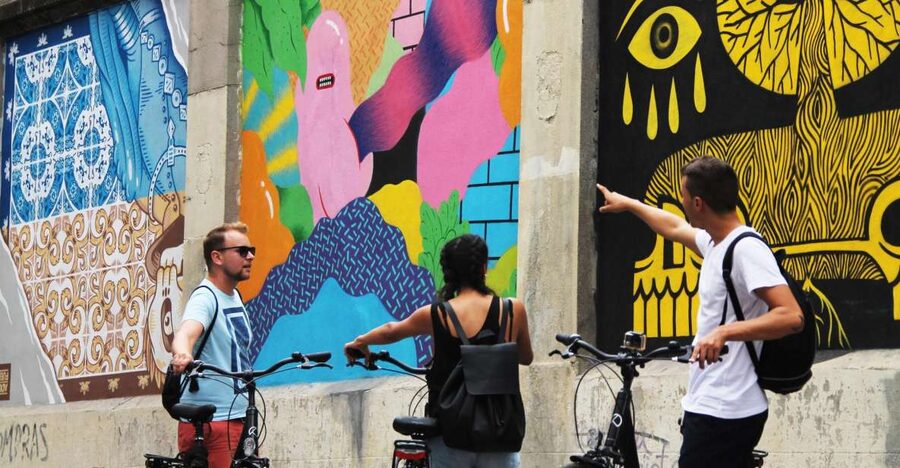
Madrid’s street art is not tucked away in a museum. It appears on shutters, traffic posts, old walls, and community gardens, and this 2.5-hour bike tour gives you a quick, useful way to find it. A local graffiti artist guides you through Malasaña and Lavapiés, two of the city’s best areas for urban art.
I like two things here: you see real festival pieces rather than a generic city ride, and you get the story behind the marks, methods, and artists. The preserved 1989 tag by Muelle is a fine example of how Madrid’s graffiti movement began. The drawback is the cycling. Madrid traffic and one uphill stretch can challenge anyone who is not comfortable riding in a city.
In This Review
- Key points
- Madrid’s graffiti story begins with Muelle
- The ride to Alonso Martinez and Boa Mistura’s first piece
- Malasaña’s festival walls and Plaza Dos de Mayo
- Solar Antonio Grilo and Esto es una Plaza
- Artists you may encounter along the way
- What the bike adds, and where it creates work
- The guide can make or break the experience
- Is $46 a fair price?
- Who should book this Madrid street art ride?
- Should you book it?
- FAQ
- How long does the Madrid Street Art Bike Tour last?
- Where does the tour start?
- Where does the tour end?
- Which languages are available?
- Is the bicycle included?
- What cycling level do I need?
- Can children join the tour?
- What should I bring?
- Can I cancel for a full refund?
Key points
- Muelle’s 1989 tag: See one of Madrid’s earliest surviving graffiti signatures and learn why Muelle matters to the city’s street art story.
- Malasaña by bicycle: Ride through the neighborhood’s Pinta Malasaña works, including the playful Bolardo Voy, Bolardo Vengo installation around Plaza Dos de Mayo.
- A local artist as guide: Learn about graffiti methods, public walls, metal shutters, and the people behind the work.
- Lavapiés community spaces: Visit Solar Antonio Grilo and Esto es una Plaza, former abandoned sites now used as urban gardens and art centers.
- Boa Mistura’s early work: Stop near Alonso Martinez to see the first piece created by the Madrid-born crew Boa Mistura.
- Moderate city cycling: Bikes, helmets, locks, and a map are included, but you should be at ease riding near traffic.
Madrid’s graffiti story begins with Muelle
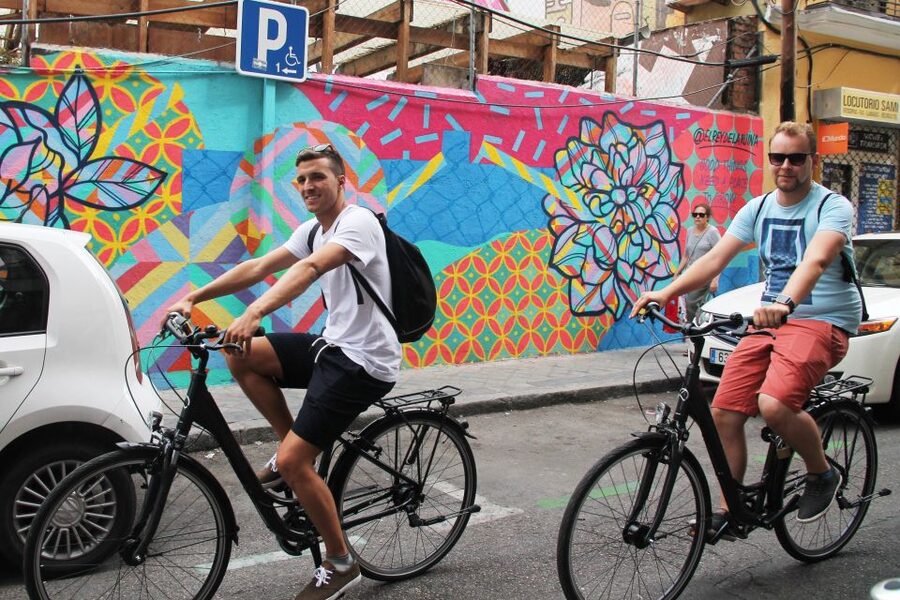
The tour starts at the entrance of the Carrefour Express at C/Montera 32, close to Gran Via and Sol. That location puts you right in central Madrid, though you should allow a little time to find the correct doorway and get settled with the bike.
Before pedaling into the neighborhoods, your guide explains how street art developed in Madrid and how artists work with walls, shutters, traffic furniture, and other city surfaces. This matters because the tour is not simply a hunt for colorful pictures. You learn to notice the difference between a tag, a larger painted piece, a designed mural, and an artwork made for a festival.
One of the first important sights is a tag by Muelle, considered a pioneer of Madrid’s graffiti movement. The mark dates from 1989 and has been preserved, giving you a direct link to the early days of a cultural movement led by a very young artist.
That stop gives the rest of the ride some context. You are not just looking at recent decoration. You are seeing how a local form of expression began, changed, and later became part of organized street art festivals and community projects.
More bike days around Madrid:
- Madrid Highlights Bike Tour
★ 5.0 · 1,731 reviews - Best of Madrid: 3-Hour Guided Bike Tour in Small Groups
★ 4.8 · 1,417 reviews - Madrid: Highlights Guided Vintage Bike Tour and Tapas Option
★ 4.9 · 962 reviews
The ride to Alonso Martinez and Boa Mistura’s first piece
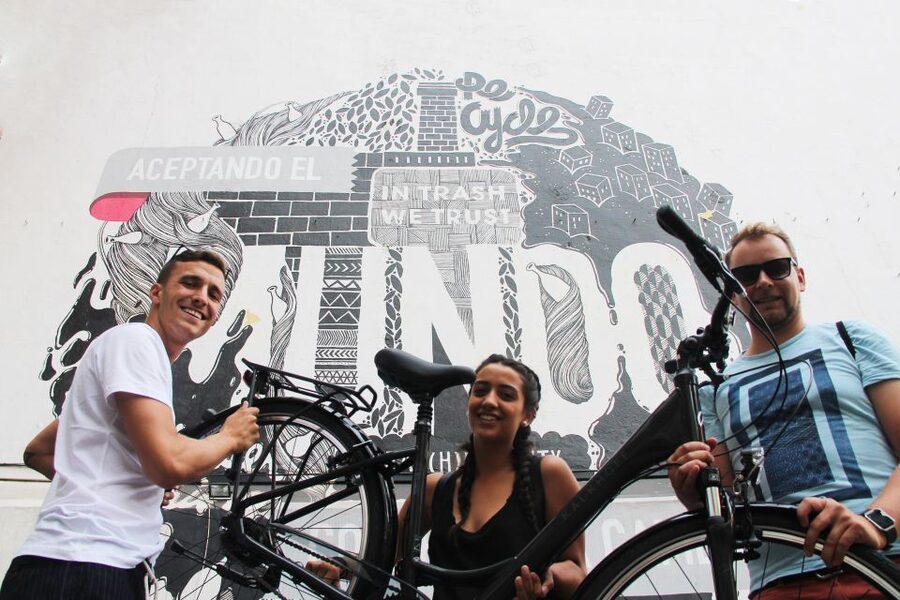
After the introduction, the guide explains bike safety and the route. You then head toward Alonso Martinez, where you can photograph the first piece created by Boa Mistura.
Boa Mistura began in Madrid’s outskirts and later worked on projects around the world. Their early piece is useful to see because it connects Madrid’s local scene with the broader world of professional design and public art.
I like this part of the route because it shows that street art does not fit neatly into one box. Some work begins as a personal tag. Some is painted for a neighborhood festival. Some develops into a large design project by an established creative crew.
You will want your camera ready, but do not expect every stop to be a grand mural. Street art changes with time, and the pleasure often comes from seeing how artists use an awkward wall, a shutter, or a small piece of street furniture. The guide’s explanation helps you understand those choices.
Malasaña’s festival walls and Plaza Dos de Mayo
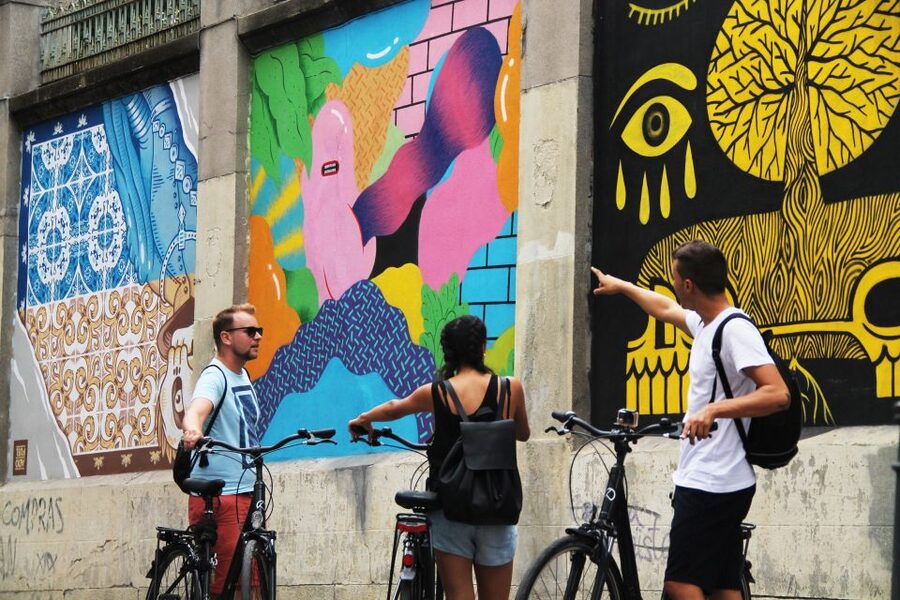
From Alonso Martinez, the ride continues toward Malasaña. This is one of Madrid’s trendiest districts, and the route includes work created for the 2017 edition of Pinta Malasaña.
Pinta Malasaña brings artists into the neighborhood during April, turning streets and small public spaces into a temporary outdoor gallery. The works you see here give you a sense of how festivals can change a district without removing its everyday character.
Plaza Dos de Mayo is the center of the neighborhood’s activity on this route. One featured work is Bolardo Voy, Bolardo Vengo, a playful treatment of traffic posts. It is a good reminder that street art does not have to cover an entire building to make you stop. Ordinary city objects can become part of the artwork.
The bicycle is useful in Malasaña because it lets you move between pieces without spending the whole afternoon walking from one street to another. You can cover more ground, then pause when the guide points out a detail.
There is a tradeoff. Malasaña is not a closed-off art park. You are riding through a working part of Madrid, so traffic, pedestrians, narrow streets, and stops may affect the pace. If you are a cautious or inexperienced cyclist, you may spend more energy watching the road than looking at the walls.
Solar Antonio Grilo and Esto es una Plaza
The route then reaches two community spaces connected with Lavapiés and the nearby Noviciado area: Solar Antonio Grilo and Esto es una Plaza.
Both sites were once abandoned places. They were later turned into local gathering spaces and urban gardens, with street art woven into their design. The important point is not only that the sites look different from ordinary city blocks. They show how residents can reclaim unused land and give it a practical public purpose.
Esto es una Plaza is especially interesting as an example of a place created for and by the community. Solar Antonio Grilo offers a similar look at local cooperation, with garden space and art sharing the same setting.
These stops add variety to the tour. After festival murals and graffiti signatures, you see spaces where art is part of a wider neighborhood project. The guide also explains the hybrid economic ideas behind these places and how similar projects have influenced other communities.
You should keep your expectations realistic. These are not polished art museums with long opening hours and formal displays. They are working community spaces, and what you see can depend on the condition of the site and the route on the day. Their value comes from the way art, gardening, and local use meet in one place.
A few more Madrid days to weigh up
- Madrid: Street Art Tour with Local Graffiti Hunter
★ 4.8 · 270 reviews - Street Art Guided Tour in Madrid
★ 5.0 · 175 reviews - Madrid Hidden Street Art Tour
★ 5.0 · 12 reviews - Madrid: Hidden Street Art Tour
★ 5.0 · 11 reviews
Artists you may encounter along the way
The route includes work connected with artists such as El Rey de la Ruina, Cassassola, Ze Carrión, Por Favor, and others. The exact pieces can vary because street art is exposed to weather, construction, repainting, and new work.
That changing quality is part of the subject. A museum collection stays in one place. Street art can disappear or be altered, so the guide’s explanations help you understand what you are seeing at that moment.
A local graffiti artist leads the experience, which is one of its strongest features. You are not getting only dates and neighborhood names. You are hearing about techniques and the decisions artists make when working on different surfaces.
You can expect discussion of walls, metal shutters, and other parts of the city. This is useful if you want to continue exploring Madrid on your own after the tour. You will begin to notice tags and painted shutters that might otherwise pass as background clutter.
The guide may also help you separate intentional work from random marks. That distinction is not always obvious to someone seeing Madrid’s streets for the first time.
What the bike adds, and where it creates work
The tour includes the bicycle, helmet, lock, and a Madrid city map. You do not need to arrange a separate rental, and the lock is handy when the group stops to look at a piece.
The activity is described as medium level, with just one uphill section. The timing is given as 2.5 hours, although the practical information also calls it a 3-hour medium-level activity. Check the starting time and current duration when you reserve, and allow room for a short restroom stop and any delays caused by city riding.
You should be comfortable starting, stopping, steering, and riding near traffic. One participant found that less experienced cyclists in the group had trouble with Madrid traffic and uphill sections, although the guide adjusted the route as much as possible. That is useful advice: this is not a gentle ride through a traffic-free park.
Families can consider it too. A seven-year-old took part on their own bike with a family group, and the guide was able to make the experience work for them. Still, age alone does not determine suitability. A child or adult should be able to manage a city bike ride at a moderate level.
Wear comfortable shoes. Bring a passport or ID card, as requested for the activity, and remember that beverages are not included. A restroom break is included, which is helpful during a ride lasting several hours.
The guide can make or break the experience
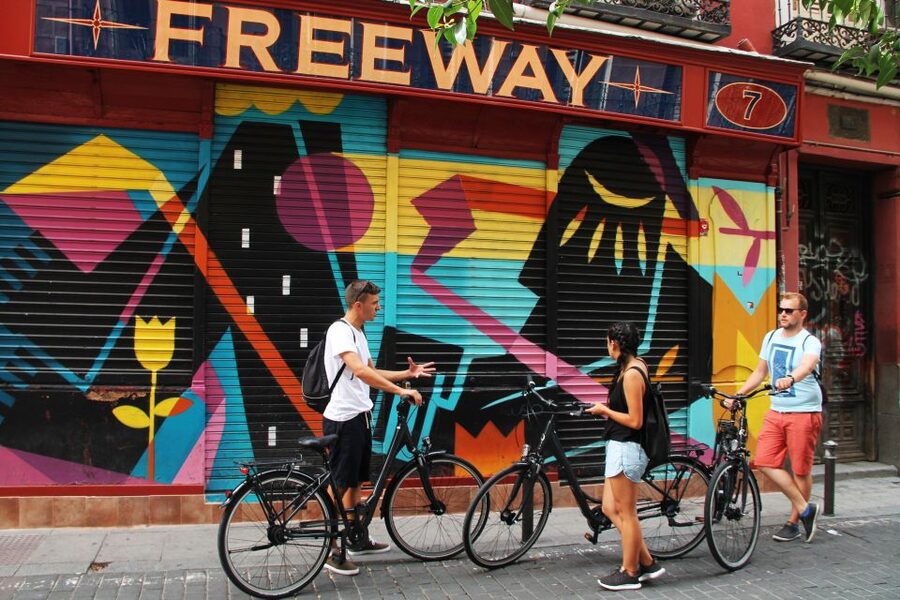
A street art bike tour depends heavily on the guide. Here, the guide is a local graffiti artist, so you get a perspective rooted in Madrid’s own creative scene rather than a standard sightseeing script.
Javier received especially strong praise for being friendly, experienced, and good with a family group. If Javier is leading your departure, you can expect a personable approach based on the experience described. Guide assignments can change, so do not assume he will be leading every date.
The guide also has to manage two jobs at once: explaining art and keeping cyclists safe. That balance matters in Madrid, where a group may need to stop, regroup, cross streets, and adjust its pace.
The best part of the experience is likely to be the explanations at the stops. The bike simply links them together. If you want a long, quiet look at each mural, you may find the pace a little brisk. If you want an organized introduction to several districts and artists in one outing, the format works well.
Is $46 a fair price?
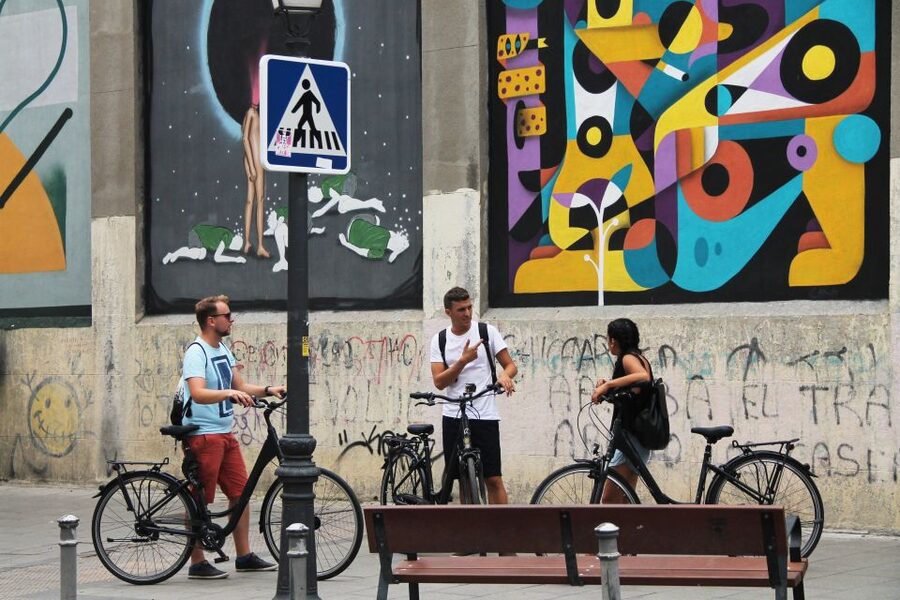
At $46 per person, the price is reasonable if you value a guide with a specialist viewpoint and want bike rental included. You are paying for the bike, helmet, lock, map, live English or Spanish guidance, the route planning, and the art background.
The value is strongest for a first visit to Madrid, when Malasaña and Lavapiés may still feel unfamiliar. You can see several art areas without working out the route yourself, and the guide gives meaning to pieces you might otherwise pass without noticing.
It is less compelling if you already own a bike, know both neighborhoods well, and prefer to explore at your own speed. You can also expect some of the cost to reflect the guide’s ability to handle a mixed cycling group in city traffic.
Free cancellation is available up to 24 hours before the activity for a full refund, and you can reserve now and pay later. Those policies make it easier to fit the tour around changing Madrid plans, but you still need to check the available departure times before booking.
Who should book this Madrid street art ride?
I would choose this tour if you enjoy public art, want local context, and are comfortable cycling in an urban setting. It suits couples, small groups, and families with children who can ride confidently on their own bikes.
It is also a good choice if you have already seen Madrid’s major museums and want something tied to present-day neighborhoods. The route brings together early graffiti, festival work, professional design, and community-led spaces.
I would think twice if you dislike traffic, have difficulty cycling uphill, or want a slow walking tour with long periods at each artwork. The ride is active, and the city remains part of the experience.
Should you book it?
Book it if you want a practical introduction to Madrid’s street art scene, especially the work around Malasaña and Lavapiés. The preserved Muelle tag, Boa Mistura’s early piece, Pinta Malasaña works, and the two community art gardens give the route real range.
Skip it if your cycling skills are uncertain or if you prefer complete control over your pace. For confident city cyclists, $46 buys more than a rental: it gives you a local artist’s eye and a route through parts of Madrid that are easy to miss on a standard sightseeing day.
FAQ
How long does the Madrid Street Art Bike Tour last?
The listed duration is 2.5 hours. The practical information also describes it as a 3-hour medium-level activity, so check the current timing when you book.
Where does the tour start?
It starts at the entrance of the Carrefour Express supermarket at C/Montera 32. The nearest metro stations are Gran Via and Sol.
Where does the tour end?
The activity ends back at the starting meeting point.
Which languages are available?
The live guide is available in English or Spanish.
Is the bicycle included?
Yes. Bike rental, a helmet, a lock, and a Madrid city map are included.
What cycling level do I need?
The activity is described as medium level, with one uphill section. You should be comfortable cycling in city traffic. Less experienced cyclists may find the traffic and uphill section challenging.
Can children join the tour?
A seven-year-old participated on their own bike with a family group. Children should be able to manage a medium-level city bike ride independently.
What should I bring?
Bring a passport or ID card and comfortable shoes. Beverages are not included.
Can I cancel for a full refund?
Yes. You can cancel up to 24 hours in advance for a full refund. You can also reserve the activity and pay later.
Just added around Madrid
- Private Vacation Photography Session with Photographer in Madrid★ 5.0 · 3 reviews
- Arrival Private Transfer from MAD Airport to Madrid in a Minibus★ 5.0 · 3 reviews
- Segovia: 3-Hour Private Walking Tour★ 5.0 · 3 reviews
- Tour Segovia and La Granja de San Ildefonso from Madrid★ 5.0 · 3 reviews
- Madrid: Prado & Reina Sofia Museum Skip-the-Line Guided Tour★ 5.0 · 3 reviews
- Salamanca: Private Guided Customizable Walking Tour★ 5.0 · 3 reviews
- Total Reboot and Renew with top wellnes 3 hours couple experience★ 5.0 · 3 reviews
- Madrid: Prado Museum Private Tour★ 5.0 · 3 reviews
Cycling Tours, compared.

Best of Madrid: 3-Hour Guided Bike Tour in Small Groups
Read our review →
Highlights Guided Vintage Bike Tour and Tapas Option
Read our review →
3 hour Guided Highlights Bike Tour with Optional Tapas
Read our review →
Madrid City Guided Bike/E-Bike Tour for Small Groups
Read our review →
Browse the lists this tour appears in