
Review · REINA SOFIA MUSEUM TOURS
Madrid: Reina Sofía Museum Private Guided Tour
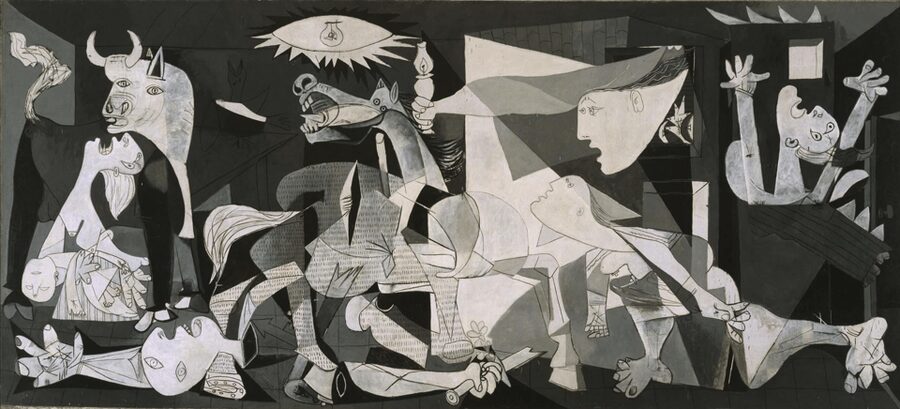
Picasso’s Guernica is the clear star here, but the real value lies in seeing how it connects to Spanish politics, Cubism, photography, film, sculpture, and the work of other artists. A private guide turns a famous painting into a readable story, not just a stop for a quick photograph.
I like two things in particular: the guide can shape the visit around your interests, and the small group of no more than seven people makes it easier to ask questions. Guides such as Amanda, Sofia, and Martín have been praised for lively explanations and useful context. You may also get links between works in separate rooms, including art by women that you might otherwise pass by.
The main drawback is the short two-hour format. The Reina Sofía is a large museum, so this is a focused introduction rather than a full visit. One reported experience also raised a basic comfort concern about a guide who was ill and stood too close, so clear communication about headphones and personal space matters.
In This Review
- Key points to know before booking
- Why the Reina Sofía works so well for a guided visit
- Meeting at the Nouvel building
- Skipping the line and getting oriented
- Picasso, Cubism, and the road to Guernica
- Dalí, Miró, and the changing language of modern art
- More than paintings: posters, photographs, film, and sculpture
- Including women artists and overlooked connections
- How two hours feels inside a large museum
- Guide quality and the private-group advantage
- Is $136 per person a fair price?
- Practical details that affect your choice
- Who should book the Reina Sofía private tour?
- Should you book it?
- FAQ
- How long does the Reina Sofía private tour last?
- How many people can join the private group?
- Which languages are available?
- Is admission to the museum included?
- Can I stay inside the museum after the tour?
- Is the museum accessible for wheelchairs and strollers?
Key points to know before booking
- Guernica gets the attention it deserves: Learn about the bombing of Guernica, the 1937 Paris Expo, Picasso’s process, and the painting’s place in modern art.
- A truly small private group: Your party can include up to seven people, allowing more conversation than a standard group tour.
- Modern art is placed in context: Picasso, Dalí, and Miró are discussed alongside Spanish history, Cubism, photographs, posters, films, and sculpture.
- The route can follow your interests: Tell the guide what you want to focus on, from major painters to women artists or particular art movements.
- Skip the ticket line: Entrance fees and management charges are included, and the guide meets you at the agreed location.
- You can keep exploring afterward: Groups of seven or fewer may remain inside the museum after the guided portion.
Why the Reina Sofía works so well for a guided visit
The Reina Sofía is not an old-master museum built around quiet rooms of portraits and religious scenes. Its focus is modern and contemporary art, covering work from 1881 to the present. That means the collection deals with war, political conflict, changing ideas about the body, new technology, and the question of what art can be.
This kind of museum can be exciting, but it can also leave you wondering what you are looking at. A painting may seem simple, strange, or unfinished until someone explains its setting and purpose. A private art guide gives you a way into those choices.
I especially like the museum’s range. You may move from paintings to photographs, propaganda posters, film clips, and sculptures. That variety helps explain how artists in the 20th century stopped treating painting as the only serious art form.
The guide’s job is not just to identify the famous names. The better part of the visit is seeing how works relate to one another. Sofia, for example, connected paintings in different rooms, including depictions of intellectual gatherings by both male and female artists. That kind of comparison is easy to miss when you walk through alone.
More Reina Sofia visits:
- Madrid: Reina Sofía Museum Entrance Ticket
★ 4.5 · 6,889 reviews - Madrid: Reina Sofía Museum Guided Tour
★ 4.3 · 659 reviews - Reina Sofia Museum Small Group Tour -6 people maximum-
★ 5.0 · 433 reviews
Meeting at the Nouvel building
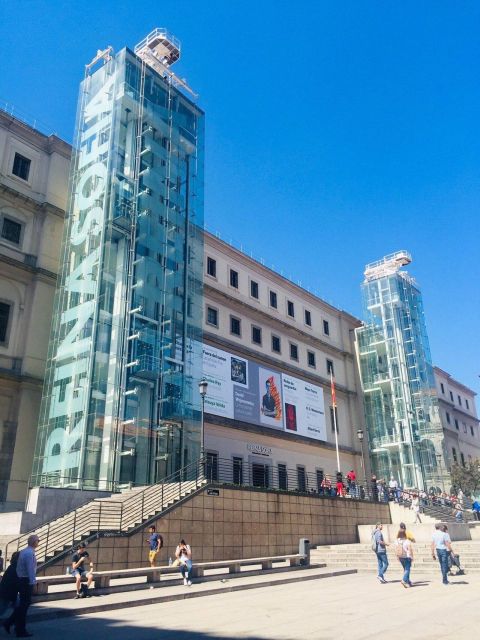
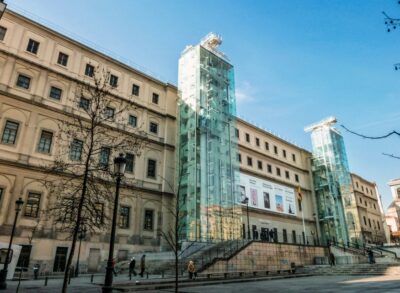
The stated meeting point is by the statue in front of the Nouvel building, although your booked option may give a different location. Check your confirmation closely, since meeting arrangements can vary.
The Nouvel building area is part of Madrid’s UNESCO-listed cultural district created under Carlos III. You do not need a long architectural lecture before entering, but the setting gives you a useful sense of Madrid’s effort to connect public space, art, and civic life.
Arrive ready to identify your guide and your party. English and Spanish tours are available. Since this is a private experience, you are not sharing the guide with a large crowd, but the exact meeting instructions still matter.
Transportation is not included. The tour is built around arriving at the museum yourself, so plan your route before the appointment and allow enough time to reach the entrance without rushing.
Skipping the line and getting oriented
Once the group meets, the guide handles the museum entry. Admission, taxes, and booking charges are included, and the tour includes skip-the-ticket-line access.
That is useful at a museum with a major international attraction such as Guernica. You are paying partly for the guide’s time and partly for a smoother start. Still, skip-the-line access does not mean you should arrive late. A late arrival can cut into a two-hour tour, which is already a fairly tight window.
The guide should first give you a sense of the museum’s modern-art focus and the period covered. That opening matters because the collection is not arranged like a simple story from one famous painter to the next. You will get more from the visit if you understand the broad movement from late 19th-century art toward the experimental forms of the 20th century and the present day.
Picasso, Cubism, and the road to Guernica
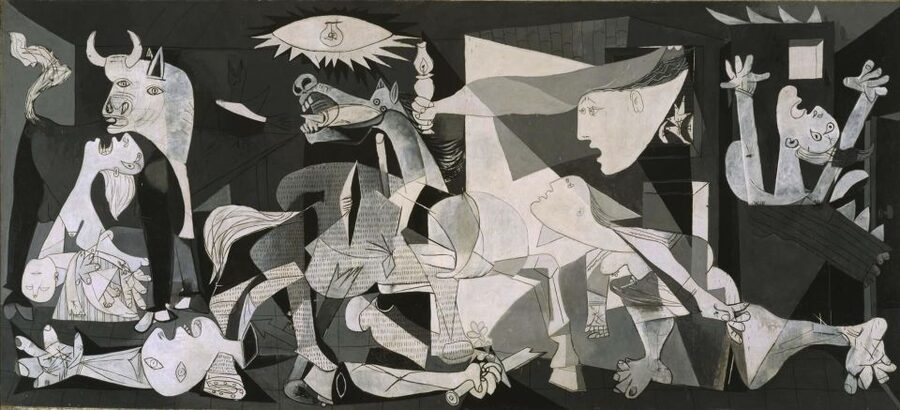
For most people, Guernica is the reason to visit the Reina Sofía. The guided explanation makes a major difference because the painting carries several layers at once: its subject, its commission, its public role, and Picasso’s visual language.
The guide may explain that Picasso painted it for the 1937 Paris Expo, and connect it to the horrific bombing of the Basque town of Guernica. Sofia’s explanation also included photographs of the work in progress and the government’s invoice for Picasso’s payment. These details give the painting a practical setting. It was not created in a vacuum, and it was not simply a private experiment by an artist working alone.
You can expect attention to Cubism as well. A good explanation of Cubism shows you how Picasso and his peers broke subjects into shifting planes and viewpoints. That background helps you read Guernica as more than a chaotic black-and-white scene.
Do not expect a private audience with the painting. It is one of the museum’s most famous works, and other people may be in the room. The benefit of the tour is that the guide helps you focus, even when the gallery is busy.
The discussion can also connect Guernica to photographs, posters, and film. That is important because modern war was communicated through many forms, not paintings alone. The Reina Sofía’s collection lets you see that wider public conversation.
More museums in Madrid:
- Madrid: Prado Museum Entry Ticket
★ 4.6 · 17,509 reviews - Madrid: Small Group of Prado Museum Tour & Optional Tapas
★ 4.6 · 2,437 reviews - Madrid: Prado Museum Guided Tour with Skip-the-Line Ticket
★ 4.5 · 2,018 reviews - Madrid: Museum of Illusions Ticket
★ 4.1 · 1,909 reviews
Dalí, Miró, and the changing language of modern art
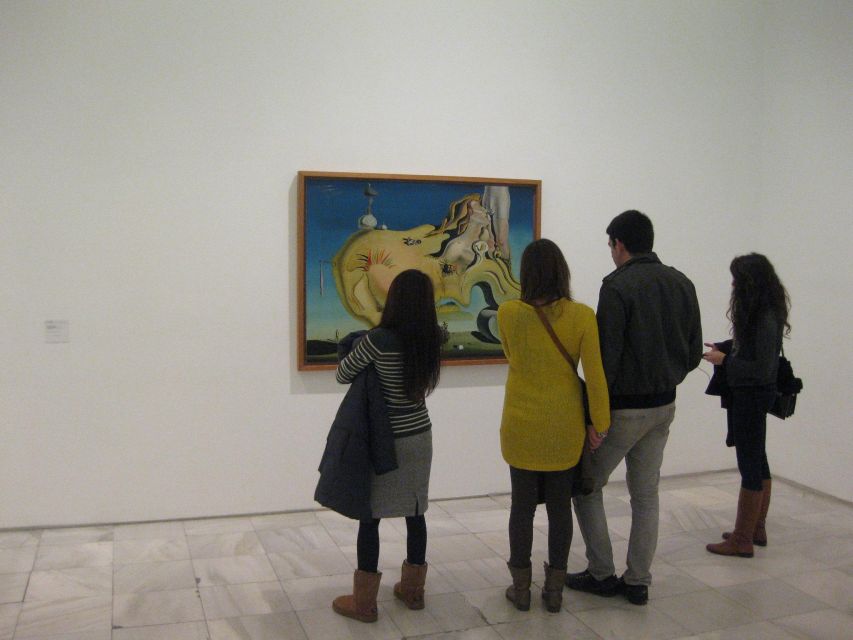
Picasso receives the biggest spotlight, but the visit also follows the work of Salvador Dalí and Joan Miró. Seeing these artists within one museum helps you compare different responses to modern life.
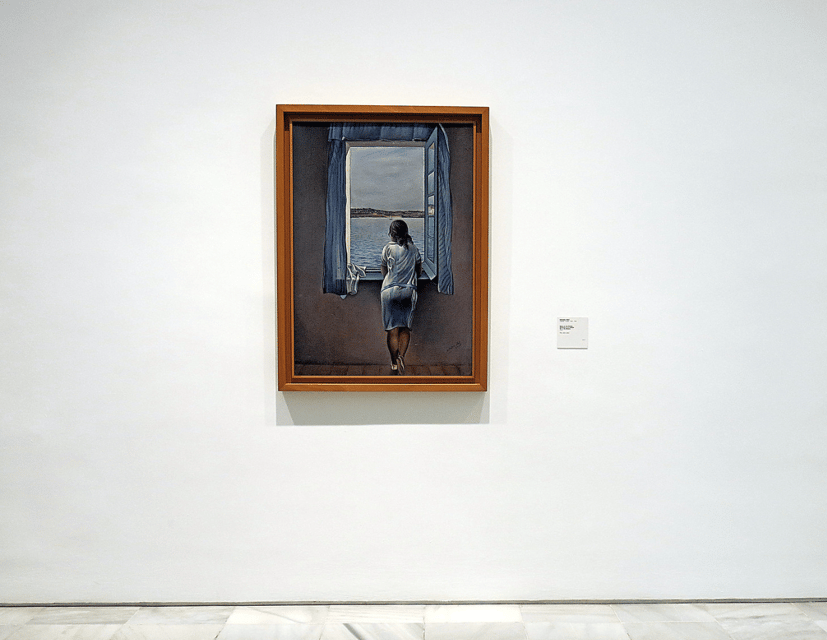
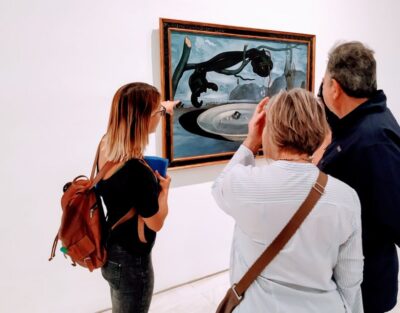
Dalí is often reduced to melting clocks and Surrealist oddities. A guide can place his work beside the ideas and artistic concerns of his period, giving you more than a quick label. Miró, in turn, helps show another path toward simplified forms, signs, and expressive color.
The point is not to memorize dates. It is to see that modern European art was not one straight march toward abstraction. Artists made different choices, argued with earlier traditions, and reacted to events around them.
This is where the private format earns its keep. If you already know Picasso but want more Miró, tell the guide. If you are curious about Surrealism, Cubism, political art, or Spanish culture, say so at the start. The experience is designed to change emphasis based on your interests.
You also have room to ask questions as you go. That sounds basic, but it changes the pace. In a large group, a question can hold up twenty people. Here, the guide can spend a little more time on the work that catches your attention.
More than paintings: posters, photographs, film, and sculpture
One of the strongest features of this museum route is its broader view of art. The collection includes photographs, propaganda posters, film clips, and sculpture alongside paintings.
That mix is especially helpful for understanding the political atmosphere surrounding Spanish modern art. A poster may communicate to a mass audience in a way a gallery painting cannot. A photograph may document an event or show how an artist worked. A film clip can reveal the influence of moving images on artists who had grown up in a new media age.
You might not care equally about every format, and a two-hour visit cannot cover everything. Still, these works stop the tour from becoming a predictable parade of three famous Spanish painters.
The guide can also point out relationships between artists that are not obvious from the museum layout. This is one of the most useful reasons to take a guided visit. You are not only being shown the museum’s best-known objects. You are being shown how to think across rooms.
Including women artists and overlooked connections
A useful museum tour should not treat modern art as a story told only by male geniuses. Sofia made a point of including works by female artists and showed how paintings by male and female artists could address similar subjects.
That approach adds balance without turning the visit into a separate side topic. You get to see how artists responded to shared ideas, such as gatherings of intellectuals, while also noticing who was included in the traditional art story and who was left out.
Ask the guide to point out female artists if that matters to you. The tour is personalized, but the guide cannot know your priorities unless you mention them.
This is also a good option if you are visiting with someone who does not normally enjoy modern art. Connections between works make the museum easier to follow. Instead of being told that one painting is important, you can see how it answers, borrows from, or challenges another work.
How two hours feels inside a large museum
Two hours is enough for a strong introduction, not enough for every room. The guide will focus on selected works and major themes, with time for explanation and questions.
That pace suits a first visit, especially if you want the famous works plus enough background to understand them. It may feel too brief if you already know the collection and want to study many individual pieces.
The private format helps the time go further. You are not waiting for a large group to gather or listening to a long explanation of works that do not interest you. You can ask to move on from a topic or spend a little longer with a painting.
Still, keep your expectations sensible. The Reina Sofía covers modern art from 1881 to today, and no two-hour tour can represent that full span in detail. Think of this as a guided framework for the museum. Afterward, you can return to the rooms that caught your eye.
For groups of seven or fewer, staying inside after the tour is allowed. The guide can suggest what to see next, which is a worthwhile extra. You do not have to leave just as the explanation ends.
Guide quality and the private-group advantage
The guide is the heart of this experience. Amanda was described as engaging and enthusiastic, although the two-hour limit left the group wishing for more time. Sofia received especially strong praise for linking artworks, explaining Cubism, discussing Spanish history, and presenting Guernica with useful supporting material. Martín was described in Spanish as attentive, friendly, and well versed in art.
Those names give you a practical point to consider: guide assignments can vary. You should book this for the private format and specialist subject, not on the assumption that one particular guide will lead every departure.
There is also one clear health and comfort concern to keep in mind. One participant reported that a guide was coughing, had a runny nose, did not use a mask or headphones, and stood very close. That is not a problem reported across the supplied feedback, but it is fair to say that personal space and audio equipment affect the quality of a museum tour. If you have concerns, raise them politely at the start.
The museum is wheelchair and stroller accessible. That makes the tour workable for visitors with mobility needs, though the private format also lets you communicate your pace and interests more easily.
Is $136 per person a fair price?
At $136 per person, this is not a budget museum visit. The price makes more sense for a small party that values expert explanation, skip-the-line entry, and a tailored route.
For one or two people, the cost may feel high compared with visiting independently. You can see the museum for less if you buy entry on your own and use the wall labels. The tradeoff is that you will need to build your own context and decide what deserves your limited time.
For a family or group of up to seven, the calculation improves. You are paying for a private guide rather than a seat on a large shared tour. If your group includes people with different levels of interest in art, the ability to ask questions and adjust the focus can prevent the visit from becoming a chore for anyone.
The included entrance fees and the option to remain in the museum add value. You can treat the two-hour guided visit as a strong opening, then continue independently without paying for a second museum entry.
I would book it if Guernica matters to you, if modern art often feels hard to read, or if you want Spanish history woven into the gallery visit. I would skip it if you prefer to wander slowly, read every label, and set your own pace without a guide.
Practical details that affect your choice
The tour lasts two hours and is offered in English or Spanish. It is a private group experience with no more than seven people, and transportation is not included.
You can reserve now and pay later, which helps if your Madrid schedule is still changing. Cancellation is free up to 24 hours before the start time for a full refund.
Meeting points vary by booking option, so confirm yours before you go. The commonly stated meeting place is the statue in front of the Nouvel building, but do not rely on that alone if your confirmation gives different instructions.
Because the tour begins at a set time and the museum is large, wear comfortable shoes and arrive with a short list of priorities. You might tell the guide that you want to focus on Guernica, Cubism, Dalí, Miró, women artists, political posters, or the relationship between painting and photography.
Who should book the Reina Sofía private tour?
This experience is best for first-time visitors who want a clear route through a demanding collection. It also suits couples, families, and small groups who would rather ask questions than follow a large crowd.
Art students and serious museum fans may appreciate the chance to compare works and request a more focused discussion. The short length may leave you wanting more, but the option to stay afterward lets you continue with the parts that interest you most.
I would not choose it for a quick, cheap look at Guernica. You can enter the museum independently for that. I would choose it when you want the painting placed in its political, artistic, and historical setting, with Picasso, Dalí, Miró, and less famous artists brought into the same conversation.
Should you book it?
Book this tour if you want meaning, context, and a flexible private route rather than a fast list of famous names. The strongest part is the guide’s ability to connect Guernica with Cubism, the Spanish Civil War, photographs, posters, and other works across the museum.
At $136 per person, it is a splurge. For up to seven people who care about art, that splurge can be worthwhile. For independent museum wanderers, the price and two-hour limit may not fit. Ask for your priorities to be included, arrive on time, and plan to remain afterward if you want the full value.
FAQ
How long does the Reina Sofía private tour last?
The guided tour lasts two hours.
How many people can join the private group?
The group can include no more than seven people.
Which languages are available?
The live guide is available in English or Spanish.
Is admission to the museum included?
Yes. Entrance fees, taxes, and management charges are included.
Can I stay inside the museum after the tour?
If your group has seven people or fewer, you may stay after the guided visit and explore independently. The guide can recommend additional works or sections to see.
Is the museum accessible for wheelchairs and strollers?
Yes. The museum is wheelchair and stroller accessible.
Just added around Madrid
- Arrival Private Transfer from MAD Airport to Madrid in a Minibus★ 5.0 · 3 reviews
- Private Vacation Photography Session with Photographer in Madrid★ 5.0 · 3 reviews
- Segovia: 3-Hour Private Walking Tour★ 5.0 · 3 reviews
- Tour Segovia and La Granja de San Ildefonso from Madrid★ 5.0 · 3 reviews
- Madrid: Prado & Reina Sofia Museum Skip-the-Line Guided Tour★ 5.0 · 3 reviews
- Salamanca: Private Guided Customizable Walking Tour★ 5.0 · 3 reviews
- Total Reboot and Renew with top wellnes 3 hours couple experience★ 5.0 · 3 reviews
- Madrid: Prado Museum Private Tour★ 5.0 · 3 reviews
Reina Sofia Museum Tours, compared.
Reina Sofia Museum Small Group Tour -6 people maximum-
Read our review →
Guided Tour of Reina Sofía Museum with Entry Ticket
Read our review →
Reina Sofia and Prado Museum Tickets and Guided Tour
Read our review →
Prado Museum with Reina Sofia Museum Guided Tour
Read our review →
Reina Sofía Guided Tour with Skip-the-Line Tickets
Read our review →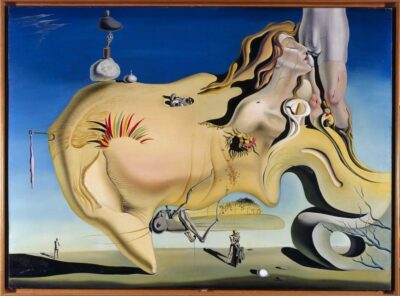
Reina Sofía Museum Ticket with In-App Audio Guide
Read our review →Browse the lists this tour appears in