
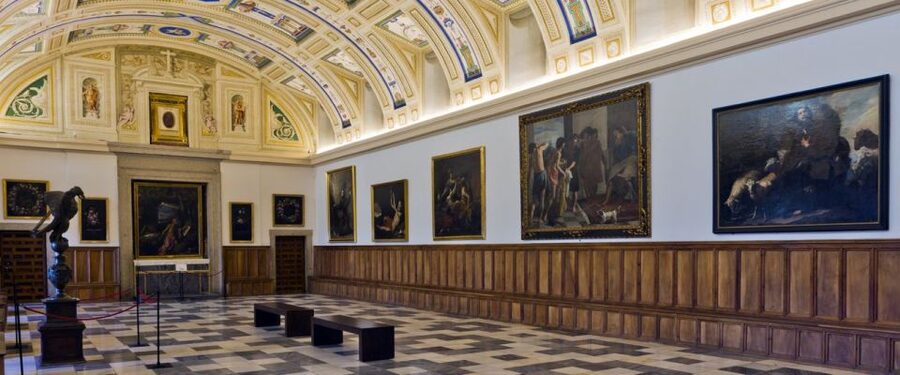
Review · EL ESCORIAL TOURS
Royal Site of San Lorenzo de El Escorial Entrance Ticket
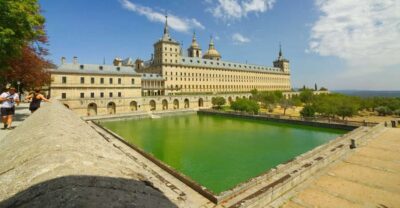
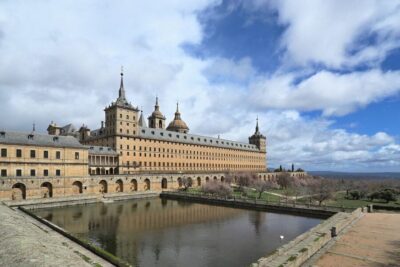
San Lorenzo de El Escorial is a huge stone statement of Philip II’s Spain: part monastery, part royal palace, part basilica, library, tomb, and art collection. The plain exterior can look stern, even prison-like, but inside you find richly decorated rooms, frescoes, chapels, and the royal crypt.
I like the freedom of a self-guided visit, since you can linger over the rooms that interest you instead of following a group. I also like the chance to pair Spanish Renaissance design with gardens and views toward the Sierra de Guadarrama and the Valley of the Fallen’s basilica. The catch is simple: no guide is included, and a few visitors have had trouble finding the correct entrance or have ended up waiting in line.
In This Review
- Key Points
- Why El Escorial Feels More Like a Small City Than a Monument
- Entering the Monastery and Reading Its Stern Exterior
- The Basilica Completed in 1574
- The Palace and Philip II’s World
- The Library and the Site’s Intellectual Ambition
- The Royal Crypt and Spain’s Dynastic Memory
- Gardens, Town Squares, and Views Beyond the Walls
- Getting There from Madrid by Train
- What the $21 Ticket Is Worth
- Who Will Like This Visit Most
- A Practical Way to Plan Your Day
- Should You Book the El Escorial Entrance Ticket?
- FAQ
- How long is the El Escorial ticket valid?
- Is a guide included with the ticket?
- What can I see inside San Lorenzo de El Escorial?
- Can I see the Valley of the Fallen from El Escorial?
- How do I reach El Escorial from Madrid?
- Is this activity suitable for people with mobility impairments?
Key Points
- Philip II’s royal complex: See how one immense building served as monastery, palace, basilica, library, and royal burial site.
- A striking inside-outside contrast: The restrained stone exterior gives way to frescoes, royal decoration, chapels, and artwork inside.
- A self-guided one-day ticket: Explore at your own pace, but plan to supply your own historical context.
- Gardens with mountain views: On a clear day, look toward the Sierra de Guadarrama and the basilica at the Valley of the Fallen.
- Easy from Madrid by train: The ride takes under an hour, followed by a pleasant but uphill walk of about 25 to 30 minutes from the station.
- Useful advance admission: The $21 price can save time, though incorrect meeting information has caused problems for some ticket holders.
Why El Escorial Feels More Like a Small City Than a Monument
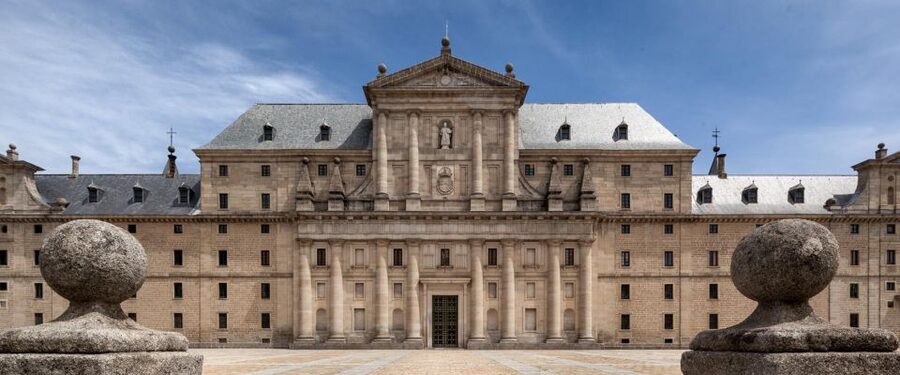
The first thing to understand is scale. El Escorial is not simply a monastery with a few royal rooms attached. It is a carefully planned complex created to serve several purposes at once, and its untouched layout still makes that ambition clear.
The monastery of San Lorenzo el Real was founded for the monks of the Order of St. Jerome. At the same time, the site connected itself to Spain’s monarchy, Catholic faith, royal memory, scholarship, and art. Emperor Charles V and his wife are linked to the royal history of the complex, while Philip II shaped much of its identity during Spain’s Golden Age.
I find the building most interesting when you stop treating it as a list of rooms. The palace explains royal power. The basilica expresses religious authority. The library points to study and control of knowledge. The crypt connects the site to generations of Spanish rulers.
That combination gives your visit more weight than a quick palace tour. You are seeing the machinery of a kingdom, not just the private rooms of a king.
More El Escorial trips:
- Escorial Monastery and the Valley of the Fallen Tour from Madrid
★ 5.0 · 2,494 reviews - From Madrid: Escorial Monastery and the Valley of the Fallen
★ 4.7 · 1,434 reviews - Escorial Monastery and the Valley of the Fallen from Madrid
★ 4.0 · 1,023 reviews
Entering the Monastery and Reading Its Stern Exterior
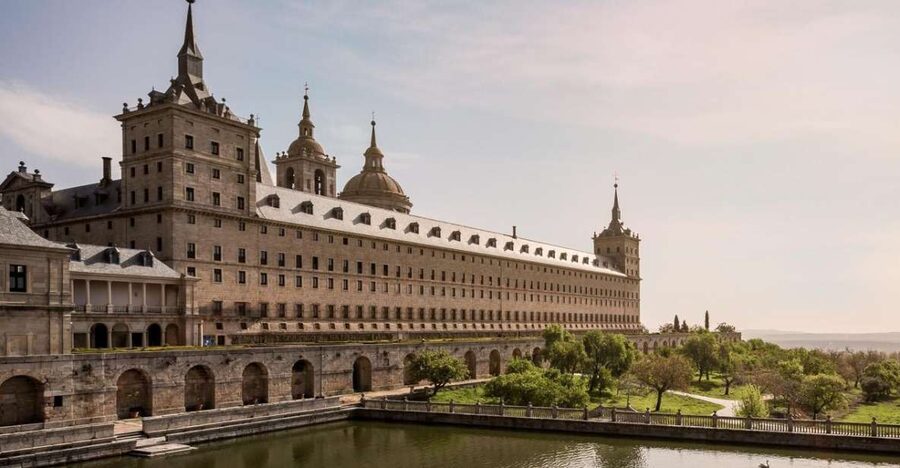
From outside, El Escorial is severe. The broad stone walls and regular design can seem cold, especially in fog or winter weather. One recent January visit took place on a foggy, chilly day, yet the weather did not erase the building’s appeal. In fact, the muted conditions suited the austere exterior.
I would not judge the site from the first view. The outer walls give little warning of the color and detail inside. Once you pass through, the contrast becomes part of the pleasure. Frescoes, royal decoration, chapels, and carved architectural details replace the fortress-like first impression.
This is a good place to slow down. The building’s plain outer shell reflects the disciplined image Philip II wanted to project, while the interior reveals the money, labor, and artistic skill available to the Spanish crown.
The entrance arrangement deserves practical attention. This ticket includes admission and an express security check, but it does not guarantee that every part of the arrival will feel effortless. Some ticket holders have been directed to the wrong meeting point or have had trouble finding the proper entrance. Check the supplied booking information carefully before you set off, and allow extra time to get oriented.
The Basilica Completed in 1574
The Basilica is one of the emotional centers of the visit. It was erected in 1574 and took years to complete, which gives you a sense of the project’s scale and ambition. Here, architecture and religious ceremony meet in a space designed to support the authority of the Spanish crown.
Look beyond the size of the room. Notice how the basilica fits into the larger plan of the complex. It is not an isolated church added beside the monastery. It forms part of a carefully ordered setting in which prayer, monarchy, art, and burial all connect.
The artwork also helps explain why this site belongs to the Spanish Renaissance rather than to one narrow architectural tradition. Italian and Flemish artistic forms were brought together here, producing an interior that feels international while remaining closely tied to Spanish royal purpose.
You may want to pause before rushing onward. A self-guided ticket gives you that option. Without a guide, though, you will need to read the available information and make your own connections. The ticket is a good fit for someone who enjoys setting their own pace, but a guided visit would likely provide more context about individual works and the long construction process.
The Palace and Philip II’s World
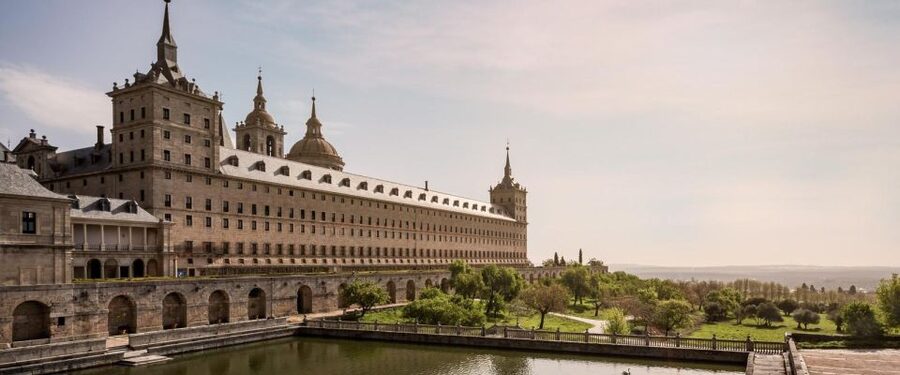
The royal rooms give the monastery a personal dimension. Philip II was not simply commissioning an impressive building from a distance. The complex was tied to his reign and to the political and religious goals of his era.
As you move through the palace areas, think about how unusual it is to find royal living quarters inside such a strongly monastic setting. The arrangement tells you a great deal about the period. Spiritual life, royal government, family memory, and public image were closely linked.
The building also recalls Emperor Charles V and his wife, who once lived there. That connection gives the royal section a longer timeline than Philip II alone. You are not looking at a single ruler’s residence, but at a place shaped by several generations of Spanish monarchy.
Do not expect the palace to feel like a light, pleasure-focused royal retreat. El Escorial is more controlled and serious than that. Its appeal comes from the way it shows duty, faith, ceremony, and power sharing the same address.
A few more Madrid days to weigh up
- Madrid: Tour Bernabéu Entry Ticket
★ 4.5 · 21,573 reviews - Madrid: Prado Museum Entry Ticket
★ 4.6 · 17,509 reviews - Madrid: Royal Palace Fast-Access Admission Ticket
★ 4.6 · 13,856 reviews - Avila & Segovia Tour with Tickets to Monuments from Madrid
★ 5.0 · 9,762 reviews
The Library and the Site’s Intellectual Ambition
The Library is one of the most important stops for understanding the project. It shows that El Escorial was intended to be a center of study as well as worship and royal life.
I like this part because it changes the rhythm of the visit. After the large religious and ceremonial spaces, the library points toward books, learning, and the preservation of ideas. It also helps explain why the complex needed to be so large. This was not merely a residence with decorative rooms. It was built to support an entire institutional world.
The artistic program matters here too. El Escorial brings together Italian and Flemish influences, and its works reflect the broad cultural reach of sixteenth-century Spain. You may not recognize every artist or object, but you can still see that the decoration was planned as part of a larger message about faith, education, and royal authority.
Because the ticket is unguided, I recommend giving the library more time than a casual glance. It is easy to spend the visit on the most obvious grand spaces and miss the quieter evidence of what the complex was meant to do.
The Royal Crypt and Spain’s Dynastic Memory
The crypt adds a solemn end point to the royal story. It houses monarchs who once lived within the world represented by the palace above.
This is not a cheerful stop, and that is precisely why it matters. The palace presents the crown in life, ceremony, and authority. The crypt presents the same dynasty in death. Together, the two spaces make the site’s purpose clearer.
You should expect the crypt to feel more reflective than decorative. It is a reminder that the grand rooms were built not only for present power, but also for dynastic memory. Spain’s rulers wanted their family line placed within a permanent religious and political setting.
If you are short on time, do not skip this area automatically. It may not have the bright visual impact of the frescoes or gardens, but it gives the visit a strong sense of completion.
Gardens, Town Squares, and Views Beyond the Walls
The visit is not confined to indoor rooms. El Escorial also gives you gardens, outdoor spaces, and a chance to look beyond the monastery toward the Sierra de Guadarrama.
The gardens are carefully maintained and provide a welcome change after the dense interior. On a clear day, you might get a broad view across the surrounding countryside and toward the Valley of the Fallen’s basilica. Fog or cold weather can reduce the view, but the gardens still add breathing room to the day.
I would save time for the outdoor areas instead of treating them as an optional extra. The gardens help you understand the building’s setting and give you a chance to see the relationship between the monastery, the town, and the mountains.
The nearby town squares also connect the royal site to ordinary public life. The complex can feel self-contained inside, but the surrounding town reminds you that El Escorial was not built in isolation. It became part of a living community shaped by the presence of the monastery and court.
Getting There from Madrid by Train
El Escorial makes a practical day trip from Madrid. The train journey takes under an hour, which keeps the outing manageable even if you are using Madrid as your base.
From the station, expect a pleasant uphill walk of about 25 to 30 minutes. That walk is worth factoring into your plans, especially in cold weather, hot weather, or if you have limited mobility. The route is not presented as suitable for people with mobility impairments, so this is not the best choice if an uphill walk and an extensive historic building would create problems.
The walk also affects your timing. This is sold as a one-day activity, not a tightly timed guided tour. Check the available starting times and allow room for the train, the walk, security, and finding the correct entrance.
The trip works best when you treat it as a full outing rather than a quick stop between Madrid attractions. You will get more from the $21 admission if you have enough time for the palace, basilica, library, crypt, gardens, and outdoor views.
What the $21 Ticket Is Worth
At $21 per person, this is a reasonable price for access to a large royal and religious complex, especially if you want freedom rather than a fixed group schedule. You are paying for admission, not for a guide, transport from Madrid, or a full historical explanation.
The value is strongest for independent visitors who already know a little about Philip II and Spanish Renaissance culture, or who enjoy reading signs and making their own route. You can pause in the basilica, spend longer in the library, or move quickly through sections that interest you less.
The value is weaker if you expect a fully managed arrival. The express security check sounds useful, but it does not remove every practical risk. Incorrect directions have led some ticket holders to wait in a long line or even face confusion about paying again at the entrance. That is a serious warning, since the ticket is non-refundable.
I would compare the cost with your priorities. If you mainly want an expert explanation, look for a guided option instead. If you want access and independence, this ticket can make sense, provided you confirm the entry details before leaving Madrid.
Who Will Like This Visit Most
I recommend El Escorial to you if you enjoy architecture, royal history, religious art, or large historic sites that reward patient exploration. It is also a strong choice if you want a change from Madrid’s central museums and grand boulevards.
You will get the most from it if you:
- Like self-guided visits and setting your own pace
- Can manage a 25 to 30 minute uphill walk from the station
- Want to see several types of space in one place, from palace to crypt
- Have an interest in Philip II, Charles V, or Spanish Renaissance culture
- Can spare most of a day for the trip
I would be cautious if you need step-free access, want a guide included, or dislike sorting out directions at a large historic entrance. The site is not designed as a quick, simple attraction.
A Practical Way to Plan Your Day
Before you leave Madrid, check your confirmation and identify the correct entrance. This is the single most useful precaution, since unclear meeting information has caused avoidable delays.
Once inside, I would use this order:
- Start with the main interior and get a feel for the monastery’s scale.
- Visit the basilica while you are fresh, since it is central to the complex’s religious and royal design.
- Continue to the palace rooms and consider how royal life fit inside the monastery.
- Give the library proper attention rather than passing through quickly.
- Visit the crypt for the dynastic story.
- Finish with the gardens and the views toward the Sierra de Guadarrama and Valley of the Fallen’s basilica.
This is not a required route. The advantage of the ticket is that you can adjust it. On a foggy day, spend more time inside. On a clear day, allow extra time outdoors.
Should You Book the El Escorial Entrance Ticket?
I would book this ticket if you want independent access to one of Spain’s most unusual royal complexes and you are comfortable arranging your own transport and historical context. The palace, basilica, library, crypt, gardens, and mountain views give you plenty to see for the $21 admission.
I would choose a guided alternative if this is your only major Spanish history visit, since the site’s many functions can be hard to understand without explanation. And if you have mobility concerns, the uphill station walk and extensive building make this a poor fit.
The best reason to go is the inside-outside contrast. The severe exterior prepares you for a solemn royal monument, but the interior opens into art, ceremony, scholarship, and royal memory. Plan carefully, allow a full day, and El Escorial can be one of the most rewarding trips beyond Madrid.
FAQ
How long is the El Escorial ticket valid?
The activity is described as a one-day visit. Starting times depend on availability, so check the available times before booking.
Is a guide included with the ticket?
No. The ticket includes admission only, and no guide is included.
What can I see inside San Lorenzo de El Escorial?
You can visit the monastery, royal palace, Basilica, Library, crypt, chapels, gardens, and other Renaissance spaces. The complex also contains artwork connected with Italian and Flemish artistic forms.
Can I see the Valley of the Fallen from El Escorial?
The experience includes views toward the Valley of the Fallen’s basilica and the Sierra de Guadarrama mountain range. Clear weather will provide the best chance of seeing them.
How do I reach El Escorial from Madrid?
The train journey from Madrid takes under an hour. From the station, the walk to the monastery takes about 25 to 30 minutes and is uphill.
Is this activity suitable for people with mobility impairments?
No. The activity is listed as unsuitable for people with mobility impairments.
Just added around Madrid
- Private Vacation Photography Session with Photographer in Madrid★ 5.0 · 3 reviews
- Arrival Private Transfer from MAD Airport to Madrid in a Minibus★ 5.0 · 3 reviews
- Segovia: 3-Hour Private Walking Tour★ 5.0 · 3 reviews
- Tour Segovia and La Granja de San Ildefonso from Madrid★ 5.0 · 3 reviews
- Madrid: Prado & Reina Sofia Museum Skip-the-Line Guided Tour★ 5.0 · 3 reviews
- Salamanca: Private Guided Customizable Walking Tour★ 5.0 · 3 reviews
- Total Reboot and Renew with top wellnes 3 hours couple experience★ 5.0 · 3 reviews
- Madrid: Prado Museum Private Tour★ 5.0 · 3 reviews
El Escorial Tours, compared.

Escorial Monastery and the Valley of the Fallen Tour from Madrid
Read our review →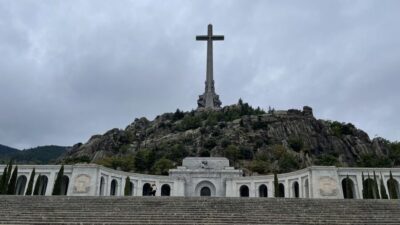
Escorial Monastery and the Valley of the Fallen
Read our review →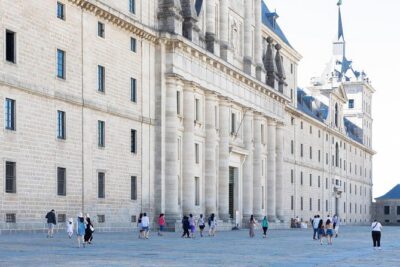
Escorial Monastery and the Valley of the Fallen from Madrid
Read our review →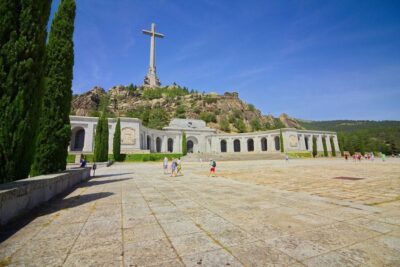
El Escorial and Valley’s Basilica Half Day Tour
Read our review →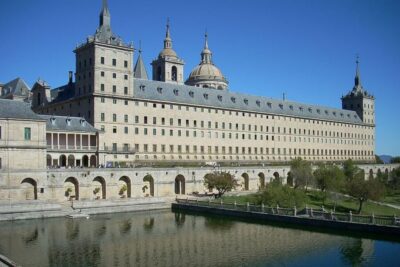
Browse the lists this tour appears in