
Review · ROYAL MONASTERY TOURS
From Madrid: Escorial Monastery and the Valley of the Fallen
El Escorial is not simply a royal palace. It is a monastery, church, library, art collection, school, and royal tomb all folded into one stern granite complex. Add the Valley of the Fallen, with its basilica cut into rock and enormous cross, and you get a sharp half-day lesson in Spain’s monarchy, Golden Age, Civil War, and modern democracy. I like the way this tour links two very different monuments, and I like that the guide provides the context that can be hard to grasp on your own.
The five-hour schedule is efficient, with about 105 minutes at El Escorial and an hour at the Valley of the Fallen. Guides such as Cristina, Beatriz, Sergio, Rafael, and Oscar have been praised for clear explanations and an easy pace. The tradeoff is limited free time, especially at the Valley, and both sites involve plenty of walking and steps.
In This Review
- Key points to know before you book
- Why these two monuments belong together
- Meeting in central Madrid and riding to the mountains
- Walking into El Escorial
- The royal tombs, paintings, and library
- Keeping pace inside a huge complex
- The road to the Valley of the Fallen
- A respectful visit to a controversial memorial
- What the $73 price includes
- Who will enjoy this half-day trip
- Practical ways to make the most of it
- Should you book this El Escorial tour?
- FAQ
- How long does the tour last?
- Where does the tour meet in Madrid?
- What languages are available?
- Are entry tickets included?
- Is food included?
- Can I visit the basilica at El Escorial on a Sunday?
- Is the tour suitable for wheelchair users?
Key points to know before you book
- Two major sites in one morning: Visit the Monastery of San Lorenzo de El Escorial and the Valley of the Fallen without arranging a car.
- Skip-the-line entry included: Separate entrance tickets save time at both monuments.
- History is the main event: Expect Felipe II, the Spanish Golden Age, royal burial traditions, the Civil War, and present-day Spain.
- The Valley of the Fallen is emotionally and politically difficult: The basilica and burial site deserve a respectful, clear explanation.
- Comfortable coach transport: Air conditioning, Wi-Fi, headsets, and a driver are included.
- Not for limited mobility: There are many steps and substantial walking at both locations.
Why these two monuments belong together
This outing works because El Escorial and the Valley of the Fallen tell different chapters of Spain’s story.
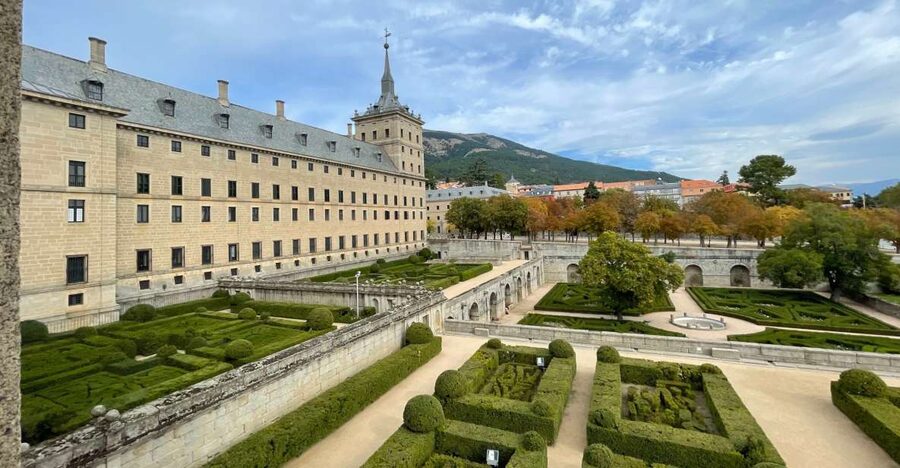
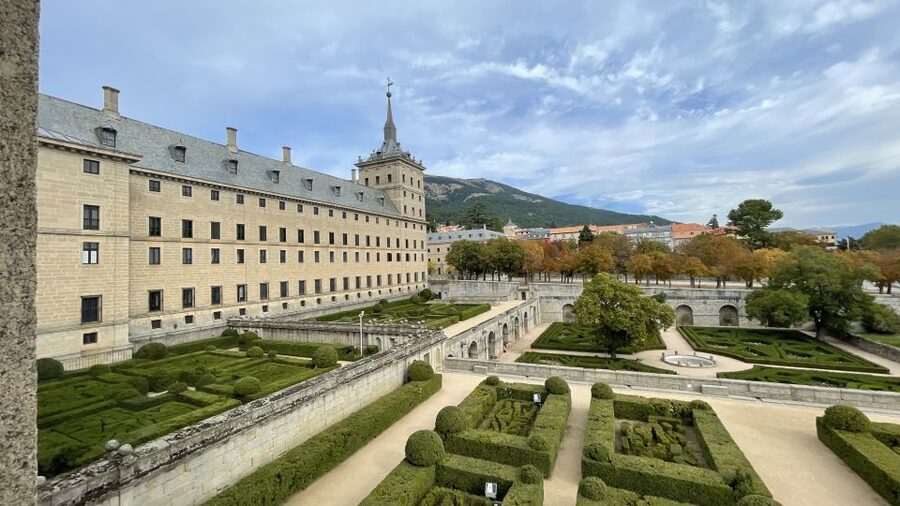
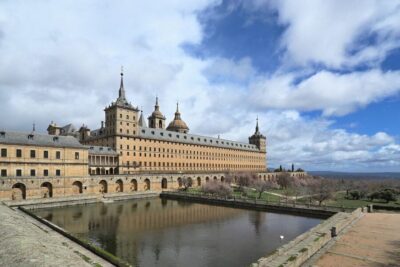
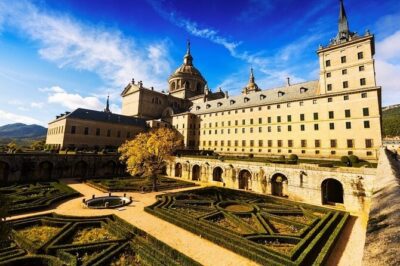
El Escorial reflects the power and religious outlook of Felipe II, who ruled during the height of Spain’s influence in Europe. The building was designed to express order, faith, royal authority, and learning. Its plain exterior gives little warning of the rooms inside: painted chapels, royal apartments, tombs, gardens, a library, and a long succession of halls.
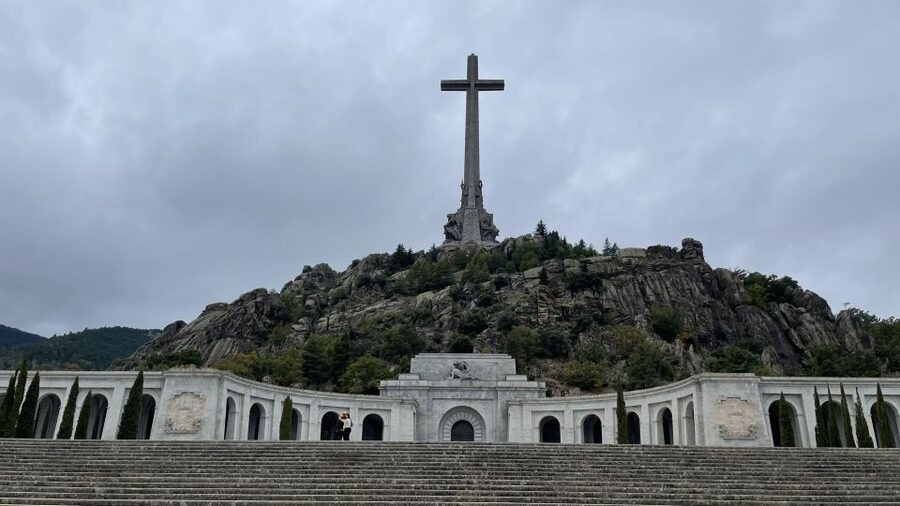
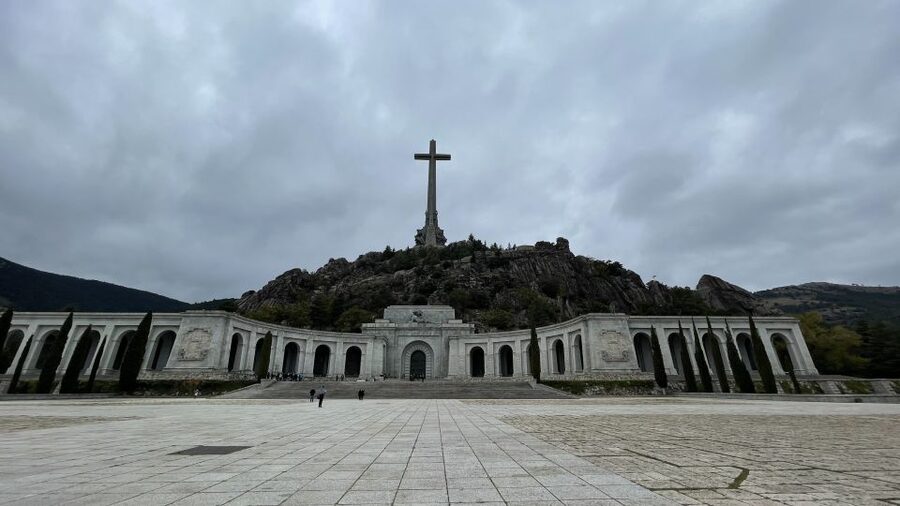
The Valley of the Fallen belongs to the much more painful memory of the Spanish Civil War. Its basilica was carved into the granite of the Peña de Cuelga Muros, and a massive cross can be seen from far away. The site includes the burial place of 33,847 people who died in the war.
You need a guide here. El Escorial has enough rooms, symbols, and royal names to blur together without a clear route. The Valley of the Fallen needs historical care, since it remains a controversial monument. A good guide can explain what you are seeing without turning the visit into a political argument. The strongest guides on this excursion, including Cristina, Pilar, Beatriz, and Sergio, have been praised for doing just that.
More royal monastery visits:
- Escorial Monastery and the Valley of the Fallen Tour from Madrid
★ 5.0 · 2,494 reviews - Escorial Monastery and the Valley of the Fallen from Madrid
★ 4.0 · 1,023 reviews - From Madrid: Escorial Monastery & Valley of the Fallen Trip
★ 4.4 · 389 reviews
Meeting in central Madrid and riding to the mountains
The meeting point is outside the Commercial Gallery at San Bernardo Street 7, home of Fun and Tickets. The coach ride to San Lorenzo de El Escorial takes about 45 minutes, followed by roughly 15 minutes to the Valley of the Fallen and another 45 minutes back to Madrid.
That transport is a major part of the value. Both monuments are outside central Madrid, and the Valley of the Fallen is especially awkward to reach without a car. You could arrange transport independently, but you would still need to manage admissions and find your way around places that make much more sense with background information.
The air-conditioned bus includes Wi-Fi, and headsets let you hear the guide during the visits. Several guides lead in both Spanish and English, and the activity also includes audio-guide support in those languages. The exact guide varies by departure, but names praised for their clear and engaging presentations include Cristina, Beatriz, Rafael, Oscar, Maria, Sergio, and Pilar.
There is no meal stop built into the tour. You get a bathroom break on arrival at El Escorial, but do not count on a proper café break. Eat before departure or carry something small if you need food during the morning.
Walking into El Escorial
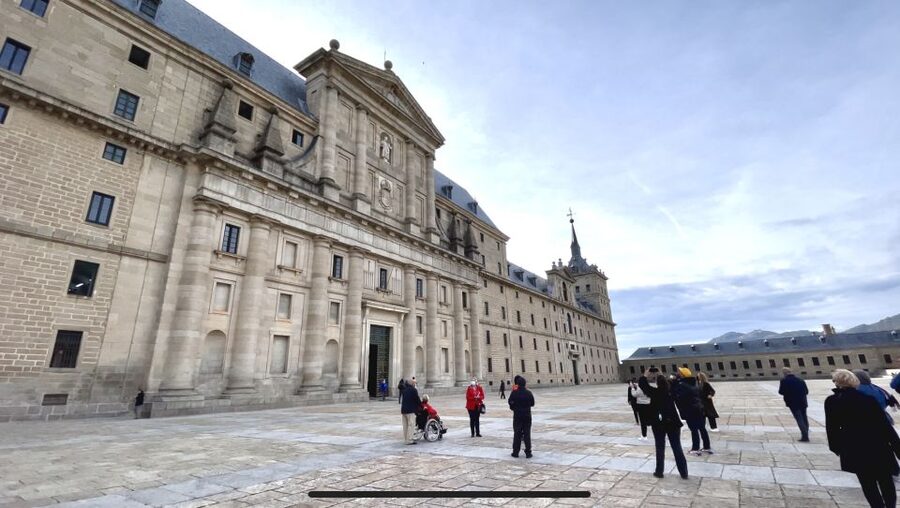
The first major stop is San Lorenzo de El Escorial, reached after about 50 minutes on the road. The guided visit lasts around 105 minutes, which is long enough to cover the main rooms without turning the whole morning into a marathon.
The monastery is often called a royal residence, but that label is too narrow. It was built as a spiritual and intellectual center as much as a palace. The building best expresses the ideals of Spain’s Golden Age: Catholic devotion, royal control, scholarship, art, and the memory of the monarchy.
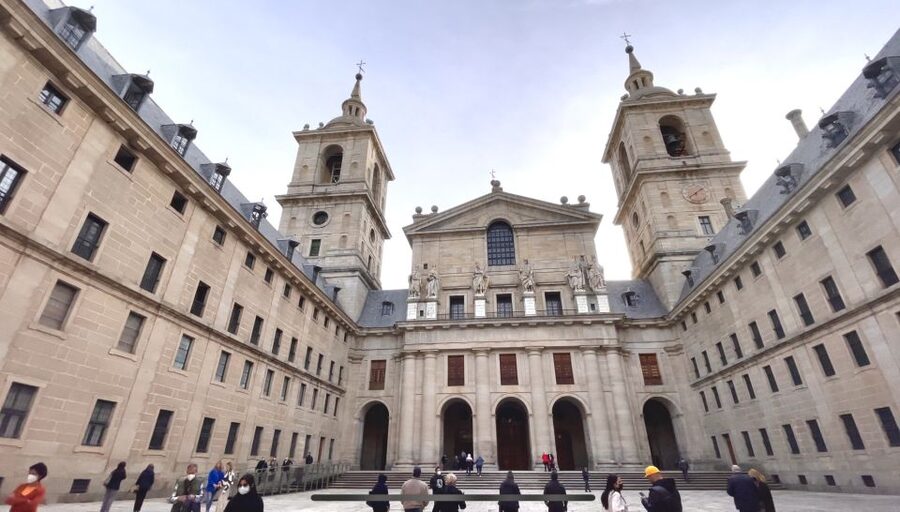
You begin with the Patio de Reyes, or Courtyard of the Kings, a formal approach that gives you a sense of the building’s scale. From there, the route moves through the cloister, chapter rooms, basilica, royal rooms, and burial areas. The interiors are serious rather than playful. This is a place of power and prayer, not a palace designed mainly for comfort.
The basilica is normally part of the route, although it is not visited on Sundays. That exception matters, so check the date before booking if the church is your main interest.
The royal tombs, paintings, and library
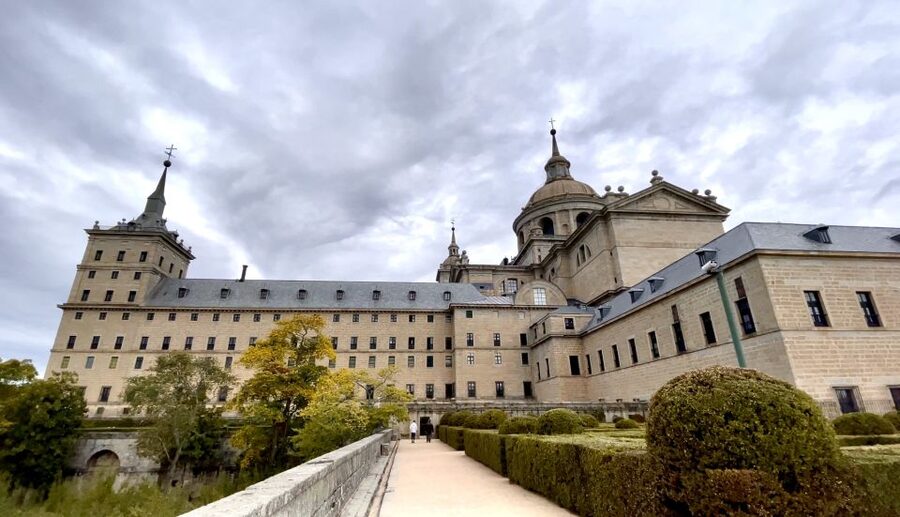
The Pantheon of Kings and Pantheon of Infants are among the most memorable sections. These underground burial spaces connect the grand architecture to actual people and dynasties. The royal tombs also help explain why El Escorial was conceived as more than a residence. It was a monument to continuity, Catholic identity, and royal memory.
The paintings are another reason to go. You will see important religious art within the monastery, and several people who took the tour singled out the paintings as a highlight. If you have a strong art-history interest, you may wish for more time with individual works. The guide has to keep the group moving, and 105 minutes covers a lot of ground.
The library and gardens also deserve attention. The library is especially impressive for anyone interested in Felipe II’s support for scholarship and learning. The gardens offer a change from the enclosed halls and a chance to appreciate the setting near the Sierra de Guadarrama.
The royal rooms are more restrained than the word royal may suggest. Their importance lies in how they show the daily and ceremonial side of monarchy within a building shaped by religious discipline. I would not expect lavish palace interiors on the scale of Versailles. El Escorial’s appeal is its combination of scale, purpose, art, and solemnity.
More El Escorial trips:
- From Madrid: El Escorial and Valley’s Basilica Half Day Tour
★ 4.4 · 638 reviews - Royal Site of San Lorenzo de El Escorial Entrance Ticket
★ 4.4 · 239 reviews - From Madrid: El Escorial, Valley and Segovia Day Trip
★ 4.5 · 134 reviews - San Lorenzo de El Escorial: Monastery and Site Guided Tour
★ 4.8 · 127 reviews
Keeping pace inside a huge complex
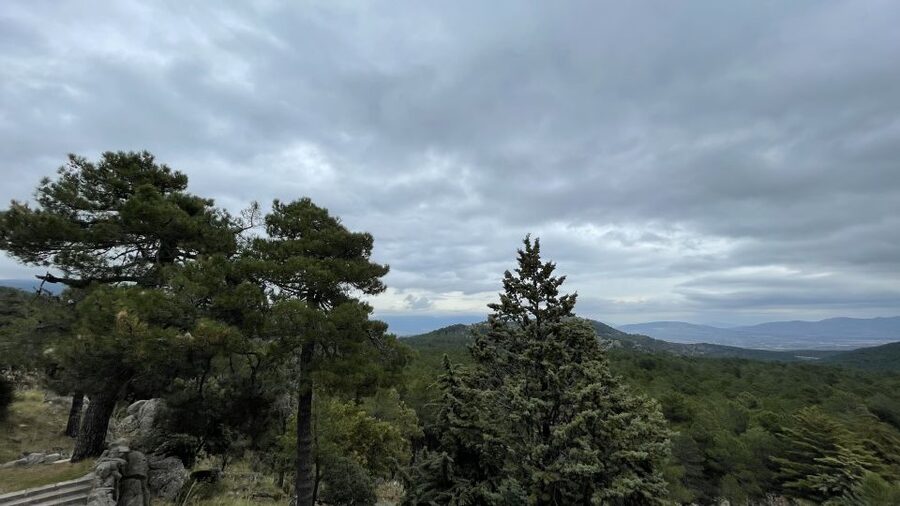
A group tour gives you a route, and that is both its strength and its limit.
The guide keeps the visit moving through the major rooms and explains why each section matters. This prevents you from losing time and missing key areas. It also means you will not have much freedom to linger over one painting, reread every label, or sit quietly in the basilica.
Several guides have been praised for finding the right balance between explanation and personal time. Some people wanted a longer visit, especially at the Valley of the Fallen, while others found the schedule just right. I would describe the pace as purposeful rather than rushed, provided you arrive ready to follow the group.
Wear comfortable shoes. This is not a coach-and-photo-stop outing. You will walk through a large building, use stairs, and remain on your feet for much of the visit.
The road to the Valley of the Fallen
After El Escorial, the coach continues for about 15 minutes to the Valley of the Fallen. The change in mood is immediate. El Escorial is a royal and religious complex tied to centuries of monarchy. The Valley is a twentieth-century memorial shaped by the memory of civil conflict and political power.
The setting among the granite hills is striking. The great cross is the first detail most people notice, since it rises high above the surrounding area and can be seen from kilometers away. Its scale is difficult to understand from photographs.
The guided visit lasts about one hour. You see the surroundings and enter the basilica, which was carved directly into the rock. The engineering is remarkable, but the monument is not merely an architectural curiosity. It is also a burial place for tens of thousands of people who died during the Spanish Civil War.
That combination makes the visit powerful and uneasy. You may find the basilica beautiful, imposing, or troubling, sometimes all at once. The best approach is to listen carefully, take in the structure, and remember that monuments carry the political choices of the people who built them.
A respectful visit to a controversial memorial
The Valley of the Fallen requires more explanation than a standard church visit. Its scale can make the place feel like a spectacle, but its purpose is connected to real suffering and a disputed period in Spanish history.
The guides have different personalities, but the strongest presentations are factual and measured. Pilar, for example, has been praised for remaining politically neutral when the conversation became pointed. Cristina has also been singled out for explaining the site respectfully while answering questions in both Spanish and English.
You should not expect a long seminar on the Civil War. The tour gives you a structured introduction during the visit, enough to understand the monument’s role and why it remains sensitive. If you want a detailed study of the war, this excursion is only a starting point.
The one-hour visit can feel short. You have time to see the basilica and hear the main explanation, but not necessarily enough for a slow personal exploration of every part of the site. Plan your photographs quickly and stay aware of the return time. One practical complaint from an otherwise happy participant was having to hurry back to the bus.
What the $73 price includes
At $73 per person, this is a solid value if you want both monuments in one half-day.
The cost includes round-trip coach transport, an English or Spanish guide, headsets, Wi-Fi on the bus, and skip-the-line entry tickets for El Escorial and the Valley of the Fallen. The admissions matter because buying transport and tickets separately would add work, and the Valley is not an easy public-transport stop.
The tour also saves you from navigating two large sites without a route. That is where the guide earns the fee. You are paying not just to get there, but to understand why the rooms, tombs, paintings, basilica, and memorial matter.
The price does not include food or drinks. Since the entire outing lasts five hours, that is manageable if you eat beforehand. It is less convenient if you need a sit-down meal or a relaxed coffee break built into every excursion.
For a small private group, $73 would be a different calculation. This is organized coach travel with a live guide, so expect a shared group experience. Its value comes from efficiency and explanation, not privacy.
Who will enjoy this half-day trip
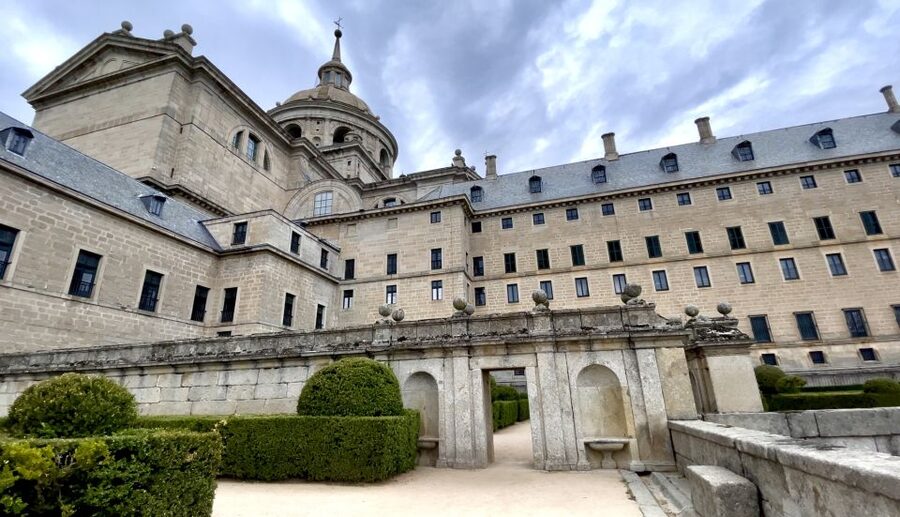
I recommend this tour to you if you want Spanish history beyond Madrid’s central museums and royal palace. It suits first-time visitors who want a major excursion without giving up an entire day, and it is particularly useful if you do not have a rental car.
Families with older children and teenagers can get a lot from it. One guide’s clear account of Spanish history was especially well received by a 17-year-old, which says something about the presentation. The tour gives young visitors concrete buildings and objects to connect with the dates and names.
It also suits art and architecture fans. El Escorial’s paintings, library, basilica, courtyards, and royal rooms make it a substantial cultural visit. The Valley adds a very different kind of architecture, with its basilica cut into solid rock and its huge outdoor cross.
You should think twice if you have difficulty walking or use a wheelchair. The activity is specifically not suitable for wheelchair users or people with mobility impairments, and the route includes many steps at both sites. Comfortable clothes and shoes are essential.
This is also not the best choice if you want hours of independent exploration. The schedule is fixed, and you will spend much of your time listening and moving with the group.
Practical ways to make the most of it
Arrive at San Bernardo Street 7 with time to find the exact meeting point outside the gallery. Bring water and a small snack, since food and drinks are not included and a full refreshment stop is not guaranteed.
Use the bathroom break at El Escorial before the monastery visit. Some people found the bus-station stop less convenient than using the monastery facilities, but it is still useful to take the opportunity before the walking begins.
Keep your headset on and stay close enough to hear the guide. The buildings are large, and a group can spread out quickly. Guides generally use the equipment to explain details while you move through the rooms.
At El Escorial, pay special attention to the library, royal burial areas, paintings, and gardens. At the Valley, save enough time to look at the basilica and the cross rather than spending the entire stop taking photos outside.
Weather can affect the experience, especially at the Valley, where the open setting may feel cold, wet, or windy. The monuments remain worthwhile in poor weather, but bring suitable clothing. A jacket and sturdy shoes will serve you better than city-only footwear.
Should you book this El Escorial tour?
Book it if you want an efficient, guided introduction to two of the most important historical sites near Madrid. The combination is unusual: one stop explains royal Spain under Felipe II, while the other confronts the memory of the Civil War. The guides are the key strength, with Cristina, Beatriz, Sergio, Rafael, Oscar, and others praised for clear bilingual explanations, patience, and good timing.
The main compromises are limited free time, no included meal, and a demanding walking route. If those points work for you, $73 buys a comfortable ride, entry to both sites, and the background needed to see more than impressive stone and paintings.
I would choose this excursion over trying to organize both stops alone, especially for a first visit to Madrid. If you want a slow art study, a private guide, or an entire day at El Escorial, choose a longer or more specialized option instead.
FAQ
How long does the tour last?
The experience lasts five hours, including transportation from Madrid, visits to both monuments, and the return to the city.
Where does the tour meet in Madrid?
Meet your driver outside the Commercial Gallery at San Bernardo Street 7, at the Fun and Tickets meeting point.
What languages are available?
The live tour guide is available in Spanish and English. Audio guides and headsets are also provided in Spanish and English.
Are entry tickets included?
Yes. Skip-the-line entry tickets for the Monastery of San Lorenzo de El Escorial and the Valley of the Fallen are included.
Is food included?
No. Food and drinks are not included, and the tour does not list a meal stop.
Can I visit the basilica at El Escorial on a Sunday?
The basilica at El Escorial is not included in the visit on Sundays. Check the departure date if seeing this area is important to you.
Is the tour suitable for wheelchair users?
No. The activity is not suitable for wheelchair users or people with mobility impairments. Both sites involve substantial walking and many steps.
Just added around Madrid
- Arrival Private Transfer from MAD Airport to Madrid in a Minibus★ 5.0 · 3 reviews
- Private Vacation Photography Session with Photographer in Madrid★ 5.0 · 3 reviews
- Segovia: 3-Hour Private Walking Tour★ 5.0 · 3 reviews
- Tour Segovia and La Granja de San Ildefonso from Madrid★ 5.0 · 3 reviews
- Madrid: Prado & Reina Sofia Museum Skip-the-Line Guided Tour★ 5.0 · 3 reviews
- Salamanca: Private Guided Customizable Walking Tour★ 5.0 · 3 reviews
- Total Reboot and Renew with top wellnes 3 hours couple experience★ 5.0 · 3 reviews
- Madrid: Prado Museum Private Tour★ 5.0 · 3 reviews
Royal Monastery Tours, compared.
Escorial Monastery and the Valley of the Fallen Tour from Madrid
Read our review →
Escorial Monastery and the Valley of the Fallen from Madrid
Read our review →
Private VIP visit El Escorial Palace, Monastery, Villa & Garden
Read our review →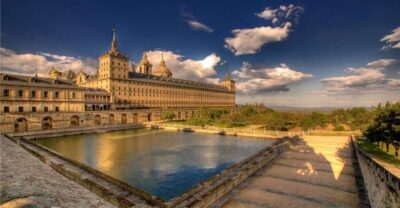
Private VIP visit El Escorial Palace, Monastery and Gardens
Read our review →Browse the lists this tour appears in