
Review · ROYAL MONASTERY TOURS
San Lorenzo de El Escorial: Monastery and Site Guided Tour
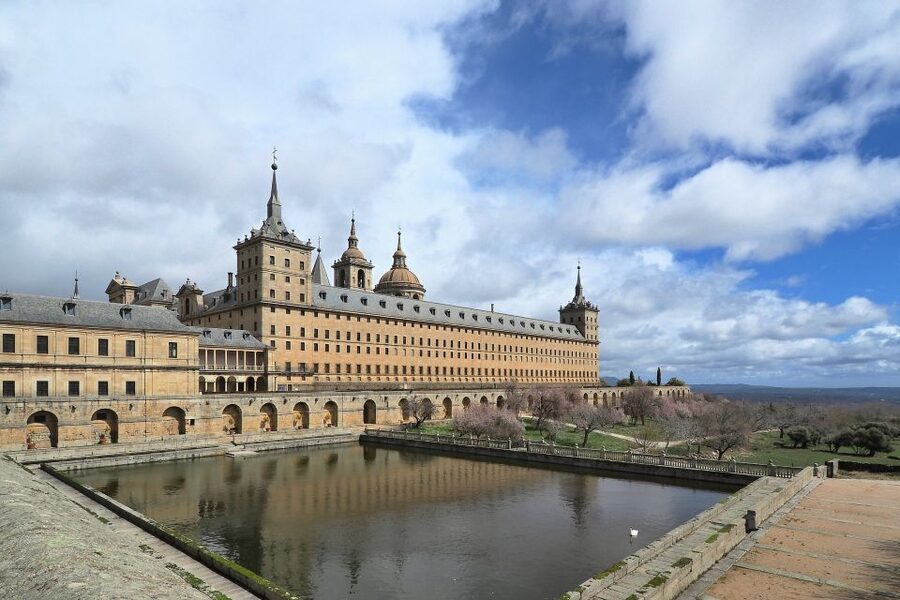
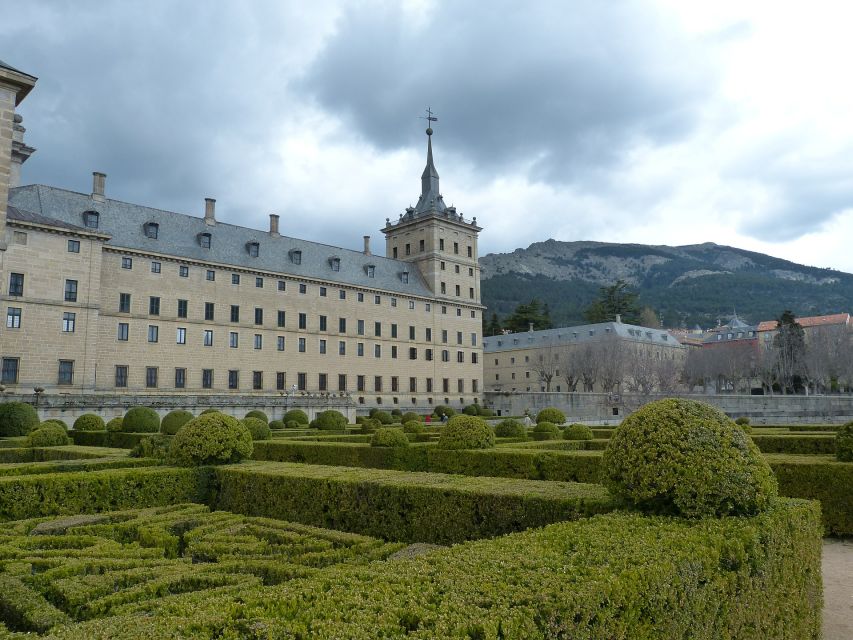
San Lorenzo de El Escorial is far more than a grand church outside Madrid. Philip II built this enormous 16th-century complex as a monastery, royal residence, burial place, library, and political statement, all joined in one severe Renaissance design. The Royal Library, filled with books collected to serve the king’s humanist interests, may be the most revealing stop of all.
I like this tour for two clear reasons: you see the major rooms in only two hours, and a guide gives the building a storyline instead of leaving you to wander through a maze. Guides named Alejandro, Isabella, and Marta have led especially strong visits, bringing clear explanations, humor, and energy to the architecture and royal history.
The main consideration is language. The activity is listed with a live Spanish-speaking guide, though some past groups were led in excellent English by Isabella. Confirm the language available for your date before booking. The meeting point can also be easy to miss, so arrive early and look for the blue Todo Tour umbrella at the main entrance.
In This Review
- Key points to know before booking
- Why El Escorial deserves time outside Madrid
- Meeting the guide at the main entrance
- The basilica and Philip II’s religious vision
- The Royal Pantheon and Spain’s royal memory
- The Battle Hall and the story of military power
- Palatial rooms and the royal side of El Escorial
- The Royal Library, a room built around learning
- Why a live guide helps in a two-hour visit
- Is $47 a fair price?
- Who should choose this El Escorial tour?
- Final verdict: book it for context and an efficient route
- FAQ
- How long does the San Lorenzo de El Escorial guided tour last?
- What is included in the price?
- How much does the experience cost?
- What language is the live tour conducted in?
- Where is the meeting point?
- How early should I arrive?
- What should I bring?
- Can I cancel the booking or pay later?
Key points to know before booking
- Philip II’s royal project: See how religion, royal power, learning, and military memory came together in one vast building.
- The Royal Library: Visit a Renaissance library created from the king’s book collection, one of the tour’s most distinctive stops.
- A focused two-hour route: Cover the basilica, Battle Hall, pantheon, palace rooms, library, and other key interiors without spending the day on site.
- A guide adds needed context: The complex can feel confusing on your own, while a planned route helps you understand why each room matters.
- Practical dress rules: Bring a passport or ID, leave large bags behind, and avoid short skirts and sleeveless shirts.
- Good booking flexibility: You can cancel up to 24 hours ahead for a full refund and reserve now while paying later.
Why El Escorial deserves time outside Madrid
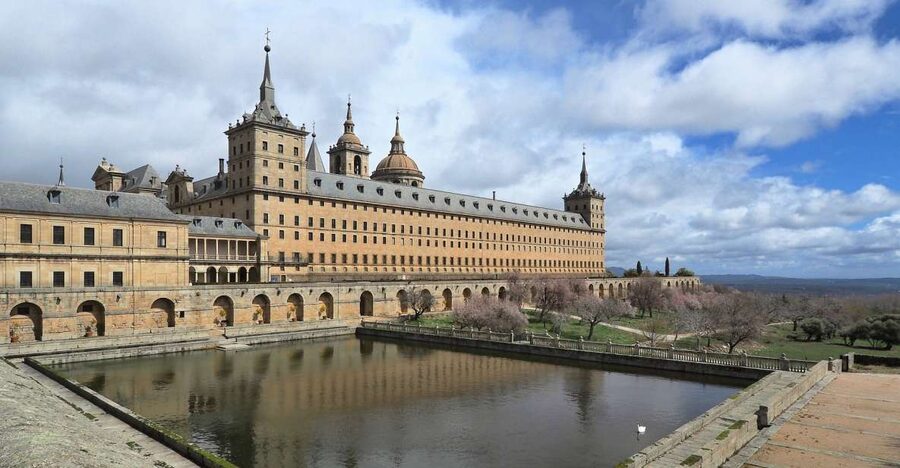
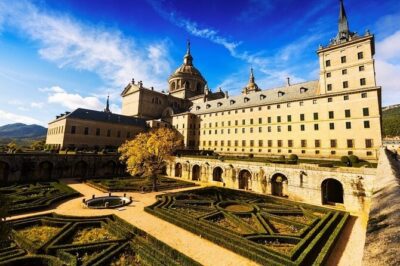
San Lorenzo de El Escorial sits in the Community of Madrid and is recognized as a UNESCO World Heritage Site. It is one of Spain’s key Renaissance monuments, but its importance is not based only on size or decoration.
The building expresses the aims of Philip II and the Spanish Golden Age. It was designed to serve several purposes at once: a monastery for religious life, a royal residence, a burial place for Spanish monarchs, and a center for books and learning. That combination makes the visit feel different from a normal palace tour.
I find the complex most rewarding when you think of it as a portrait of royal priorities. The basilica presents the public religious image of the monarchy. The pantheon connects the king to earlier rulers and future dynasties. The library points to scholarship and humanist study. The Battle Hall preserves military memory. The palace rooms show how royal life fit into this larger religious and political plan.
That is a lot to take in without help. A guide gives you the connections, so the visit is not just a procession of impressive rooms.
More royal monastery visits:
- Escorial Monastery and the Valley of the Fallen Tour from Madrid
★ 5.0 · 2,494 reviews - From Madrid: Escorial Monastery and the Valley of the Fallen
★ 4.7 · 1,434 reviews - Escorial Monastery and the Valley of the Fallen from Madrid
★ 4.0 · 1,023 reviews
Meeting the guide at the main entrance
Plan to arrive at least 15 minutes before the scheduled start. You must exchange your voucher at the meeting point, so arriving at the last minute is a poor gamble.
The guide waits at the monastery’s access door, specifically the main entrance with the Spanish flag above it. Look for a blue Todo Tour umbrella. This detail matters because a large historic complex can have several doors and open spaces around it, and one past participant wished the guide had carried a clearer identifying sign.
I would treat the meeting point as part of the preparation, not an afterthought. Have your voucher ready, keep your identification accessible, and allow time to find the correct entrance. The tour lasts two hours, so a late start cuts directly into the time inside.
Bring a passport or identity card. Large bags and luggage are not allowed. The rules also prohibit short skirts, sleeveless shirts, swimwear, and making noise. Dress for a religious and historic monument rather than a beach or casual poolside outing.
The site is listed as wheelchair accessible. If accessibility is important for your visit, it is still sensible to confirm the current route and meeting arrangements when you book.
The basilica and Philip II’s religious vision
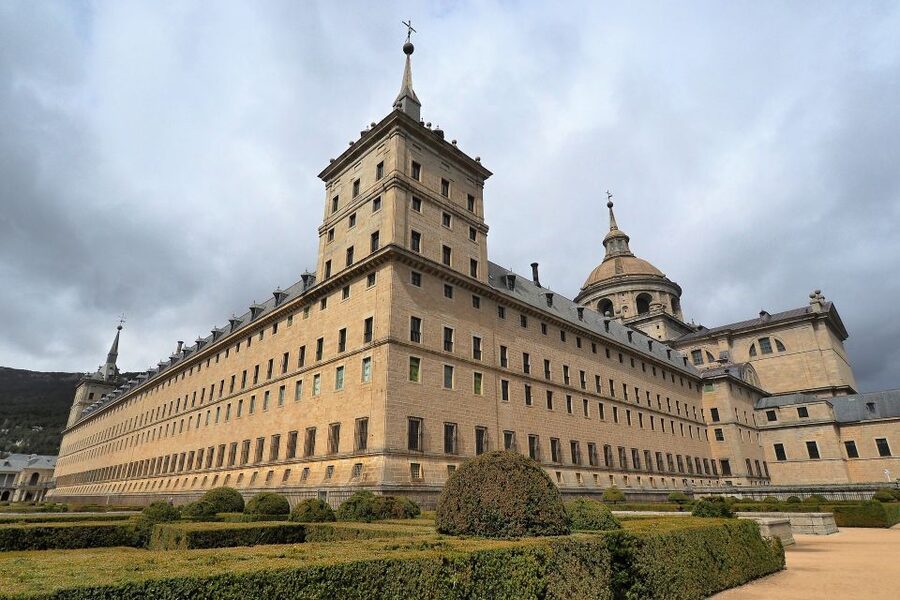
The basilica is one of the essential first stops on the route. Here, the scale of El Escorial becomes clear. The building was not simply a royal home with a chapel attached. Religious purpose sits at the center of the entire complex.
Your guide explains how the basilica connects to Philip II’s ideals and to the wider Spanish Golden Age. That context gives the architecture more meaning. Instead of seeing only stone, altars, and formal spaces, you begin to understand the building as a statement about Catholic faith and royal authority.
The basilica also helps explain the unusual shape of the monastery. El Escorial is often associated with a grill-like plan, linked to Saint Lawrence. The guided visit gives you a chance to see how that overall design supports many different functions while keeping the religious center in view.
Expect a serious mood here. This is not a lighthearted palace tour, although the guides praised for this experience bring humor where it helps. The best explanations make the place easier to understand without turning it into a lecture.
The Royal Pantheon and Spain’s royal memory
The pantheon is one of the most memorable parts of the visit. Almost all of Spain’s kings are buried here, making the space a direct link to the country’s monarchy and succession.
This is where the tour moves from architecture into dynastic history. The tombs are not simply beautiful or solemn objects. They show how the Spanish crown presented continuity, family, and authority across generations.
A guide is particularly useful in the pantheon because the significance can be easy to miss if you do not know who is buried there or why the room was placed within this larger complex. You are given the historical thread while standing among the royal remains, rather than trying to reconstruct it afterward from a label.
The pantheon may also feel more formal than the palace rooms. Give yourself a moment to take in the atmosphere. The route is efficient, but the subject deserves attention.
More El Escorial trips:
- From Madrid: El Escorial and Valley’s Basilica Half Day Tour
★ 4.4 · 638 reviews - From Madrid: Escorial Monastery & Valley of the Fallen Trip
★ 4.4 · 389 reviews - Royal Site of San Lorenzo de El Escorial Entrance Ticket
★ 4.4 · 239 reviews - From Madrid: El Escorial, Valley and Segovia Day Trip
★ 4.5 · 134 reviews
The Battle Hall and the story of military power
The Battle Hall offers a different view of Philip II’s world. Here, the focus turns toward warfare and the military history tied to Spain’s power during the period.
The room helps balance the religious and scholarly parts of El Escorial. You see that the complex was also concerned with conflict, victory, and the public memory of military events. Its inclusion makes the monastery feel like a complete royal project rather than an isolated religious building.
This is one of the places where a well-organized explanation matters. A guide can point out what to look for and connect the imagery to the political ambitions of the period. Without that framework, the room may register as an ornate historical interior without much clarity.
The tour does not promise an exhaustive study of every event shown there. Instead, it gives you a useful overview within the two-hour route. If military history is your main interest, you may want additional reading afterward, but the stop provides an important part of the building’s message.
Palatial rooms and the royal side of El Escorial
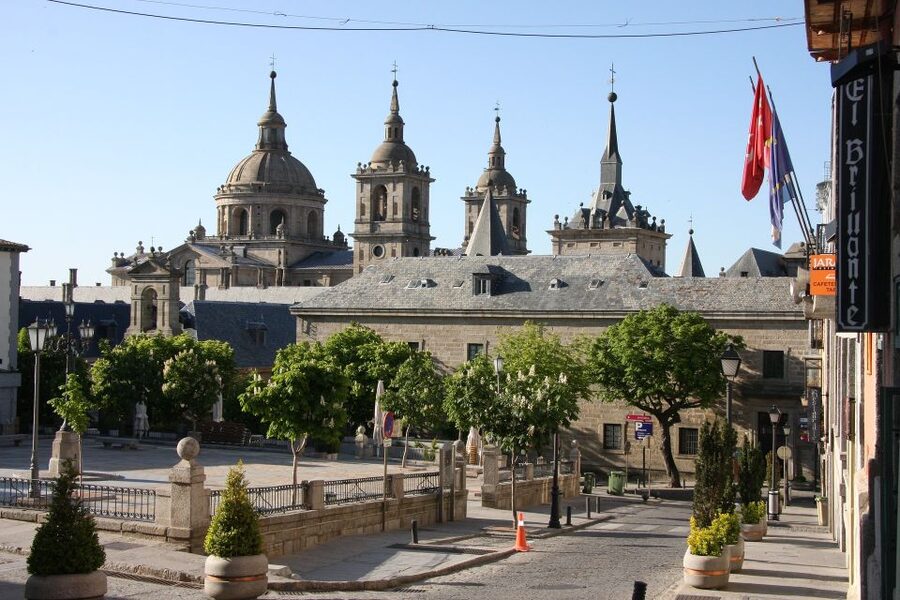
The palatial rooms show how the royal household occupied space inside the monastery. They help you picture the practical side of Philip II’s project, where private royal life existed beside religious duties, administration, art, and scholarship.
The contrast between the palace areas and the basilica is part of the appeal. You move between spaces built for devotion, ceremony, residence, and government. That change in function is easier to appreciate when the guide explains how the rooms fit together.
The palace interiors may not have the playful decoration found in some European royal residences. El Escorial is known for a more controlled and imposing style. That restraint is useful to keep in mind before you arrive. If you expect a palace full of glitter and theatrical ornament, the building may feel austere. If you are interested in how a ruler used architecture to express discipline and authority, it becomes much more rewarding.
The route also saves you from unnecessary backtracking. One person who explored with an electronic device found the complex confusing and walked farther than needed. A live guide keeps the visit moving through a planned sequence.
The Royal Library, a room built around learning
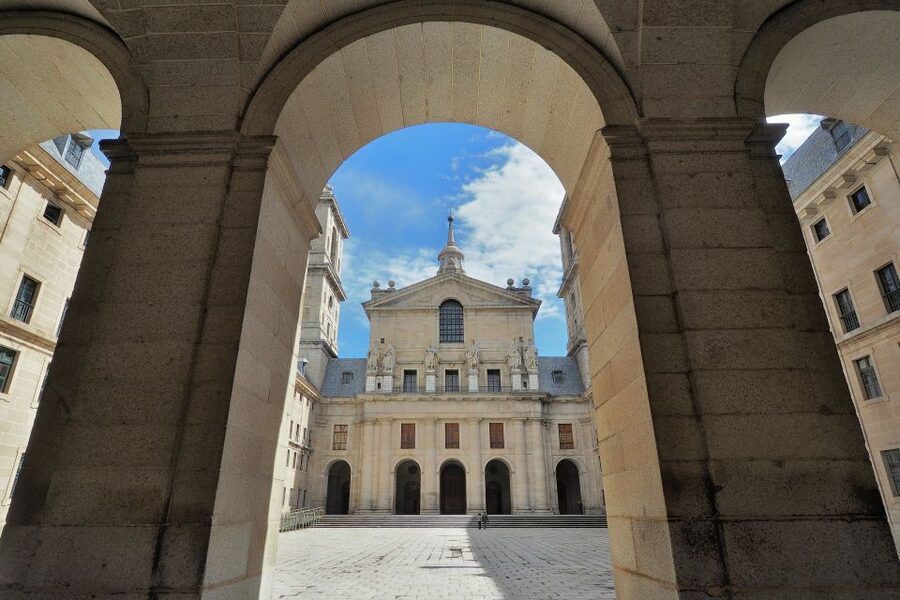
For me, the Royal Library is the standout stop. Philip II collected its books to expand his humanist knowledge, and the room shows that the monastery was intended as a place of study as well as worship and royal ceremony.
The library is also a Renaissance statement of power. Books represented access to knowledge, education, and the intellectual tools needed to govern. By placing such a collection inside this royal and religious complex, Philip II linked learning to monarchy and faith.
You do not need to be a specialist in Renaissance books to appreciate the room. Listen for the explanation of why the collection mattered and what it says about the king’s interests. This is the kind of detail that turns a beautiful interior into a revealing historical object.
The library also gives the tour a welcome change of pace. After the solemn basilica, royal tombs, and military displays, it offers a quieter look at the mind behind the project. I would pay close attention here, since it is one of the stops most difficult to understand from a basic audio guide or a quick walk-through.
Why a live guide helps in a two-hour visit
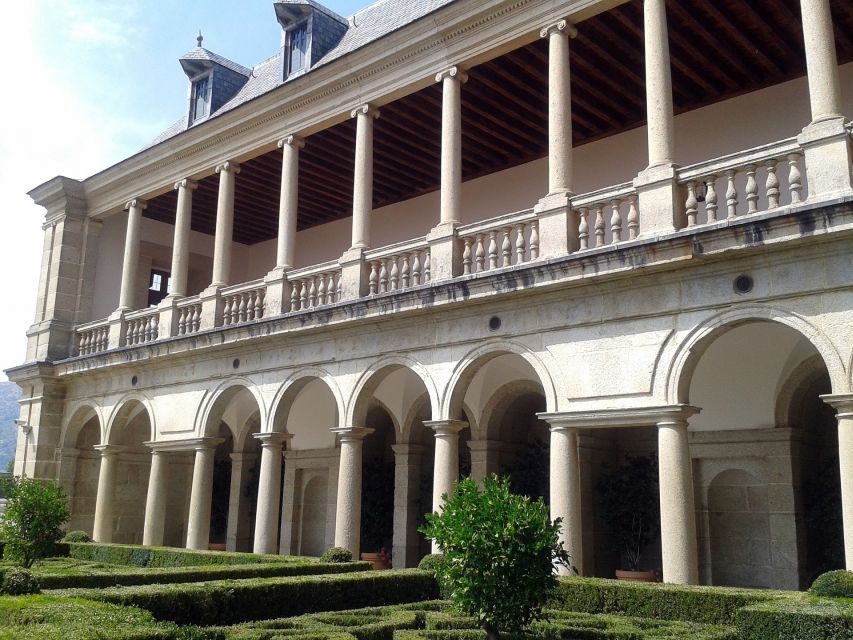
Two hours is enough for a strong introduction, not enough for every corner and every story. That time limit makes the guide’s role important.
A good guide keeps the group focused on the essential places and explains the links among them. The most praised guides, including Alejandro, Isabella, and Marta, are described as clear, friendly, prepared, and able to make difficult history easy to follow. Isabella has also been praised for perfect English and lively energy, while Marta’s explanations were noted for separating documented facts from invented stories.
That last point matters at a place with so much legend and royal drama. You want a guide who can tell an engaging story without blurring fact and folklore.
The experience appears to work especially well for visitors who do not want to spend time learning the floor plan beforehand. You can arrive, join the route, and let the guide set the pace. It is also useful for anyone who wants the political and cultural meaning of El Escorial, not just photographs of grand rooms.
The tradeoff is that a guided route gives you less freedom to linger. One past visitor found the pace somewhat rushed on a return visit. If you have already been here and want to study particular rooms at length, independent entry may suit you better.
Is $47 a fair price?
At $47 per person, the tour includes the entrance ticket and the guide for two hours. The value depends on what you want from El Escorial.
If you only need admission and prefer to read on your own, the guided supplement may not be necessary. But if you want to understand Philip II’s aims, recognize the roles of the basilica and pantheon, and make sense of the library and Battle Hall, the added cost buys structure and explanation.
I consider the price reasonable for a first visit because the complex contains several different experiences under one roof. You are not paying only for a quick look at a church. You are getting a route through royal, religious, military, scholarly, and dynastic spaces.
The strongest value comes when the group is small enough for the guide’s explanations to feel personal. One past group had only four people in its English-speaking section and found the efficient route worth the cost. Group size can vary, so do not assume every departure will be that intimate.
The tour also offers reserve-now, pay-later booking and free cancellation up to 24 hours before the activity. Those terms are useful when you are building a Madrid schedule around changing plans.
Who should choose this El Escorial tour?
I would choose this experience if you are making your first visit to the monastery, have about two hours, and want the building explained rather than simply entered.
It is a good match for:
- History-minded visitors interested in Philip II and the Spanish Golden Age
- Architecture fans who want to understand the Renaissance plan
- First-time visitors who may find the complex confusing
- People who want to see the Royal Library, pantheon, and Battle Hall in one efficient route
- Visitors who prefer a live guide to an electronic device
- Anyone who values a clear overview before exploring more on their own
You may want another approach if you need a very slow visit, want to photograph every room, or already know the monastery well. The two-hour format is designed for coverage and explanation, not extended private study.
Pay close attention to the language shown for your date. The published activity language is Spanish, while some past visits had excellent English-speaking guides. Do not assume that an English tour is available simply because an earlier group had one.
Final verdict: book it for context and an efficient route
Book this tour if El Escorial is new to you and you want its many parts to make sense. The guide-led route covers the basilica, pantheon, Battle Hall, palace rooms, and Royal Library while placing them in the story of Philip II and Spain’s Golden Age.
The best reason to go is not just the monument’s size. It is the way the complex joins faith, monarchy, war, burial, and learning in one place. A guide helps you see those links before the details blur together.
Before booking, confirm the available tour language, arrive 15 minutes early, find the blue Todo Tour umbrella by the entrance with the Spanish flag, and leave luggage behind. With those points handled, $47 is a fair price for a focused first visit to one of Spain’s most important Renaissance sites.
FAQ
How long does the San Lorenzo de El Escorial guided tour last?
The tour lasts two hours.
What is included in the price?
The price includes a tour guide and an entry ticket to the Monastery of San Lorenzo de El Escorial.
How much does the experience cost?
The listed price is $47 per person.
What language is the live tour conducted in?
The activity information lists Spanish as the tour language. Some past groups had English-speaking guides, so confirm the language available for your chosen date.
Where is the meeting point?
Meet at the monastery’s main access door, the entrance with the Spanish flag at the top. The guide will be waiting with a blue Todo Tour umbrella.
How early should I arrive?
Arrive 15 minutes before the activity begins. You must exchange your voucher at the meeting point.
What should I bring?
Bring your passport or ID card.
Can I cancel the booking or pay later?
You can cancel up to 24 hours in advance for a full refund. The activity also offers reserve now, pay later booking.
Just added around El Escorial
- Private 8-hour Tour of Madrid + Escorial Monastery & Valley of the Fallen★ 4.5 · 3 reviews
- From Madrid: El Escorial, Valley of the Fallen, & City Tour★ 5.0 · 3 reviews
- El Escorial and Valley of the Fallen Private Tour★ 4.5 · 6 reviews
- Private Tour El Escorial and The Valley of the Fallen from Madrid★ 4.5 · 10 reviews
- San Lorenzo de El Escorial Monastery: Private Tour★ 5.0 · 12 reviews
- El Escorial & Valley Half Day Trip from Madrid★ 4.0 · 19 reviews
- Private VIP visit El Escorial Palace, Monastery and Gardens★ 4.9 · 23 reviews
- Private VIP visit El Escorial Palace, Monastery, Villa & Garden★ 5.0 · 25 reviews
Royal Monastery Tours, compared.

Escorial Monastery and the Valley of the Fallen Tour from Madrid
Read our review →
Escorial Monastery and the Valley of the Fallen
Read our review →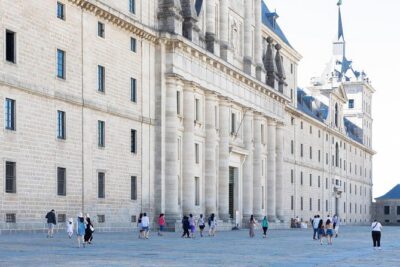
Escorial Monastery and the Valley of the Fallen from Madrid
Read our review →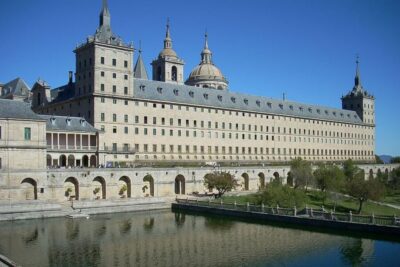
Private VIP visit El Escorial Palace, Monastery, Villa & Garden
Read our review →
Private VIP visit El Escorial Palace, Monastery and Gardens
Read our review →Browse the lists this tour appears in