
Review · ROYAL MONASTERY TOURS
San Lorenzo de El Escorial Monastery: Private Tour
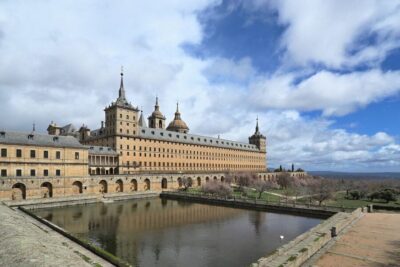
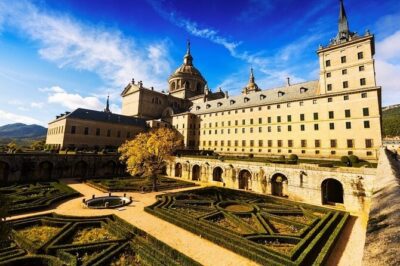
El Escorial is more than a monastery. It is a vast royal statement in stone, built by Philip II to serve as a palace, church, monastery, library, and burial place for Spain’s rulers. Inside, you move from solemn royal tombs to dazzling ceiling frescoes, then out into gardens with views toward the Sierra de Guadarrama.
I like the private guide and the way the tour brings together art, religion, politics, and royal family drama. I also like the priority entrance, especially since your limited time is better spent inside the monument than waiting at the door. The main drawback is physical: this is not suitable for wheelchair users or people with mobility problems, and you will climb many steps.
In This Review
- Key points at a glance
- Why El Escorial makes a strong day trip from Madrid
- Finding the guide outside the monastery
- Entering a Habsburg royal monument
- The library and Philip II’s world of learning
- The basilica and the religious heart of El Escorial
- The Royal Pantheon and Habsburg family history
- Major paintings by Titian, El Greco, Velázquez, and Luca Giordano
- The Hall of Battles and its sweeping murals
- Renaissance gardens and Sierra de Guadarrama views
- Is the $79 price fair?
- Who should book this private tour?
- Should you book San Lorenzo de El Escorial?
- FAQ
- How long does the El Escorial private tour last?
- What language is the tour offered in?
- Is this a private group tour?
- What does the price include?
- Is transportation from Madrid included?
- Where does the tour begin?
- Is the monument accessible for wheelchairs?
- Can I visit the basilica on a Sunday morning?
Key points at a glance
- A private visit to a UNESCO World Heritage Site: Your guide can explain the building at your pace instead of delivering a one-size-fits-all group talk.
- The library is a highlight: Philip II’s interest in science and the arts appears in the frescoed ceilings and grand Renaissance design.
- Royal tombs and Habsburg power: The Royal Pantheon gives the monastery its most direct connection to Spain’s ruling family.
- Art by major European painters: Look for works associated with Titian, El Greco, Velázquez, and Luca Giordano.
- A strong final stop: The Hall of Battles has huge mural paintings, while the gardens open toward forests and mountain views.
- Plan for stairs and security: Large bags go into free lockers, airport-style screening is required, and comfortable shoes are essential.
Why El Escorial makes a strong day trip from Madrid
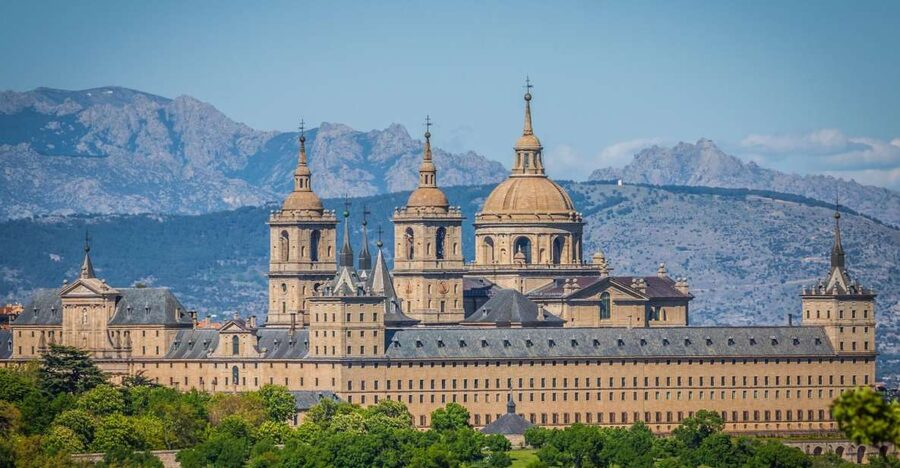
San Lorenzo de El Escorial sits in the Community of Madrid, near the Sierra de Guadarrama. The setting gives the visit a welcome change of pace from Madrid’s crowded streets. You get a major cultural monument, open views, and a little time among gardens and trees in one outing.
The building was designed to express the authority of the Habsburg dynasty and the religious outlook of Philip II’s Spain. That combination explains the unusual range of rooms. You are not simply touring a church. You are walking through a royal residence, a monastery, an art collection, a library, and a dynastic burial place.
A private visit helps because El Escorial can feel overwhelming at first. The scale is grand, and the rooms do not all tell their stories in the same way. A good guide gives you a thread to follow, pointing out how the building reflects royal power, Catholic devotion, learning, and military memory.
The tour lasts about 2.5 hours. That is long enough to cover the principal rooms without turning the visit into an exhausting full-day ordeal. It also leaves room for you to continue exploring San Lorenzo de El Escorial on your own if you want more time in the area.
More royal monastery visits:
- Escorial Monastery and the Valley of the Fallen Tour from Madrid
★ 5.0 · 2,494 reviews - From Madrid: Escorial Monastery and the Valley of the Fallen
★ 4.7 · 1,434 reviews - Escorial Monastery and the Valley of the Fallen from Madrid
★ 4.0 · 1,023 reviews
Finding the guide outside the monastery
The meeting point is easy to identify once you know what to look for. Find the entrance with the Spanish flag above it, directly opposite the Tourist Office. Your guide will carry an Isabella Trébede tote bag.
Isabella Trébede is the named licensed guide for the experience. The tour is offered in English or Spanish, and individual headsets are provided so you can hear the explanation clearly while moving through large rooms. That small detail matters in a building where sound can disappear beneath high ceilings and stone walls.
You do not receive hotel pickup or transport to San Lorenzo de El Escorial. You need to arrange your own way to the meeting point. The price is $79 per person, and priority admission tickets valued at €12 per person are included.
Arrive ready for security screening. Everyone must pass through airport-style controls. Backpacks and large bags cannot be carried through the monument, but free individual lockers are available. They require a €1 coin, so carrying one is a practical bit of preparation.
Entering a Habsburg royal monument
The first impression is one of scale and purpose. El Escorial was built as a national and royal monument, not as a quiet retreat hidden from public life. Its spaces show how Spain’s Habsburg rulers connected faith, learning, family succession, and political power.
A private tour gives you the chance to ask why a room looks the way it does, who used it, and how it fits into the larger plan. The guide can also adjust the emphasis. You may care most about Spanish painting, royal history, architecture, or the religious role of the monastery.
The building’s power comes partly from the contrast between grand public rooms and more solemn spaces. You will see decoration meant to impress, but also areas designed for prayer, burial, and study. The best tour does not treat every room as an isolated sight. It shows you how the rooms work together.
The route includes many stairs. The guide will take the group at an easier pace, but the physical demand remains real. Wear shoes with good support, and do not plan this visit around a heavy suitcase or large daypack.
The library and Philip II’s world of learning
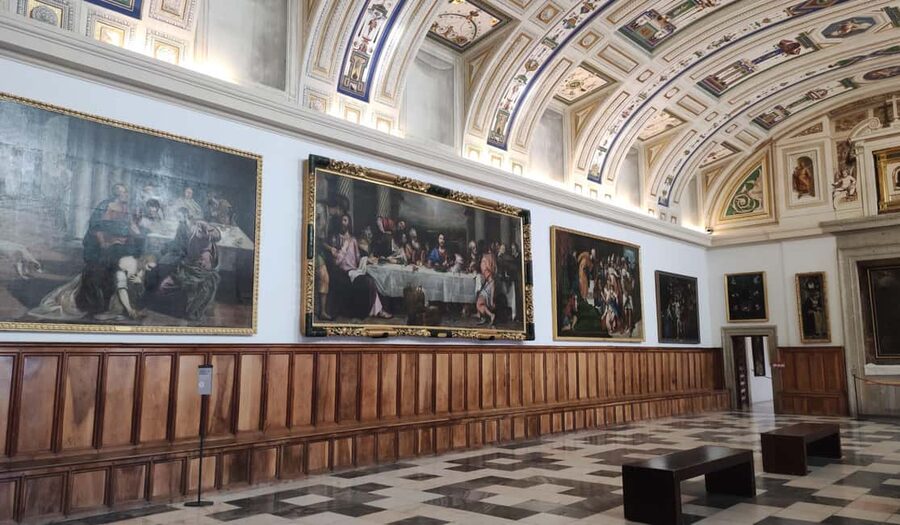
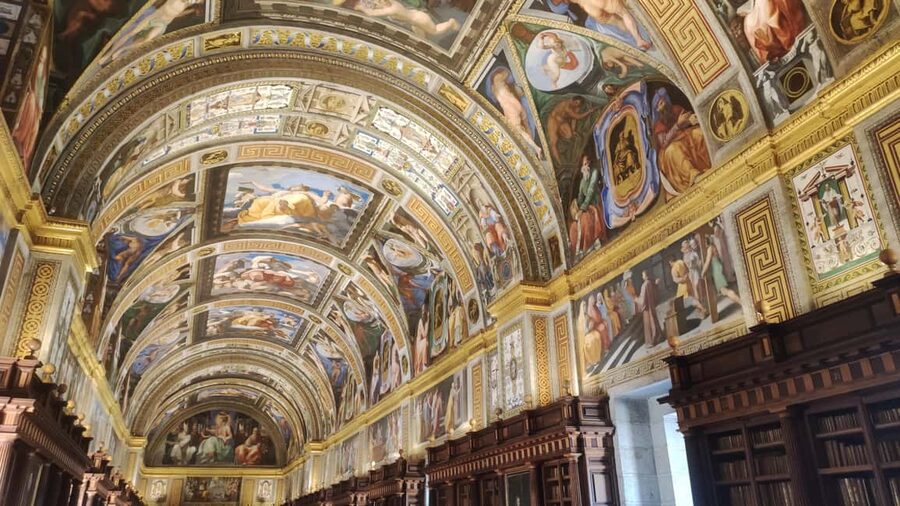
The library is one of the most memorable rooms in El Escorial. It represents Philip II’s interest in scholarship, science, and the arts, often described as a key example of Philip II’s humanism.
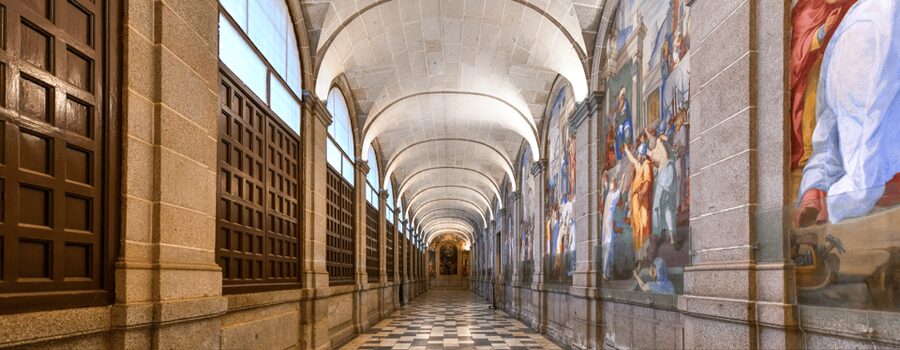
Look up. The ceiling frescoes are a major reason to visit. The painted decoration turns the room into more than storage for books. It presents learning as something worthy of royal support and visual celebration.
The main staircase also has impressive frescoes. This is an important reminder to keep your eyes moving during the tour. Some of El Escorial’s best visual moments appear above you or along the route between rooms, not only on the walls directly in front of you.
The guide’s historical explanation is especially useful here. The library makes more sense when you understand that the building was intended to gather religious knowledge, classical learning, science, and art under royal direction. You are seeing Philip II’s idea of an ordered world, with the monarchy and Catholic faith at its center.
This is also where a private format earns its keep. If you want to know more about the books, the ceiling paintings, or Philip II’s approach to learning, you can ask immediately rather than waiting for a group to move on.
More El Escorial trips:
- From Madrid: El Escorial and Valley’s Basilica Half Day Tour
★ 4.4 · 638 reviews - From Madrid: Escorial Monastery & Valley of the Fallen Trip
★ 4.4 · 389 reviews - Royal Site of San Lorenzo de El Escorial Entrance Ticket
★ 4.4 · 239 reviews - From Madrid: El Escorial, Valley and Segovia Day Trip
★ 4.5 · 134 reviews
The basilica and the religious heart of El Escorial
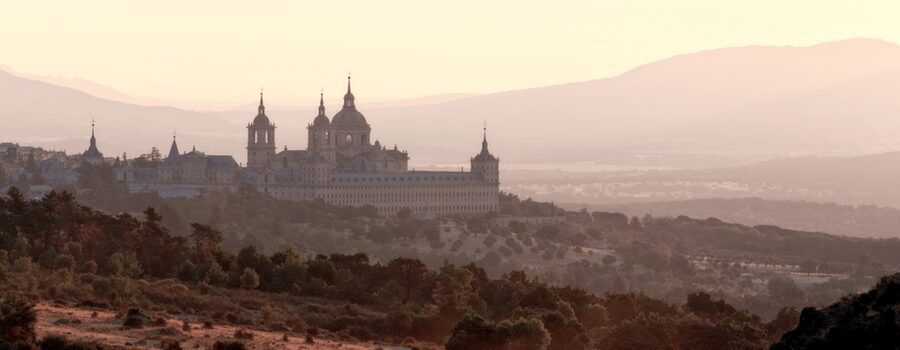
The basilica shows the religious setting that shaped the monument. Its scale and formal design make clear that worship was not an afterthought. The church forms one of the central parts of the complex and helps explain why El Escorial was built with such seriousness and expense.
Your guide will place the basilica within the religious context of the period, linking the building’s design to Philip II and the Habsburg court. This makes the room more understandable than simply admiring its architecture in silence.
There is one important scheduling issue. The basilica is closed during Mass. On Sundays and religious holidays, it may be closed throughout the morning. If that happens, the guide extends the tour in the library or the Chapter Rooms instead.
That replacement is useful, but it is still worth checking the day and start time before booking if the basilica is essential to you. The tour remains worthwhile without access to the church, but the exact route can change with religious services and opening hours.
The Royal Pantheon and Habsburg family history
The Royal Pantheon is one of the most powerful sections of the visit. This is where the monastery’s role as a royal burial place becomes direct and personal. The setting connects the architecture to generations of Spanish rulers and the succession concerns of the Habsburg dynasty.
The room encourages a slower pace. Instead of looking only at decoration, you start thinking about family lines, royal authority, and the way monarchies use burial sites to present continuity. A guide can make the names and relationships easier to follow.
The tour also includes the story of John of Austria, the illegitimate son of Emperor Charles V. His life adds a human thread to the formal dynastic setting. It reminds you that the people connected to El Escorial were not just titles carved into a family tree. They had complicated identities and roles within the Habsburg world.
If you prefer art and architecture to royal biography, this part may feel more solemn than exciting. Still, it is one of the places where the building’s purpose becomes clearest. El Escorial was created to preserve memory as well as to display power.
Major paintings by Titian, El Greco, Velázquez, and Luca Giordano
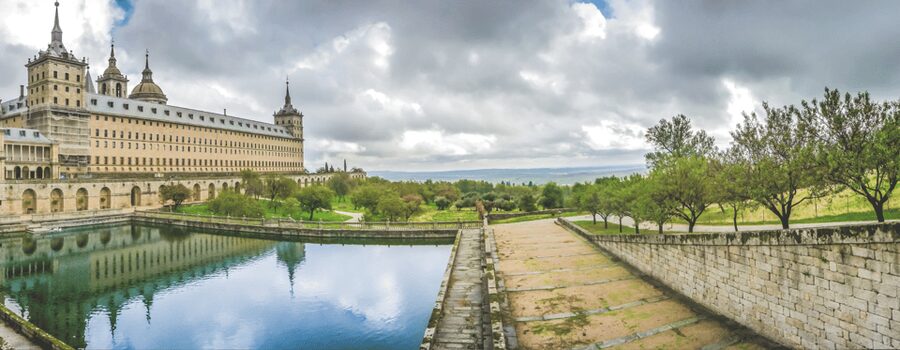
Art lovers have plenty to look for during the interior visit. The collection includes works connected with Titian, El Greco, Velázquez, and Luca Giordano. These names cover different periods and styles, giving the tour more range than a single-theme museum visit.
A guide is particularly helpful here because the experience is not arranged like a modern art gallery with extensive labels at every turn. You may see a painting in a religious or royal room, and the explanation can clarify why it is there and what role it played in the larger setting.
El Greco and Velázquez are especially useful names to know before entering, since both are strongly tied to Spanish art. Titian connects El Escorial with the wider European court culture of the period, while Luca Giordano represents the later decorative energy found in some of the monument’s interiors.
You do not need a specialist background to enjoy this section. Let the guide point out what matters, then take a moment to look without rushing. The private group format should make it easier to pause for a question or spend longer with a work that catches your eye.
The Hall of Battles and its sweeping murals
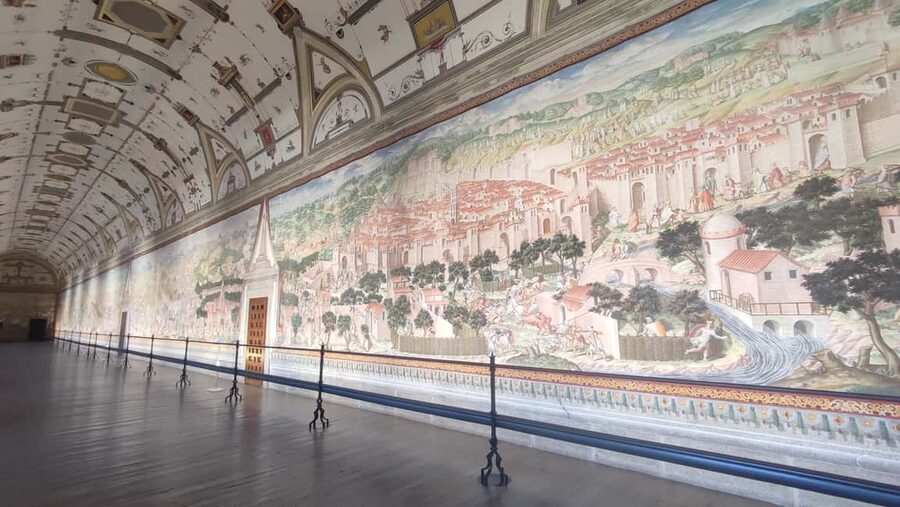
The interior route ends in the Hall of Battles. Its mural paintings are among the most dramatic sights in the complex. The walls present military scenes on a large scale, turning the room into a visual record of conflict and royal achievement.
This is a fitting final interior stop because it shifts the focus from prayer and burial to military power. The Hall of Battles helps complete the picture of Habsburg Spain: a monarchy that used religion, art, family, learning, and military success to shape its public image.
Take time to study the murals rather than viewing them as background decoration. Large battle scenes can become a blur of figures and movement, but a guide can help you understand what the paintings were meant to communicate.
The room may be especially appealing if you enjoy historical painting or military history. If you prefer quiet architecture, the sheer scale and detail may feel intense. Either way, it gives the visit a strong visual finish before you head outside.
Renaissance gardens and Sierra de Guadarrama views
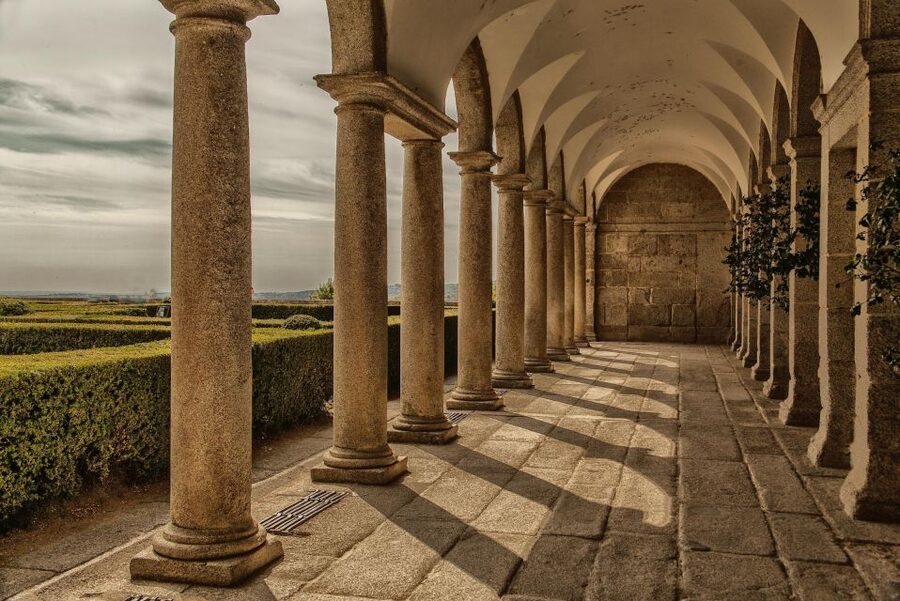
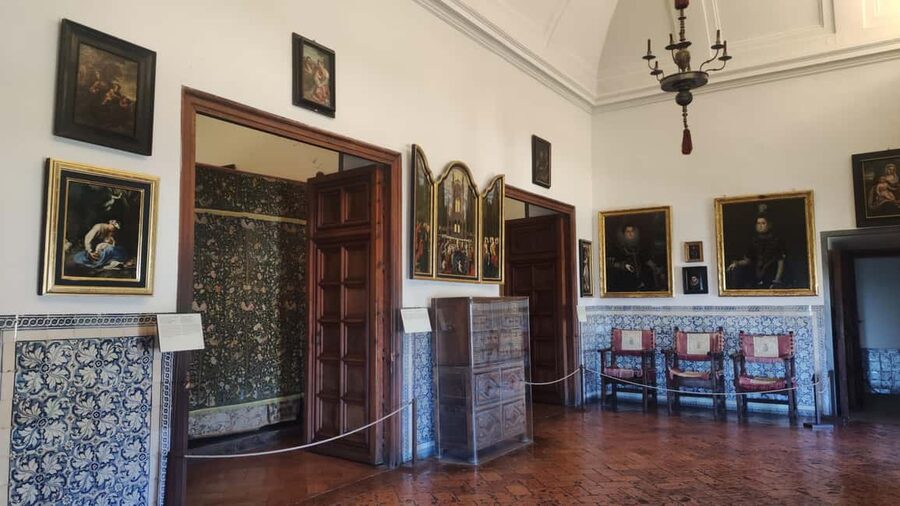
After the indoor rooms, the Renaissance gardens offer a change in mood. These gardens were created for the kings and monks of the monastery, and they give you space to see the monument in relation to its surroundings.
The views reach toward the forest and mountains around San Lorenzo de El Escorial. After several hours among stone interiors, frescoes, tombs, and painted walls, the open air helps you put the building in context. You can also see why the area works well as a day trip from Madrid.
Peacocks live in the gardens, so you might spot one during the final part of the route. It is a small detail, but a welcome one after the formality of the royal rooms.
The gardens are not a substitute for a long mountain walk. They are best understood as the closing section of the monastery visit, a place to pause and take in the views. If the weather is clear, this may become one of your favorite parts of the experience.
Is the $79 price fair?
At $79 per person, the tour costs more than visiting El Escorial independently. The value comes from the private format, the licensed guide, priority entrance, and the ability to ask questions throughout the 2.5-hour visit.
The included skip-the-line ticket is listed at €12 per person. That does not cover the whole price, of course, but it reduces the amount you pay separately and saves time at the entrance. Individual headsets are included as well.
I think the price makes the most sense for couples, families, or small groups who care about interpretation and want a focused visit. If you are happy reading signs and exploring without help, an independent visit may cost less. If you want the monument to make sense as a connected story, private guiding gives you more value.
The tour has earned top marks for its historical explanations and entertaining narrative. The praise is strongest for Isabella’s detailed answers and clear delivery. That matters at a place with so many layers, since the quality of the explanation can shape your entire impression.
Who should book this private tour?
Book it if you want to understand El Escorial rather than simply walk through it. It suits visitors interested in Spanish monarchy, Habsburg history, religious art, Renaissance architecture, frescoes, or royal burial traditions.
It is also a good choice if you have only part of a day and want the main rooms organized into a clear route. A private guide can keep the visit moving while still responding to your interests.
Families with children can book, but all minors must be accompanied by an adult. Infants under five are free, yet they still must appear in the booking. Children aged 12 to 16 and adults over 65 must bring valid identification, or a copy, for entry.
Think twice if anyone in your party has a mobility impairment, uses a wheelchair, or finds many stairs difficult. The monument is explicitly not accessible, and large bags, food, bikes, pets, baby carriages, and luggage are not allowed inside.
You can cancel up to 24 hours in advance for a full refund, and the reserve-now, pay-later option keeps your plans flexible. The tour remains subject to opening hours, so check the available start times carefully.
Should you book San Lorenzo de El Escorial?
I would book this tour if El Escorial is high on your Madrid list and you want its many rooms to form one understandable story. The library frescoes, Royal Pantheon, Hall of Battles, major paintings, and gardens each offer something different, and a private English or Spanish guide helps connect them.
Choose another plan if you want an inexpensive, self-guided visit, need step-free access, or cannot arrange your own transportation to the meeting point. For everyone else, the combination of royal history, serious art, mountain views, and a personal guide makes this a strong half-day outing from Madrid.
FAQ
How long does the El Escorial private tour last?
The tour lasts approximately 2.5 hours. Starting times depend on availability and the monument’s opening hours.
What language is the tour offered in?
The live tour guide is available in English or Spanish.
Is this a private group tour?
Yes. You have a private group and a guide just for your party.
What does the price include?
The price includes a licensed tour guide, skip-the-line tickets valued at €12 per person, and individual headsets so you can hear the guide clearly.
Is transportation from Madrid included?
No. Hotel pickup and transportation to or from the meeting point are not included.
Where does the tour begin?
Meet at the entrance with the Spanish flag above it, directly opposite the Tourist Office. The guide will carry an Isabella Trébede tote bag.
Is the monument accessible for wheelchairs?
No. The monument is not accessible, and the tour is not suitable for wheelchair users or people with mobility impairments. You will climb many steps.
Can I visit the basilica on a Sunday morning?
The basilica is closed during Mass. On Sundays and religious holidays, it is closed for the entire morning. If it is closed, the guide extends the visit in the library or Chapter Rooms.
Just added around Madrid
- Private Vacation Photography Session with Photographer in Madrid★ 5.0 · 3 reviews
- Arrival Private Transfer from MAD Airport to Madrid in a Minibus★ 5.0 · 3 reviews
- Segovia: 3-Hour Private Walking Tour★ 5.0 · 3 reviews
- Tour Segovia and La Granja de San Ildefonso from Madrid★ 5.0 · 3 reviews
- Madrid: Prado & Reina Sofia Museum Skip-the-Line Guided Tour★ 5.0 · 3 reviews
- Salamanca: Private Guided Customizable Walking Tour★ 5.0 · 3 reviews
- Total Reboot and Renew with top wellnes 3 hours couple experience★ 5.0 · 3 reviews
- Madrid: Prado Museum Private Tour★ 5.0 · 3 reviews
Royal Monastery Tours, compared.
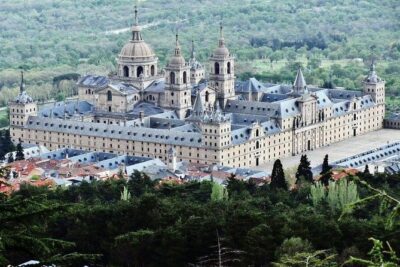
Escorial Monastery and the Valley of the Fallen Tour from Madrid
Read our review →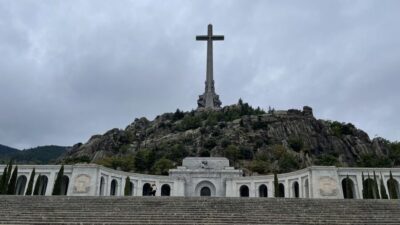
Escorial Monastery and the Valley of the Fallen
Read our review →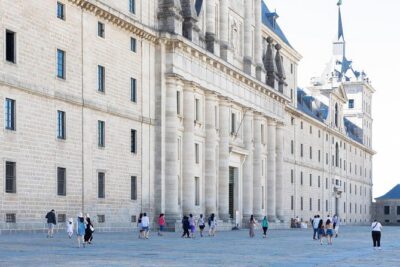
Escorial Monastery and the Valley of the Fallen from Madrid
Read our review →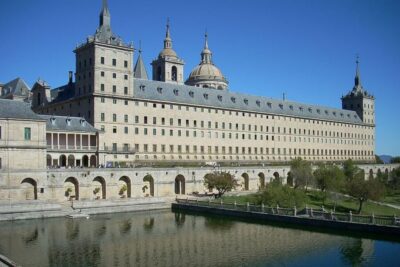
Private VIP visit El Escorial Palace, Monastery, Villa & Garden
Read our review →Browse the lists this tour appears in